
Yes, you can grow sweet peas in a window box, but I want to be upfront with you: they are one of the more demanding flowers to pull off indoors. They are climbers, they need cool temperatures, they want serious light, and their roots go deep. Get those four things right and you will absolutely get fragrant blooms on your windowsill. Get even one of them wrong and you end up with a leggy, flowerless tangle of vines. This guide walks you through exactly what it takes so you can decide whether your setup is up to it and then get started with confidence.
Can You Grow Sweet Peas in a Window Box Indoors? How
James Hartwell
24 Mar 2026
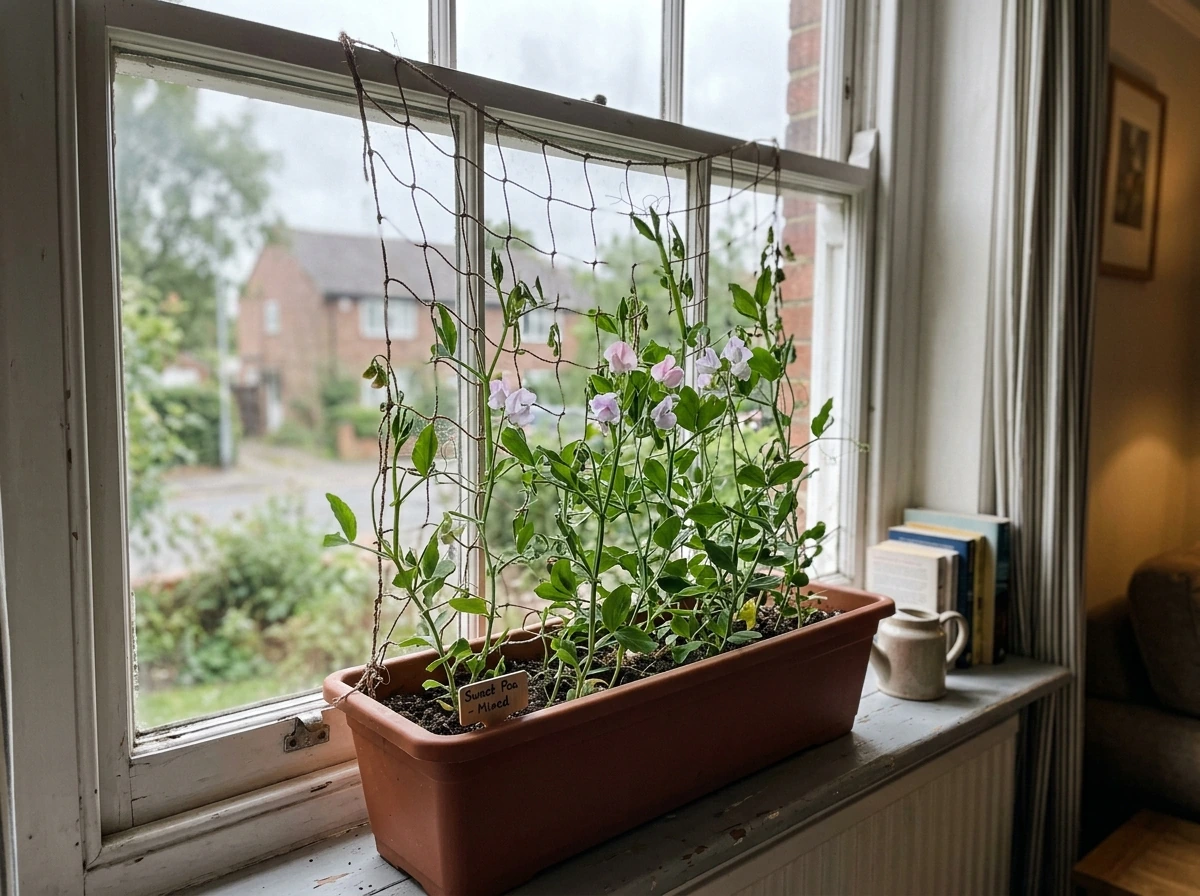
Are sweet peas actually suited to a window box?
Sweet peas (Lathyrus odoratus) were bred to grow several feet tall in open gardens with full sun, cool air, and deep soil. A window box does not offer any of that by default, so it does require some adjustment. That said, compact and dwarf varieties have changed the game for container growers considerably. These shorter types stay around 3 feet tall, still flower well, and are far more manageable on a windowsill than classic tall varieties that want to climb 6 feet or more.
The two biggest indoor constraints are light and temperature. Sweet peas need genuinely bright light, ideally at least 6 hours of direct sun per day, and they flower best when daytime temperatures sit around 65°F with cooler nights around 45°F. Most apartments run warmer than that, and most windows do not deliver enough light intensity in winter. Neither of those is a dealbreaker if you are willing to work around them with supplemental grow lights and a cooler spot near the glass, but I want you going in with clear eyes rather than crossed fingers.
Choosing the right sweet pea type and seed
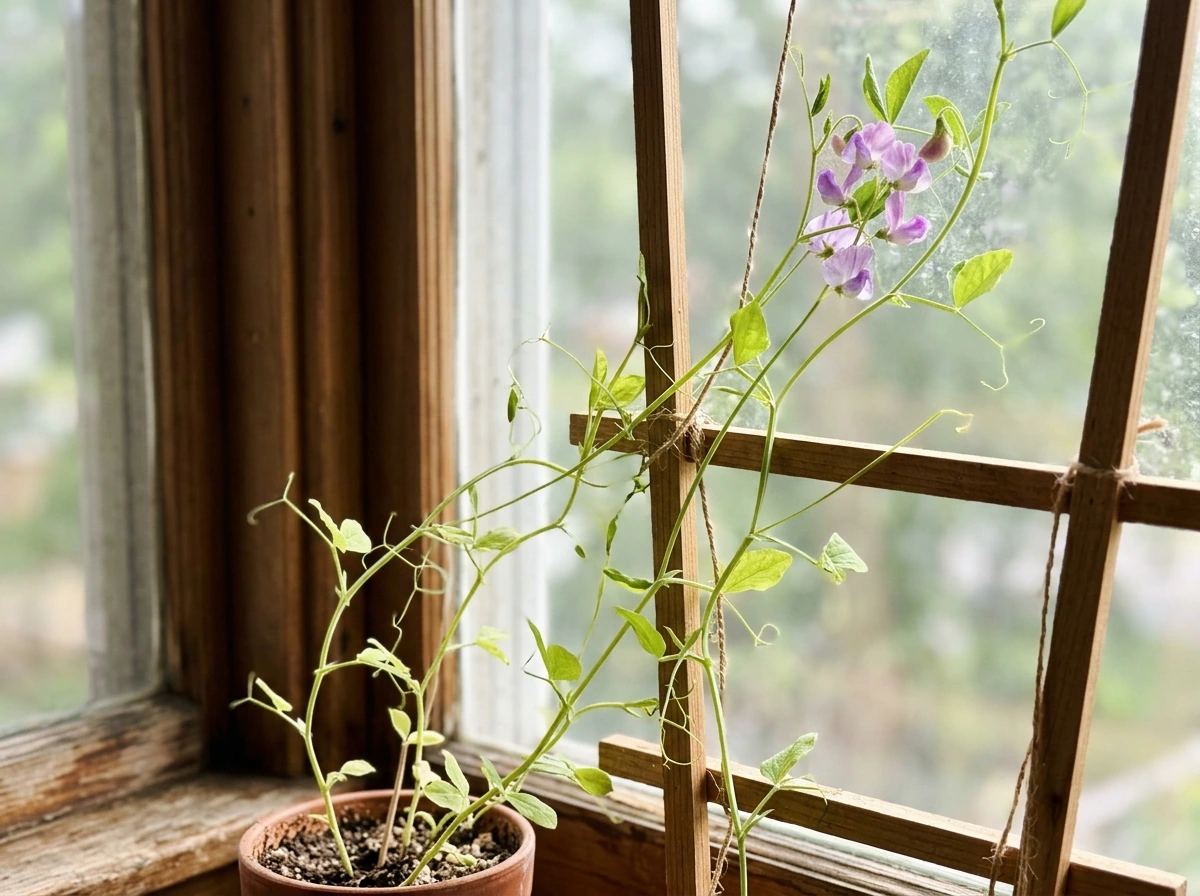
Variety selection is probably the single most important decision you will make for indoor window-box success. Skip the tall heritage varieties for now. They need serious vertical space and increasingly strong support as they grow, and managing that indoors quickly becomes a hassle. Instead, look for compact or dwarf types that top out around 3 feet, and specifically seek out day-neutral (also called winter-flowering) sweet pea varieties. Day-neutral types do not depend heavily on day length to trigger flowering, which matters indoors where your light hours and intensity may be inconsistent.
Good categories to search for include cascading container types and dwarf window-box varieties. When you are browsing seed packets, words like 'dwarf,' 'patio,' 'bush,' or 'winter-flowering' are your green flags. Classic tall varieties like Spencer types are beautiful in a garden but are genuinely harder to manage in a window box, so save those for when you have outdoor space to give them.
One note on seed prep before you sow: sources differ slightly here. Botanical Interests and Renee's Garden both suggest nicking the seed coat with a nail clipper or a piece of sandpaper rather than soaking, because soaking can actually reduce germination in some cases. The Old Farmer's Almanac and Eden Brothers recommend a 24-hour soak in room-temperature water. My honest take is that nicking is more reliable and less fussy: just scrape one side of the seed coat lightly without cutting into the seed itself, then sow immediately. The National Sweet Pea Society specifically says do not soak seeds before sowing, and that guidance has been consistent across many growing seasons.
Setting up your window box: size, soil, drainage, and support
Container size and depth
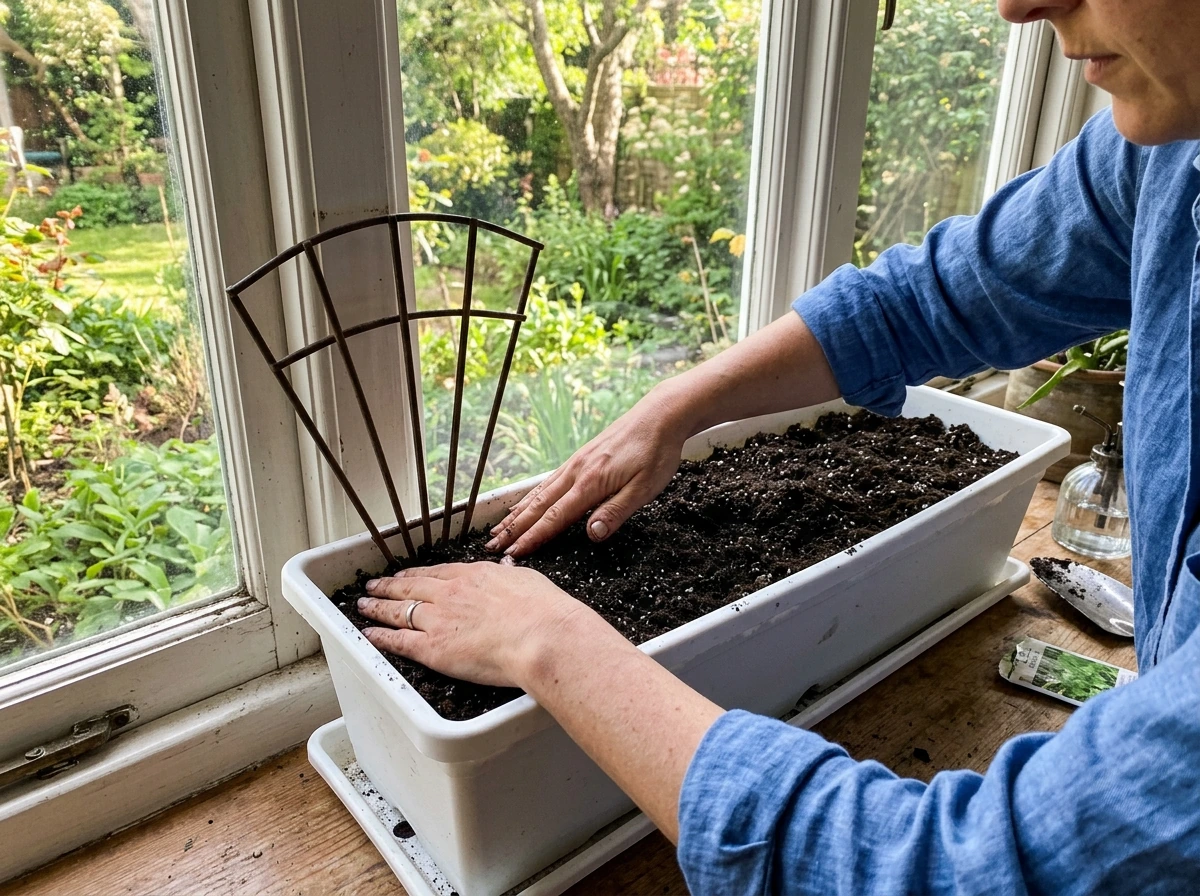
Sweet peas have long roots. They are not shallow-rooted flowers you can squeeze into a 6-inch pot. For climbing types, you need a container at least 16 to 20 inches (40 to 50 cm) deep. For dwarf varieties, you can get away with a little less, but do not go under 12 inches deep if you want them to thrive rather than just survive. A standard window box that is wide but shallow will stress the roots quickly and limit flowering, so if you are choosing between a wide-shallow box and a narrower-but-deeper one, go deeper.
Soil and drainage
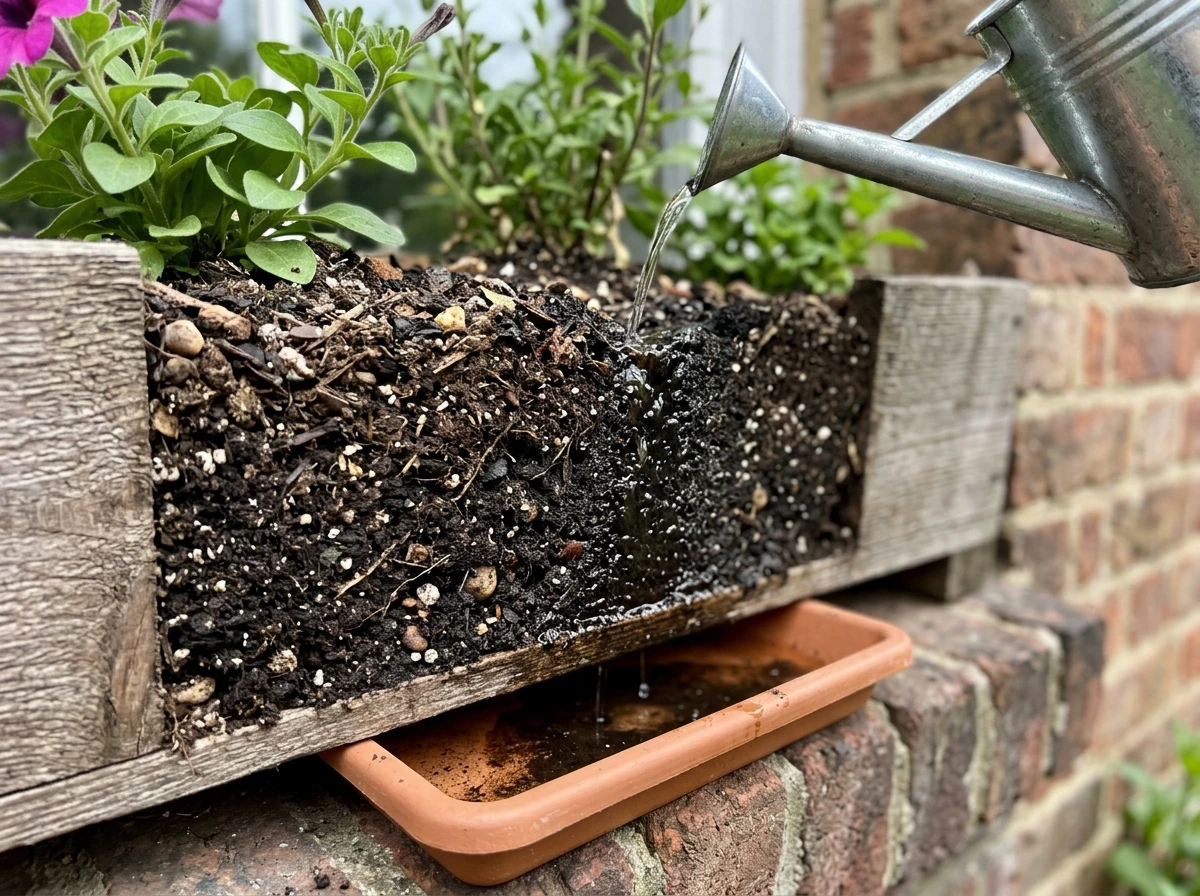
For starting seeds indoors, use a sterile seed-starting mix rather than regular potting compost. It is lighter and less likely to compact, which helps seeds germinate cleanly. Once plants are established and you are moving them to their permanent window box, switch to a good-quality potting mix. Before you add any soil, add a 2 to 3 cm layer of coarse aggregate (pea gravel or similar non-limestone material) at the bottom of the box.
This layer prevents the drainage holes from clogging and keeps roots from sitting in waterlogged soil, which is one of the fastest ways to kill sweet peas in a container. Make sure your window box has drainage holes to begin with. If it does not, drill some or choose a different container.
Trellising and support
Sweet peas climb using tendrils and they will grab onto anything nearby, including your curtains, your neighbor's plants, or themselves into a knotted mess if you do not give them proper support early. Set up your trellis at the same time you plant or even before. For a window box, a row of bamboo canes pushed into the soil with horizontal string or thin netting between them works very well. The key is to start training the stems onto the support when they are still young and flexible, around 4 to 6 inches tall. Once they start climbing on their own they become harder to redirect without snapping.
Light and temperature at your window
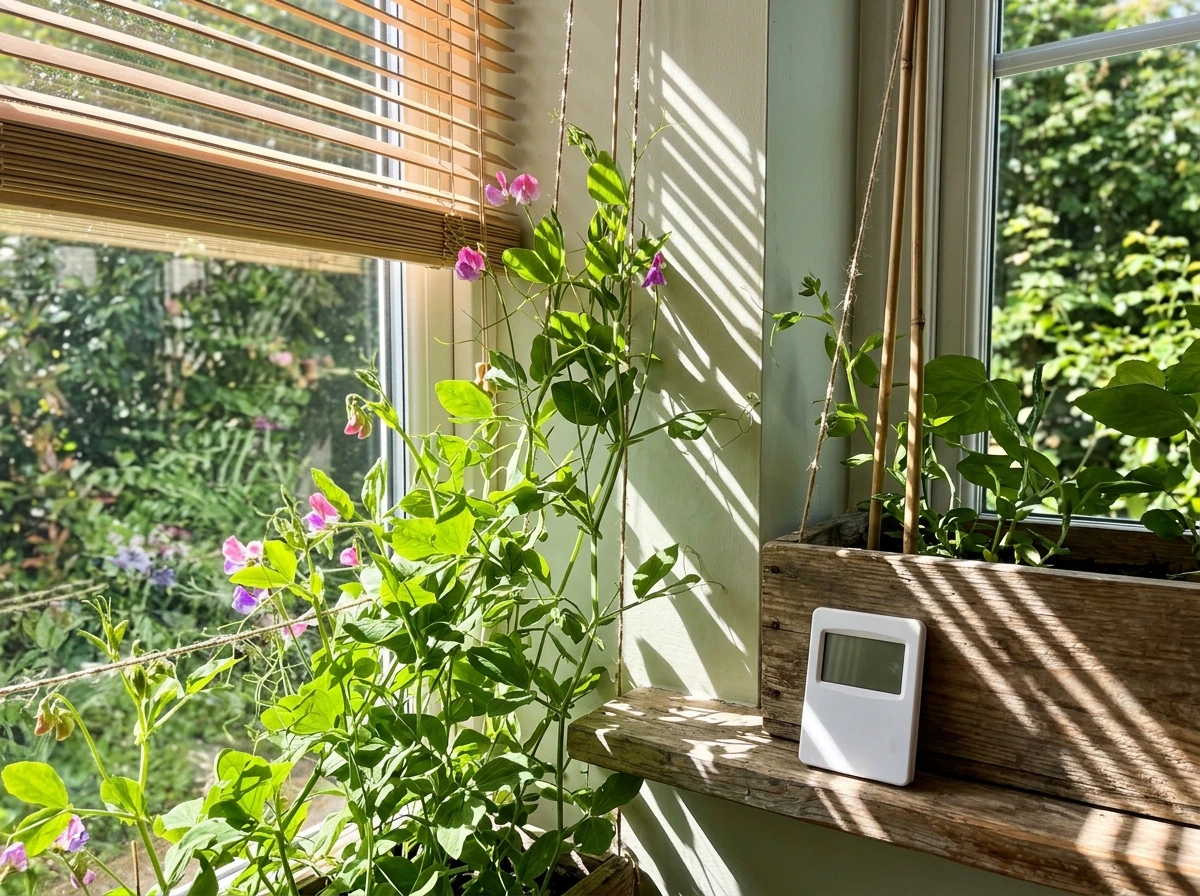
A south-facing window is your best option for sweet peas. They want at least 6 hours of direct sunlight per day, and a south-facing window in the northern hemisphere is the most likely to deliver that. East or west-facing windows can work if the light is unobstructed, but north-facing window are genuinely not suitable for sweet peas without grow light support. If you are growing in winter or early spring and your window does not get strong direct sun, a sunny window alone may not be enough.
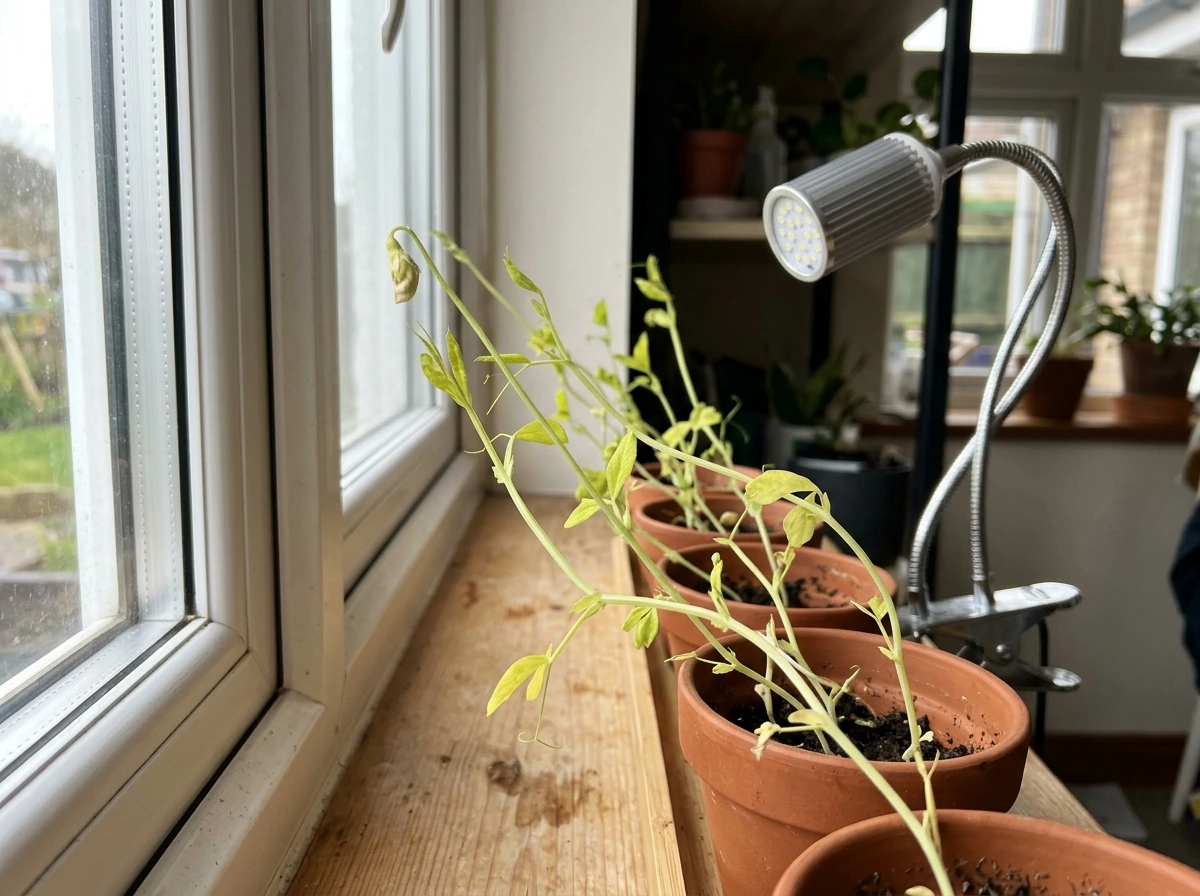
This is the most common failure point I see with indoor sweet peas. The plants look fine at first but then get increasingly leggy and pale, and they never flower. That is a light problem. The fix is supplemental LED or fluorescent grow lights kept on for 12 to 16 hours per day. Keep the light source close to the top of the plants, around 2 to 4 inches above the canopy, and raise it as the plants grow. If your seedlings are already stretching and leaning toward the window, that is your signal to add more light immediately. Fourteen to sixteen hours of bright light daily is the sweet spot for strong, compact growth.
Temperature is equally important and often overlooked. Sweet peas are cool-season flowers. They do best with daytime temperatures around 65°F and nights dropping to around 45°F. Most apartments hover between 68 and 72°F year-round, which is warmer than ideal. A windowsill in late winter or early spring is actually one of the best spots in your home for this because the glass keeps the area cooler than the rest of the room. One thing to watch: if your window drafts drop below 30°F at night after a warm day, buds can drop. Use a simple thermometer near the window to check, and move the box slightly away from the glass on very cold nights if needed.
How to plant, water, feed, and train your sweet peas
When and how to sow
For an outdoor window box where you plan to transition plants outside after frost, start seeds indoors 4 to 6 weeks before your last expected frost date. If you are keeping them at an indoor window permanently, you can sow anytime from late winter through early spring. Sow seeds about 1 inch deep in seed-starting mix.
Johnny's Selected Seeds recommends sowing at 1/4 to 1/2 inch depth and notes that darkness aids germination, so cover them well and keep the pot in a cool, dark location until sprouts appear. The National Sweet Pea Society suggests sowing about 8 seeds in a 12. 5 cm (5-inch) pot and then thinning to the strongest 6 after germination.
For a window box final arrangement, aim for one plant every 6 to 8 inches along the box to give roots room.
Pinching and training
Once seedlings reach about 4 inches tall, pinch out the growing tip just above a leaf node. This sounds scary the first time you do it, but it prompts the plant to send out side shoots, which means more stems and ultimately more flowers. Without pinching, sweet peas tend to race up as a single leggy stem. After pinching, start training the side shoots gently onto your trellis or support strings. Tie loosely with soft twine if the tendrils are not gripping on their own yet.
Watering and feeding
Sweet peas like consistent moisture but they absolutely hate soggy soil. Check the top inch of soil every day or two. Water when it feels dry to the touch, water thoroughly until it drains from the bottom, and then do not water again until that top inch dries out. In a window-box environment this usually means watering every 2 to 3 days in warm weather and less often in cool weather. Morning watering is better than evening watering indoors, especially in a less-ventilated space, because it keeps the leaves drier overnight and reduces the risk of fungal problems.
Once plants start actively growing (after the first few true leaves appear), feed every two weeks with a balanced liquid fertilizer. Once buds start forming, switch to a high-potassium feed (the kind sold for tomatoes works well) to support flowering. Do not over-fertilize with nitrogen or you will get lush green leaves and almost no flowers.
Deadheading
This is non-negotiable if you want continuous blooms. Remove spent flowers as soon as the petals drop, before seed pods start to form. Once a sweet pea plant thinks it has set seed, it slows down or stops flowering entirely. Deadheading every few days, or picking flowers for a vase (which amounts to the same thing), keeps the plant in flowering mode for weeks longer than if you let pods develop.
Problems you might run into and how to fix them
| Problem | Likely cause | Fix |
|---|---|---|
| Leggy, pale stems reaching for the window | Insufficient light | Add a grow light; aim for 14–16 hours of bright light per day |
| No flowers despite healthy-looking plants | Too warm, too dark, or day-length sensitive variety | Move to a cooler spot; switch to a day-neutral variety; increase light |
| Bud drop | Cold drafts below 30°F or temperature swings at the window | Check window temperature with a thermometer; move box back slightly on very cold nights |
| Yellowing lower leaves, wilting | Overwatering or poor drainage | Check drainage holes are clear; add coarse aggregate layer; let soil dry between waterings |
| White powdery coating on leaves | Powdery mildew from high humidity and poor airflow | Water in the morning; improve ventilation near the window; remove affected leaves promptly |
| Roots circling at the bottom, stunted growth | Container too small or too shallow | Repot into a deeper container (at least 16 inches deep) |
Powdery mildew is worth watching for specifically in indoor conditions where air circulation is often lower than in a garden. Ideal Home also notes that sweet peas are prone to powdery mildew and that encouraging air circulation is an important preventative step. Morning watering is a simple preventative habit. If you do see it developing, remove affected leaves right away and move the plant to a spot with better airflow. Indoors this might mean cracking a window nearby or using a small fan on a low setting for a couple of hours a day.
When to expect flowers and what realistic success looks like
If you sow in late winter, say late January or February, and give your plants strong light from the start, you can realistically expect flowers somewhere between 10 and 14 weeks after sowing, often in April or May. That timeline can stretch if your light or temperature conditions are not ideal. Day-neutral varieties will start blooming more reliably than standard types, which can stall when day length is short.
Sweet peas are not long-season indoor plants. Even with good care, they tend to peak in late spring and then struggle as indoor temperatures rise through summer. Think of your window-box sweet peas as a late winter through spring project rather than a year-round fixture. That seasonal framing actually makes them very satisfying: you get beautiful, fragrant flowers at a time of year when most windowsills are bare, and then you move on to something else. If you are also looking for herbs that can grow indoors with low light, focus on varieties known for tolerating dimmer windowsills.
If you enjoy growing best herbs to grow indoors alongside your flower projects, that kind of rotation works really well, so if you’re wondering does basil grow indoors, it’s worth planning your herb setup alongside these blooms. If you enjoy growing best herbs grow indoors alongside your flower projects, that kind of rotation works really well, so if you’re wondering does basil grow indoors, it’s worth planning your herb setup alongside these blooms.
Basil is a popular indoor herb, and it can do well on a sunny windowsill if you give it enough light does basil grow indoors. herbs that can grow indoors with low light If you want more reliable greenery in darker corners, choose herbs that can grow indoors with low light and plan your lighting around them.
The bottom line is that sweet peas in a window box are genuinely achievable, but they reward preparation more than most windowsill plants. Pick a dwarf or day-neutral variety, use a deep container with good drainage, nail the light situation early (with grow lights if your window is not sunny enough), keep the temperature as cool as your home allows, and deadhead religiously. Do those things and you will have one of the most rewarding and fragrant displays you can grow at a window. If you are looking for the best smelling herbs to grow indoors as well, you can pair fragrant herb pots with your sweet peas for a fuller indoor garden.
FAQ
What size window box should I choose if I want sweet peas to bloom, not just survive?
Aim for a container depth of at least 12 inches for dwarf types, and 16 to 20 inches for climbing varieties. If your box is wide but shallow, the roots can’t expand downward, so plants often look fine early and then stop flowering.
Can I grow sweet peas in a window box year-round indoors?
Usually no. Even with perfect light and feeding, sweet peas tend to peak in late spring and then slow when indoor temperatures rise. Plan them as a late-winter to spring project, then rotate to something else for summer.
How do I tell if my sweet peas need more light versus they have a watering or temperature issue?
If they stretch toward the window, stay pale, and fail to set buds, it is almost always insufficient light. If leaves wilt but feel damp in the top inch, it points to overwatering or poor drainage. If buds drop suddenly after warm days, check night temperature near the glass.
My seedlings are leaning and stretching, should I wait or add grow lights immediately?
Add more light right away. Once you see leaning or tall, weak stems, shorten the gap by placing LED or fluorescent lights closer to the canopy and run them about 12 to 16 hours daily.
Is it better to soak sweet pea seeds or nick them before sowing?
For indoor window-box success, nicking the seed coat often gives more consistent germination without the fussy soaking variable. If you do soak, use room-temperature water for about 24 hours, and be aware some growers see reduced germination when soaking is done incorrectly.
How many sweet pea plants should I fit in a single window box?
Use spacing of about 1 plant every 6 to 8 inches along the box. Overcrowding can reduce airflow, tangle stems, and limit root room, which often shows up as weak growth and fewer blooms.
Do sweet peas need a trellis right away in a window box?
Yes. Set up support at planting time and start training when stems are about 4 to 6 inches tall. Waiting until later makes the vines harder to redirect and increases the risk of snapped stems or curtains getting grabbed.
What should I do if my window box doesn’t have drainage holes?
Don’t rely on being able to “carefully water.” Without drainage, roots sit in stagnant moisture and container sweet peas can fail quickly. Drill holes if possible, or switch to a container designed for drainage, then include a non-limestone coarse gravel layer at the bottom.
How do I water sweet peas indoors without causing root problems?
Water thoroughly until it drains from the bottom, then wait until the top inch dries before watering again. Morning watering is best indoors because it reduces leaf wetness overnight, which helps lower mildew risk.
Why are my sweet peas getting lots of leaves but few or no flowers?
Overly nitrogen-heavy fertilizer is the most common cause. Use balanced feeding early, then switch to a high-potassium flowering fertilizer once buds form, and avoid frequent heavy feeding.
How often should I deadhead sweet peas in a window box?
Check every few days and remove spent flowers promptly before pods develop. In containers, letting seed pods set signals the plant to stop blooming, so even a short delay can noticeably reduce the number of flowers.
What’s the best way to handle powdery mildew indoors?
Improve airflow immediately and remove affected leaves as soon as you spot them. If your space is stagnant, crack a nearby window or run a small fan on low for a couple of hours daily, and keep watering timed for morning.
When should I pinch sweet peas, and will pinching always increase flowering?
Pinch when seedlings reach about 4 inches tall, just above a leaf node. It encourages side shoots, which typically increases the number of stems and flowers, but you still need to match light and cool temperature, or pinching alone won’t fix leggy no-bloom growth.