Quick answer: can you grow herbs in a north-facing window?
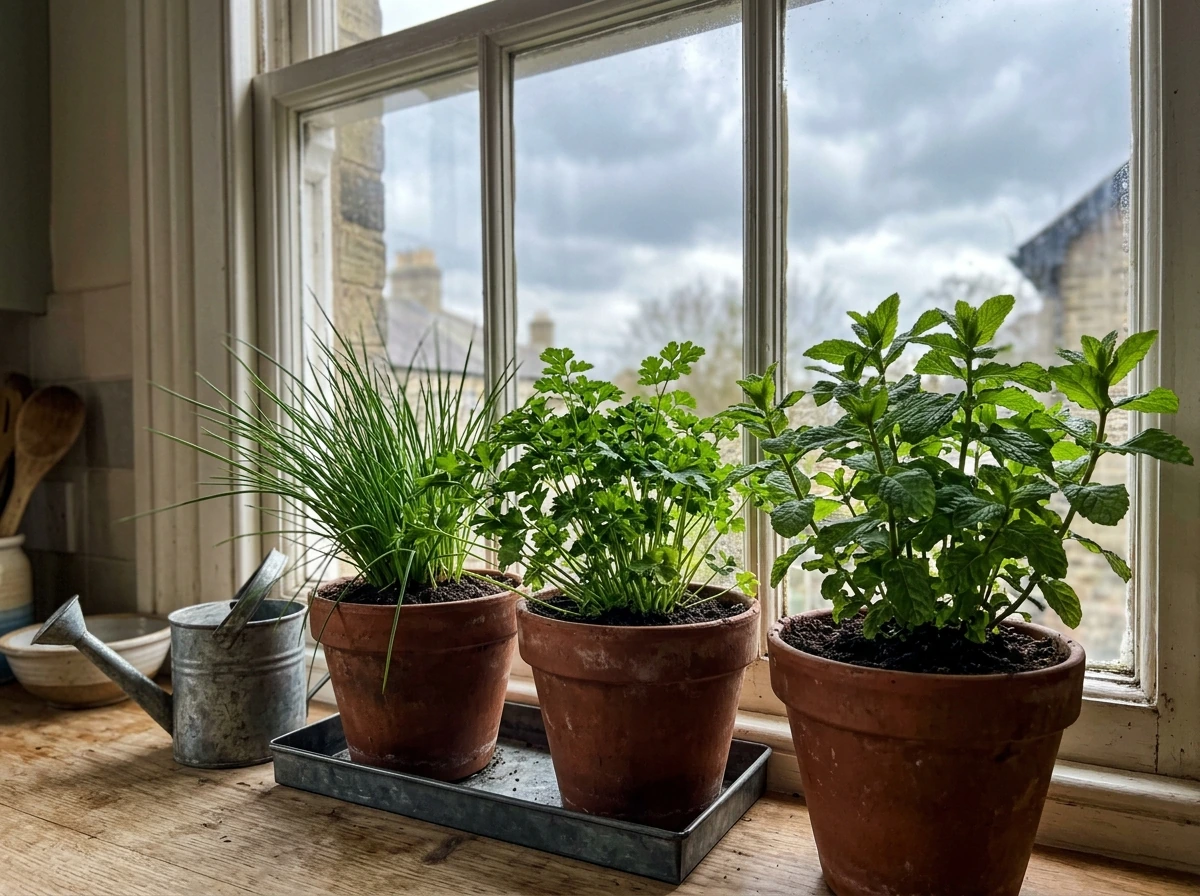
You can grow herbs in a north-facing window, but you need to go in with realistic expectations. A north-facing window in the Northern Hemisphere never receives direct sun, what you get is dim, diffuse daylight, and that's genuinely not enough for most popular culinary herbs on its own. Basil, rosemary, and cilantro will struggle and get leggy fast. A handful of herbs, chives, mint, and parsley, can survive and even produce usable harvests at low light, especially if you keep plants close to the glass and add a basic grow light during shorter days. Start with herbs that naturally tolerate dimmer spots, since these low-light indoor growers will be your most reliable win herbs that can grow indoors with low light. best smelling herbs to grow indoors So: yes, it's possible for the right herbs, but for most people with a north window and no supplemental light, growth will be slow, flavor will be weaker, and results will be frustrating unless you pick your herbs carefully.
How north vs east window light changes herb growth
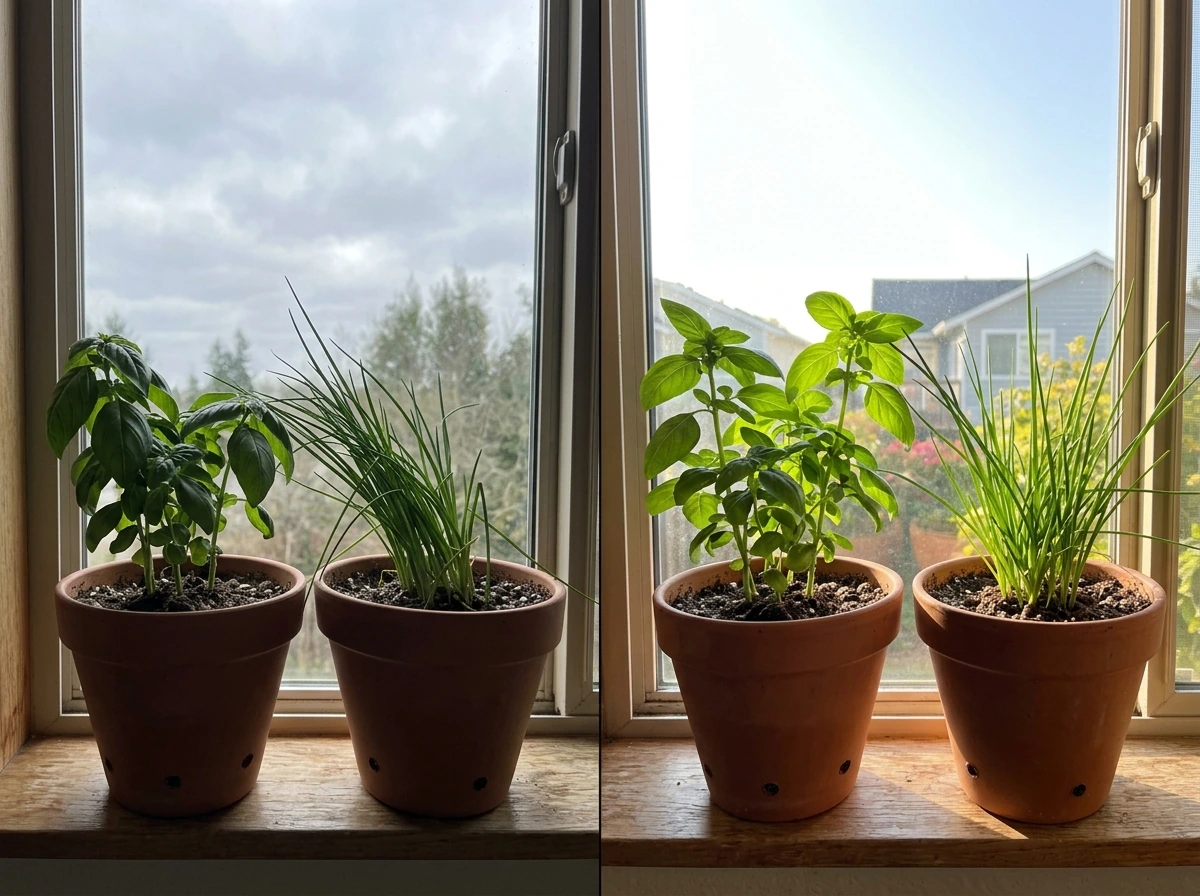
Window direction is one of the biggest factors most indoor gardeners underestimate. I've watched people put a pot of basil on a north windowsill in January and wonder why it collapses within two weeks, the answer is almost always light, not watering or soil. Here's the practical difference between north and east windows.
A north-facing window is the weakest orientation for plant light in the Northern Hemisphere. It never catches direct sun at any time of year. What comes through is indirect, reflected daylight, and the intensity drops further the further you move back from the glass. East-facing windows are meaningfully better: they receive a direct burst of morning sun for roughly two to four hours, which is gentler than afternoon sun but still real, usable light. East and west windows have roughly two-thirds of the light of a south-facing window, north windows fall well below that.
For herbs, this difference matters a lot. Light drives photosynthesis, which drives flavor production. Culinary herbs like basil, rosemary, and thyme get their oils (and therefore their taste and aroma) from vigorous growth in strong light. Under a north window, they can photosynthesize, but they do it slowly and spend more energy reaching toward the light source than building leaves and oils. The result is thin, pale, stretched plants that don't taste like much. Under an east window, those same herbs have a real shot at compact, flavorful growth, especially in spring and summer.
Distance from the glass matters more at a north window than anywhere else. A useful rule of thumb: during the April through September growing season, keep north-window plants within about 2 feet of the glass. East or west-window plants can be placed 2 to 6 feet away and still receive workable light. That shrinks your usable north-window real estate significantly, basically, pots need to be right on the sill.
Best herbs for north windows vs best herbs for east windows
Not all herbs have the same light appetite. When you're working with limited light, matching the herb to the window is the most important decision you'll make. Here's how common culinary herbs line up across both orientations.
| Herb | North Window (no grow light) | East Window | Notes |
|---|
| Chives | Good — one of the best low-light herbs | Excellent | Tolerates low light well; grows slowly but reliably |
| Mint | Workable — survives, grows moderately | Excellent | Prefers more light for strong flavor but handles shade better than most |
| Parsley | Workable — needs 3-4 hours indirect light minimum | Very good | Slow in low light but can produce; keep within 2 ft of glass |
| Cilantro | Struggles — needs more light to avoid bolting/legginess | Good | Better with supplemental light at a north window |
| Basil | Poor — gets leggy quickly, low flavor | Good to very good | Needs 12+ hours of adequate light daily; north window alone won't cut it |
| Thyme | Poor — low oil production, weak growth | Good | Mediterranean herb; needs strong light for flavor |
| Rosemary | Poor — very light-hungry, will decline | Moderate | Needs high light intensity; north window not recommended without grow light |
If you only have a north window and no grow light, start with chives, mint, and parsley. Those three give you the best shot at a functional herb pot. If you want basil indoors (and most people do), an east window plus a small grow light on darker days will get you there, and that same window-box approach is also how you can grow sweet peas in a window box. For rosemary and thyme, be honest with yourself: without real direct sun or supplemental lighting, they'll survive but won't thrive, and the flavor will disappoint. If you want more detail on which herbs genuinely do well indoors across different conditions, the topic of best herbs to grow indoors covers the full picture across window types.
How to set up containers, soil, and watering for indoor herbs
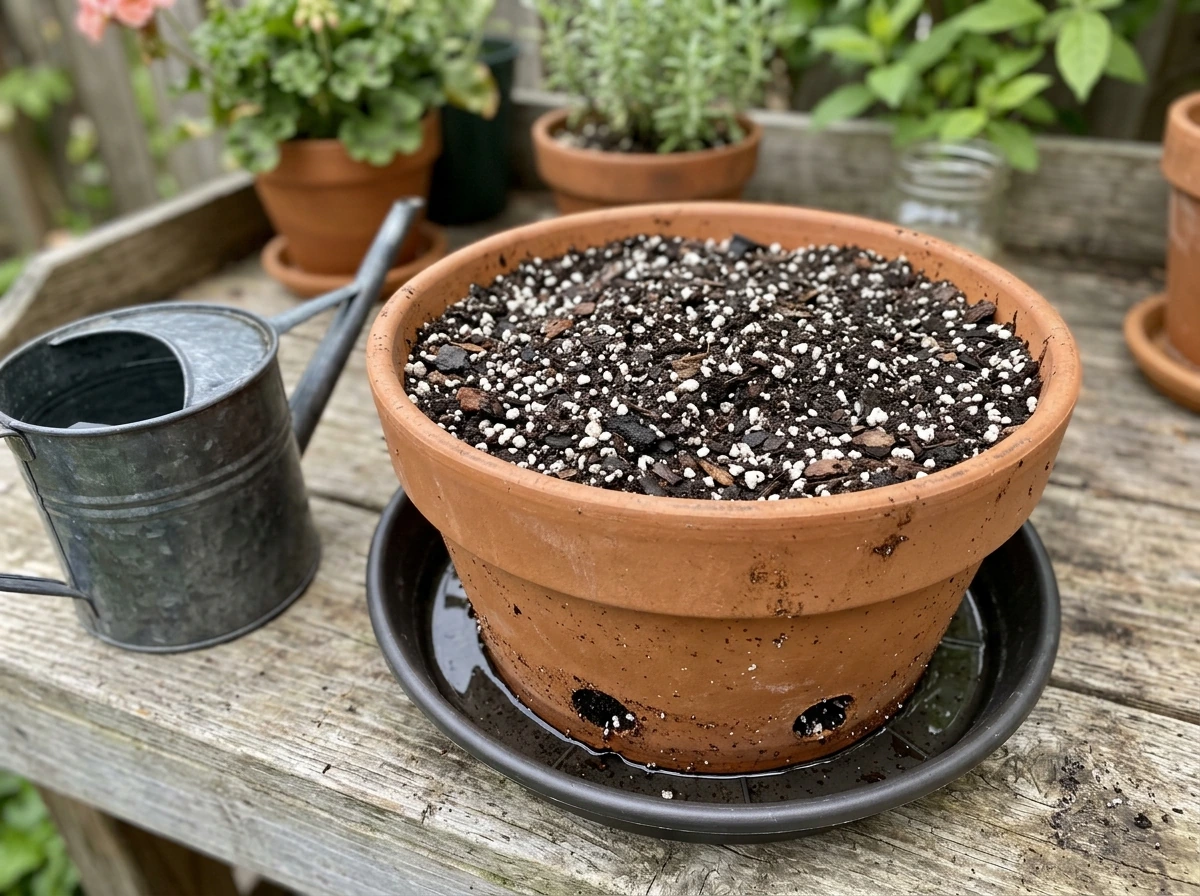
Getting the setup right means your herbs can use whatever light they do receive without being set back by avoidable problems like root rot or dry-out. In low-light conditions like a north window, plants absorb water more slowly than they would outdoors, so the margin for overwatering error shrinks dramatically.
Containers and drainage
Use containers with drainage holes, this is non-negotiable for herbs indoors. Without drainage, water pools at the bottom, roots sit in anaerobic soil, and root rot follows. Terracotta pots work well because they're porous and allow excess moisture to evaporate through the sides, which helps with the overwatering risk that comes with low-light growing. A 4- to 6-inch pot is the right size for a single herb; go too big and you increase the volume of wet soil around roots, again raising rot risk.
Soil mix
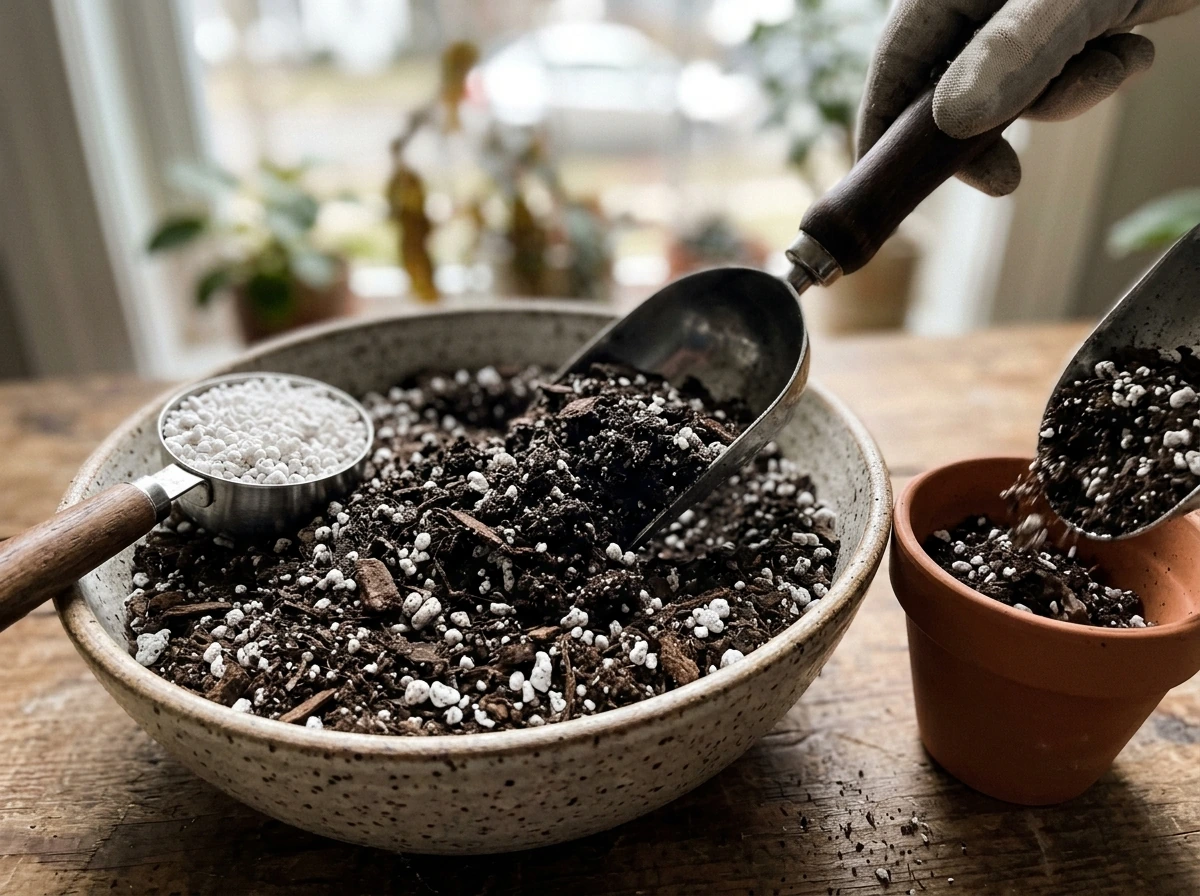
Use a well-draining potting mix, not garden soil. A standard indoor potting mix is fine, but adding about 20 to 30 percent perlite improves drainage and aeration considerably. Mediterranean herbs like thyme and rosemary appreciate even sandier, faster-draining mixes. Good drainage is especially critical indoors where air circulation is lower and soil dries out more slowly.
Watering
The single most common indoor herb killer is overwatering, and it's worse in low light because plants use water more slowly. Watering frequency isn't a fixed schedule, it depends on your pot size, the season, your home's temperature and humidity, and how much light the plant is getting. The reliable method is to check the soil before watering: stick your finger about an inch into the mix. Water only when it feels dry at that depth. In a north-facing window in winter, you might only need to water every 10 to 14 days. In summer with brighter light and more growth, that shortens. Yellowing leaves combined with soggy soil means you're overwatering; yellow leaves with bone-dry soil means you've gone too long between waterings.
Airflow and positioning
Herbs like a little airflow. Good air circulation helps prevent fungal issues and mimics the outdoor conditions they evolved in. If your north window is usually kept closed, cracking it occasionally in mild weather helps, or you can run a small fan on low nearby. Also rotate your pots every few days, even at a low-light north window, one side of the plant will lean toward the glass. Also, the Missouri Botanical Garden advises rotating indoor herb pots every three to four days for more uniform growth rotate your pots every few days. Rotating keeps growth more even and upright.
How to tell if your window has enough light (and what to watch for)
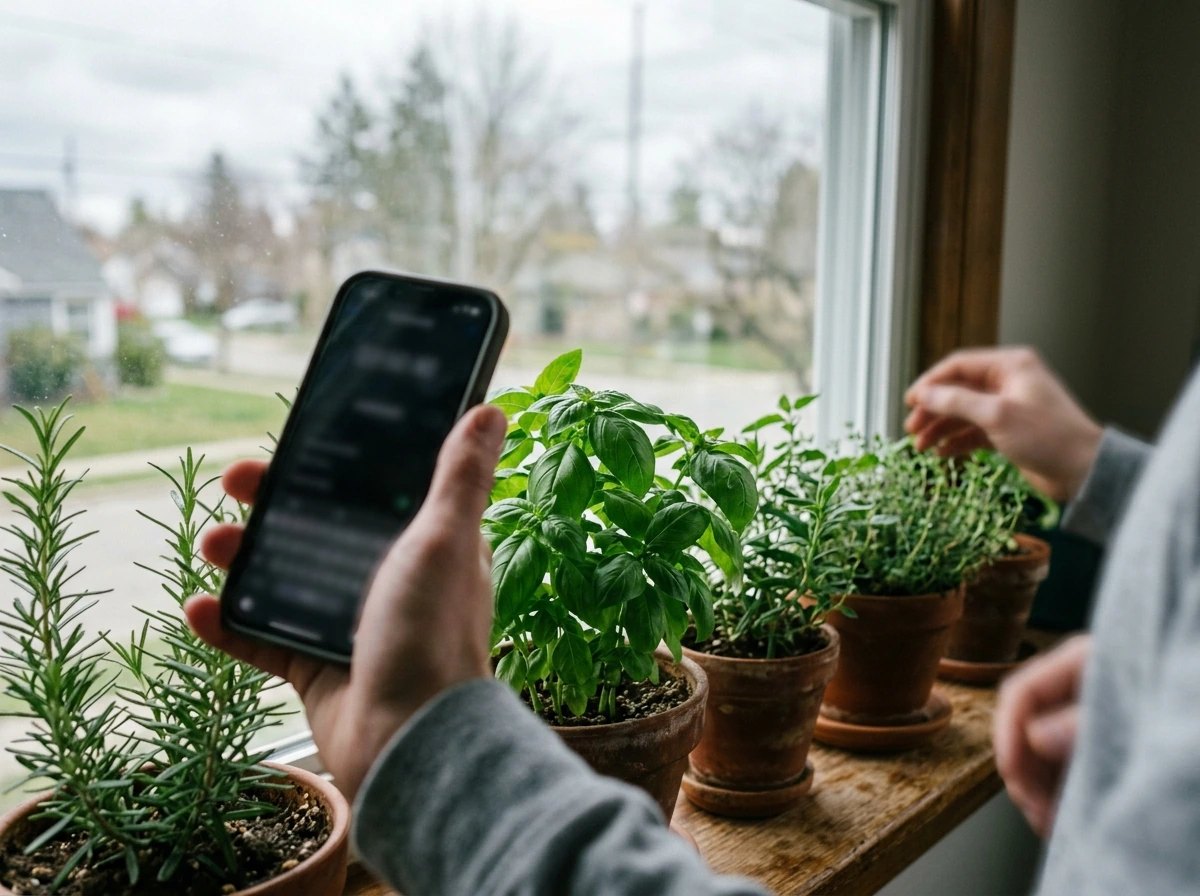
The most honest signal is your plants themselves. Within two to three weeks of placing herbs on a north-facing windowsill, you'll see clear signs of whether the light is sufficient. Here's what to look for.
- Leggy, stretched stems reaching toward the window: this is the clearest sign of insufficient light. Plants are physically reaching for more than they're getting.
- Pale green or yellowish new leaves: in a plant that's otherwise healthy and not overwatered, paleness signals that light-driven chlorophyll production is insufficient.
- Slow or stalled growth: if your herb isn't putting out new leaves after two to three weeks, the light level is likely the limiting factor.
- Dropping lower leaves: when combined with adequate watering, this often means the plant can't sustain its existing leaf mass on the light it's receiving.
- Weak flavor or aroma when you pinch a leaf: low light means fewer essential oils produced. If your mint or basil smells faint, light is often to blame.
If you want a more precise read, a free lux meter app on your phone can give you a rough light reading. Hold your phone at the plant's location facing the window and take a reading on a clear midday. Most culinary herbs want at least 2,000 to 3,000 lux for basic growth; basil and rosemary prefer 5,000 lux and above. North windows on a clear day might hit 500 to 1,500 lux depending on obstructions outside (trees, buildings, roof overhangs). These apps aren't precise instruments, but they'll confirm your gut if the numbers come back low.
When to add a grow light and how to choose placement and timing
If you're seeing the warning signs above, or if it's fall or winter and your north window is giving you barely a few hundred lux on overcast days, a grow light is the practical solution. You don't need anything expensive or elaborate. A simple LED grow light in the 20 to 40 watt range is enough for a small herb collection on a windowsill.
Placement matters a lot. Position the light 6 to 12 inches above the tops of your herb pots. Too far away and the intensity drops off sharply; too close and you risk heat stress (less of a concern with LEDs than older fluorescents, but still worth watching). A general rule from extension research: plants need around two hours of supplemental light for every one hour of natural light they're missing. In a north window in January in a northern state, you might have four hours of dim daylight, supplemental light makes up the gap.
Use a timer. Set it to run your grow light for 14 to 16 hours per day total (natural light plus supplemental combined). Running lights longer than 16 to 18 hours can actually inhibit growth because herbs, like most plants, need a dark period. A cheap outlet timer from any hardware store handles this perfectly, it's one of the best investments you can make for indoor herbs. For basil and cilantro, which need something around 16 watts per square foot for 12 or more hours of good light daily, a grow light is basically required in a north window for reliable results, not just a nice-to-have.
If you're deciding between a grow light and simply moving the herbs to a better window, move the window first. An east-facing window even in winter will outperform a north window with a modest grow light for light-hungry herbs. If your only option is a north window, add the light.
Troubleshooting: leggy growth, yellowing, slow growth, and pests
Leggy, stretched plants
Long, thin stems with widely spaced leaves mean the plant is reaching for light it isn't getting. First response: move the pot closer to the glass or add a grow light. As a stopgap, pinch back leggy stems to a leaf node, this redirects energy to side shoots and encourages bushier growth rather than continued upward stretching. But pinching alone won't fix a light problem; it buys you time while you address the root cause.
Yellowing leaves
Yellow leaves have multiple causes and you need to diagnose before acting. Check the soil moisture first: soggy soil with yellow leaves almost always means overwatering and possible root rot, let the soil dry out and check if the roots look brown and mushy (if they do, repot into fresh dry mix and cut the damaged roots back). If the soil is dry and you have yellowing, it could be underwatering, insufficient light, or a nutrient deficiency after months in the same pot. Try watering thoroughly and, if the pot is more than two months old, add a diluted balanced liquid fertilizer. If neither helps, move the plant to better light.
Slow or stalled growth
Herbs grown indoors will always be less productive than outdoor plants, that's just the reality. But if growth has completely stalled and you're not harvesting any usable leaves, the most likely culprit is insufficient light, especially in winter. Add supplemental lighting or move to a brighter window. Also check that you haven't been under-fertilizing: a diluted balanced liquid fertilizer every three to four weeks during the growing season gives plants the nutrients they need to convert whatever light they do receive into new growth.
Pests: aphids and spider mites
Indoor herbs in low-light, dry conditions can attract spider mites especially in winter when indoor heating drops humidity. You'll notice fine webbing on the undersides of leaves or tiny moving dots. Aphids tend to cluster on soft new growth tips. Both can be addressed without chemicals: blast the plant with water in a sink (getting the undersides of leaves), then apply diluted neem oil or insecticidal soap every few days until the infestation clears. Keeping humidity reasonable (around 40 to 50 percent) and good airflow around plants helps prevent spider mites in the first place. Inspect new plants before placing them near your existing herbs.
A simple next-steps plan to start your first indoor herb pot
Here's what I'd do if I were starting today with a north-facing window and wanted results quickly.
- Pick the right herbs for your light: start with chives, mint, and parsley. These are the most forgiving at low light levels and will give you actual harvests. Hold off on basil, rosemary, and thyme unless you're adding a grow light.
- Get the container setup right: use 4- to 6-inch pots with drainage holes. Fill with a well-draining potting mix cut with about 20 to 30 percent perlite. Place a saucer under each pot but don't let pots sit in standing water.
- Position pots within 2 feet of the north window glass — right on the sill if possible. This is non-negotiable for north-window growing.
- Assess your light after two weeks: check for leggy growth, pale leaves, and slow development. If you see any of these signs, order or pick up a simple LED grow light in the 20 to 40 watt range.
- If adding a grow light: hang it 6 to 12 inches above the herb tops and use an outlet timer to run it so total daily light (natural plus supplemental) reaches 14 to 16 hours.
- Water by feel, not by schedule: check soil moisture with your finger before every watering and only water when the top inch of soil is dry. In a north window in winter, that's often every 10 to 14 days.
- Rotate pots every 3 to 4 days to keep growth even and prevent one-sided leaning toward the window.
- Harvest regularly: pinching herbs back to a leaf node when they reach 6 inches or so encourages bushy growth and prevents them from getting leggy and going to seed. Regular harvesting is also how you actually train herbs to grow more vigorously indoors.
That's genuinely all it takes to get started. If you want to expand from there into more light-hungry herbs like basil, the setup for growing basil indoors deserves its own attention, light requirements are significantly higher and the setup is a little different. OSU Extension Service notes that many herbs grown indoors need about 6 to 8 hours of light, use well-draining soil, and are typically fertilized about once each season blank" rel="noopener noreferrer">about 6 to 8 hours of light and well-draining soil. does basil grow indoors And if you want a broader overview of which herbs are worth your windowsill space, looking at the full list of the best herbs to grow indoors will help you prioritize what's actually worth the effort based on your exact conditions. best herbs grow indoors