Basil is a warm-weather, sun-loving herb that originated in tropical regions. Indoors, it expects similar conditions: warmth, brightness, and good air circulation. It's not a low-maintenance windowsill plant you can mostly ignore. But it's also not fussy in a complicated way. Once you nail the setup, basil is fast-growing, rewarding to harvest, and genuinely useful in the kitchen.
How much light basil actually needs indoors
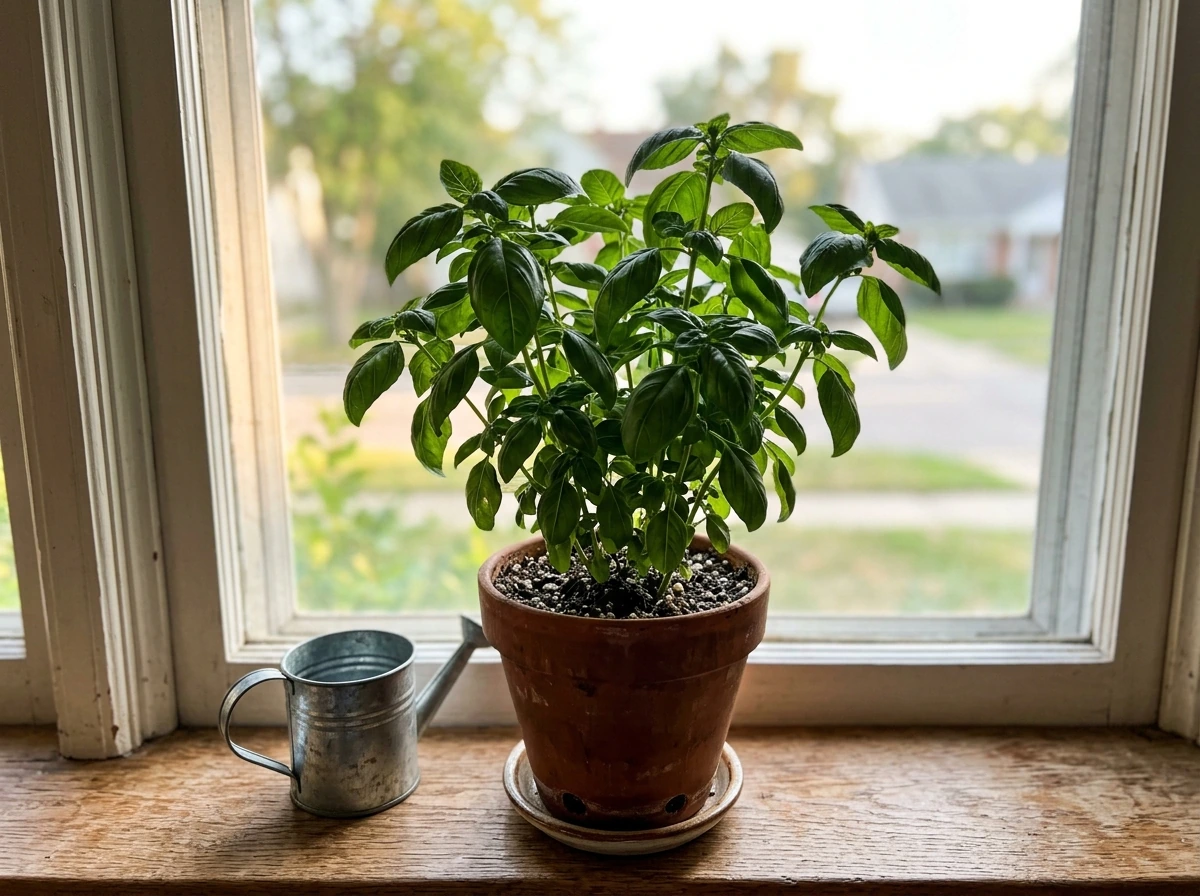
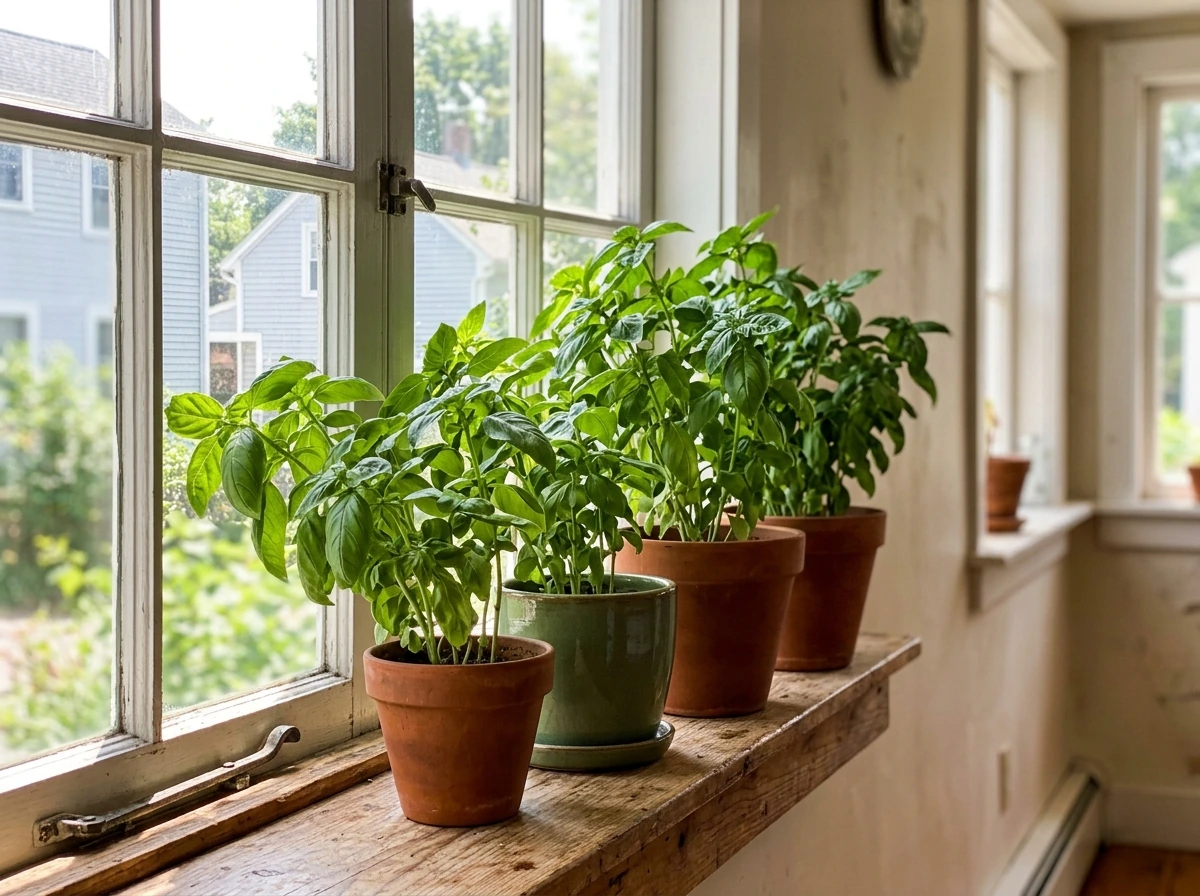
UMN Extension recommends at least six to eight hours of bright light per day for basil. UC ANR is more specific: a south-facing window that delivers a minimum of six hours of direct sunlight is ideal. If you're in the northern hemisphere and your brightest window faces south, that's your best starting point. East-facing windows can work but tend to deliver softer morning light that may not be intense enough, especially in winter. North and west windows are usually a dead end for basil unless you supplement with artificial light.
The practical test: put your hand near the window at midday. If you can see a sharp shadow, the light is probably strong enough. If it's diffuse or faint, you'll likely end up with spindly plants that reach desperately toward the glass. I've tried basil in an east-facing apartment window in January, and while it stayed alive, it never really produced the way it does in summer or under a grow light. For winter growing in particular, most window setups need a boost.
Growing basil indoors without sunlight: grow lights and what works
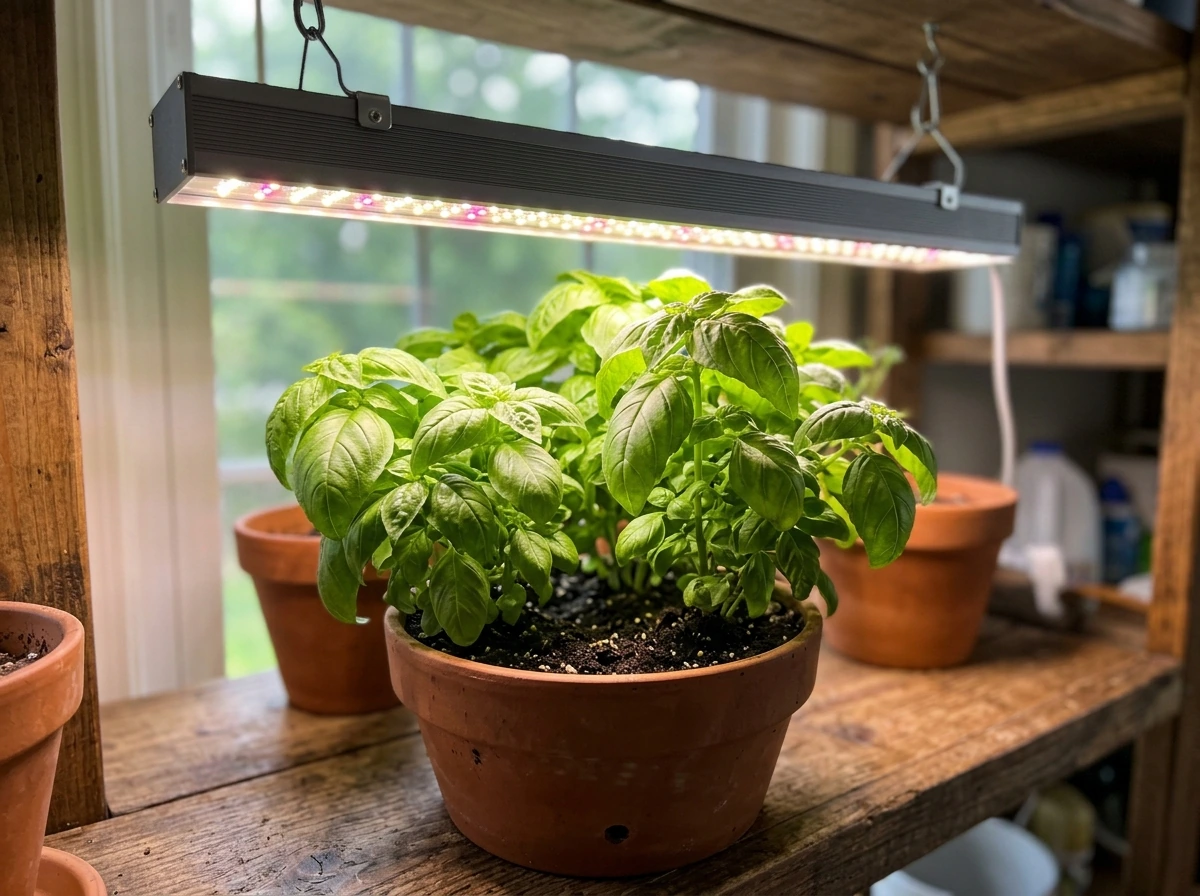
If your space doesn't get enough natural light, grow lights are the practical solution, and they work well for basil. UC ANR recommends placing fluorescent lights about 6 inches above the plants and running them for 14 to 16 hours per day. Charley’s Greenhouse likewise recommends placing fluorescent lights close to the plants, about 6 inches away, and using long-day schedules of roughly 14 to 18 hours fluorescent lights about 6 inches above the plants. Missouri Extension guidance for plants receiving no outdoor light at all pushes that up to 16 to 18 hours of light per day, using a timer to keep things consistent.
For a more precise approach, researchers measure light for plants in PPFD (photosynthetic photon flux density, in µmol·m−2·s−1). Studies have found that increasing PPFD from 250 to 380 µmol·m−2·s−1 produced notably higher basil biomass, meaning more leaves and faster growth. In a basil lighting study, researchers compared PPFD levels of 250 vs 380 μmol·m−2·s−1 and also used a 16/8 h light to dark photoperiod [light intensity (PPFD) at 250 and 380 μmol·m−2·s−1 along with a 16/8 h light/dark photoperiod](https://pmc. ncbi.
nlm. nih. gov/articles/PMC11275332/). A budget full-spectrum LED grow light positioned 6 inches above your plants and set to 14 to 16 hours per day with a simple outlet timer is genuinely enough to grow productive indoor basil with zero window light.
If you're weighing options for a windowless kitchen counter or a basement herb setup, that's a realistic path.
One note: you don't need the most expensive grow light on the market. A basic full-spectrum LED panel works fine for a pot or two of basil. What matters more than the hardware is positioning it close enough (that 6-inch guideline) and running it long enough each day.
How to grow basil indoors from scratch
Seeds vs. seedlings: which to start with
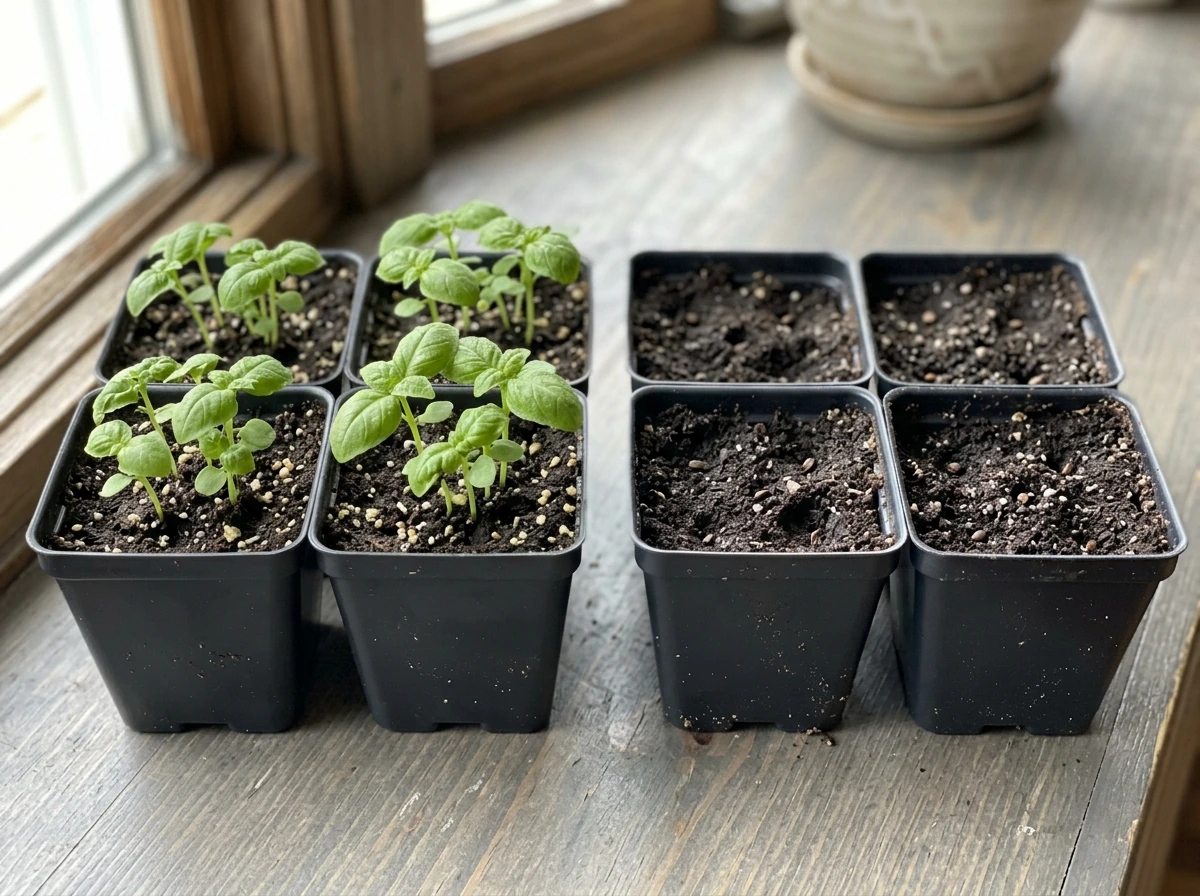
Basil seeds germinate fast, typically five to seven days according to UMN Extension. UC ANR suggests sowing seeds indoors about six weeks before you plan to transplant or establish them in their final spot. If you want to skip the germination stage and get to harvesting faster, buying a small seedling from a grocery store or garden center works too. Just know that grocery store basil plants are often several seedlings crowded into one tiny pot, and they need to be separated and repotted before they'll do much for you.
Potting mix and container
Basil likes soil with a pH between 5.5 and 6.5 (UC IPM puts the sweet spot at 6.0 to 6.5). A good-quality general-purpose potting mix usually falls in that range. Don't use garden soil indoors, it compacts in containers and drains poorly. Choose a pot that's at least 6 inches wide and deep, with drainage holes. Basil hates sitting in water, and a pot without drainage will rot the roots quickly. I use terracotta pots when humidity is on the higher side because they breathe and dry out a little faster than plastic.
Where to place it
Your south-facing window is first choice. If that's not available, set up a grow light as close to the plant as recommended and keep it running on a timer. Keep basil away from air conditioning vents and cold drafts, both of which can stress the plant. Basil is cold-sensitive, and temperatures below 50°F at night will damage it, more on that in the care section.
Step-by-step setup
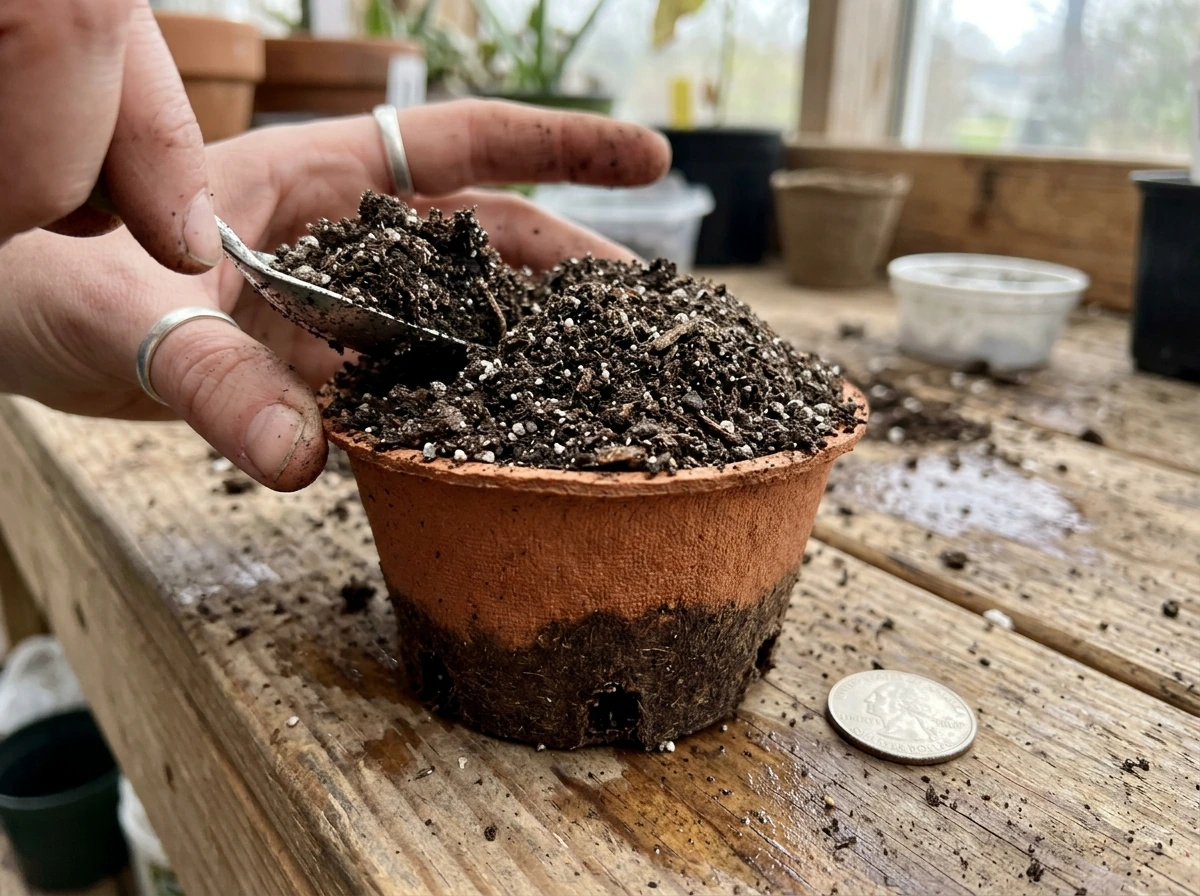
- Fill a pot (at least 6 inches wide, with drainage holes) with fresh potting mix.
- Sow 2 to 3 seeds per pot about a quarter-inch deep, or transplant a seedling at the same depth it was growing previously.
- Water gently until water drains from the bottom, then let the top inch of soil dry before watering again.
- Place the pot in your brightest south-facing window, or position a grow light 6 inches above it.
- Set a timer if using artificial light: 14 to 16 hours per day is the target.
- Seeds germinate in 5 to 7 days. Once seedlings reach 3 to 4 inches, thin to one plant per pot.
- Begin harvesting lightly once the plant has at least 3 sets of leaves, always snipping just above a leaf node.
Thai basil indoors: what changes
Thai basil (Ocimum basilicum var. thyrsiflora) grows well indoors using essentially the same setup as sweet basil: bright light, warm temperatures, well-draining soil. The light and temperature requirements are similar. However, there are a couple of things worth adjusting.
Thai basil tends to be slightly more heat-tolerant than sweet basil and has a more upright, sturdy growth habit. In my experience it handles indoor conditions at least as well as sweet basil, sometimes better. The more important distinction is disease resistance. UConn Extension research identifies sweet basil as the most susceptible basil type to downy mildew, while Thai basil shows better resistance. If your indoor space tends toward higher humidity (which many apartments do, especially in winter with heating systems), growing Thai basil is actually a safer bet than sweet basil from a disease standpoint. You'd still want to avoid wetting the leaves and keep air moving around the plant, but Thai basil gives you a bit more margin.
The care routine is the same: 6 to 8 hours of bright light minimum, consistent watering without waterlogging, and regular harvesting to keep it from bolting. The flavor profile is different (anise-like, more peppery), but the growing requirements are close enough that if you can grow sweet basil indoors, you can grow Thai basil too.
Keeping it alive: watering, temperature, humidity, and pruning
Watering
Basil likes moist soil but not wet soil. UC IPM recommends keeping it consistently moist with regular watering. In practice, that means checking the top inch of soil: when it feels dry to the touch, water thoroughly until it drains out the bottom. Then wait. Overwatering is one of the most common ways people kill indoor basil, the roots suffocate and rot before you notice anything wrong at the surface. If you're unsure, err toward underwatering rather than over.
Temperature
Keep indoor basil in a consistently warm spot. Clemson HGIC notes that outdoor basil shouldn't go in the ground until daytime temperatures are in the 70s°F and nights stay above 50°F. Use those numbers as your indoor guide too. Avoid placing basil near cold windows in winter (the glass can create a cold microclimate), and keep it away from air conditioning units in summer. A consistent room temperature of 65 to 80°F is ideal.
Humidity
This one surprises people. You'd think basil, being a tropical plant, would love humidity. But UConn Extension and UMass Extension both flag high humidity and extended leaf wetness as the main environmental factors driving basil downy mildew, one of the worst diseases the plant faces. The disease develops best around 68°F with humidity near 100%. Indoors in a steamy kitchen or a tightly sealed apartment, that's not as far-fetched as it sounds. Keep humidity moderate, water at the base of the plant (not overhead), and make sure air can circulate around the leaves. If you notice grey fuzzy patches on the undersides of leaves, that's downy mildew and it moves fast.
Pruning and harvesting
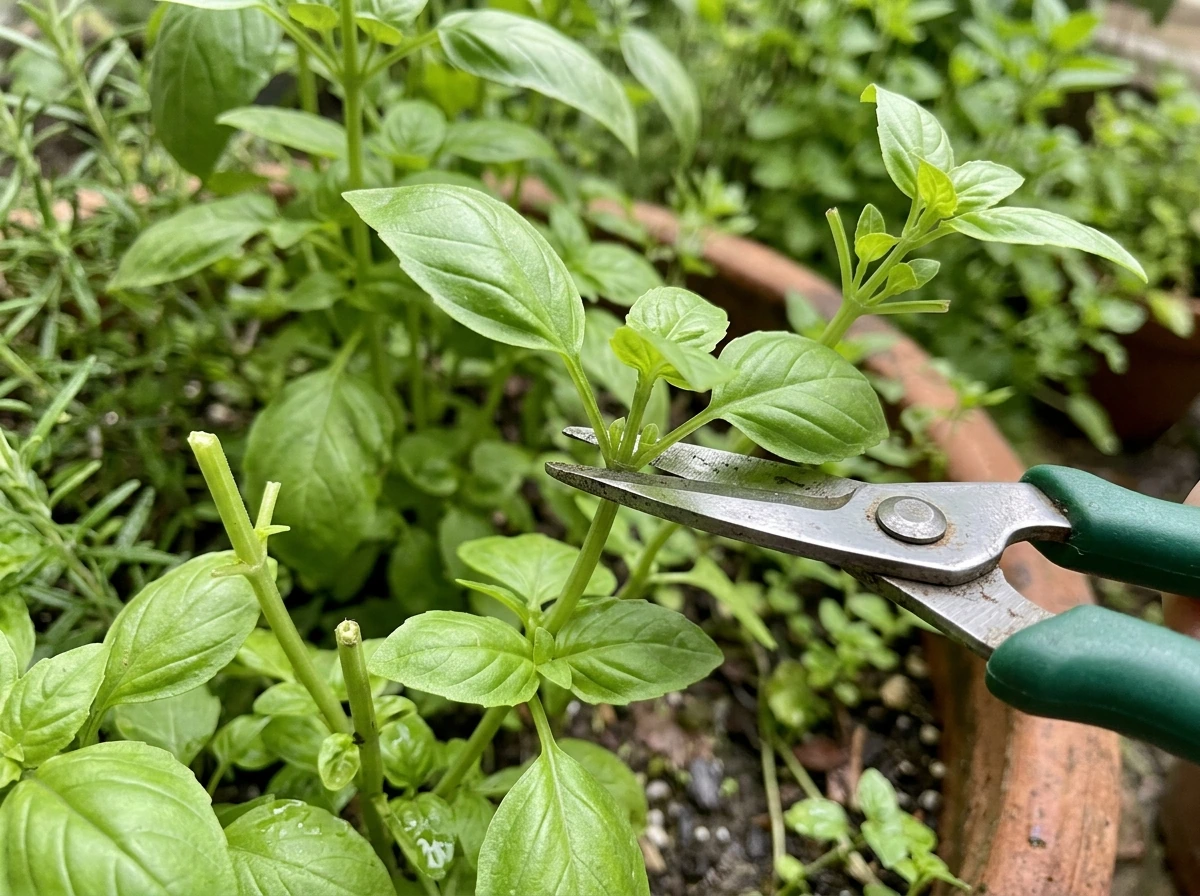
Regular harvesting is what keeps indoor basil productive and compact. UC ANR recommends snipping fresh young leaves as needed. Always cut just above a leaf node (the point where two leaves branch off the stem), which encourages the plant to branch and fill out rather than growing one long, leggy stem. Remove any flower buds as soon as they appear, once basil bolts and flowers, the leaves become bitter and production slows. Pinching flowers off weekly is part of the maintenance routine.
Why indoor basil fails (and how to fix it)
Most indoor basil failures trace back to a short list of fixable problems. Here's what to look for and what to do about it.
| Problem | Likely cause | Fix |
|---|
| Tall, spindly stems with small leaves | Not enough light | Move to a brighter window or add a grow light 6 inches above the plant, running 14 to 16 hours per day |
| Yellow leaves, wilting despite wet soil | Overwatering / root rot | Let soil dry out, check drainage holes are clear, reduce watering frequency |
| Brown leaf edges | Cold draft or temperature below 50°F at night | Move away from cold windows or vents, keep in a warmer spot |
| Grey fuzzy patches on leaf undersides | Basil downy mildew | Improve air circulation, avoid wetting leaves, reduce humidity, remove affected leaves immediately |
| Leaves turning bitter, plant flowering fast | Bolting (triggered by heat or long days) | Pinch off flower buds as soon as they appear, harvest regularly to slow the process |
| White or yellow spots, sticky residue | Aphids or whiteflies | Inspect undersides of leaves, rinse with water, use neem oil spray if infestation persists |
If your plant looks unhappy across the board, revisit light first. It's the most common limiting factor indoors, and most other symptoms (legginess, slow growth, pale color) improve once the plant is getting enough photons. If light seems adequate, check your watering habits next, the second most common culprit. Basil is forgiving once you've got those two things dialed in.
One more tip: if you're consistently struggling with indoor basil and wondering whether another herb might be easier in your specific setup (especially if you have a darker window), there are One more tip: if you're consistently struggling with indoor basil and wondering whether another herb might be easier in your specific setup (especially if you have a darker window), there are herbs that can grow indoors with low light. One more tip: if you're consistently struggling with indoor basil and wondering whether another herb might be easier in your specific setup (especially if you have a darker window), there are herbs that can grow indoors with low light. But if you can get even a modest grow light going, basil is very much within reach, and fresh basil on demand indoors year-round is worth the small effort it takes to set up right.. But if you can get even a modest grow light going, basil is very much within reach, and fresh basil on demand indoors year-round is worth the small effort it takes to set up right.