
Yes, you can grow columbine indoors, but it comes with a real asterisk: this is a plant that wants cool temperatures, strong light, and a cold dormancy period to truly perform. You can absolutely start seeds indoors, keep seedlings growing on a bright windowsill, and even coax blooms out of a potted plant, but columbine is genuinely happiest when it eventually gets outside. Think of indoor growing as a head start or a temporary home, not a forever situation. Caladium is another common houseplant question, and yes, it can grow indoors if you give it bright light and warm, consistently moist conditions can caladium grow indoors.
Can You Grow Columbine Indoors Yes But Only If You Can Provide Cool Light
James Hartwell
11 May 2026
What columbine actually needs to survive indoors
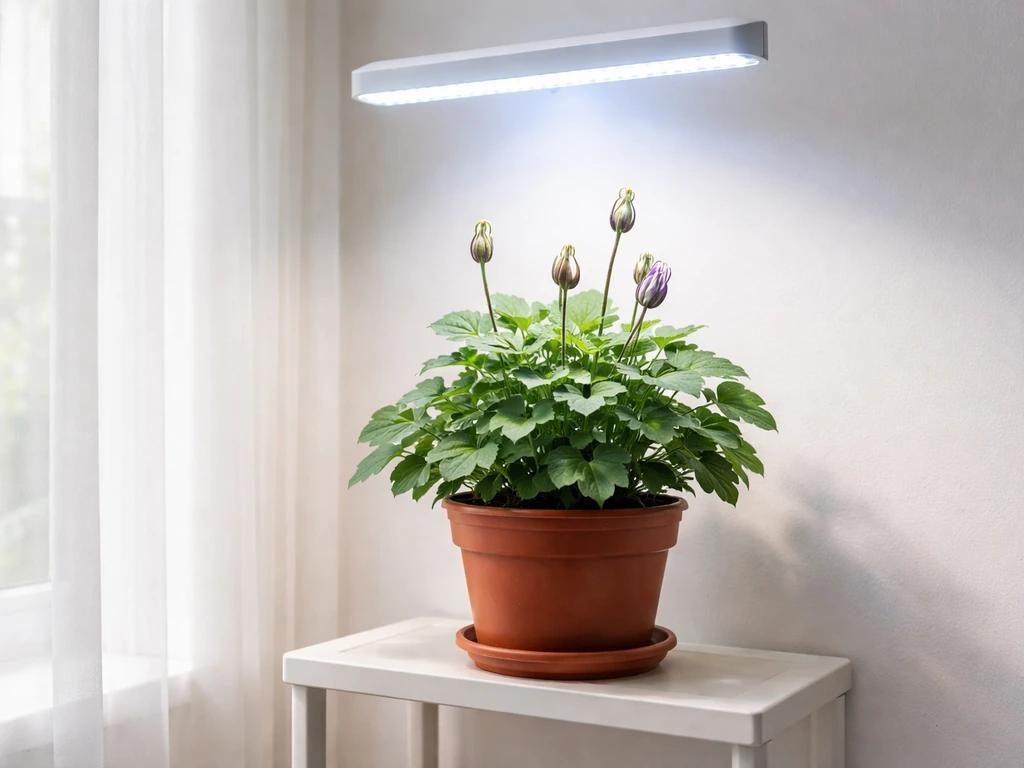
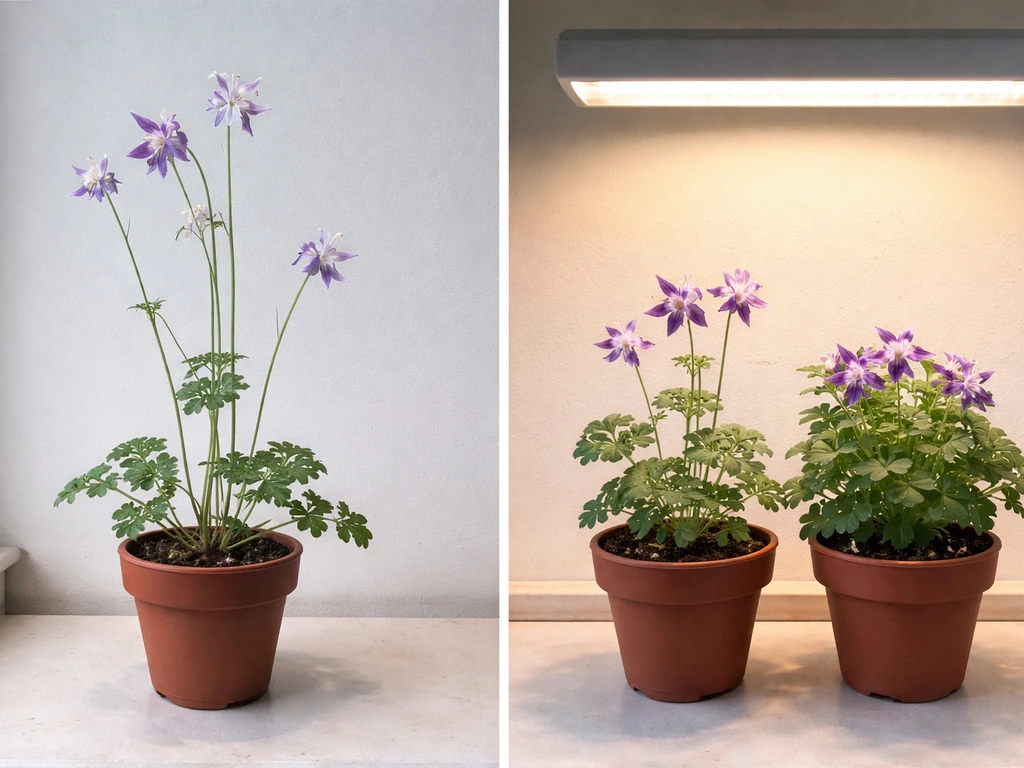
Light is the single biggest hurdle. Columbine wants as much bright light as you can throw at it, ideally 6 or more hours of direct or very bright indirect sun daily. A south-facing window is your best shot in the northern hemisphere. An east or west-facing windowsill can work but expect slower, leggier growth. If your apartment only has north-facing windows, you'll want to supplement with a full-spectrum grow light, keeping it running for 14 to 16 hours per day to compensate. Skimping on light is the number-one reason indoor columbines get sad and stretched out.
Temperature is the other big factor. Columbine is a cool-season plant that actually prefers temperatures in the 50s and 60s Fahrenheit (around 10 to 18°C). That's cooler than most of us keep our homes. A spot near a drafty window, an unheated sunroom, or a cool basement with grow lights can work well. Consistently warm indoor temps above 70°F will stress the plant and make it push weak, floppy growth. Humidity isn't a major concern since columbine tolerates average home humidity fine, but good airflow matters a lot to keep fungal issues away.
Getting the pot and soil right
Columbine has a long taproot, so the container depth matters more than you might expect. Go with a pot that's at least 8 to 12 inches deep and has solid drainage holes. A terracotta pot is a nice choice because it breathes and dries out more evenly than plastic, which helps prevent the soggy-root issues that will kill this plant faster than almost anything else.
For soil, use a well-draining mix rather than straight potting soil from a bag. A good ratio is about two parts standard potting mix to one part perlite or coarse grit. This keeps the roots moist but never waterlogged. Columbine in the ground tends to grow in loamy, slightly acidic to neutral soil (pH around 6.0 to 7.0), so avoid heavy peat-based mixes that compact over time and hold too much moisture. Add a layer of gravel or broken pottery shards over the drainage holes before filling to prevent soil from washing out and clogging drainage.
Starting columbine indoors: seeds vs. transplants
Starting from seed
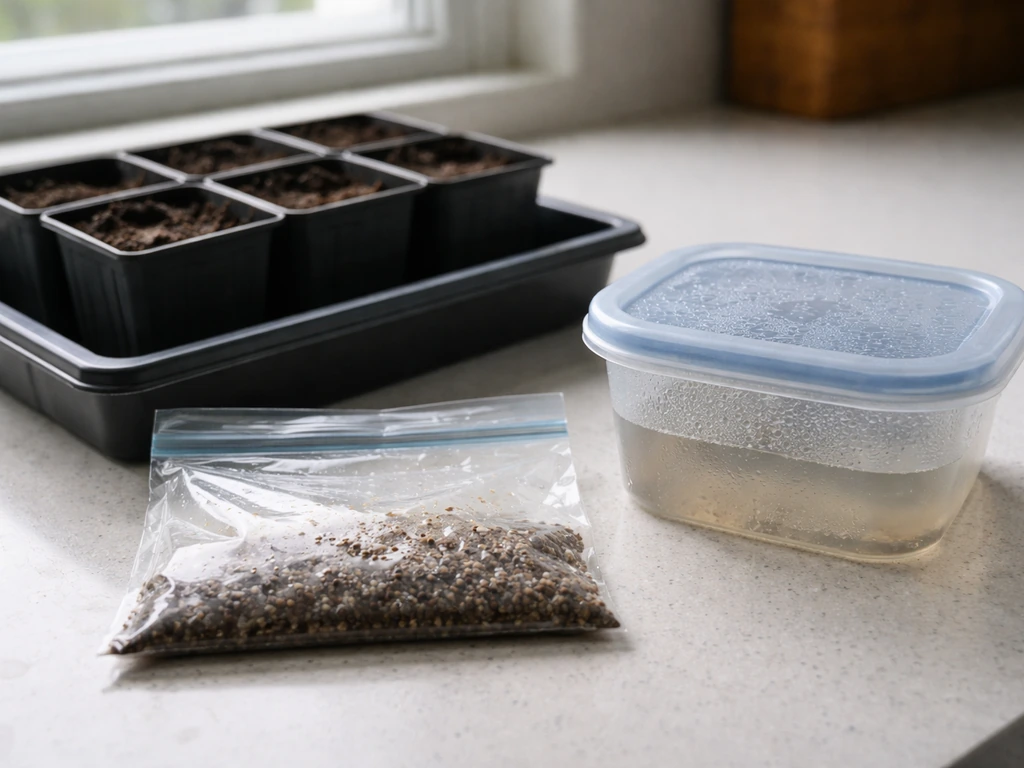
Seeds are the most common way to start columbine, and indoor seed-starting works well with the right prep. Columbine seeds benefit from cold stratification, basically tricking them into thinking they've gone through winter. To do this, mix your seeds with a little damp vermiculite or sand in a zip-lock bag and place them in your refrigerator for 3 to 4 weeks before you plan to sow. Some growers skip this step and still get germination, but stratification dramatically improves germination rates and consistency.
After stratification, sow seeds shallowly (barely cover them, as they need some light to germinate) in moist seed-starting mix and keep them at room temperature. Sow the seeds so they are not covered, since light helps columbine germination seeds are not covered, since light helps columbine germination. At typical indoor temps around 65 to 70°F, you can expect germination in roughly 15 to 20 days. Once seedlings have two to three sets of true leaves, pot them up carefully into their individual containers, trying not to disturb the taproot more than necessary. The best timing for starting indoors is late winter, around 8 to 10 weeks before your last frost date, so mid-January through February in most temperate climates.
Starting from a transplant or nursery plant
If you're buying a started plant from a nursery, pot it up in early spring or early autumn. Columbine resents being transplanted once it's established, so move it to its final container as soon as you get it home and try not to disturb the roots unnecessarily. Handle the root ball gently, plant at the same depth it was growing before, and water it in well.
Day-to-day care routine
Watering
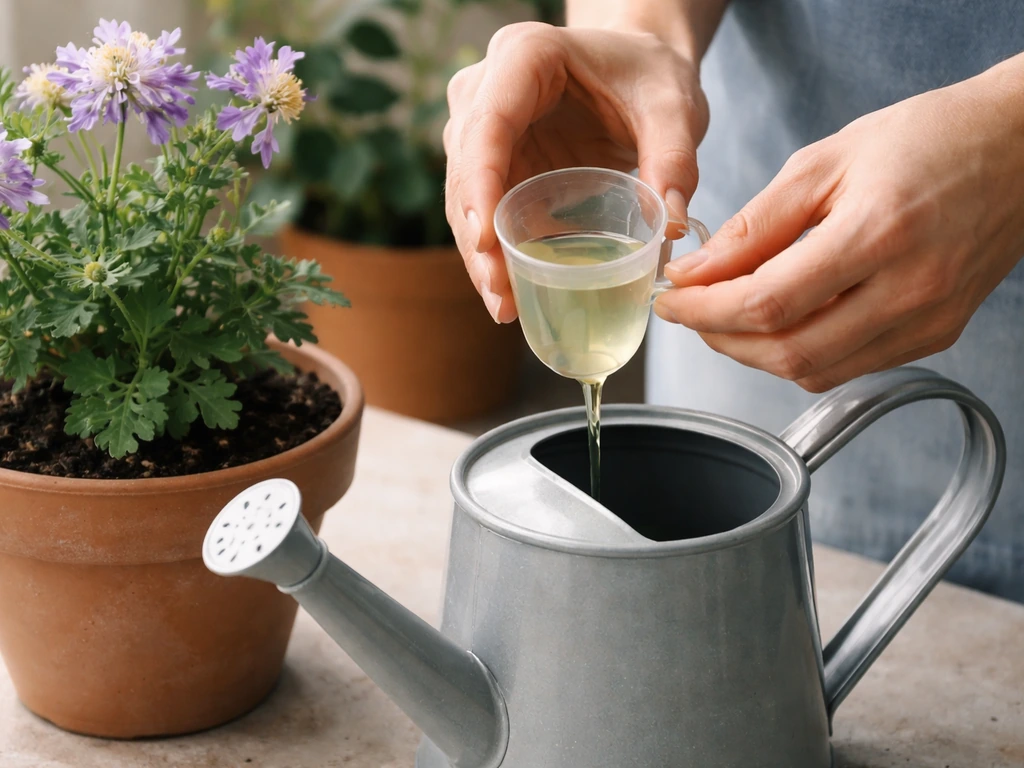
Water columbine when the top inch of soil feels dry to the touch, then water deeply until it drains from the bottom. In a cool room with decent airflow, this typically means watering every 5 to 7 days in winter and every 3 to 4 days once the plant is actively growing in spring. Never let it sit in a saucer full of water. Overwatering is one of the quickest ways to lose a potted columbine indoors.
Fertilizing
Keep feeding light. A balanced liquid fertilizer diluted to half strength, applied once a month during active growth, is plenty. Columbine isn't a heavy feeder, and over-fertilizing with high-nitrogen formulas encourages lush leafy growth at the expense of flowers. Once flower buds appear, switch to a bloom-boosting formula (something with higher phosphorus, like a 5-10-5) to encourage stronger flowering.
Pruning and deadheading
Deadhead spent flowers as soon as they fade to encourage the plant to keep producing blooms rather than setting seed. Once flowering is completely done, cut the flower stalks back to the base. In late summer or early autumn, you can cut the entire plant back to a few inches if it's looking tired or scraggly. New basal foliage will emerge and the plant will push fresh growth for the next season.
Common indoor problems and how to fix them
| Problem | Likely Cause | Fix |
|---|---|---|
| Leggy, stretched-out stems | Not enough light | Move to brightest window or add a grow light 14-16 hrs/day |
| Seeds won't germinate | Skipped cold stratification or buried too deep | Cold-stratify seeds 3-4 weeks; barely cover seeds with soil |
| Yellowing leaves or rot at base | Overwatering or poor drainage | Let soil dry more between waterings; repot into grittier mix |
| Aphids on stems and buds | Common pest on stressed plants | Spray with insecticidal soap; improve airflow around plant |
| Powdery mildew on leaves | Warm temps plus poor airflow | Remove affected leaves; increase air circulation; avoid wetting foliage |
| No blooms | Insufficient light, warmth, or no vernalization | Provide vernalization period and brightest possible light |
Getting your indoor columbine to bloom (and when to move it outside)
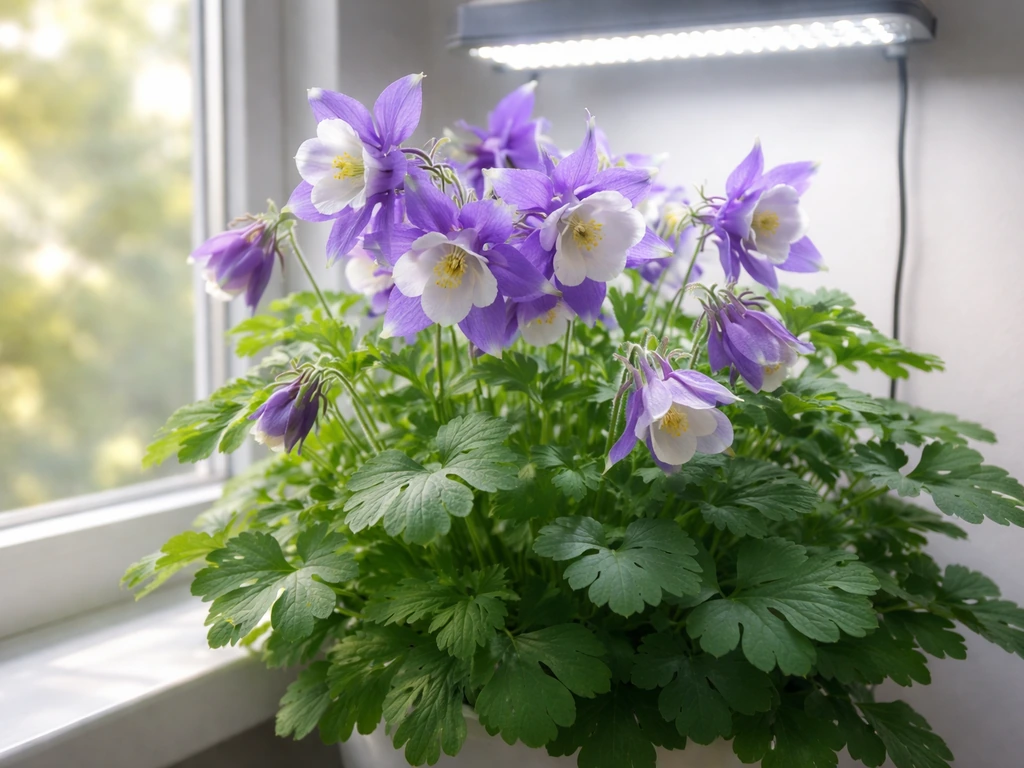
Here's the honest truth about blooming: columbine needs vernalization (a cold period) combined with high light and longer days to reliably initiate flowers. Greenhouse growers achieve this by giving plants 6 to 9 weeks at temperatures below 40°F, then moving them into bright conditions. You can replicate this at home by placing your potted columbine in an unheated garage, shed, or against a cold wall outdoors during late winter, then bringing it back inside to your brightest light source in early spring. Plants that skip this cold cycle may still bloom under very high light and long days, but results are inconsistent.
If you've been growing your columbine indoors as a seed-started plant, plan to transition it outdoors in spring after your last frost date. Harden it off gradually over 7 to 10 days by setting it outside in a sheltered spot for increasing hours each day. Once it's fully acclimatized, columbine will put on its best show in the garden, with significantly more blooms and stronger stems than it ever managed on a windowsill. The outdoor move isn't a failure of indoor growing, it's the natural next chapter for this plant.
Indoor columbine: realistic expectations over the long term
Columbine is a short-lived perennial, typically lasting 3 to 5 years even in ideal outdoor conditions. Indoors, it rarely thrives long-term without cycling through a cool dormancy period each year. The most successful approach for apartment dwellers or indoor gardeners is to treat it as a seasonal plant: start seeds indoors in late winter, grow through spring, move outdoors for summer bloom if possible, bring it back inside or through a cold cycle in autumn, and repeat. If you're wondering can you grow canna indoors too, the key is matching its warm, bright needs and giving it enough light to keep it growing strong. If you have a cool sunroom or an unheated but frost-free space with good natural light, you have a better shot at keeping a potted columbine happy year-round. Compared to genuinely easygoing indoor plants, columbine takes more management, but it's absolutely achievable with the right setup.
Is columbine safe for kids and pets?
This is worth knowing before you bring any new plant inside. Columbine (Aquilegia spp.) is considered toxic to dogs, cats, and horses if ingested, and the seeds are the most concentrated source of alkaloids. If your pet or child may have chewed a plant, the ASPCA Animal Poison Control Center recommends checking its toxic and non-toxic plant resources while assessing risk from the specific plant involved ASPCA toxic/non-toxic plants resources. The ASPCA lists it as toxic to pets, so keep it out of reach of curious cats who like to chew on plants and away from areas where dogs have unsupervised access. It's also mildly toxic to humans if consumed in quantity, so keep it away from small children who might mouth leaves or seeds. For most households with well-behaved pets and older kids, this is manageable, but it's a genuine consideration for homes with young animals or toddlers.
Quick comparison: columbine vs. similar indoor flowering plants
If you're weighing columbine against other flowering options for indoor growing, it helps to see where it fits. Plants like kalanchoe are genuinely easier to bloom indoors with minimal fuss. Caladium and coleus are grown mainly for foliage and adapt to indoor conditions more readily. Columbine sits in a trickier middle ground: it's not impossible indoors, but it needs more deliberate management than most flowering houseplants.
| Plant | Ease of Indoor Growing | Blooms Indoors? | Light Need | Cold Requirement |
|---|---|---|---|---|
| Columbine (Aquilegia) | Moderate to challenging | Yes, with effort | Very bright/supplemental | Yes, 6-9 weeks below 40°F |
| Kalanchoe | Easy | Yes, reliably | Bright indirect | No |
| Coleus | Easy | Grown for foliage | Bright indirect to medium | No |
| Caladium | Moderate | Grown for foliage | Bright indirect | No |
| Canna | Moderate | Sometimes | Full sun/very bright | No |
The bottom line is that columbine rewards the effort if you're willing to provide strong light, cool conditions, and that all-important cold period. If you want a foolproof indoor bloomer with minimal fuss, kalanchoe is the easier path. But if columbine is what you love, the indoor journey is genuinely worthwhile, especially as a bridge to getting beautiful plants established and ready for your garden. If you want to grow canna indoors instead, you can use similar planning for light and temperature to set yourself up for success bridge to getting beautiful plants established.
FAQ
Can you grow columbine indoors year-round and still get reliable blooms?
It can, but the odds drop fast if your indoor “cool spot” stays above about 70°F for long stretches. If you do not have daytime temps in the 50s to 60s (or a place like a cool basement, unheated sunroom, or a window ledge that actually stays cool), plan to grow it only as a seed-start/temporary setup and move it outdoors for the real flowering cycle.
Does cold stratification (fridge chilling) also guarantee columbine will bloom indoors?
You can, but it must be cold enough to mimic winter. A typical fridge stratification only helps seeds germinate. For flowering, you need a vernalization period outdoors or in an unheated, protected space, where temperatures go below 40°F for weeks. Just keeping it indoors near a cool window usually is not the same thing as vernalization.
What should I do if my windowsill light is not strong enough for indoor columbine?
Use grow lights if you cannot get consistent bright light. A common mistake is running a light for too few hours, which causes leggy growth even if the room is cool. Aim for roughly 14 to 16 hours per day on full-spectrum lighting, and position the light close enough that the leaves remain compact rather than stretching toward the bulb.
My indoor columbine seedlings are leggy and weak, what are the most likely causes?
If seedlings look stretched, lower the temperature slightly and increase light intensity or duration. Also check that you are not overwatering, because soggy mix can stunt growth and make stems appear weak. Seedlings need moisture that is evenly damp, not wet, and shallow coverage of seeds (barely covered) to reduce “damping off” and weak emergence.
How deep does the pot need to be, and does shallow planting actually hurt columbine indoors?
Choose a deeper pot, at least 8 to 12 inches deep, and prioritize reliable drainage over style. A top mistake is using a shallow container, which forces the taproot to circle or hit bottom too soon, leading to poor establishment. Terracotta can help because it dries more evenly, reducing the chance that waterlogged soil triggers root rot.
When should I move an indoor columbine outdoors, and can I skip hardening off?
Yes, but only if you time it and acclimate it correctly. Harden off for 7 to 10 days, increase outdoor exposure gradually, and avoid sudden full sun right away. Also, if your nights are still warm, move later, because consistent warm spells can interfere with the plant’s cool-season cycle.
How often should I water indoor columbine, and how do I know I’m not overdoing it?
Let the top inch dry before watering again, then water thoroughly until excess drains. Indoor containers often retain moisture longer than you expect, especially in cooler rooms, so your watering schedule can easily stretch. Do not use a saucer as a reservoir, because even brief sitting in runoff can keep roots oxygen-starved.
What indoor problems should I watch for, and how do I prevent fungus?
Yes, pests can show up indoors, but the bigger recurring issue is fungal problems from poor airflow and consistently wet conditions. Use a fan on low for gentle circulation, keep the plant spaced if you have multiples, and avoid misting as a “humidity boost.” If you see gray mold or blackened stems, reduce watering immediately and improve airflow.
Why does my columbine grow leaves but not flower indoors?
Stop and re-check your light and temperature before increasing fertilizer. A high-nitrogen approach can create lots of leaves with few or no flowers, even when the plant looks healthy. Once buds form, switch to a bloom-leaning formula and avoid frequent feeding, since columbine is not a heavy feeder.
What is the most realistic long-term plan for indoor-grown columbine in an apartment?
If your goal is a “potted indoor bloomer,” treat it as a seasonal cycle, not a houseplant marathon. Many indoor attempts fail because the plant never gets a true cool period each year. For best results, plan to give it outdoor summer conditions (for growth), a cold cycle later, and then bring it back to bright indoor light to finish the season.