
The best chilli plants for growing indoors in the UK are compact, early-fruiting varieties like Prairie Fire, Apache, Demon Red, Filius Blue, and Black Pearl. These stay under 40cm tall, fruit reliably in pots on a south-facing windowsill, and cope far better than larger varieties with the lower light and sometimes cooler temperatures typical of UK homes. If you only want one recommendation to start with, Prairie Fire is the one I keep coming back to: it stays around 20–30cm in a 10cm pot, produces masses of small hot chillies, and is genuinely forgiving for beginners.
Best Chilli Plants to Grow Indoors in the UK
James Hartwell
3 Jun 2026
What makes a chilli plant work indoors in the UK
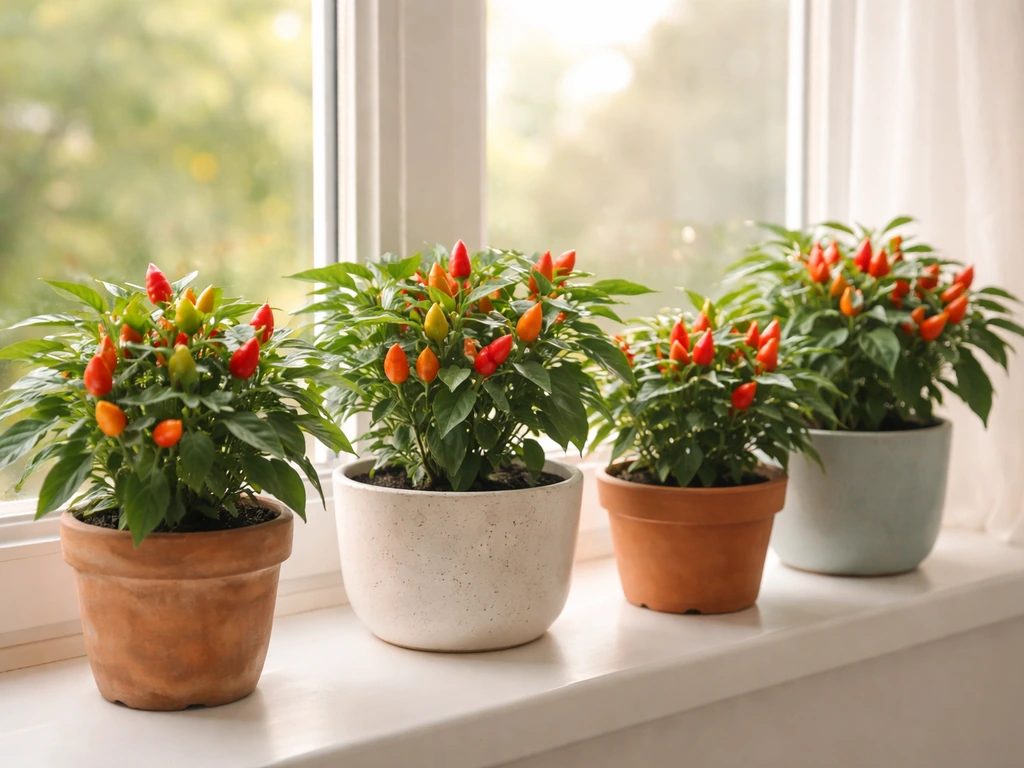
Not all chillies are created equal when it comes to indoor life, especially in the UK where light levels are often the limiting factor from October through to April. A variety that thrives in a Spanish greenhouse will sulk and stretch on a British windowsill. So when I'm picking a chilli for indoors, I'm looking for a few specific traits.
- Compact habit: plants that stay under 45cm tall fit comfortably on a windowsill, don't need staking, and won't outgrow a 22cm pot
- Early fruiting: varieties that set fruit quickly after flowering make the most of the short UK growing window and don't rely on endless summer heat
- Tolerates lower light: large-fruited varieties like Habanero or Scotch Bonnet demand serious heat and light to fruit well; small-fruited compact types are far more forgiving
- Good in containers: some chillies resent restricted roots, but the varieties below are genuinely pot-happy
- Manageable heat level: worth thinking about before you buy — Scoville Heat Units (SHU) range from a few hundred for mild varieties to over 100,000 for the seriously hot ones, so pick what you'll actually want to cook with or show off
UK homes also tend to be drier than ideal for chillies, especially in winter with the central heating running. And while most British living rooms sit comfortably above the 12°C minimum chillies need to survive, they rarely hit the 20–25°C that makes chillies really push on. The varieties below are the ones that perform reliably within those real-world constraints.
Top chilli varieties for growing indoors in the UK
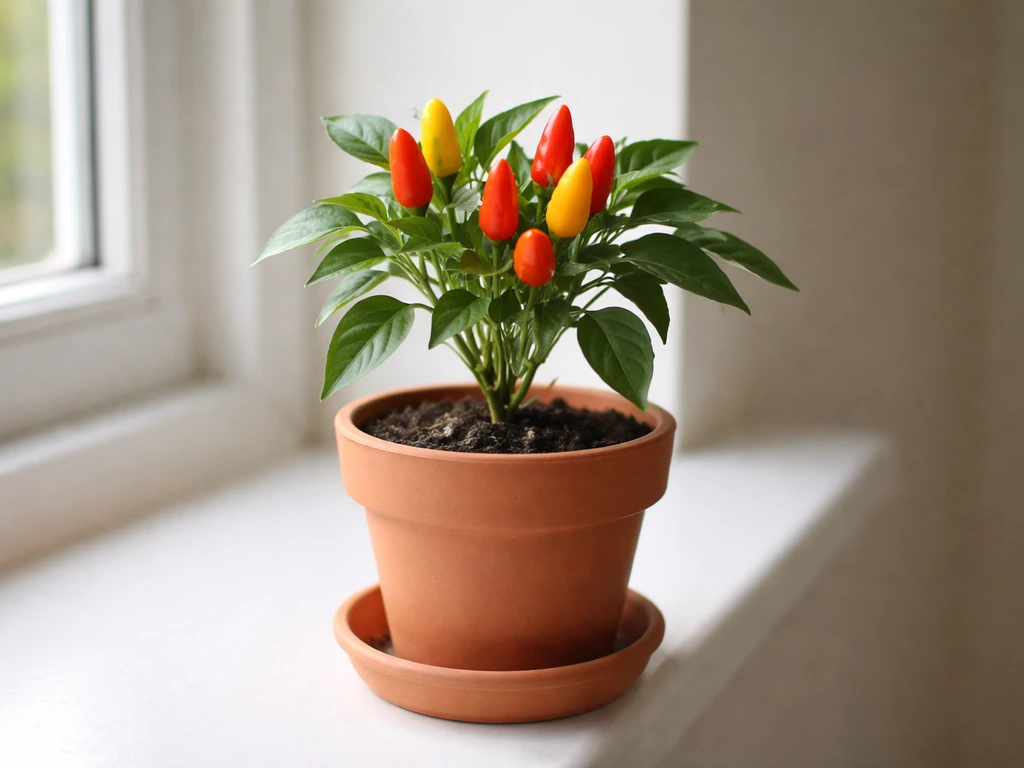
These are the varieties I'd confidently recommend to anyone working with a windowsill, a spare bedroom shelf, or a grow-light setup. They're widely available from UK seed suppliers like Thompson & Morgan, Suttons, and RHS-affiliated retailers.
| Variety | Height | Heat level (SHU) | Fruit colour | Best for |
|---|---|---|---|---|
| Prairie Fire | 20–30cm | 70,000–80,000 | Yellow to red | Beginners, small pots, windowsills |
| Apache F1 | 35–45cm | 70,000–80,000 | Green to red | Reliable cropping, slightly more space |
| Demon Red | 30–40cm | 30,000–50,000 | Green to red | Upright compact habit, heavy cropper |
| Filius Blue | 30–45cm | 30,000–50,000 | Purple to red | Ornamental and edible, striking colour |
| Black Pearl | 31–35cm | 10,000–30,000 | Black to red | Ornamental, black foliage, stunning indoors |
| Chenzo | 25–35cm | 5,000–10,000 | Green to red | Milder heat, good for cooking |
| Spicy Jane (Ponky) | 20–30cm | 30,000–50,000 | Red | Very small containers, tight spaces |
Prairie Fire
This is the go-to compact chilli for indoor UK growing. At 20–30cm in a 10cm pot it fits almost anywhere, and it produces dozens of small upward-pointing chillies that ripen from yellow through orange to red. It takes around 80 days from pollination for pods to change colour, which is fast enough to feel rewarding without needing a greenhouse summer. The RHS recommends it specifically, and for good reason.
Black Pearl
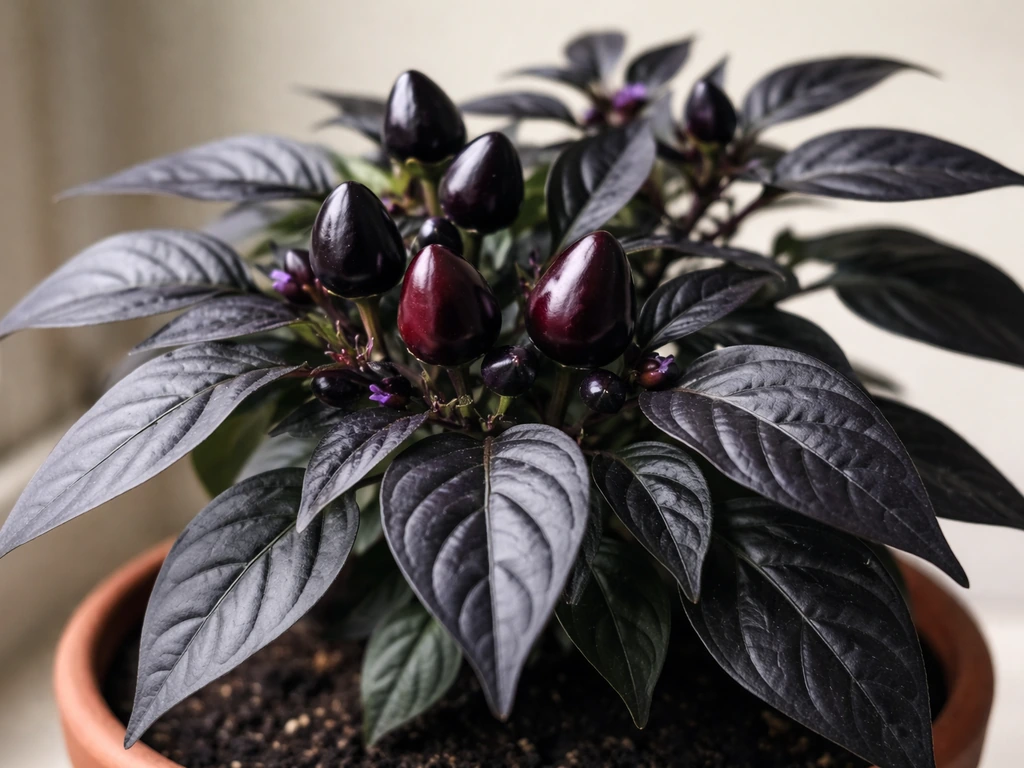
If you want something that looks as good as it tastes, Black Pearl is a standout. It has near-black foliage and small black fruits that ripen to red, and it stays at 31–35cm. Fleuroselect recommends growing it at 18–21°C nights and 20–22°C days, which matches a warm UK living room nicely. It's earned ornamental variety awards but it's genuinely edible and moderately hot.
Apache F1
Apache is one of the most popular indoor chilli varieties in the UK for a reason. It's a bit larger than Prairie Fire but still very manageable, and it's a heavy cropper even in lower light. The F1 hybrid status means it's reliable and consistent, though you can't save seed from it. It's a great option if you want more fruit volume.
Pots, soil, and drainage, the container basics
Chillies hate sitting in soggy soil more than almost anything else. Get the container setup right and you'll avoid the most common killer of indoor chilli plants.
Pot size
Start small and pot on as the plant grows. Sow seeds in small cells or 7–9cm pots, then move into a 12–15cm pot once the roots fill the container. For most compact varieties, the final pot size is around 22cm (roughly a 3-litre pot). Suttons advise potting on to a 22cm final container, and that's consistent with what I've found works well for Prairie Fire and Apache indoors. Don't be tempted to put a seedling straight into a large pot, too much compost around young roots stays wet for too long and invites rot.
Soil mix
Use a good-quality peat-free multipurpose compost mixed with around 20–25% perlite or coarse horticultural grit. That extra drainage is critical. Plain compost from a bag tends to compact over time and holds too much moisture, especially in a pot without natural rain to flush it through. The perlite keeps things airy, warms up faster, and prevents the waterlogging that causes flower drop and root rot.
Drainage rules
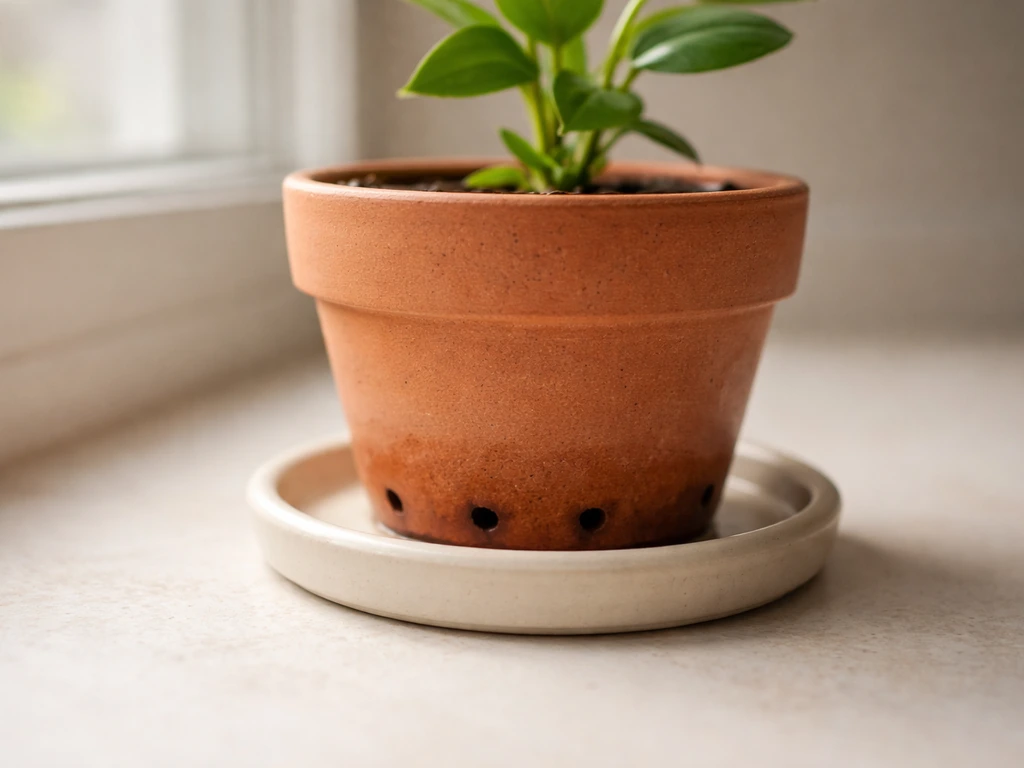
- Always use a pot with drainage holes — no exceptions
- If using a saucer or tray underneath, empty any standing water within an hour of watering
- Terracotta pots are excellent because they breathe; plastic pots retain moisture longer, so water less frequently with plastic
- Avoid decorative pots without holes unless you're using them as a sleeve over a plastic nursery pot
Light: windowsill placement vs grow lights
Light is almost always the hardest thing to get right for indoor chillies in the UK, particularly from October to March. Chillies want bright, direct sun for at least 6 hours a day, ideally more. A south-facing windowsill in summer gets close to that. A north-facing windowsill in January really doesn't.
Windowsill growing
A south-facing windowsill is the best spot in your home for chillies from April through September. East or west-facing windows can work in summer but will slow growth noticeably. In winter, even a south-facing window delivers far less light than you might expect due to the low sun angle, shorter days, and frequent cloud cover. Plants grown purely on a windowsill in winter tend to become leggy and produce fewer flowers. If you're starting seeds in January or February (which the RHS and Thompson & Morgan both recommend for a long growing season), supplementary light is genuinely worth considering.
Grow lights
A full-spectrum LED grow light makes a significant difference to chillies sown from January onwards. Aim for 14–16 hours of light per day during seedling and vegetative stages, dropping to 12–14 hours once the plants are established and you want to encourage fruiting. Position the light so the top of the plant is roughly 15–30cm from the bulbs, light intensity (PPFD) drops sharply with distance, so too far away and you're wasting the investment. A basic LED grow light panel from around £20–£40 is enough for a windowsill collection of 4–6 plants.
Day-to-day care: temperature, watering, feeding, and humidity
Temperature
Chillies need warmth at every stage. For germination, aim for around 21°C, a heated propagator makes this reliable and is strongly recommended by the RHS. After germination, seedlings do fine at 16–18°C ambient temperature (Suttons' guidance), and mature plants grow well between 18–25°C during the day. The RHS notes the minimum night temperature for survival is around 12°C, but plants actively grow and fruit better if kept above 15°C overnight. In a typical UK centrally-heated home, most rooms stay above this through winter, though windowsill temperatures can dip significantly at night if plants are left between the curtains and the glass.
Watering
The golden rule with chillies is: consistent moisture, never waterlogged. Water when the top 2–3cm of compost feels dry to the touch. In summer on a warm windowsill, that might be every 2–3 days. In winter with lower light and slower growth, it could be once a week or even less. Both dry soil and soggy soil cause the same devastating symptom: flower and bud drop. Oregon State University Extension notes that dry soil can cause peppers to drop flower buds, flowers, and small fruit, so keeping soil moisture consistent can help reduce blossom drop dry soil and soggy soil cause the same devastating symptom: flower and bud drop. The OSU Extension and West Virginia University Extension both flag irregular watering as a top cause of blossom drop in peppers. The RHS specifically notes that flower buds will fall if plants get too dry. Aim for consistent, moderate moisture every time.
Feeding
Don't feed chillies heavily while they're young and leafy, you'll get big plants with few fruits. Wait until the first tiny fruits have set, then switch to a high-potassium liquid fertiliser (a tomato feed is perfect) and apply it weekly. Suttons and the RHS both recommend this approach. Before fruiting, a balanced liquid feed once every two weeks is plenty. Overfeeding with a nitrogen-heavy feed pushes leafy growth at the expense of flowers and fruit.
Humidity
Central heating dries the air considerably, and chillies prefer humidity around 50–70%. Dry air encourages spider mites and can cause leaf curl. Misting the foliage lightly once a day helps (it also deters pests, as the RHS chilli trials note), or you can place a tray of damp pebbles under the pot. Don't mist the flowers directly when they're open, wet pollen doesn't transfer well.
Getting chillies to actually set fruit indoors
This is where most indoor growers run into frustration. The plant looks healthy, flowers appear, and then... the flowers drop off without setting fruit. It's common, and it's almost always fixable.
Pollination basics
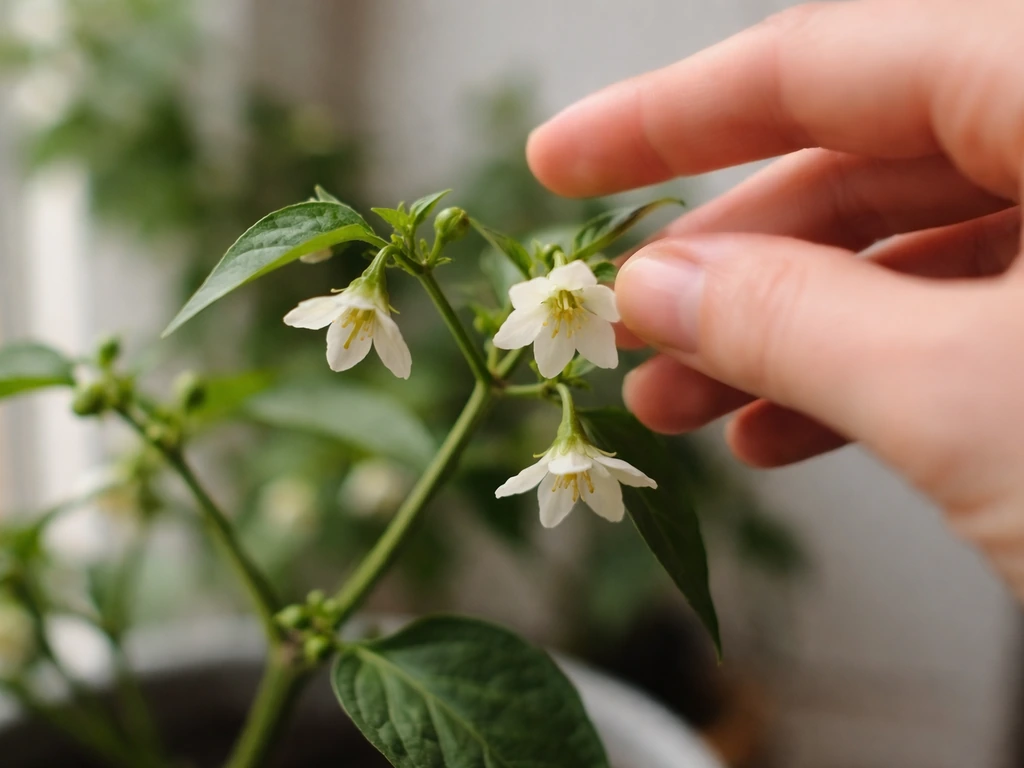
Pepper flowers are self-fertile, meaning they carry both male and female parts in the same flower. Outdoors, wind and insects do the job. Indoors, nothing moves the pollen unless you do. The solution is simple: gently shake or flick each open flower once a day. You can also run a soft paintbrush or even an electric toothbrush along the inside of open flowers to dislodge and transfer pollen. CityRooted's indoor pepper guidance recommends a daily gentle shake when flowers are open, and this is consistent with the technique described in eOrganic's pepper pollination guide. Once you start doing this routinely, fruit set improves noticeably within a couple of weeks.
Encouraging more flowers
- Pinch out the very tip of the main stem when the plant is young and bushy (around 20–25cm tall) to encourage branching and more flower sites
- Maintain consistent watering — dry spells cause bud and flower drop before pollination can even happen
- Keep temperatures above 15°C at night — cold snaps reduce flower set significantly
- Avoid sudden temperature changes, cold draughts from opening windows, or blasts from air conditioning
Troubleshooting common indoor chilli problems
Leggy, stretched plants
If your chilli is growing tall and spindly with long gaps between leaves, it's not getting enough light. Move it to a brighter spot immediately, or add a grow light. Leggy plants are also more prone to flopping and producing fewer flowers. Pinching out the growing tip once the plant has 4–6 sets of leaves encourages a bushier habit, which helps in lower-light conditions.
Flowers dropping without setting fruit
This is almost always one of three things: not enough pollination (shake the flowers daily), inconsistent watering (go back to basics, check soil moisture every day), or temperatures too low at night (keep above 15°C). In some cases, it's a combination of all three.
Aphids
Aphids love the soft new growth on chilli plants and can appear at any time of year on indoor plants. Check the undersides of leaves and growing tips regularly. For light infestations, wipe them off with a damp cloth or blast them with a fine mist of water. For heavier infestations, use an insecticidal soap spray (widely available, safe for edibles). The RHS notes aphids as a common problem in chilli growing, and they're one of the first pests to establish on indoor plants kept near open windows in summer.
Spider mites
These tiny pests thrive in hot, dry conditions, exactly what a windowsill in a centrally-heated flat can create. You'll notice fine webbing and pale, mottled leaf surfaces. Increase humidity, mist regularly, and use a plant-safe miticide or insecticidal soap if the problem takes hold. Catching it early is much easier than dealing with a full infestation.
Yellow leaves and poor growth
Yellowing lower leaves can mean overwatering (check the soil isn't consistently soggy), nitrogen deficiency (time for a balanced feed), or simply old leaves naturally dying off as the plant matures. If yellowing is spreading rapidly across the plant, suspect a nutrient issue or root problem. Let the soil dry out a bit, check drainage, and start a regular feeding routine if you haven't already.
Getting started today: seeds, plug plants, and what to do right now
Seeds vs plug plants
Since it's June, you're past the ideal sowing window (January to February, per Thompson & Morgan and the RHS) for getting a full outdoor-season crop. But for indoor growing, that matters less. If you sow seeds now in a heated propagator at around 21°C, you can still get plants established and fruiting indoors by September–October. If you're also wondering can mums grow indoors, the key is matching the light and watering routine to a suitable indoor spot. Alternatively, buy young plug plants or potted chilli plants from a garden centre right now, they'll be a couple of months ahead and could be fruiting by late summer. For a first-time indoor grower, buying a young plant in June is genuinely the most practical option this year.
Sowing and repotting steps
- Sow seeds 5mm deep in small cells or a seed tray filled with damp seed compost
- Place in a heated propagator at 21°C or on a warm surface (top of a fridge, airing cupboard) and check daily for germination
- Once seedlings emerge, move to a bright windowsill or under a grow light at 16–18°C
- When the first true leaves appear and roots start to show at the drainage holes, pot on into a 9cm pot with multipurpose compost and perlite
- Continue potting on as needed until the plant reaches its final 22cm container
- Begin weekly high-potassium feeding once tiny fruits appear
Overwintering your chilli plant
One of the real advantages of indoor growing is that overwintering is straightforward. Chillies are perennials in their native climates and can live for several years. In autumn, cut the plant back by about a third, reduce watering significantly, and keep it in the warmest, brightest spot you have through winter. Don't feed it over winter, it's in semi-dormancy. Come late January or February, move it to your best light source and gradually increase watering. New growth will emerge, and a second-year plant will usually fruit earlier and more heavily than a first-year plant because the root system is already established. It's one of the most satisfying things about growing chillies indoors year-round.
If you're already exploring other edible plants for your indoor space, chillies pair well in a setup with other compact edibles. You can use the same type of indoor setup to grow mums in the house, as long as you match the light and watering needs for each plant other edible plants. The principles around light, humidity, and consistent care that apply here overlap with growing herbs like mint and peppermint indoors, consistent moisture, bright light, and good airflow are the common threads across all of them. These same indoor growing principles can mint plant grow indoors apply to many herbs, including mint and peppermint.
FAQ
Which is the easiest indoor chilli if I only have a small south-facing windowsill?
Choose a very compact type like Prairie Fire and keep it in a final container around 3 litres (about 22 cm pot). If space is tight, don’t use a larger pot, it increases the chance of slow-wetting compost and root issues.
Can I grow indoor chillies on a north-facing or shaded windowsill in the UK?
It can work only with supplemental light. Without it, plants usually go leggy, set fewer flowers, and may not ripen fruit by autumn. If you try it, plan on using a full-spectrum LED and keep the lamp close (around 15 to 30 cm) for enough intensity.
Do I need a grow light if I start seeds in autumn or winter?
For January to March starts, yes, unless you have unusually bright light or a greenhouse-like room. With LEDs, keep seedlings under light longer (about 14 to 16 hours), then shorten the day length slightly once plants are established to help shift focus toward flowering.
What’s the best way to water indoor chillies to prevent blossom drop?
Use a “top 2 to 3 cm dry” check rather than a fixed schedule. If you alternate between very dry and very wet compost, you can trigger bud drop even if temperatures are fine, so aim for consistent moderate moisture each time.
How can I tell if my compost mix is draining properly?
After watering, the pot should drain freely within a short time, and you should not see water lingering in the bottom saucer. If water stays pooled or the surface stays wet for days, reduce watering and consider improving drainage by increasing perlite or coarse grit.
Should I mist my plants every day, or is a tray of damp pebbles better?
Both can help, but misting is most useful for quick humidity boosts on dry indoor days. If your room is prone to fungal problems or leaves stay wet for long periods, prefer a pebble tray and ensure good airflow around the plant.
Why are my flowers falling even though the plant looks healthy?
The most common causes indoors are lack of pollination and inconsistent moisture. Pepper flowers are self-fertile but still need pollen movement, so shake or flick each open flower daily and keep watering steady based on the soil test.
Is there a temperature problem if my indoor chilli won’t fruit?
Yes, nights that are too cool can stall fruiting even if daytime temperatures seem okay. If nights fall below about 12 to 15°C near the window, move the plants away from cold glass or curtains, or keep them in the warmest part of the room.
Can I save seed from Apache F1 for next year?
No, with F1 hybrids like Apache, saved seed may not produce the same traits reliably. If you want consistent results indoors, re-buy seed or consider saving only from non-hybrid varieties.
Should I start feeding immediately after the seedlings emerge?
No. Wait until the first tiny fruits have set before switching to a high-potassium feed. Early feeding with nitrogen-heavy fertiliser can create lush foliage with fewer flowers.
My chilli is tall and floppy, but I’m already using the same windowsill. What should I do?
Leggy growth usually means light is insufficient or uneven. Move the plant to the brightest spot, or use a grow light, and consider pinching once it has several sets of leaves to encourage branching and sturdier form.
How do I handle aphids on indoor chilli plants without damaging edible leaves?
Start with the least disruptive option, wipe or rinse with water if the infestation is light. For heavier cases, use an insecticidal soap made for edible plants, and repeat as directed since eggs can survive and hatch later.
What’s the best approach if I’m late to sow but want fruit indoors?
Start seeds now only if you can provide warmth (around 21°C for germination using a heated propagator) and extra light. Otherwise, buying young plug plants or potted chillies is usually the fastest route to fruiting by late summer or early autumn indoors.
Can I keep an indoor chilli plant going for more than one year?
Yes. In autumn, cut back by about a third, reduce watering, and keep it in the warmest brightest area you have without feeding. Then resume light and watering gradually in late winter so it re-grows and often fruits earlier in year two.