
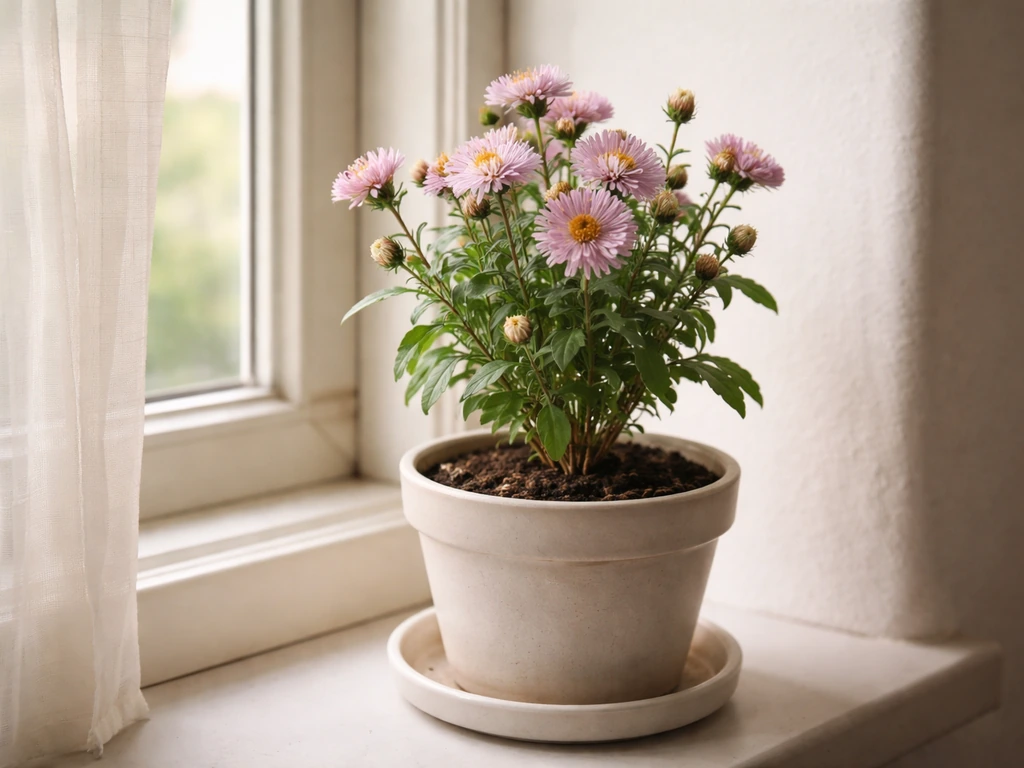
You can grow asters indoors, but they're not the easiest houseplant to pull off and they won't live on your windowsill indefinitely the way a pothos will. Think of them more as a seasonal flowering plant you bring inside for a 4 to 6 week bloom show, then move back out or refresh. With the right setup, a compact variety, very bright light, good drainage, and decent airflow, you can absolutely get them to flower inside. Without those things, you'll end up with leggy, mildew-prone stems and buds that refuse to open.
Can You Grow Asters Indoors? Yes, Here’s How to Start

James Hartwell
13 May 2026
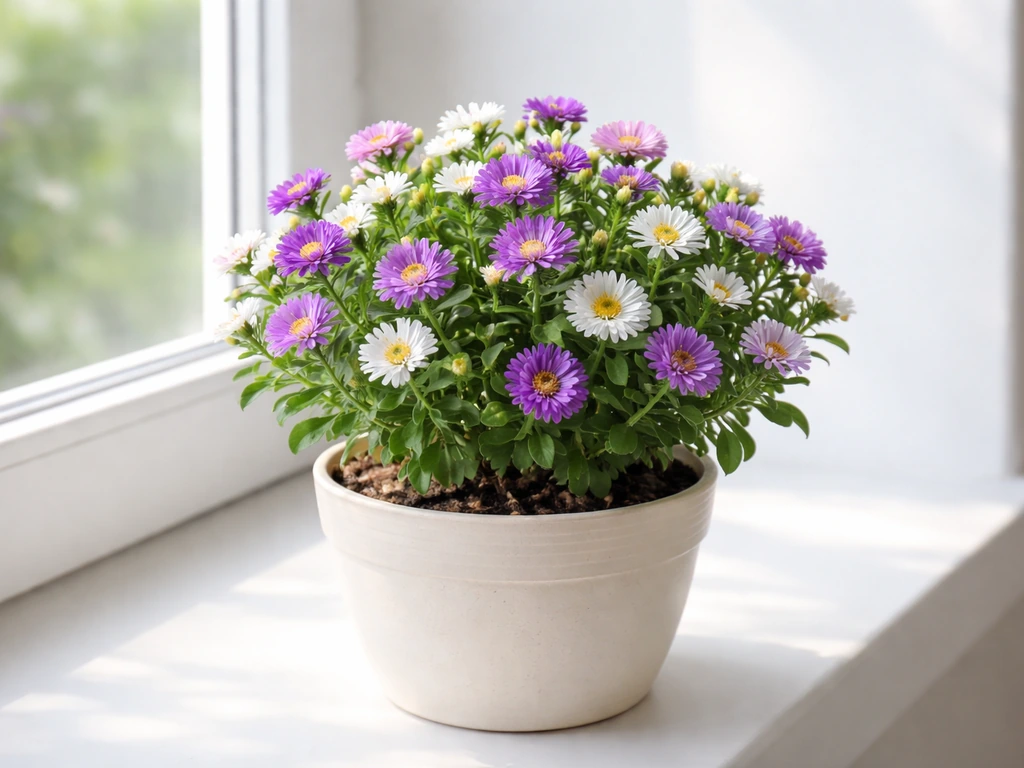
Best indoor varieties and what to look for
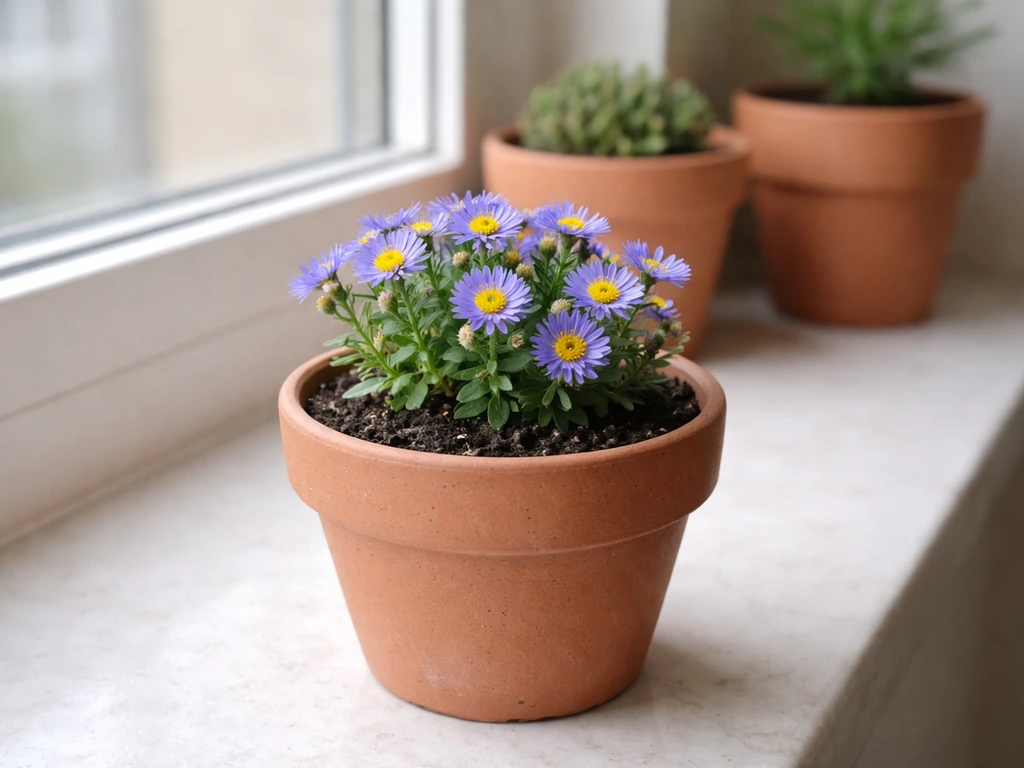
Not all asters are worth trying indoors. Standard garden asters can hit 3 to 4 feet tall, which is awkward in a pot and makes airflow problems worse. For indoors, you want dwarf, compact cultivars, ideally ones with documented mildew resistance, since powdery mildew is one of the biggest indoor aster killers.
The variety I'd point you to first is 'Woods Blue' (Symphyotrichum novi-belgii 'Woods Blue'). It's dwarf and mounding, so it stays manageable in a container. More importantly, it's described specifically as having mildew-resistant foliage, which matters a lot indoors where airflow is limited. TheTreeFarm.com describes 'Woods Blue' as having highly mildew-resistant foliage, which helps it hold up indoors where airflow is limited. It blooms for close to 6 weeks, giving you a solid flowering window if you can get it to bud. Multiple nurseries list it explicitly as a container-suitable plant, so you're not fighting the plant's nature.
When shopping, look for these traits on the label: compact or dwarf habit, container suitability, and mildew resistance. Avoid tall garden varieties, they're bred for open outdoor beds with plenty of breeze, not an apartment corner.
Light requirements and how to set up lighting
This is the number-one make-or-break factor for indoor asters. They need bright light, the kind that most indoor rooms simply don't provide on their own. The clearest supported guidance for Symphyotrichum novi-belgii is that it tolerates 'bright indoor positions,' meaning you need the sunniest spot you have, ideally a south- or west-facing window with direct sun hitting the plant for several hours a day.
If your window can deliver strong, direct light for 6 or more hours, you have a shot without extra equipment. If you're in an apartment with a north-facing window, or if it's late fall when the days are short, a grow light is not optional, it's necessary. A full-spectrum LED grow light positioned 6 to 12 inches above the plant, running 14 to 16 hours a day, can make up the difference. Without enough light, your aster will stretch toward the source, get leggy and floppy, and likely never bloom properly.
One practical tip: if you're bringing the plant in from outside specifically to enjoy the bloom indoors, try to do it once buds have already formed. At that stage, it needs less light investment to finish flowering than it does to form buds from scratch under indoor conditions.
Containers, potting mix, and watering schedule
Choosing the right pot
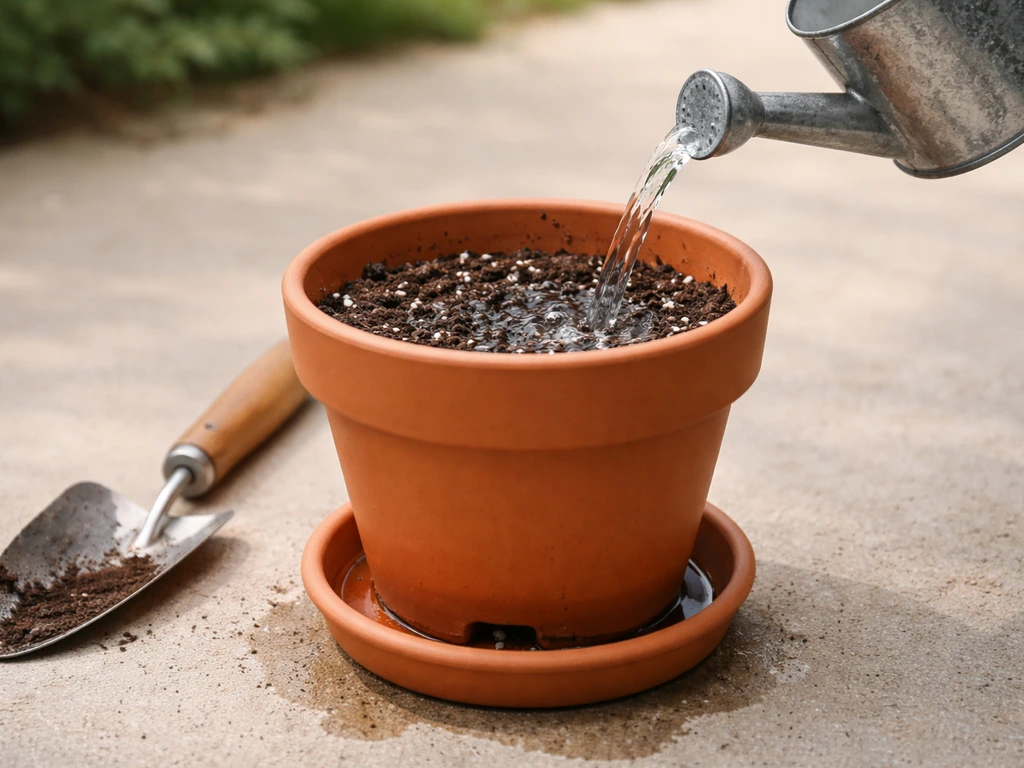
Use a pot with drainage holes, this is non-negotiable. Symphyotrichum novi-belgii will not tolerate waterlogging, and root rot in an airtight container is almost certain to kill it. For a dwarf variety like 'Woods Blue,' a 6 to 8 inch pot is usually the right size. Go slightly larger if you want the plant to fill out, but don't over-pot, sitting in too much wet soil around the roots is a fast path to rot.
Potting mix
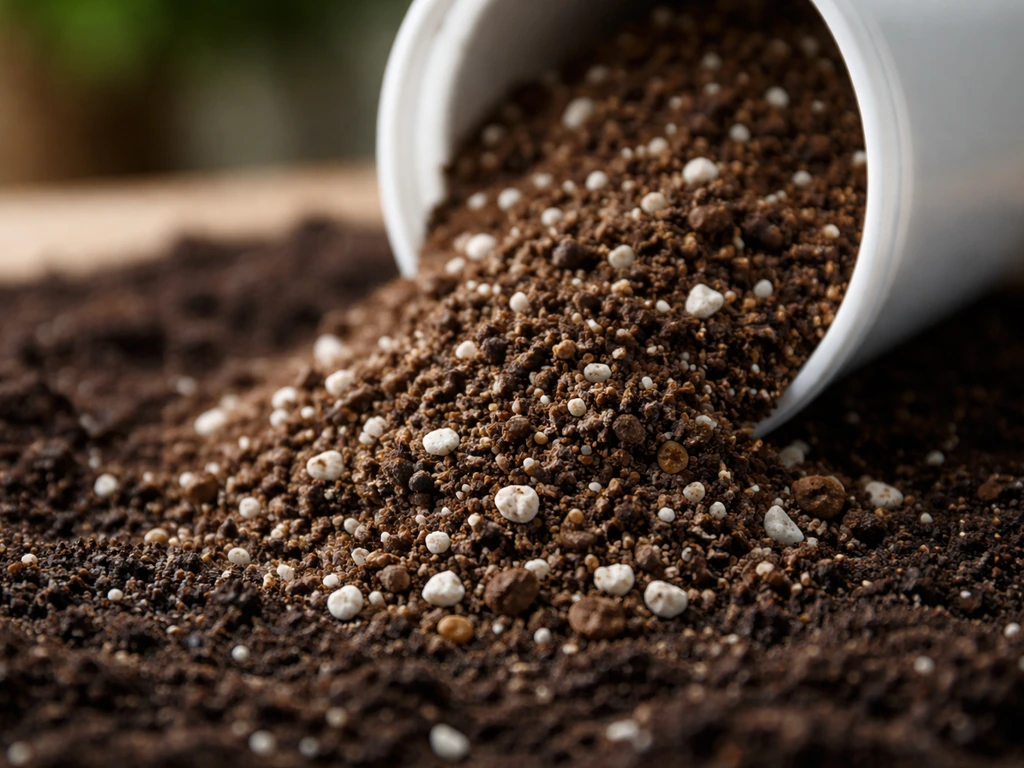
Skip straight garden soil in a container, it compacts and drains poorly. Use a lightweight potting mix and improve drainage by mixing in perlite at roughly a 3:1 ratio (three parts potting mix to one part perlite). A peat and perlite mix, or a good quality commercial potting mix amended with perlite or coarse grit, works well. The goal is a mix that holds just enough moisture to feed the roots but drains freely so the roots never sit in standing water.
Watering
Water when the top inch of the mix feels dry, then water thoroughly until it runs freely out of the drainage holes. Don't let it sit in a saucer of water afterward. During active growth and blooming, that might mean watering every 3 to 5 days depending on your pot size and room temperature. Once the plant finishes blooming and enters dormancy, cut back significantly, the root zone should stay barely moist, not consistently wet. Overwatering during dormancy is the quickest way to lose the plant over winter.
Temperature, humidity, and airflow needs
Asters are tough, cold-hardy perennials outdoors, but indoors the risks flip. The threats aren't cold, they're warmth, stagnant air, and high humidity. For active growth and blooming, keep temperatures in the 60 to 70°F (15 to 21°C) range. If you're overwintering the plant rather than discarding it after bloom, move it somewhere cool, around 41 to 50°F (5 to 10°C), like an unheated garage or cool basement. This mimics the dormancy cue the plant needs.
Humidity is where indoor growing gets tricky. Asters are genuinely prone to powdery mildew, and the conditions that drive it, high ambient humidity combined with low airflow, are exactly what many indoor spaces provide. USU Extension notes that powdery mildew management often relies on improving air movement to reduce humidity in the plant canopy high ambient humidity combined with low airflow. You don't want to run a humidifier near your aster. Average household humidity (40 to 50%) is fine; anything higher is pushing toward mildew territory.
Airflow is critical and often overlooked. Don't press the plant against a wall or crowd it between other plants. A small fan running on low nearby for a few hours a day does a lot to keep the leaf surfaces dry and the canopy humidity down. Just avoid placing the plant directly in front of a heating or air conditioning vent, that kind of dry, forceful draft stresses the plant and can cause buds to drop before they open.
Fertilizing and overall care through blooming
Asters in containers need feeding because the nutrients in potting mix get used up quickly. During the period when blooms are forming, feed with a balanced water-soluble fertilizer, something like a 10-10-10 or bloom-focused formula, roughly every two weeks. The timing matters: fertilizing actively during bud formation and early bloom gives the plant the energy it needs to push those flowers open fully.
Once the plant has finished blooming and is going dormant, stop fertilizing entirely. Pushing new growth during dormancy doesn't help the plant and can actually weaken it heading into the next growing cycle. If your potting mix already contains slow-release fertilizer, hold off on additional liquid feeding for the first 6 to 8 weeks after potting up.
Pinch out spent flower heads as blooms fade to keep the plant looking tidy and to prevent it from putting energy into seed production rather than staying healthy. Keep the foliage dry when you water, watering at the base rather than overhead helps reduce the risk of powdery mildew taking hold.
Common problems indoors and troubleshooting
| Problem | Likely Cause | Fix |
|---|---|---|
| Leggy, stretched stems | Not enough light | Move to brightest window or add a grow light 6–12 inches above the plant |
| Buds fail to open | Insufficient light, root rot, or disease stress | Check roots for rot; improve light; ensure airflow around plant |
| White powder on leaves | Powdery mildew from high humidity or stagnant air | Improve ventilation, run a small fan nearby, remove affected leaves |
| Wilting despite wet soil | Root rot from overwatering or waterlogged mix | Unpot, trim rotten roots, repot in fresh well-draining mix |
| Yellowing lower leaves | Overwatering or normal die-back at base | Let mix dry out more between waterings; trim yellowed leaves |
| Tiny insects on stems or undersides of leaves | Aphids or spider mites | Wipe with damp cloth, treat with insecticidal soap spray |
| Buds or leaves dropping suddenly | Temperature shock from heating/AC draft | Move plant away from vents; stabilize temperature |
Powdery mildew is worth calling out specifically because it's so common on asters indoors. It shows up as a white, dusty coating on leaf surfaces. Catching it early matters, remove affected leaves immediately and improve airflow around the plant. If it spreads quickly, a diluted neem oil or baking soda spray can slow it down. The mildew-resistant 'Woods Blue' variety helps reduce this risk, but it's not immune, especially if the air around it is consistently still and humid.
How long asters live indoors and when to move outdoors
Here's the honest expectation: asters are perennials outdoors, but indoors they behave more like a seasonal flowering display. When conditions are right, a dwarf aster like 'Woods Blue' will give you close to 6 weeks of bloom. After that, the show is over for the season and the plant needs a rest.
For the best long-term results, treat your indoor aster as a temporary resident. Bring it inside when buds are forming or just starting to open, enjoy the bloom indoors, then move it back outside or to a cool, frost-free overwintering spot (around 41 to 50°F / 5 to 10°C) once flowering finishes. Outdoors, in a container on a sheltered patio or planted in the ground, it will reset and come back stronger the following season.
Trying to keep asters as a permanent indoor plant year-round is an uphill battle. Without a true dormancy period and the natural light cycles they get outdoors, most will slowly decline. If you want something that behaves like a genuine long-term indoor flowering plant, other options fit that role better. But if you want a beautiful 4 to 6 week autumn bloom display inside your home, asters in containers are very doable, you just need to manage expectations and set up the right conditions from the start. If you're wondering, can you grow persian shield indoors, the setup for light and humidity matters just as much as it does for asters.
If you're exploring other flowering plants that push the boundaries of indoor growing, some of the same principles apply: light is almost always the limiting factor, airflow prevents the most common diseases, and container drainage makes or breaks root health. Or if you're asking, can you grow ornamental grass indoors, the key is matching light, airflow, and potting setup to the grass type other flowering plants that push the boundaries of indoor growing.
If you are wondering can you grow edelweiss indoors, the biggest hurdles are the same as with indoor asters: strong light and conditions that prevent humidity from getting too high light is almost always the limiting factor. Plants like foxglove and perennials in general face similar indoor challenges, and comparing how asters perform against those options can help you decide which seasonal bloomers are worth the effort for your specific space.
If you are asking can you grow perennials indoors, the key is understanding that many species will need strong light, airflow, and a rest period to stay healthy. If you want, you can use the same approach to learn how to can you grow foxglove indoors and avoid the most common indoor pitfalls.
FAQ
Can I keep indoor asters flowering all year?
Not usually. Asters are best treated as a seasonal container flowering display, then returned outside (or moved to a cool dormancy spot) after the 4 to 6 week bloom. If you try to keep them as a year-round indoor plant without a strong light source and a true rest period, decline is common.
If I buy an aster outside, when is the best time to bring it indoors to bloom?
You can start with outside plants, but the main goal is to buy or move them at a stage that reduces indoor effort. Bringing them in once buds have already formed typically reduces the chance they stall on bud formation indoors, compared with bringing them in before any buds appear.
Is a fan or airflow necessary for indoor asters, and can it be too much?
Yes, but it increases risk. Avoid placing the pot directly under an AC or heater blast, and keep a fan for gentle circulation rather than a strong direct draft. The best setup is airflow that keeps leaf surfaces dry without creating temperature stress.
How can I tell if I’m overwatering my indoor aster?
Overwatering is one of the fastest ways to kill indoor asters because they do not tolerate waterlogged soil. Use drainage holes, skip saucers with standing water, and let the top inch dry before watering again, especially as the plant transitions into dormancy.
Will a north-facing window be enough to grow asters indoors?
It depends on which window you have. If you cannot deliver direct sun for several hours a day (especially in short winter days), a grow light is usually the difference between leggy growth and actual budding. Aim for a full-spectrum LED placed close enough to deliver strong intensity.
What should I do if powdery mildew shows up on my indoor aster?
Use scouting and leaf-level action. Check the undersides and top surfaces of leaves often for early powdery mildew signs (the dusty white look). Remove affected leaves right away and improve airflow immediately, because indoor outbreaks spread faster when air is stagnant.
Can neem oil or baking soda cure indoor powdery mildew on asters?
You can try, but it’s not a guaranteed fix. For a light, early outbreak, diluted neem oil or a baking soda-based spray may slow spread, but it works best alongside improving airflow and keeping humidity at average household levels. If mildew is widespread, removal and better conditions are usually more effective than repeated spraying.
Should I prune or pinch indoor asters to encourage more blooms?
Skip topping, heavy pruning, or repeated pinching late in the bloom cycle. Pinch spent flower heads as blooms fade to prevent seed energy and keep the plant tidy, but avoid cutting back hard once flowering is underway, because indoor recovery takes longer when light is limited.
Does pot size change how often I should water a dwarf indoor aster?
Yes, but you must match watering to the pot size and plant stage. In smaller pots the mix dries faster, so watering intervals may be shorter during active growth. During dormancy, reduce watering for all pot sizes so the root zone stays barely moist.
Do indoor asters need a cool dormancy period to survive indoors?
Warm rooms can work while it’s growing and blooming, but overwintering is different. For plants you want to keep, move them to a cooler location around the dormancy range (about 41 to 50°F / 5 to 10°C). Without a cool rest period, indoor asters often decline.
When should I fertilize an indoor aster, and when should I stop?
Fertilizing helps during bud formation and early bloom, but it can backfire during dormancy. Use a balanced water-soluble fertilizer about every two weeks while buds are forming, then stop completely once flowering ends to avoid encouraging weak growth.