Yes, haworthia grows indoors beautifully, and it is honestly one of the best succulents you can choose for life inside a home or apartment. It tolerates lower light than most succulents, stays compact, rarely complains, and can survive a few missed waterings without drama. The catch is that "tolerates low light" does not mean "happy in a dark corner," and overwatering will kill it faster than almost any other mistake. Get the light and watering right and you will have a plant that thrives on a windowsill for years with minimal fuss.
Can Haworthia Grow Indoors? Indoor Care Setup Guide
James Hartwell
30 May 2026
Quick verdict: haworthia indoors success factors
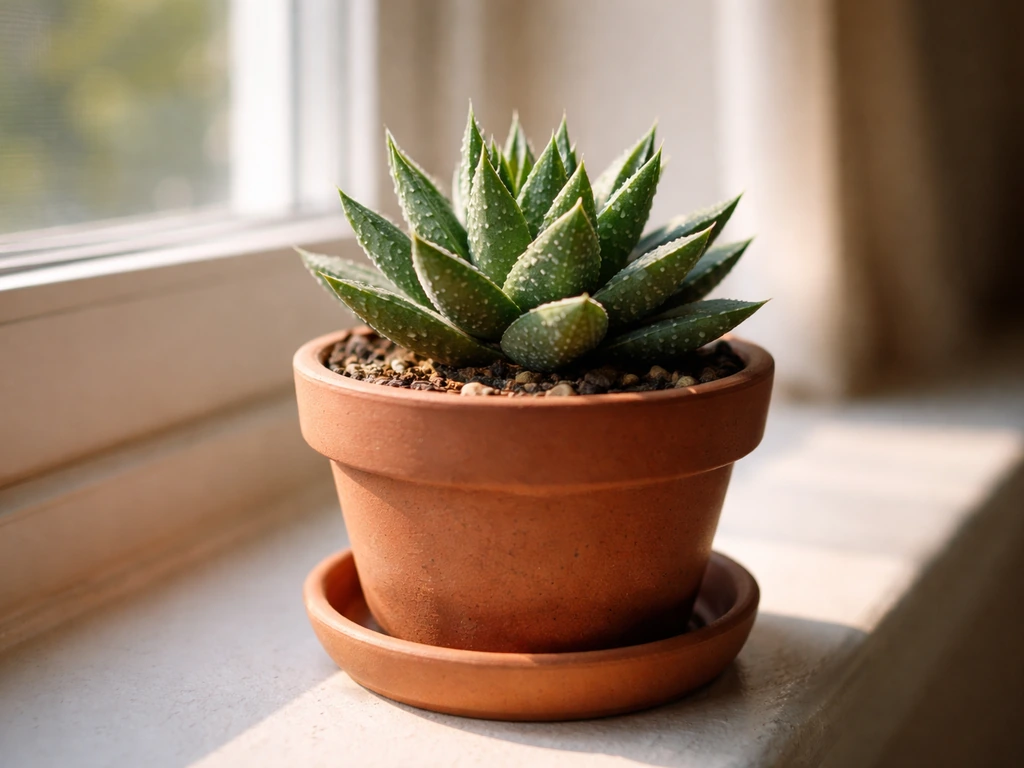
Haworthia is genuinely one of the most indoor-friendly succulents on the market. It evolved in South Africa, often growing in the partial shade of rocks and shrubs, which means it is already adapted to the kind of filtered, indirect light you get near a window. That said, it still needs real light, ideally in the 6,000 to 12,000 lux range. Most windowsills with decent brightness will hit that, but a dim north-facing corner in winter will not. The other big success factor is the drainage setup: root rot from sitting in wet soil is the number-one killer. Nail these two things and you are most of the way there.
- Bright indirect light near a window (east or west-facing is ideal; south-facing works with a sheer curtain)
- Well-draining cactus or succulent mix, ideally amended with perlite or coarse grit
- A terracotta pot with a drainage hole, sized slightly snug rather than oversized
- Watering only when the soil is approaching dryness, not on a fixed schedule
- A cool, dry winter rest period with reduced watering
- Temperatures kept between 10 and 26°C (50 to 80°F) year-round
Haworthia is forgiving for beginners but rewards anyone who pays attention to seasonal changes. If you have already kept a hoya or a succulent alive indoors, you already have the instincts you need. If you are wondering whether a hoya can also live indoors, the key is giving it bright light and avoiding soggy soil hoya can live indoors.
Indoor light needs and best window or grow-light setup
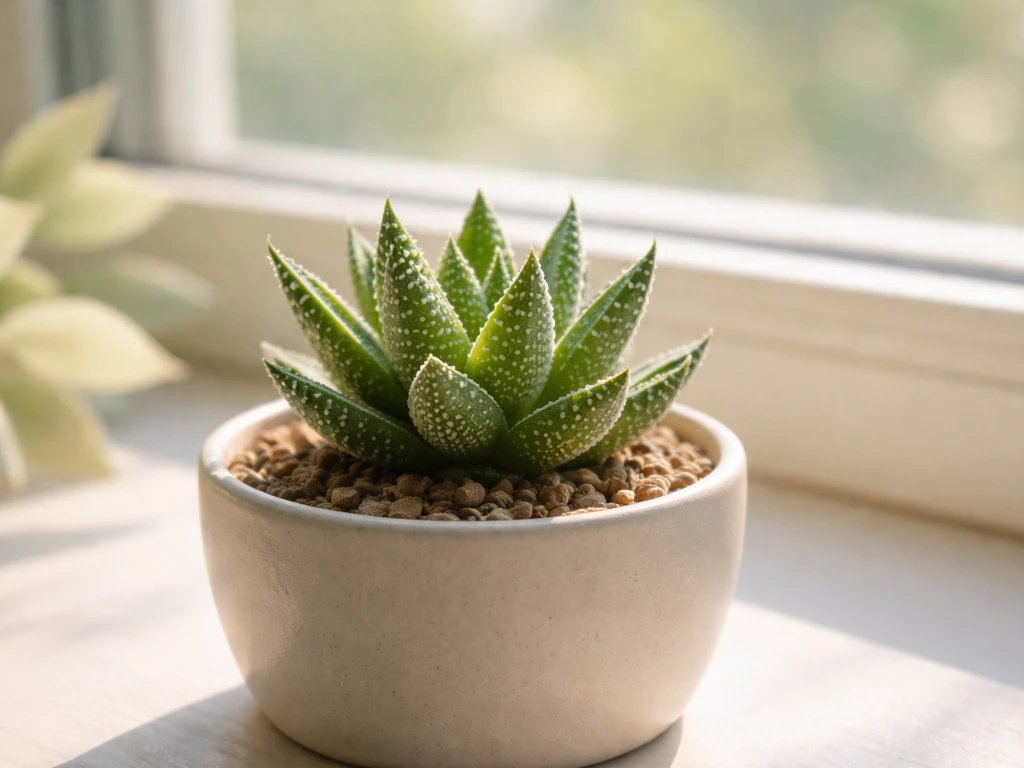
This is where most people go wrong, usually in the direction of too little light rather than too much. Haworthia does not need the blasting full sun of a cactus, but it does need consistent, bright indirect light. The sweet spot is around 6,000 to 12,000 lux. When light drops below that for extended periods, the plant starts to stretch, or etiolate: the leaves pull apart and the rosette goes tall and leggy instead of staying tight and compact. Once a plant etiolates, that shape does not reverse, so it is worth getting the position right from the start.
In practice, an east or west-facing windowsill is the ideal spot for most homes. East-facing gives gentle morning sun and bright light for the rest of the day, which haworthia loves. South-facing windows (in the northern hemisphere) can work well but may get intense midday sun in summer, so a sheer curtain or positioning the plant a foot back from the glass helps avoid scorching. North-facing windows are the hardest to work with. A haworthia can survive there but will almost always stretch and slow down significantly. If your only option is a north-facing room, a grow light changes everything.
Using a grow light indoors
A simple LED grow light on a timer running 12 to 14 hours a day can fully substitute for a good windowsill position, or supplement a dim one. Full-spectrum LED panels or bulbs work well and do not generate the heat that older-style grow lights did. Position the light 20 to 30 cm (8 to 12 inches) above the plant for adequate intensity. This setup is particularly useful in winter when natural daylight drops sharply in most northern climates. Haworthia cooperi, one of the most popular varieties with its distinctive translucent leaf tips (which evolved to photosynthesize even when partly buried in sand), is especially responsive to consistent light levels indoors.
Soil, pot, and drainage: preventing root rot
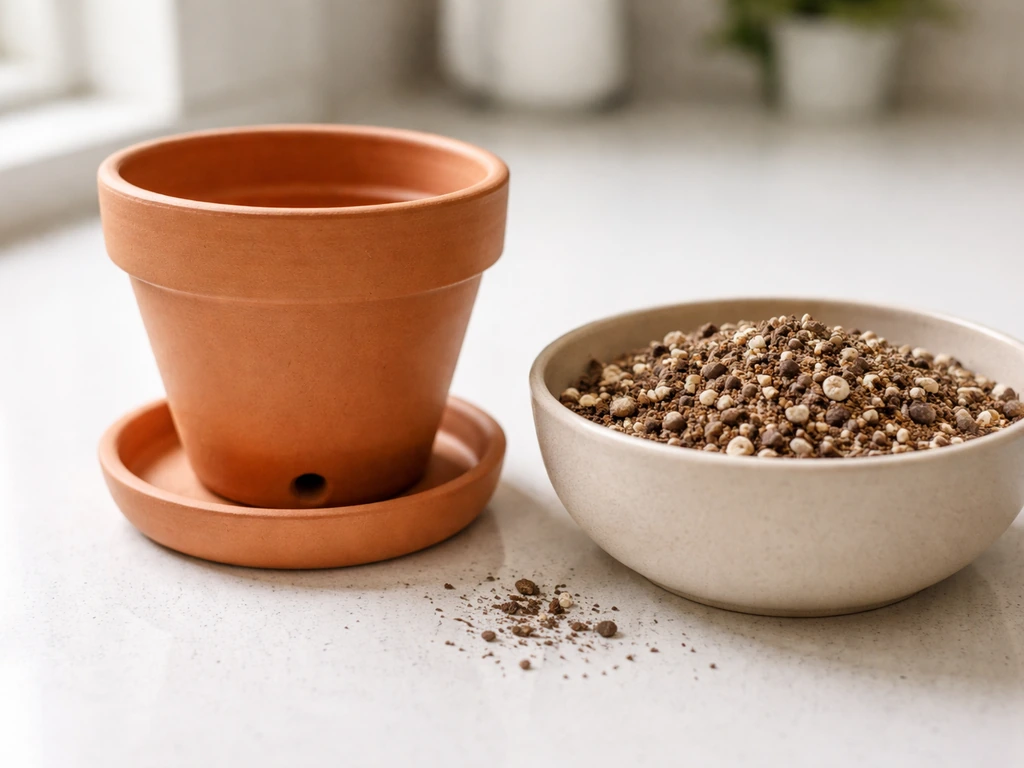
Root rot is the primary cause of haworthia death indoors, and it almost always traces back to two things: soil that holds too much water and a pot that does not drain well. The fix is straightforward but non-negotiable. Use a cactus and succulent mix as your base, then amend it with around 20 to 30 percent perlite, coarse horticultural grit, or scoria to open up the structure and improve drainage. The goal is a mix where water flows through quickly and does not compact into a dense, moisture-trapping mass. Avoid potting mixes with a lot of fine peat or moisture-retaining crystals, as these fill the air spaces in the soil that roots need.
Terracotta pots are the best choice for haworthia indoors. They wick moisture through their walls, which helps the soil dry out faster between waterings. A shallow pot or pan also works better than a deep one: haworthia has a fairly shallow root system and a deep pot just means a reservoir of wet soil sitting below the roots where it cannot dry out and will invite rot. Whatever pot you choose, it must have a drainage hole. No exceptions. Remove any saucers that let the plant sit in standing water, or empty them within an hour of watering.
| Setup element | Best choice | Why it matters |
|---|---|---|
| Pot material | Terracotta | Wicks moisture, dries faster than plastic or glazed ceramic |
| Pot depth | Shallow or standard (not deep) | Avoids trapped wet soil below the shallow root zone |
| Drainage hole | Mandatory | Without it, water accumulates and root rot follows |
| Soil base | Cactus/succulent mix | Formulated for better drainage than standard potting mix |
| Amendment | Perlite, grit, or scoria (20-30%) | Opens up air spaces, speeds drainage, reduces compaction |
Watering routine for indoor haworthia
The most useful thing I can tell you about watering haworthia is this: forget a fixed schedule. Water based on the soil, not the calendar. When the soil is approaching dryness, water thoroughly until it drains from the bottom, then leave it alone until it approaches dryness again. In active growing periods (spring and autumn, when temperatures are moderate and the plant is absorbing water most readily), that might mean watering every 10 to 14 days. In summer heat or winter dormancy, you might go three to six weeks or more between waterings.
One counterintuitive thing about haworthia: it can survive many months without water but can die quickly from root rot if kept too wet. If you are unsure, wait another few days. When you do water, avoid getting water trapped in the center of the rosette, especially in warm weather. Water sitting between the inner leaves in high temperatures is a direct cause of leaf rot, which can spread fast and damage or kill the plant. Watering at the base of the plant or using a narrow-spouted watering can aimed at the soil rather than the leaves sidesteps this entirely.
Signs your watering is off
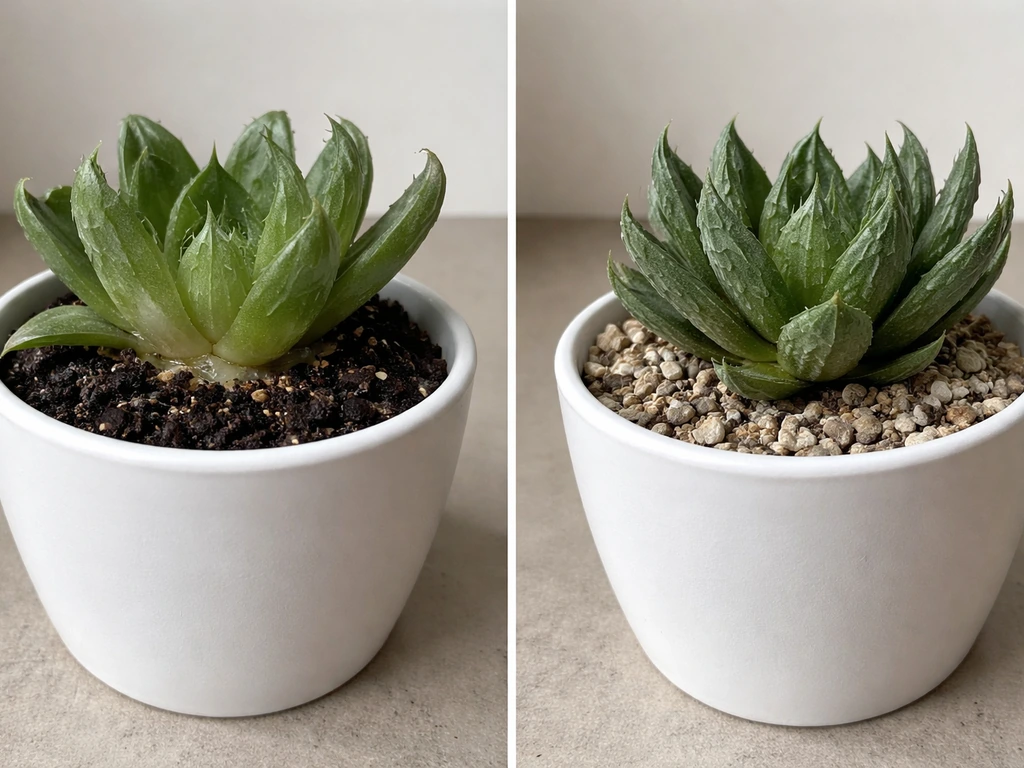
- Soft, mushy, or translucent leaves near the base: overwatering or root rot starting
- Wrinkled, slightly shriveled leaves: underwatering or roots damaged and unable to uptake water properly
- Yellowing lower leaves combined with wet soil: almost certainly too much water
- Rotting or blackening center leaves: water trapped in the rosette, especially in warm conditions
- Soil still wet after two or more weeks: drainage or soil mix needs adjusting
Temperature, humidity, airflow, and seasonal care
Haworthia is comfortable across the typical indoor temperature range: 10 to 26°C (50 to 80°F) covers almost every home environment. Most common varieties, including Haworthia cooperi, are happy at the 18 to 27°C (65 to 80°F) range that most people keep their homes at. What it does not like is sudden cold drafts from windows in winter or being placed directly next to a heat source like a radiator, which dries the air out severely and can stress the plant.
Humidity is not a major concern for haworthia the way it is for tropical plants like heliconias or some ferns. Heliconias have much higher humidity and warmth requirements than haworthia, which is why they are harder to keep indoors tropical plants like heliconias. Average indoor humidity is fine. What does matter is airflow: stagnant air increases the risk of fungal issues and makes it harder for the soil to dry properly between waterings. A room with some air circulation, even just from a nearby window opened occasionally, keeps the plant healthier than a sealed, humid room.
Seasonal adjustments matter more than most people realize
Winter care is where indoor haworthia growers most often go wrong. If you are also wondering whether other plants like hibiscus can grow indoors in winter, the answer depends on light levels and how you handle dormancy-like conditions can hibiscus grow indoors in winter. Haworthia needs a genuine rest period in winter: cooler conditions (toward the lower end of its range), reduced light, and significantly less water. If you skip the winter rest and keep watering and maintaining warm temperatures year-round, the plant responds by producing thin, weak growth that distorts its shape. The RHS is explicit about this: no winter rest means poor form, and you will end up with a plant that looks stretched and unwell. Taper your watering down gradually in autumn before winter arrives, and start bringing it back up slowly in spring. The plant needs time to adjust to both drier and wetter conditions.
Beginner-friendly setup vs troubleshooting common problems
The simple beginner setup
If you are new to haworthia, start simple. Get a small terracotta pot with a drainage hole, fill it with cactus mix blended with a handful of perlite, put it on an east or west-facing windowsill, and water it only when the top inch or two of soil is dry. Do not fertilize in the first year. Do not repot unless the roots are visibly coming out of the drainage hole. Check it every week or so, mostly just to look at it. That routine will get you a healthy, stable plant with almost no effort.
Troubleshooting the most common indoor problems
| Problem | Likely cause | Fix |
|---|---|---|
| Stretching/leggy rosette | Not enough light | Move to a brighter windowsill or add a grow light |
| Mushy base or roots | Overwatering or poor drainage | Let soil dry out fully; check drainage hole; repot into grittier mix if needed |
| Wrinkled leaves | Underwatering or root damage | Check roots for rot first; if healthy, water thoroughly |
| Center leaves rotting | Water trapped in rosette (especially in heat) | Water at soil level only; improve airflow around plant |
| Pale or washed-out color | Too much direct sun or too little light | Adjust position; bright indirect is ideal |
| No growth for months | Winter dormancy, or too dark, or rootbound | Check season; improve light; consider repotting in spring |
| Thin, weak new growth | No winter rest given | Allow cooler, drier winter period going forward |
Pests and maintenance: repotting, propagation, and clean-up
Haworthia is not particularly pest-prone, but mealybugs are the main thing to watch for. They show up as small, white, cottony clusters in the joints between leaves or around the base. The best time to treat them is in spring or autumn when temperatures are moderate and the plant is actively growing and absorbing water, as insecticidal soap applied then is most effective. Spider mites occasionally appear but are much less common on haworthia than on many other indoor plants. If you spot either pest, isolate the plant from others immediately and treat promptly.
Repotting is needed every two to three years, or when you can see roots escaping from the drainage hole. Do it in spring at the start of the growing season. Move up only one pot size at a time: too large a pot means too much soil volume holding moisture around the roots. When you repot, take the opportunity to check the roots for any rot (soft, brown, mushy roots), trim off anything damaged with clean scissors, and let the roots air dry for a day before potting into fresh dry mix. Hold off watering for a week after repotting to let any cut roots callus over.
Propagation is easy and satisfying
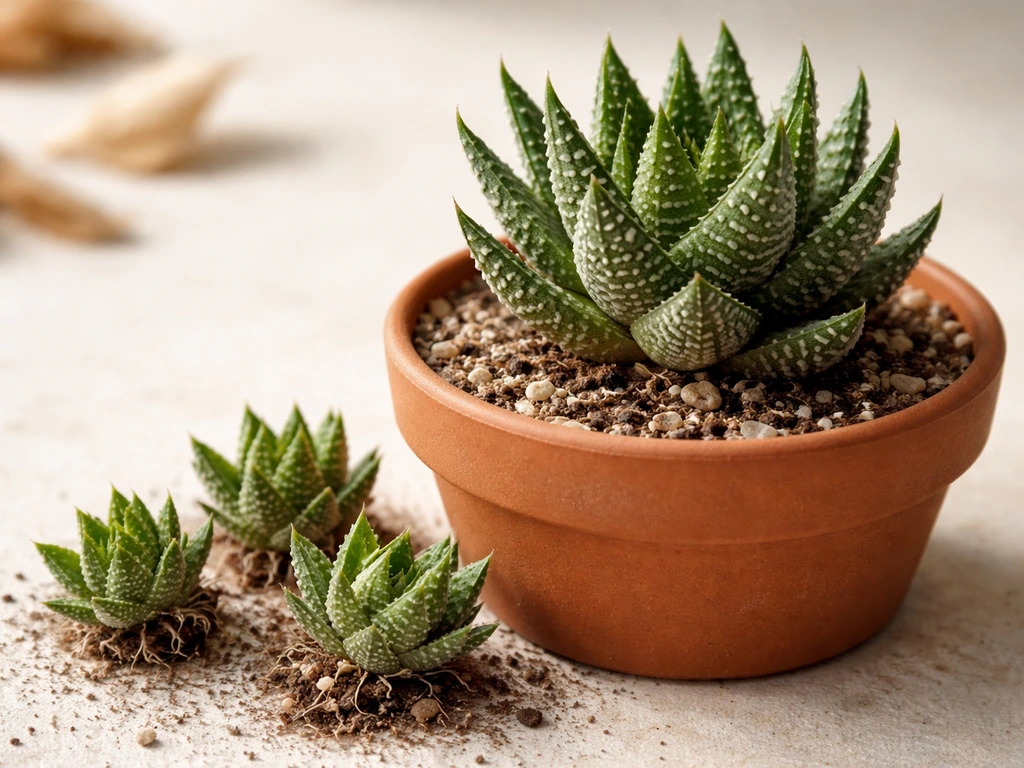
Haworthia produces offsets, or pups, regularly at the base of the plant. These are small rosettes that grow alongside the parent. Once a pup is roughly a third the size of the parent plant and has its own visible roots, you can gently separate it and pot it up independently. Let the offset dry for a day before planting in fresh cactus mix. This is genuinely one of the easiest propagation methods in indoor gardening and a great way to expand your collection or share plants with other people. If you are wondering can we grow parrots at home, start by learning what birds need day to day: a safe space, proper diet, and consistent care. You can also try leaf cuttings, though offset division is more reliable and faster.
For general maintenance, wipe dust off the leaves occasionally with a soft dry cloth. Haworthia leaves can accumulate dust indoors, which reduces the light reaching them. Remove any dead or dried outer leaves by gently pulling them away from the base. That is genuinely about all the regular maintenance this plant needs. If you enjoy a plant that gives a lot and asks for very little, haworthia is hard to beat as an indoor choice.
FAQ
Can haworthia grow in a closed terrarium or glass container indoors?
Yes, but only if you can match the same light and drainage rules. A terrarium that stays humid or has no bottom drainage is a common failure mode, because trapped moisture increases rot risk even when you water less. If you use a closed container, open it regularly for fresh air and be extra strict about a very airy mix and rare watering.
How do I know if my haworthia is getting too little light versus too much water?
The fastest way to tell is to check for shape and feel. Etiolation shows up as stretching, wider gaps between leaves, and a rosette that looks taller and less compact, and it usually happens after weeks of insufficient light. If the plant looks fine but soil stays wet for too long, rot is the likely issue instead.
What’s the safest way to increase light for an indoor haworthia that has been in a dim spot?
Move it gradually. If you put a stretched or newly purchased plant into stronger light, acclimate over 1 to 3 weeks by increasing brightness a little at a time, such as moving from a few feet back to nearer the window or increasing grow light exposure. Sudden bright light can scorch leaves, especially on plants that have been in low light.
My haworthia has soft or translucent spots on the leaves. What should I do?
If you notice leaf rot, the key decision is whether the rot is limited or spreading. Remove any clearly mushy or blackened leaves at the base, keep the plant drier immediately, and ensure the rosette center stays dry. If the crown is soft, take offsets if available, and consider propagating only healthy pups rather than trying to save the whole plant.
Does haworthia need special water (RO, distilled, rainwater) indoors?
Tap water is usually fine, but let it be at least room temperature and avoid constantly wetting the rosette center. If your tap water is very hard or you see white mineral crusting on soil or leaves, switch to filtered or rainwater for regular watering and flush the pot with water occasionally to reduce salt buildup.
Can I keep haworthia right on a windowsill during winter and summer temperature swings?
It should be okay, but you should position it away from drafts and heat blasts. A radiator next to a window can dry the plant unevenly, and cold drafts can cause stress in winter. Keep the plant on the windowsill but not directly touching the glass if it gets very cold overnight.
Should I fertilize haworthia indoors, and if so, how often?
Fertilize lightly or not at all, especially in the first year. Indoor succulents typically do best with little fertilizer because too much salts can damage roots in a dry, slow-growing environment. If you do fertilize later, use a diluted succulent or cactus fertilizer at about 1/4 to 1/2 strength and only during active growth, then stop if growth stalls.
How long should I wait to water after separating haworthia pups, and will they survive if they don’t have roots yet?
Yes, but treat it like a separate plant. Keep the offset drier right after separation, use fresh cactus mix with extra perlite, and wait until it has stable roots before resuming your normal watering pattern. Water too soon is one of the biggest reasons pups fail, even though the parent is healthy.
Why does my haworthia decline after repotting even when I follow a watering routine?
Common potting-mistakes are using a pot that is too large, using soil that stays dense, and leaving water in a saucer. If you see persistent soggy soil or the plant repeatedly declines after repotting, re-check the mix aeration, confirm there is a drainage hole, and consider terracotta for faster drying.
My plant looks worse in winter. How can I tell dehydration from winter rot indoors?
Some growth slowdown is normal in winter, but you should still confirm you are not unintentionally overwatering. If leaves look limp but the soil is dry, it may be dehydration; if leaves look translucent or mushy and soil stays wet, it is likely rot pressure. In winter, let soil dry more thoroughly before any watering, then reassess after a couple of weeks.
Should I rotate my haworthia pot indoors for even growth?
If you keep it by a sunny window, rotate the pot occasionally so it grows evenly toward light. Indoors, most plants will lean over time, and haworthia can start looking lopsided even when it is healthy. Rotate about a quarter turn every couple of weeks when you have steady daylight or consistent grow light positioning.
What’s the best way to deal with mealybugs on haworthia without harming the leaves?
Mealybugs can be hidden at the base, so quick wiping may not be enough. Isolate the plant, inspect the leaf joints and crown, and remove visible bugs with a cotton swab dipped in alcohol. Then treat with insecticidal soap and repeat if you still see new white clusters after a week, since eggs can hatch.