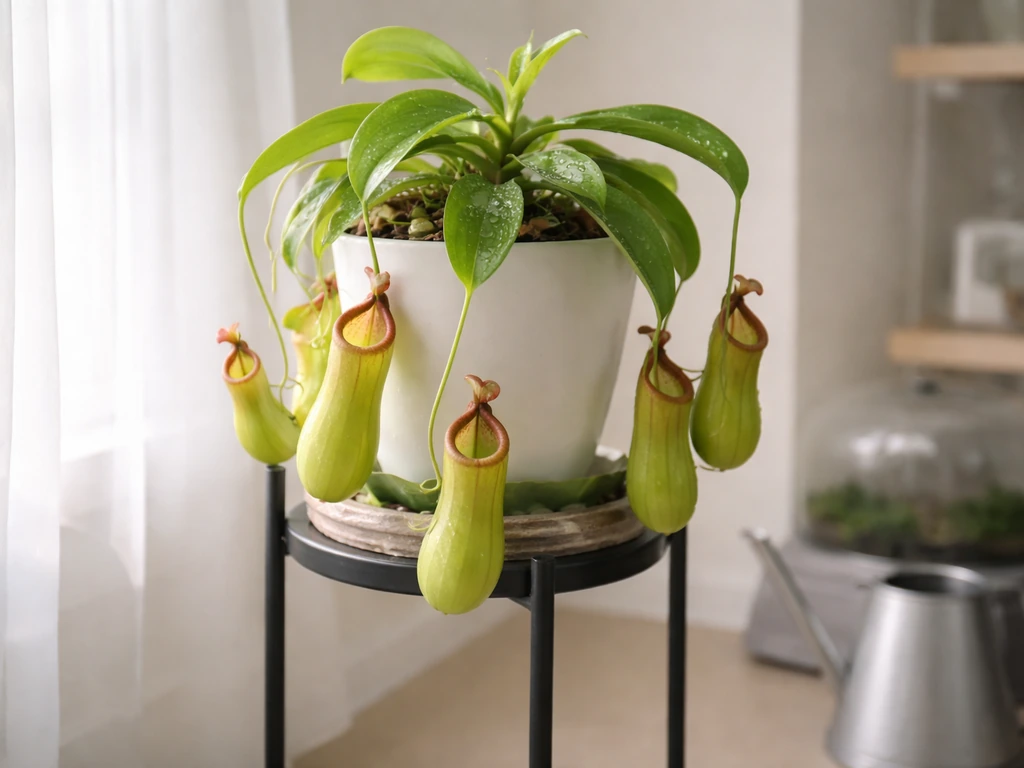
Yes, pitcher plants can absolutely grow indoors, but which species you pick makes all the difference between a thriving, pitcher-covered plant and a sad, browning mess on your windowsill. Tropical pitcher plants (Nepenthes) are the easiest indoor choice by far since they skip the cold dormancy requirement and adapt well to typical home conditions. Temperate pitcher plants (Sarracenia) can be grown indoors but need a cold rest period each winter, making them more work. The Albany pitcher plant (Cephalotus) is possible but genuinely challenging. If you're starting out, a highland or intermediate Nepenthes hybrid is your best first move.
Can Pitcher Plants Grow Indoors? Care Guide and Setup Tips

James Hartwell
7 Jun 2026
Which pitcher plants actually work indoors
Not all pitcher plants are created equal when it comes to indoor growing. Here's an honest breakdown of each group so you can pick the right one before you spend money on a plant that's going to fight you.
| Species | Indoor Ease | Dormancy Needed? | Humidity Needs | Best For |
|---|---|---|---|---|
| Nepenthes (tropical/hybrid) | Easy to moderate | No | 50%+ preferred | Beginners, apartment growers |
| Sarracenia (temperate) | Moderate | Yes (cold rest) | Moderate | Growers with a cold garage or fridge |
| Cephalotus (Albany) | Difficult | Partial/optional | High | Experienced growers only |
| Heliamphora (sun pitcher) | Moderate-difficult | No | Very high | Terrariums, highland conditions |
Nepenthes hybrids like 'Rebecca Soper', N. x ventrata, and N. x mixta are genuinely forgiving. They handle the lower humidity of most homes better than species plants, and they'll keep growing and pitchering year-round with no dormancy fuss. If you've ever grown carnivorous plants indoors, you'll know the other genera can grow indoors too, but the more demanding conditions make it much trickier to get them right.
What every indoor pitcher plant needs: the non-negotiables
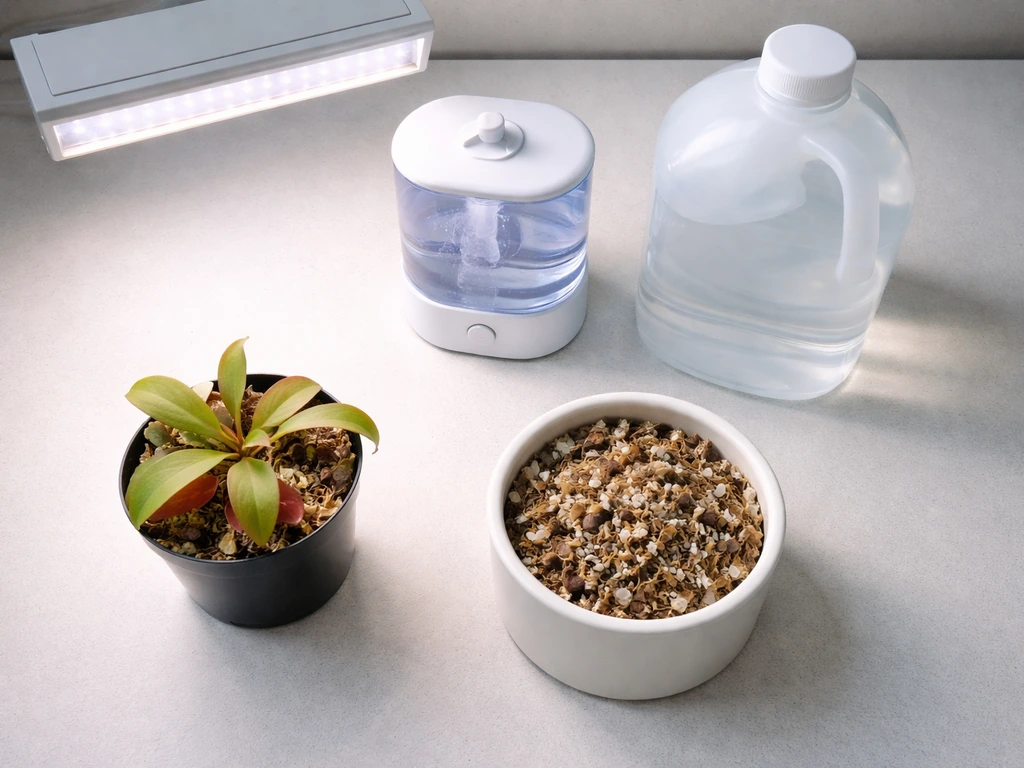
Think of these as the four things you absolutely cannot skip. Get all four right and your plant will thrive. Miss even one and you'll wonder why the pitchers keep dying.
Light
This is where most indoor growers fail. Pitcher plants want a lot of light: the kind of bright, intense exposure most homes simply don't deliver through a window. A south-facing window is your minimum for window growing, and even then you may see weak, spindly growth or poor coloration if the light isn't strong enough. Thin, pale, or non-pitchering growth is almost always a light problem.
If you're using grow lights for seed starting or supplementing natural light, ICPS guidelines recommend at least 25W of white LED per square foot or 15W of colored (red/blue) LED per square foot, run for 16 to 18 hours per day for seedlings, and 12 to 16 hours per day for established plants. Sarracenia.
com also discusses strong-light culture targets, including aiming for 10, 16 hours of direct, unfiltered sunlight when possible The Carnivorous Plant FAQ.
Temperature
Nepenthes lowland hybrids are happy in typical room temperatures: 65 to 85°F (18 to 30°C) suits them perfectly. Highland Nepenthes want cooler nights, ideally dropping to 50 to 60°F (10 to 15°C), which most homes don't provide without effort. Sarracenia handle wide temperature swings and actually need them seasonally. Keep the species' natural range in mind when picking your plant.
Humidity
Nepenthes need 50% relative humidity or higher, and the Logees cultural guidance is clear: the more the better, because higher humidity directly drives better pitcher development. Most homes run between 30 and 50% humidity depending on season and climate. If your home is on the dry side, especially in winter with the heat running, you'll want a small humidifier near the plant or a tray of water and pebbles underneath it. Sarracenia are more tolerant but still appreciate moderate humidity.
Airflow
Stagnant air is a hidden killer of indoor carnivorous plants. It encourages mold, fungal rot, and algae growth in the media. A small USB fan on a low setting nearby does the job well. You want gentle movement, not a wind tunnel. This is especially important in enclosed terrariums where humidity is high but air circulation is poor.
Soil and pot setup: what goes in the container matters enormously
Pitcher plants evolved in nutrient-poor, acidic, boggy soils. Regular potting mix will kill them. Fertilizer from the soil will also kill them. You need to get this right from day one.
The right soil mix
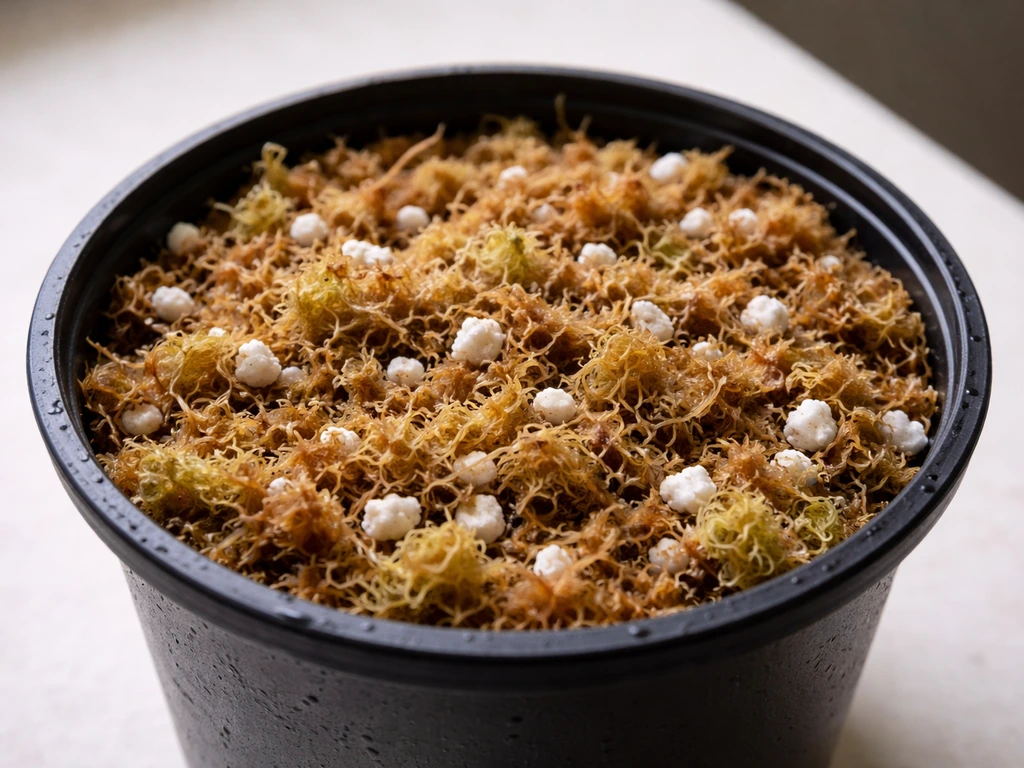
For Nepenthes, a mix of long-fiber sphagnum moss and perlite (roughly 50/50 or 60/40 sphagnum to perlite) is a reliable starting point. It stays moist, drains well, and keeps roots aerated. For Sarracenia, a classic mix is 50% peat and 50% coarse silica sand or perlite. Avoid peat mixes with added fertilizer or lime. For Cephalotus, a more porous mix helps reduce the root rot risk that trips up so many growers: ICPS notes that porosity is more important than getting the exact recipe perfect.
Container choice
Plastic pots work better than terracotta because terracotta wicks moisture away and can concentrate minerals in the soil over time. A pot with drainage holes is essential. For Sarracenia grown using the tray method (more on this in a moment), a plain plastic nursery pot sitting in a tray of water is the standard setup. For Nepenthes, hanging baskets lined with sphagnum are a beautiful option that also promotes airflow around the roots.
Drainage and the tray method
Sarracenia thrive with the tray method: sit the pot in a shallow tray filled with 1 to 2 inches of water, and let the plant drink from the bottom up. Refill the tray when it's nearly empty. Nepenthes prefer not to sit in standing water; instead, water from the top and let excess drain freely, then allow the mix to go slightly moist (not bone dry, not waterlogged) between waterings.
Watering: this is where most people accidentally poison their plants
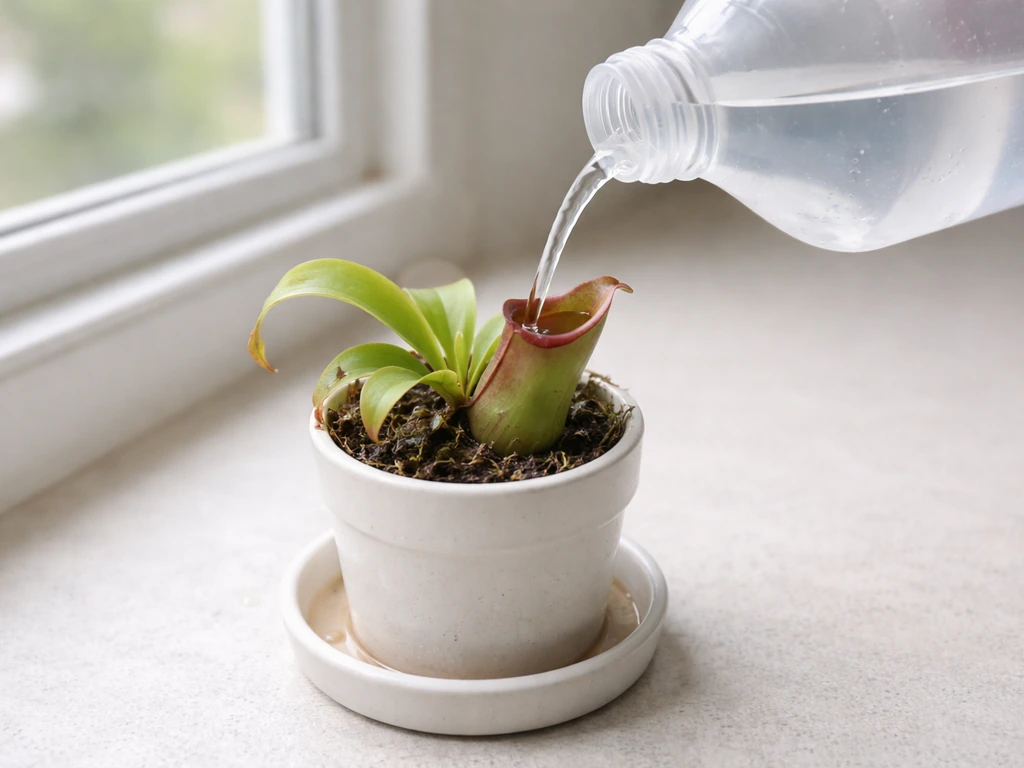
Pitcher plants are extremely sensitive to the minerals in tap water. Even water that tastes perfectly fine to you can have dissolved salts, chlorine, and minerals at levels that will slowly damage and eventually kill your plant. Stick to one of these three options exclusively: distilled water, reverse osmosis (RO) water, or collected rainwater. That's it. Don't use softened water either, since it replaces calcium and magnesium with sodium, which is just as harmful.
A gallon of distilled water from the grocery store costs about a dollar and lasts a small Nepenthes for a couple of weeks. An RO filter under the sink is a bigger upfront cost but pays for itself quickly if you're growing multiple plants. Rainwater is free and plants love it, though collecting enough in an apartment is tricky.
What about fertilizer?
Do not add fertilizer to the soil or water. Pitcher plants are carnivorous because they evolved in nutrient-depleted environments. Their roots are not built to handle conventional fertilizer and it will cause root burn and death. If you want to feed them, you can occasionally place a small, dead insect (a dried mealworm works well) into a mature pitcher. Feed sparingly: once or twice a month in the growing season is plenty. Nepenthes in particular appreciate a small amount of prey in their pitchers, but they don't need it to survive if they're getting decent light.
Getting the light right: windows vs. grow lights
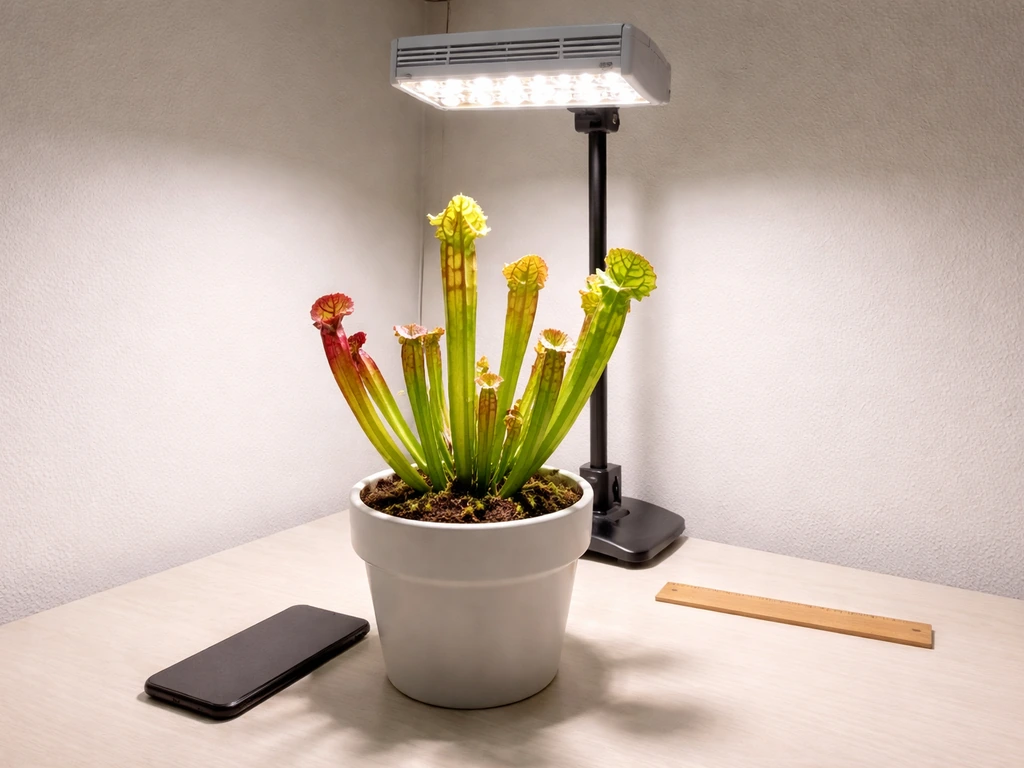
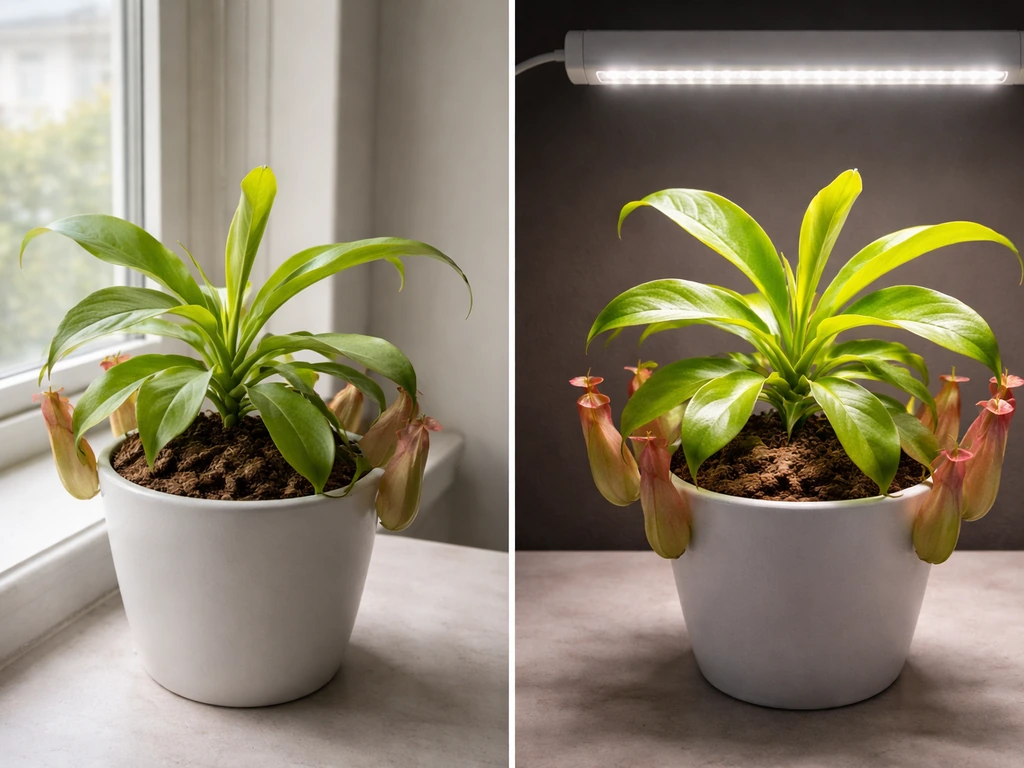
A south-facing window in summer can work for Nepenthes and Sarracenia if the plant gets at least 4 to 6 hours of direct sun. But in winter, or in an apartment where direct sun is limited, a grow light is often the difference between a plant that pitchers and one that just barely survives. I've had Nepenthes do much better under a grow light than they ever did on a windowsill in a north-facing apartment.
Grow light recommendations
Full-spectrum white LED grow lights are the most versatile option. ICPS guidelines recommend at least 25W of white LED per square foot of growing area. Red/blue (purple) LED lights need at least 15W per square foot because they're more efficient at the wavelengths plants actually use, but they can miss parts of the spectrum that some carnivorous plant genera need. Run lights for 12 to 16 hours a day for established plants, using a simple outlet timer to stay consistent. Position the light 6 to 18 inches above the plant depending on its output: check that the canopy feels warm but not hot to the back of your hand.
Windowsill placement tips
- South-facing windows are best in the northern hemisphere; move the plant as close to the glass as possible without touching it
- East-facing windows give morning sun and work for Nepenthes but are usually insufficient for Sarracenia
- West-facing windows are a workable second choice for Nepenthes in summer
- North-facing windows will not provide enough light for any pitcher plant without supplemental grow lighting
- Clean the glass: dirty windows can cut light transmission by 10 to 20%
Seasonal care and dormancy: what to do when things slow down
This is one area where the species you chose matters a lot. Handle it correctly and your plant comes back healthier in spring. Get it wrong and you might lose the plant entirely.
Nepenthes (no dormancy needed)
Tropical Nepenthes don't need a dormancy period. They grow year-round. In winter, growth may slow simply because light levels drop, but this isn't true dormancy. Just maintain your watering routine, keep humidity up, and consider boosting your grow light hours to compensate for shorter days. Lowland hybrids are fine at normal room temperature all year long.
Sarracenia (cold dormancy is non-negotiable)
Temperate Sarracenia need 3 to 5 months of cold dormancy, typically from November through February. In nature they experience frosts and freezing temperatures. Indoors, you need to replicate this. Options include an unheated garage that stays between 32 and 50°F (0 to 10°C), or a refrigerator. Trim dead pitchers before storing, reduce watering to just enough to keep the media barely damp, and keep the plant in the dark or under very dim light. Bring it back out gradually as your last frost date approaches and light levels increase in spring. Skipping dormancy weakens Sarracenia significantly over time and they will decline.
Cephalotus (partial rest works)
Cephalotus benefits from a cooler, slightly drier rest period in winter but doesn't need hard freezing temperatures the way Sarracenia do. Keeping it around 45 to 55°F (7 to 13°C) for 2 to 3 months while reducing watering slightly is sufficient. Light remains important year-round for Cephalotus since it's most colorful and healthy with strong light exposure.
Troubleshooting common indoor problems
Even with the best setup, things go wrong. Here's what I see most often and how to fix it.
Pitchers turning brown or black
Old pitchers naturally die back over time, so some browning is normal. But if new pitchers are browning quickly, the most common culprits are: low humidity (especially for Nepenthes), tap water minerals, or handling the tendrils roughly. Check your humidity first. If the air is dry, a humidifier nearby will often solve it within a few weeks as new pitchers form.
No new pitchers forming
The plant is growing leaves but not producing pitchers? That's almost always a humidity or light problem. Nepenthes stop forming pitchers when humidity drops below what they need. Increase humidity first. If humidity is already 50%+ and pitchers still aren't forming, add more light. It's rarely a watering or feeding issue.
Weak, pale, or spindly growth
Etiolated (stretched, pale) growth almost always means insufficient light. Move the plant closer to a window or add a grow light. If you're also wondering whether can spider plants grow indoors, they are usually far easier to keep than carnivorous pitcher plants. Don't just add one small bulb and expect miracles: match the wattage recommendations from ICPS so the plant is actually getting enough intensity.
Mold, algae, or fungal growth in the media
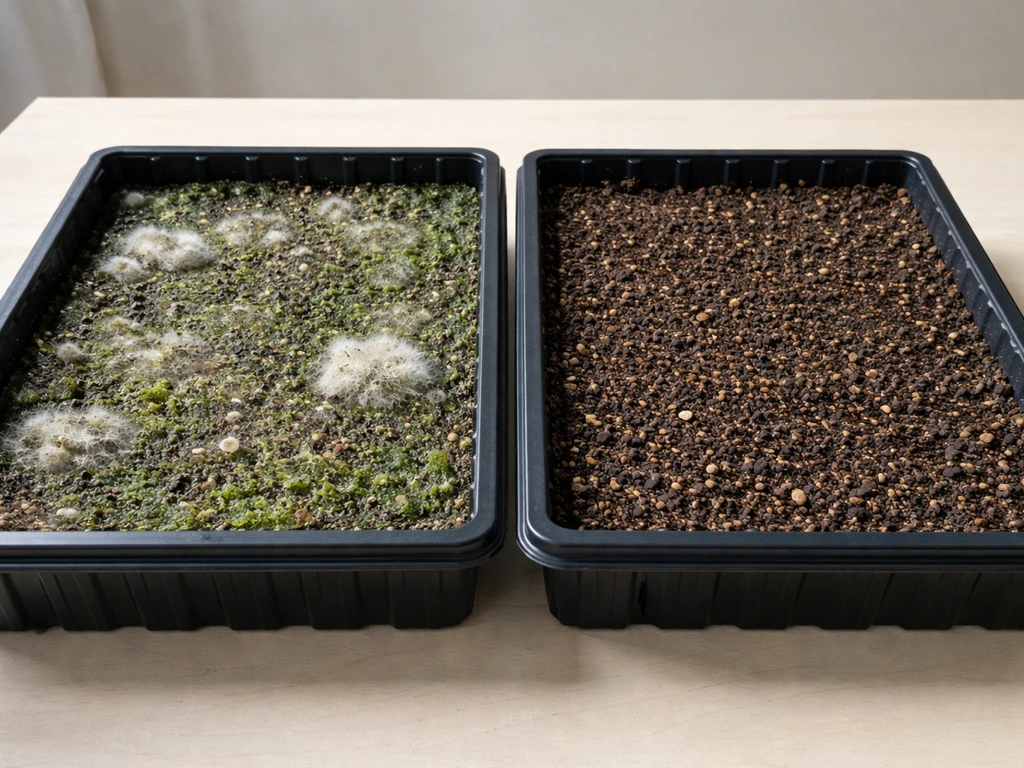
This is a sign of stagnant air, overwatering, or both. Add gentle air circulation with a small fan. If the media smells sour or the surface is consistently slimy, reduce watering frequency and let the top layer of moss dry slightly between waterings (for Nepenthes). A hydrogen peroxide solution (1 part 3% peroxide to 3 parts distilled water) drizzled on the surface can knock back surface mold without harming the plant.
Root rot
Root rot shows up as mushy, blackening stems at the base and a sudden collapse of the plant despite regular care. It's caused by overwatering plus poor drainage plus stagnant air, often all three together. If you catch it early, unpot the plant, trim all black or mushy roots back to healthy tissue, dust with sulfur powder or let the roots air dry briefly, then repot in fresh media. Improve drainage and airflow after repotting.
Pests
Aphids, fungus gnats, and mealybugs are the most common indoor pests. The irony is that a healthy pitcher plant will catch and eat fungus gnats. For aphids or mealybugs, insecticidal soap spray works well. Avoid neem oil on Nepenthes as some growers report sensitivity. Fungus gnats in the media usually signal overwatering: let the surface dry more between waterings.
Is this a good plant for beginners and apartments?
If you pick the right species, yes. A Nepenthes hybrid like N. x ventrata is about as beginner-friendly as carnivorous plants get. It tolerates lower humidity than most, doesn't need a cold dormancy, and is available at many garden centers.
You don't need a greenhouse or a bog garden. You need a bright spot, distilled water, and the right potting mix. Once the setup is done, day-to-day care is minimal: water once or twice a week, refill the pitcher fluid occasionally with a drop of distilled water, and trim dead pitchers when they go brown. The time commitment is genuinely low after the initial setup, maybe 10 to 15 minutes a week.
Pitcher plants are also non-toxic to cats and dogs (though you should keep curious pets from drinking the pitcher fluid), and they're excellent natural pest catchers for indoor spaces. Air plants do well indoors as long as you provide bright, indirect light and regular misting or soaking can air plants grow indoors.
If you're interested in exploring other carnivorous plants indoors, many of the same principles apply: the right water, the right media, and honest light assessment are the common threads across the whole group.
Your starter checklist for growing pitcher plants indoors
- Choose a Nepenthes hybrid for the easiest indoor experience (N. x ventrata, N. x mixta, or 'Rebecca Soper' are great starting points)
- Get a plastic pot with drainage holes and mix equal parts long-fiber sphagnum and perlite
- Position the plant at a south-facing window or set up a full-spectrum LED grow light at 25W per square foot, running 12 to 16 hours per day on a timer
- Buy distilled or RO water and use it exclusively for watering and topping up pitchers
- Set up a small fan nearby for gentle air circulation
- Check humidity with a cheap hygrometer: aim for 50% or above, and add a humidifier if your home runs dry
- Water from the top when the media is slightly moist (not bone dry, not soggy), letting excess drain freely
- Do not add fertilizer to the soil: feed only by placing small insects into mature pitchers once or twice a month if you want
- Monitor for the three early warning signs: pale/spindly growth (light problem), no pitchers forming (humidity or light), browning new pitchers (humidity or water quality)
- If growing Sarracenia, plan a 3 to 5 month cold rest period starting in November in an unheated space or the fridge
FAQ
If I use a windowsill, how do I prevent uneven growth or pitchers facing the wrong direction?
Most pitcher plants do best with clean, consistent light, so rotate the pot every 1 to 2 weeks to keep growth even. If you only move it when you notice problems, pitchers can form unevenly and later leaves may look lopsided even after you correct the lighting.
Can I grow pitcher plants in a bathroom or kitchen if humidity is high but the room has lots of moisture on surfaces?
Yes, but only if you use a humidity strategy that avoids wet foliage. Use a small humidifier aimed at the plant, or a covered tray system, and keep leaves dry where possible to reduce fungal issues.
How can I tell normal pitcher dieback from an actual care problem?
If a pitcher browns at the tip while the base stays healthy, it is often normal wear. If multiple new pitchers brown quickly at the same time, check humidity and water source first, then inspect that the plant is getting strong light (new growth should look thicker and darker once conditions improve).
Should I add water to the pitchers, and how often is too often?
Yes, but pitchers do not need to be “topped up” constantly. Add only a small amount of distilled water to the pitcher opening when it is clearly drying out, then leave it alone. Too much liquid or frequent disturbance can encourage mold on pitcher rims.
Is feeding necessary indoors, and what happens if I overfeed my Nepenthes?
For Nepenthes, you generally want to avoid feeding more than once or twice per month, and only offer small prey into mature pitchers. Feeding young pitchers is less successful, and overfeeding can foul the pitcher or promote rot, especially in low light.
What should I do if I already watered with tap water a few times?
Because tap water can slowly accumulate salts, flush is not a good substitute for proper water. If you already used tap water, the safer approach is to switch to distilled or RO immediately, then consider repotting into fresh media if you notice crusty buildup or persistent browning.
Can I water on a schedule, or do I need to adjust based on what the potting mix is doing?
Often yes, especially for Nepenthes, but aim for gentle drying cycles. If you let the media sit constantly wet, the plant may look lush while slowly declining. A simple check is to water only after the top layer has slightly shifted toward damp rather than wet (species and season will change the timing).
Can pitcher plants be grown in an enclosed terrarium?
Yes, but only if the pot can breathe and drainage is fast. Terrariums tend to trap stagnant air and reduce airflow around roots, which raises mold risk. If you use one, add active airflow (a small low-speed fan) and avoid sealing it tightly.
Do pitcher plants need a strict light schedule, or can I vary it day to day?
If you must, use a dimmer timer approach, not a short photoperiod. Aim for 12 to 16 hours of light for established plants when using grow lights, and use a consistent schedule so the plant does not keep cycling between darkness and sudden intensity.
What’s the best indoor treatment plan for aphids, mealybugs, and fungus gnats?
Use only insecticidal soap for most common soft-bodied pests, and rinse with distilled water afterward if you see residue. For fungus gnats, the root cause is usually overwatering, so let the surface dry more between waterings and consider changing the watering frequency before repeating sprays.
Where should I avoid placing pitcher plants indoors (windows, vents, heaters)?
Cephalotus and Sarracenia are less forgiving about temperature swings than many Nepenthes. Avoid placing plants right against drafty windows, heat vents, or AC outlets, since rapid temperature changes combined with wet media can trigger rot.
How do I repot without stopping pitcher production for too long?
Repotting can pause growth, so do it only when necessary, and handle roots gently. Use fresh, species-appropriate media and do not add fertilizer afterward, because the main risk is root stress plus nutrient and salt exposure.