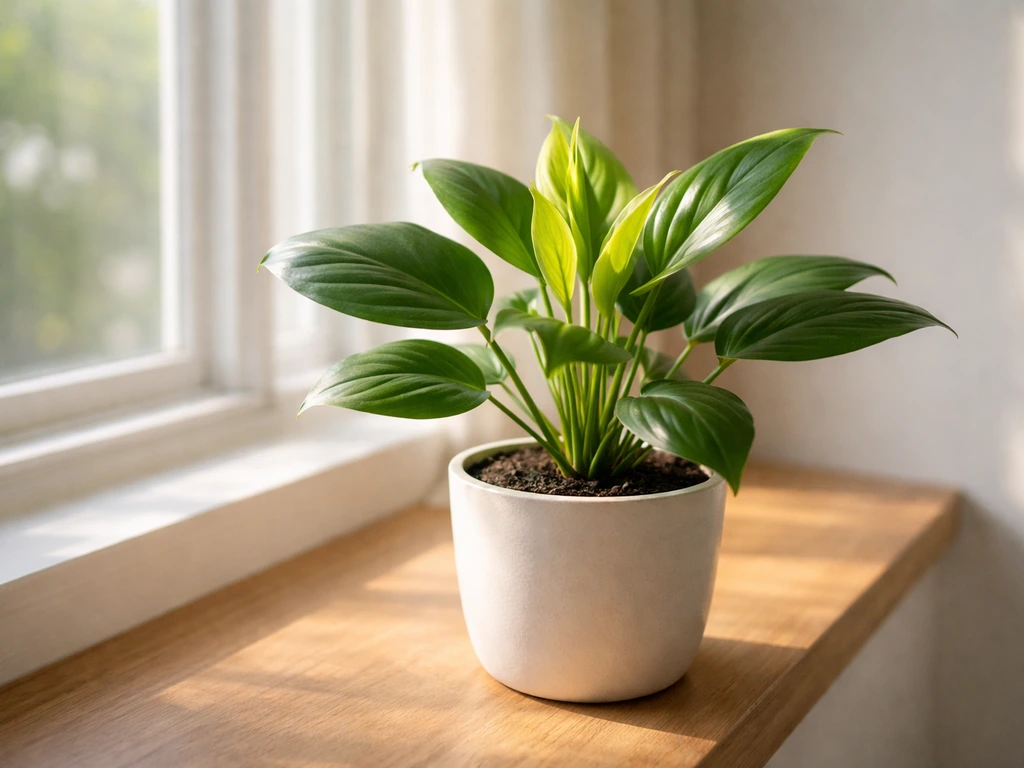
Yes, indoor plants absolutely grow indoors. Not just survive in a corner looking sad, but actually push out new leaves, extend stems, and fill a pot with roots. The catch is that growth depends almost entirely on how well you match your plant to your home's real conditions, especially the light. Air plants can grow indoors too, as long as you meet their moisture and light needs can air plants grow indoors. Get that right, and a pothos will give you three to four new leaves a month. Get it wrong, and that same plant stretches desperately toward the window with huge gaps between leaves and barely a new leaf to show for months.
Do Indoor Plants Grow? What You Need to Thrive Indoors
James Hartwell
6 Jun 2026
What actual growth looks like indoors
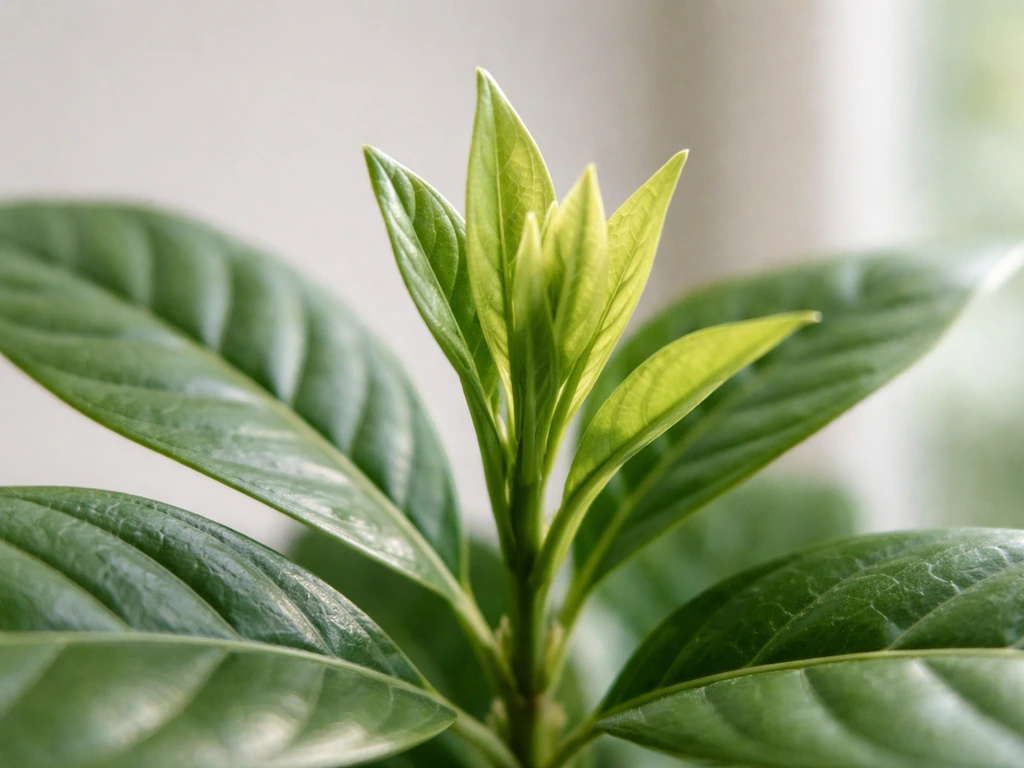
A lot of people mistake "staying alive" for "growing." Those are two very different things. A plant that's alive but not thriving will hold its existing leaves, maybe look okay, but produce nothing new. Real indoor growth is easy to spot once you know what to look for.
- New leaves unfurling from the growing tip, usually every few weeks with adequate light
- Stem length increasing between leaf nodes (short internodes are a good sign; long, stretched ones mean the plant is hunting for light)
- Roots emerging from drainage holes or circling the top of the soil surface, signaling a healthy root system
- Deeper, richer color in the foliage compared to when you first brought the plant home
- For flowering species, buds forming seasonally
The newest leaf is always your best diagnostic tool. For example, with a peace lily or any recent nursery purchase, ignore the older nursery leaves and watch what the plant produces on its own after a few weeks at home. If the new growth is smaller and paler than the existing leaves, something is off, usually light. If it matches or exceeds what's already there, you're on the right track.
Light is everything: window direction, foot-candles, and grow lights
If you take one thing from this article, let it be this: light intensity is the single biggest factor determining whether your indoor plant grows or just exists. Everything else, watering, feeding, soil, is secondary. I've moved the same pothos from a dim hallway to a bright east-facing window and gone from zero new leaves in six weeks to four new leaves in one month. Same plant, same soil, same water schedule.
Light is measured in foot-candles (fc). The categories that actually matter for indoor growing break down like this, according to university extension research:
| Light Level | Foot-Candles | Typical Window Position | Example Plants |
|---|---|---|---|
| Low | 50–500 fc (75 fc is a common low-light threshold) | Far from any window, north-facing rooms | Cast iron plant, ZZ plant, some ferns |
| Medium | 500–1,000 fc | East or west window, 3–5 feet back from a south window | Pothos, peace lily, philodendron |
| High | 1,000+ fc | Within 1–2 feet of a south or west-facing window | Succulents, herbs, fiddle-leaf fig |
Here's the practical reality: light intensity drops fast as you move away from the window. Even in the same room, a plant sitting two feet from the glass can be getting dramatically less light than one right on the sill. The direction your window faces matters too. South-facing windows in the Northern Hemisphere get the most total light; north-facing windows get the least. Season and shading from trees or buildings also shift the math significantly.
When to use a grow light
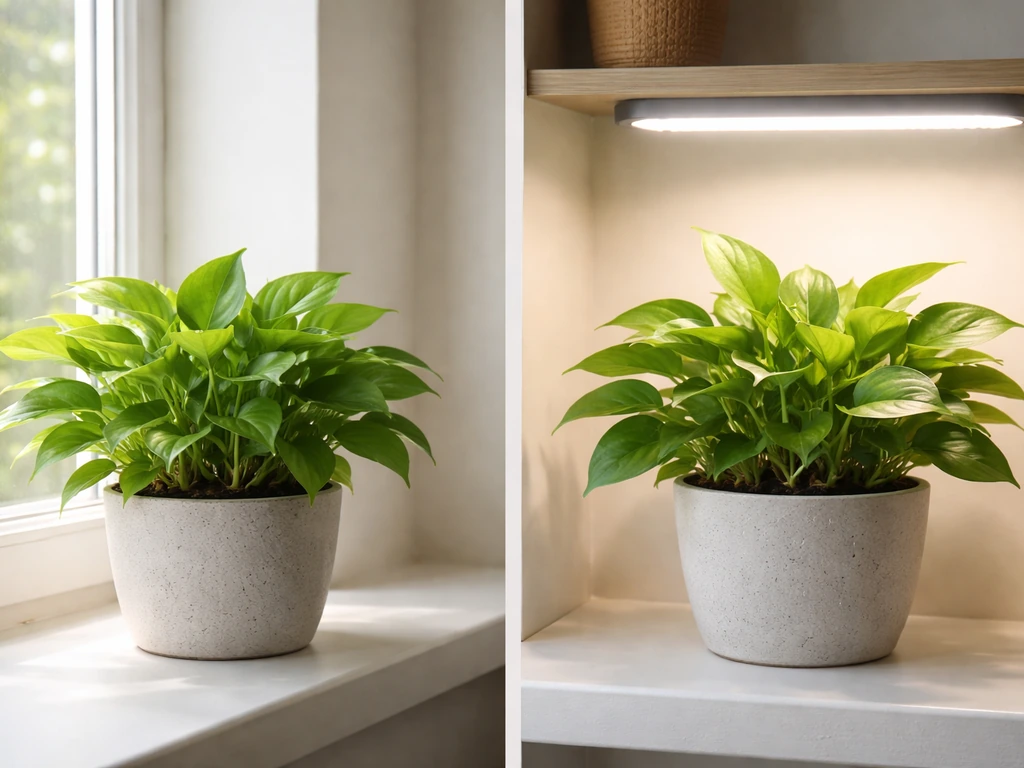
If your home doesn't have a bright south or west window, or if your plant keeps showing leggy, stretched growth with pale new leaves, a grow light is the most direct fix. Full-spectrum LED grow lights positioned 6–12 inches above foliage for 12–16 hours a day can replicate the intensity your plants need. This isn't a luxury option for serious growers only. It's genuinely the fastest way to unlock real growth in a dim apartment. I run a simple clip-on LED over my herb shelf in a north-facing kitchen and it makes the difference between herbs that actually produce leaves to harvest and herbs that slowly fade.
Choosing the right plant for your actual light situation
Before you fall in love with a plant at the garden center, assess your home's actual light. Be honest. A lot of plant problems trace back to putting a high-light plant in a low-light room and then wondering why it sulks. Here's how to match plant to place:
- Identify your window direction (north, south, east, or west) and count how many hours of direct or indirect light that window gets in the current season
- Estimate foot-candles if you can, using a light meter app on your phone as a rough guide
- Match the plant's published light requirements to what you actually have, not what you wish you had
- For apartments with only north-facing windows, stick to genuine low-light plants like ZZ plants, pothos, or cast iron plants rather than trying to force herbs or succulents
- For bright south-facing windows, you have the most options, including herbs, most tropical foliage plants, and even some fruiting plants
Some plants worth knowing about for specific niches: spider plants are impressively adaptable to medium and even lower light, air plants (Tillandsia) need bright indirect light near an east or west window but no soil at all, and carnivorous plants like pitcher plants are honestly a special case indoors because Sarracenia in particular wants intense sunlight that most homes just can't deliver without grow lights. If you're curious about those specialty plants, they each have their own set of indoor growing requirements that differ significantly from typical houseplants. Carnivorous plants can also be grown indoors, but they need specific light and watering conditions to thrive. Carnivorous plants also have their own indoor requirements, especially regarding light and moisture, so it helps to plan for those before you buy those specialty plants.
Watering, drainage, and soil: the trio that makes or breaks roots
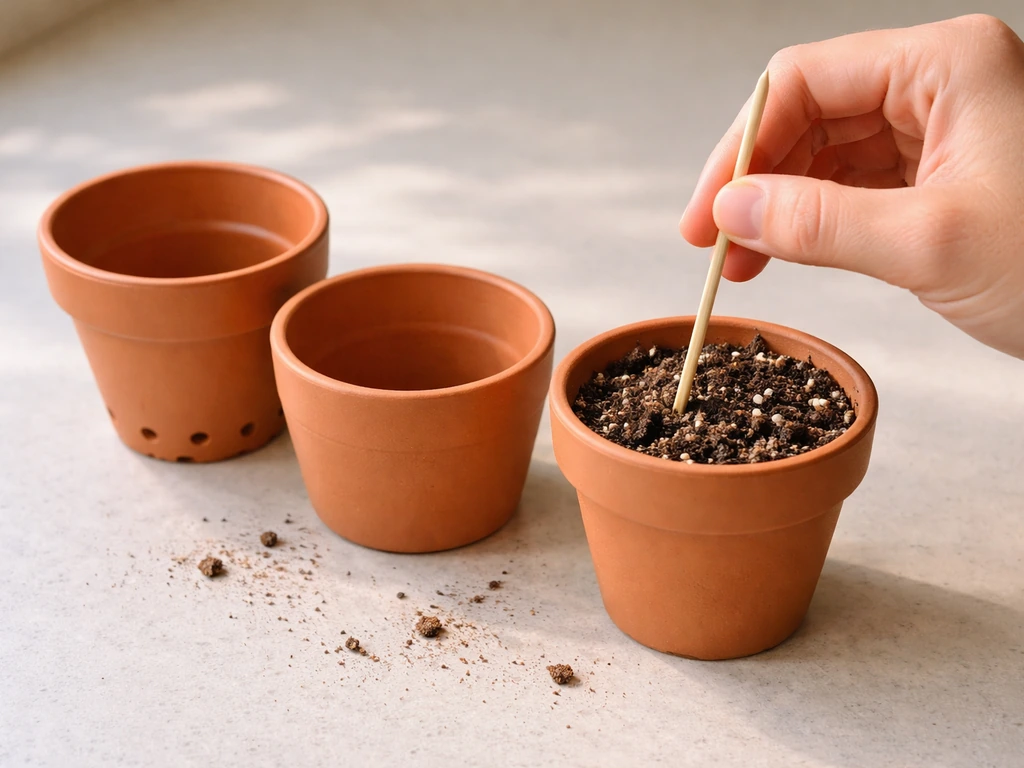
More indoor plants are killed by overwatering than by almost any other cause. Can pitcher plants grow indoors? Yes, but they need very specific light and consistently managed moisture. The problem isn't usually the amount of water, it's watering on a schedule instead of checking the soil, using pots without drainage, or choosing soil that holds too much moisture. Roots need oxygen just as much as they need water, and waterlogged soil starves them of air. UMN Extension explains that overwatering or letting plants sit in water can lead to root rot, because blank" rel="noopener noreferrer">wet soil lacks air and roots need oxygen to grow well.
The right approach is simple: check the soil before you water. Stick your finger an inch into the potting mix. If it's still moist, wait. Most common houseplants do best when the top inch or two dries out between waterings. A few, like succulents and cacti, want even more drying time. A few others, like ferns and peace lilies, prefer consistently moist but never soggy conditions. The plant's label or a quick lookup will tell you which camp it falls into.
Pot size, drainage holes, and soil mix
Always use a pot with drainage holes. Pots without drainage are genuinely harder to manage because there's nowhere for excess water to go, and roots sitting in pooled water at the bottom will rot. If you love the look of a decorative pot without holes, use it as a cachepot and keep your plant in a plain nursery pot with drainage inside it.
Pot size matters more than people realize. A pot that's too large for the root system holds far more wet soil than the roots can drink from, which mimics overwatering even when you're being careful. Go up in pot size gradually, typically only one size (about 2 inches in diameter) at a time when you do repot. For soil, a porous, well-draining potting mix is the baseline. For succulents and cacti, cut standard potting mix with perlite to improve drainage. For tropicals, a standard houseplant mix usually works as long as it's not old and compacted.
Fertilizing: only feed a plant that's actually growing
Fertilizer is fuel for growth, not a rescue treatment. If your plant isn't growing because of low light, adding fertilizer won't fix it and can actually make things worse by building up salts in the soil. The rule is: fertilize only when your plant is actively pushing new growth, which is typically March through September for most houseplants in the Northern Hemisphere.
For most common houseplants, a balanced fertilizer like a 10-10-10 formula works well as a starting point. Most plants only need feeding once every one to three months during the growing season. More frequent feeding doesn't speed up growth the way you might hope, and the salt buildup from over-fertilizing can actually make it harder for plants to take up water, which then looks like drought stress. If you notice a white crusty residue on the soil surface or pot rim, that's salt accumulation. Flush the soil thoroughly with water to clear it out.
When your plant won't grow: fast troubleshooting
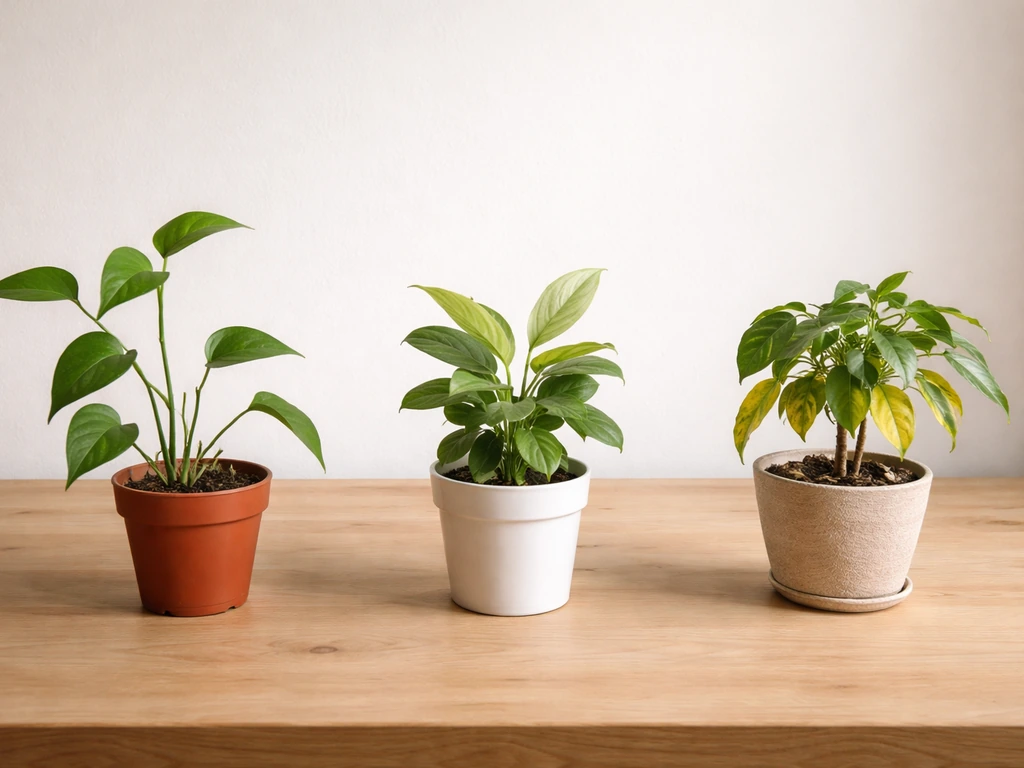
If your plant has been sitting without producing new growth for more than four to six weeks during the growing season, run through this checklist before assuming the plant is a lost cause.
| Symptom | Most Likely Cause | Quick Fix |
|---|---|---|
| Long, stretched stems with large gaps between leaves | Not enough light | Move closer to window or add a grow light |
| New leaves are smaller and paler than old ones | Insufficient light intensity | Increase light; check foot-candle level at plant position |
| Variegated plant pushing all-green new growth | Low light (plant reverting for more chlorophyll) | Move to brighter spot |
| Wilting between normal waterings | Root rot or pot-bound roots | Check roots; repot if rootbound or if roots are brown and mushy |
| No new growth during growing season despite good light | Nutrient deficiency or rootbound | Fertilize lightly; check if roots are circling the pot bottom |
| Yellowing lower leaves, soggy soil | Overwatering or poor drainage | Let soil dry out; check drainage holes; reduce watering frequency |
| Leaf tips browning, white crust on soil | Fertilizer salt buildup or low humidity | Flush soil with water; mist plant or use a humidifier for humidity-sensitive species |
| No growth after repotting | Transplant shock | Be patient; keep conditions stable for 2–4 weeks and avoid fertilizing immediately |
Root issues are worth a closer look. If a plant wilts between waterings even though you're watering consistently and the light seems right, the roots are usually the culprit. Either they're rotted from too much moisture, or the plant is so rootbound that the dense root mass can't hold enough water to sustain the foliage. Gently slide the plant out of its pot to check. Healthy roots are white or light tan and firm. Rotted roots are brown, mushy, and may smell. Trim away any rotted roots with clean scissors, let the cut ends dry briefly, and repot in fresh, well-draining mix.
Your starter checklist for today and realistic growth expectations
Before you water, repot, or buy anything new, spend five minutes doing a quick assessment of your current setup. Small adjustments made today can shift a stalled plant into active growth within a few weeks.
- Stand at your plant's current position and honestly assess the light: which direction does the nearest window face, how far away is the plant, and are there trees or buildings blocking the glass?
- Check the soil moisture right now by pressing your finger an inch into the mix. Is it wetter than you expected?
- Look at the newest leaf on your plant. Is it the same size and color as the older leaves, or is it smaller and paler?
- Check the pot's drainage hole. Is it blocked? Does the pot have one at all?
- If it's March through September and you haven't fertilized in over three months and the plant is producing new growth, give it a half-strength balanced fertilizer today
- If no new growth has appeared in six or more weeks and light looks adequate, gently check the roots by lifting the plant out of its pot
On realistic expectations: indoor plants generally grow more slowly than the same plants outdoors, and that's completely normal. A pothos in bright indirect light (200–500 foot-candles) should push roughly three to four new leaves per month, but a low-light pothos might manage one every few weeks with noticeably stretched stems. Slower species like ZZ plants or cast iron plants may only produce a handful of new leaves per season even in good conditions. That's not failure, that's just their pace.
The goal for most indoor growers is steady, healthy new growth over months and years, not rapid jungle-level expansion. Once you've matched the right plant to your real light conditions and dialed in your watering, you'll be surprised how reliably they reward you. If you’re wondering can you grow carnivorous plants inside, the biggest step is again matching the light and keeping the growing medium right matched the right plant to your real light conditions.
FAQ
How long do indoor plants take to show new growth after I improve their light?
Often you will see changes in 2 to 6 weeks, but the timing depends on the plant’s growth stage. If the plant recently has root stress or was kept too dry, it may take longer. Keep the light improvement consistent during that window so you can tell whether the new growth is actually responding.
Do indoor plants grow in low light if I water and fertilize correctly?
They may stay alive, but true growth usually will not happen at low light levels, because light is what drives leaf production. Fertilizer cannot replace insufficient light, and in low light it can increase salt buildup that further stresses the plant.
Is it better to rotate my plants toward the window or leave them facing one direction?
Rotate them every 1 to 2 weeks so growth stays more balanced and you prevent a constant “lean” toward the glass. Do not make large light swings, like moving from a dim spot to right on the sill overnight, because sudden intensity changes can slow growth or cause pale new leaves.
Can do indoor plants grow from a cutting the same way they grow from a purchased plant?
Yes, but cuttings need stable moisture and light to root before they can produce new leaves. Use a rooting method that matches the plant type (some root in water, others need soil), and expect slower results than established nursery plants because root establishment comes first.
What foot-candles or window conditions should I target for faster indoor growth?
A practical baseline for many common tropical houseplants is bright indirect light, roughly 200 to 500 foot-candles, which matches the growth expectations discussed in the article. If you cannot measure light, use behavior as a guide: leggy spacing and pale new leaves usually signal the intensity is too low.
Why does my plant make new leaves but they keep turning pale or small?
Small, paler new growth usually points to insufficient light intensity, even if the plant is technically growing. Also check for nutrient lockout from over-fertilizing, especially if you see crusty residue on the soil surface.
Do indoor plants grow better with grow lights, and what placement mistake should I avoid?
They do grow better with grow lights when natural light is limited, and the biggest mistake is placing the light too far away. Follow the typical 6 to 12 inch range and use a timer for 12 to 16 hours, then reassess leaf color after a few weeks.
How do I tell the difference between slow growth and a problem like root rot?
Slow growth usually looks consistent, with no rapid decline, and the plant still responds over time with incremental new leaves. Root rot tends to come with warning signs like persistent wilting despite moist soil, yellowing, soft stems, or a bad smell from the pot, and it often follows overwatering or poor drainage.
Should I repot to help indoor plants grow more quickly?
Repotting helps only when it corrects a real limitation, like compacted soil, poor drainage, or being severely rootbound. If your plant is already in a healthy draining mix with room to grow, repotting may temporarily slow growth because roots take time to recover.
Does plant growth mean I can increase watering and feeding too?
Not automatically. As long as light is the main driver, you should keep watering based on soil moisture, not on the calendar. During active growth, plants may use water faster, so you might water more often, but you should still wait for the appropriate dryness level for that specific plant type.
Why do some indoor plants grow very slowly even in good conditions?
Some species have inherently slower growth rates, and they may only add a few leaves per season even when the light and watering are correct. If the newest leaves are healthy and not pale or distorted, low speed can be normal rather than a deficiency.
Can do indoor plants grow year-round, or should I expect a winter slowdown?
In most homes, indoor growth usually slows in winter because day length and light intensity drop. That is why many plants feed best only during the active growing season, commonly March through September in the Northern Hemisphere, unless you use consistent grow light schedules.