
The fastest plants you can grow indoors right now are microgreens (ready in 7 to 14 days), sprouting seeds like radish or mung bean (3 to 5 days), leafy herbs like basil and cilantro (first harvest in 3 to 4 weeks from seed), and pothos or tradescantia if you want visible foliage growth almost week to week. If you want something in your salad bowl fast, start with microgreens today. If you want a living plant that keeps giving, basil or mint from a nursery start is your quickest win.
What Plants Grow Fast Indoors: Fastest Options and Tips
James Hartwell
22 May 2026
What actually makes a plant grow fast indoors
Growth speed indoors comes down to one thing more than anything else: light. Not water, not fertilizer, not the fanciest potting mix. Light is the engine, and everything else is just support. When a plant doesn't get enough, it stretches toward any source it can find, producing thin, pale, weak stems with long gaps between leaf nodes. That's called etiolation, and it's the most common reason indoor plants grow slowly or look terrible. You're not doing anything wrong with water or soil; the plant is just starving for photons.
After light, temperature matters a lot. Most fast-growing edibles and tropicals thrive when daytime temps sit in the low-to-mid 70s°F and nights don't drop much below the mid-60s. Below that range, metabolism slows and growth stalls. Soil temperature is especially important for seeds: aim for 70 to 75°F at the root zone. A cheap seedling heat mat under your trays makes a real difference for germination speed.
Airflow is the underrated factor. Stagnant air encourages fungus gnats, mold, and weak stems. A small fan running on low for a few hours a day strengthens stems and dries the soil surface enough to discourage pests. It's a small thing that pays off every week.
Fast-growing indoor herbs and leafy greens
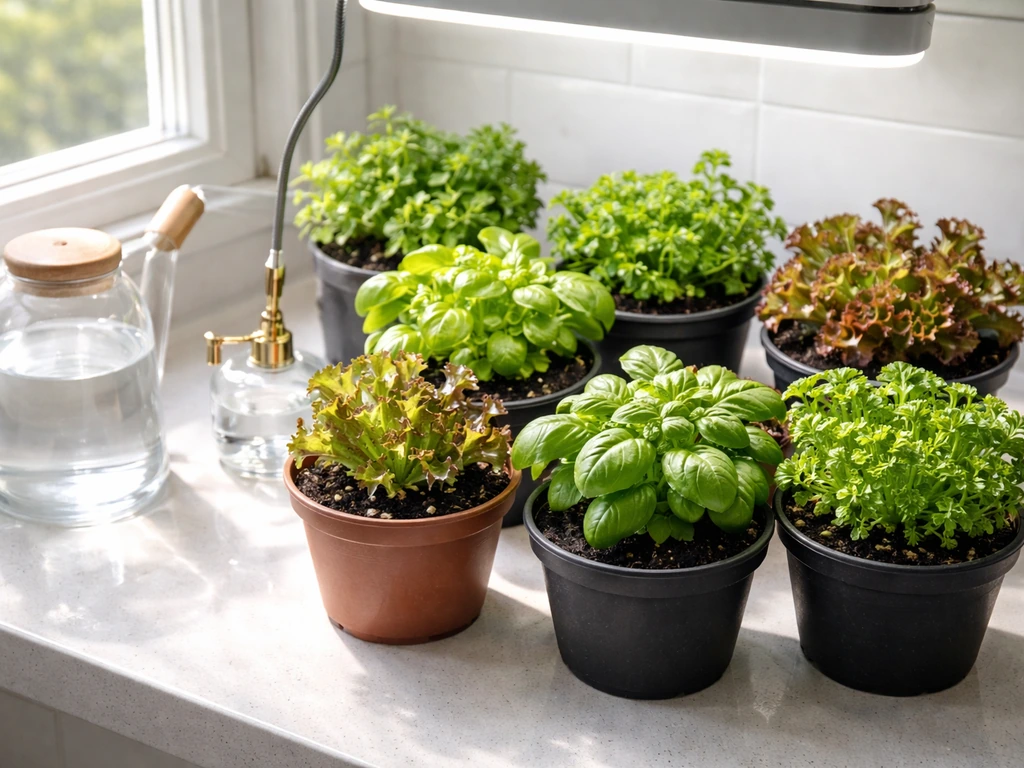
Herbs and leafy greens are the sweet spot for indoor fast growing. They don't need fruit to set, so they hit a usable stage much earlier than tomatoes or peppers. Here's what actually performs well and how long it realistically takes. USU Extension notes that leafy greens can often be harvested starting 3 to 5 weeks after seeding, especially with cut-and-come-again picking.
| Plant | Time to First Harvest | Light Needs | Best Container Setup | Key Tips |
|---|---|---|---|---|
| Basil | 3–4 weeks from seed, 1–2 weeks from nursery start | Bright window (south/west) or LED grow light, 14–16 hrs | 4–6 inch pot, well-draining potting mix | Pinch flowers immediately; warm room required (above 65°F) |
| Cilantro | 3–4 weeks from seed | Bright indirect light, 12–14 hrs | Wide shallow pot (dislikes transplanting) | Bolt-resistant varieties like 'Leisure'; sow succession batches every 2–3 weeks |
| Mint | 2–3 weeks from cutting or nursery start | Medium to bright indirect light | Wide pot, contains spreading roots | Grows aggressively; water consistently but don't let it sit soggy |
| Chives | 3–4 weeks from seed to snipping | Bright window or grow light | Small pot, 4–6 inches | Cut-and-come-again; one pot gives months of harvests |
| Lettuce (loose-leaf) | 3–5 weeks to first cut | Medium light, 12–14 hrs | Shallow tray or container, at least 4 inches deep | Keep cool (60–68°F); heat causes bolting and bitterness |
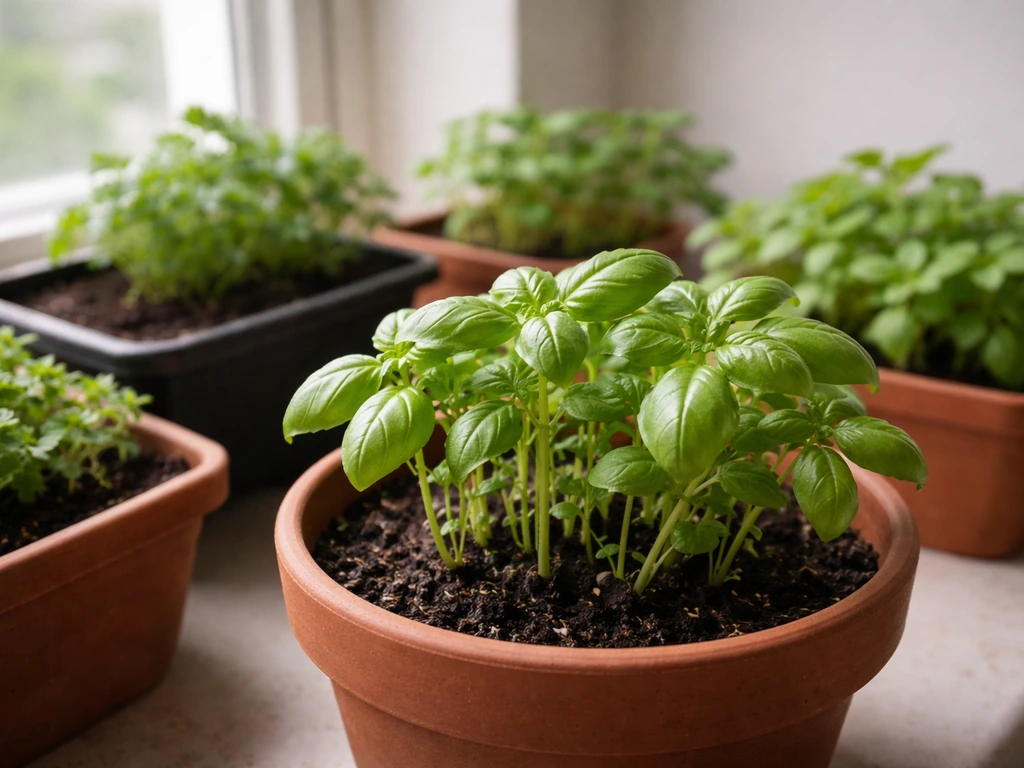
Basil is my personal go-to for a fast, satisfying indoor herb. Buy a grocery store pot, split it into two or three smaller pots, and you'll have harvestable basil within two weeks. Just don't let it get cold. Anything below 60°F and basil sulks, then blackens. Keep it near a warm south-facing window or under an LED panel and it rewards you fast.
Microgreens and sprouts: the genuinely fastest option
If speed is the whole point, microgreens and sprouts are in a different category entirely. Sprouts (mung beans, lentils, radish) don't even need soil or light. You rinse them twice a day in a jar and they're ready to eat in 3 to 5 days. Microgreens take a little longer but are more versatile in the kitchen.
Microgreens are harvested at the true leaf stage, not just when the seed coat opens. That timing matters because harvesting at the cotyledon stage (too early) gives you less flavor and nutrition. Plan for 7 to 14 days depending on the variety. Arugula is one of the fastest, with some growers harvesting at 6 to 8 days. Asian greens, radish, and sunflower typically hit the 10 to 14 day range. After seeds sprout (about 3 to 4 days in darkness under a cover), remove the cover and move the tray to a bright window or lamp. OSU Extension recommends around 15 hours of light per day for best results; dim light causes leggy, leaning microgreens that are still edible but not ideal.
One important note on sprouts: use seeds sold specifically for sprouting, not garden seed packets. Garden seeds are sometimes treated with fungicides or other coatings not intended for raw consumption. For microgreens, standard untreated vegetable or herb seeds are fine since you're growing them in a medium and cooking or eating the shoots, not the raw seed.
| Variety | Harvest Time | Setup Needed | Notes |
|---|---|---|---|
| Radish sprouts | 3–5 days | Jar, no soil or light needed | Spicy, crunchy; rinse 2x daily |
| Mung bean sprouts | 4–5 days | Jar, no soil or light needed | Classic stir-fry sprout; keep warm |
| Arugula microgreens | 6–8 days | Shallow tray, potting mix or coconut coir, bright light | Fastest microgreen; peppery flavor |
| Radish microgreens | 7–10 days | Shallow tray, grow medium, bright light | Bold flavor; easy germinator |
| Sunflower microgreens | 10–14 days | Tray with weight on seeds for even germination, grow medium | Nutty and meaty; needs darkness phase first |
Fast-growing indoor flowering plants: honest expectations
I'll be straight with you: flowering plants indoors grow slower than herbs and greens, and most of the "fast bloomers" you see online still take 8 to 12 weeks from seed to flower. That said, a few are genuinely rewarding for indoor spaces.
African violets are among the most reliable indoor bloomers. They don't grow fast from seed (that takes months), but a healthy plant from a nursery can bloom nearly continuously when conditions are right. The keys are bright indirect light (no direct sun, which scorches the fuzzy leaves), day temperatures in the low-to-mid 70s°F, and night temps around 65 to 70°F. If your African violet refuses to flower, low light or cool temperatures are almost always the culprit. Under LED grow lights set to no more than 16 hours a day, they perform beautifully year-round.
Impatiens and begonias are solid choices for fast indoor flower color from starts or transplants rather than seed. Pothos and tradescantia won't flower indoors reliably, but they produce visible new leaves weekly under decent light, which feels fast and satisfying if foliage is your goal. If you're looking for tropical flowering plants that can adapt to indoor conditions, many of those overlap with the broader category of tropicals grown indoors, which thrive in similar warmth and humidity.
Setting up your space for maximum growth speed
Light: the one thing you can't shortcut
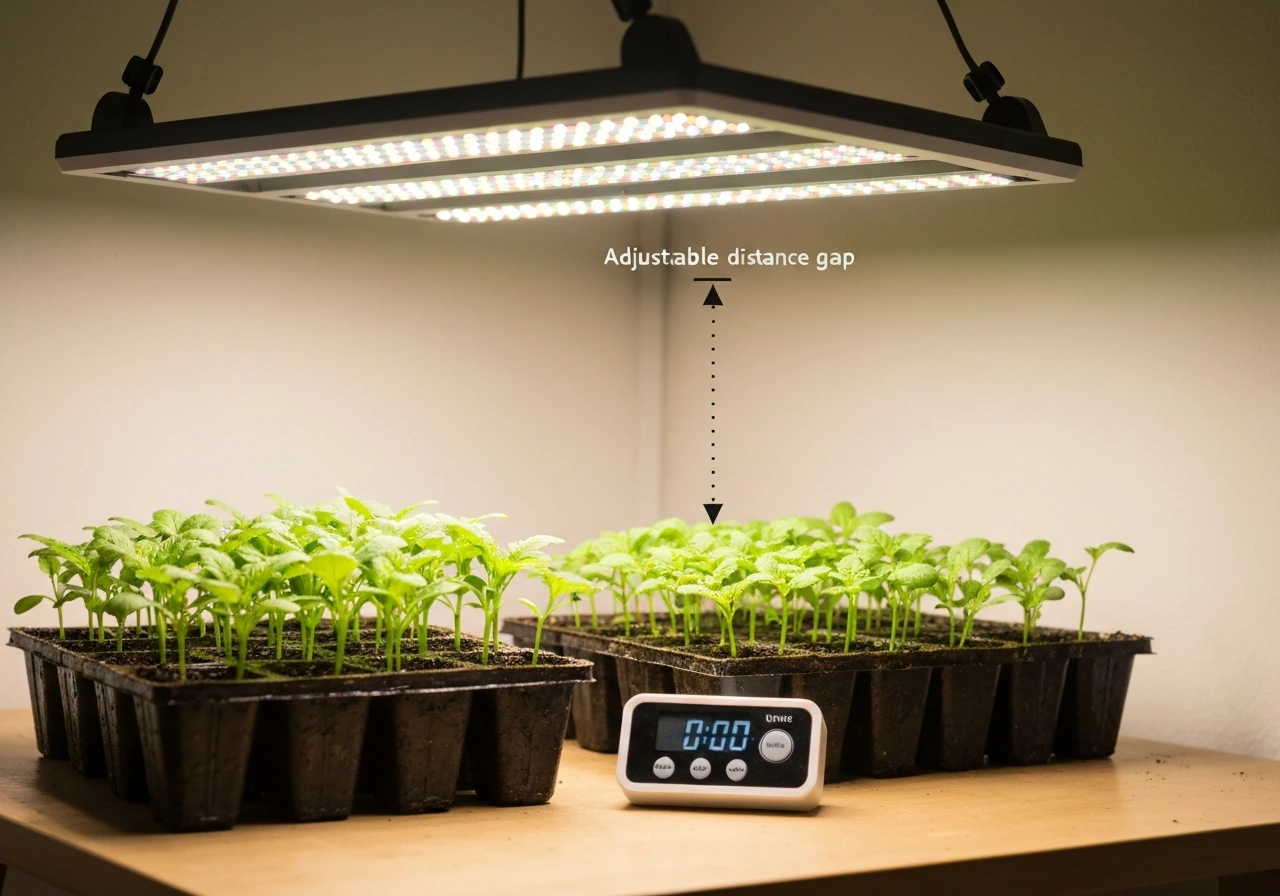
For seedlings and clones, you need at least 12 to 16 hours of light per day, whether from a south-facing window in summer or a dedicated grow light. Natural window light is rarely enough for fast growth in most apartments, especially through fall and winter. A full-spectrum LED panel positioned 6 to 12 inches above your plants (check the manufacturer's recommendation because PPFD drops sharply with distance) will outperform even a decent south window in terms of consistent output.
Here's a useful benchmark: herbs need roughly 100 to 500 PPFD (micromoles per square meter per second) for healthy vegetative growth. Flowering plants need 400 to 1,200 PPFD to bloom well. Microgreens are forgiving, growing at DLI below 20 mols per square meter per day, which a basic shop light or modest grow panel handles fine. The closer your light source is to the plant (without burning), the faster growth you'll see.
Temperature, airflow, and humidity
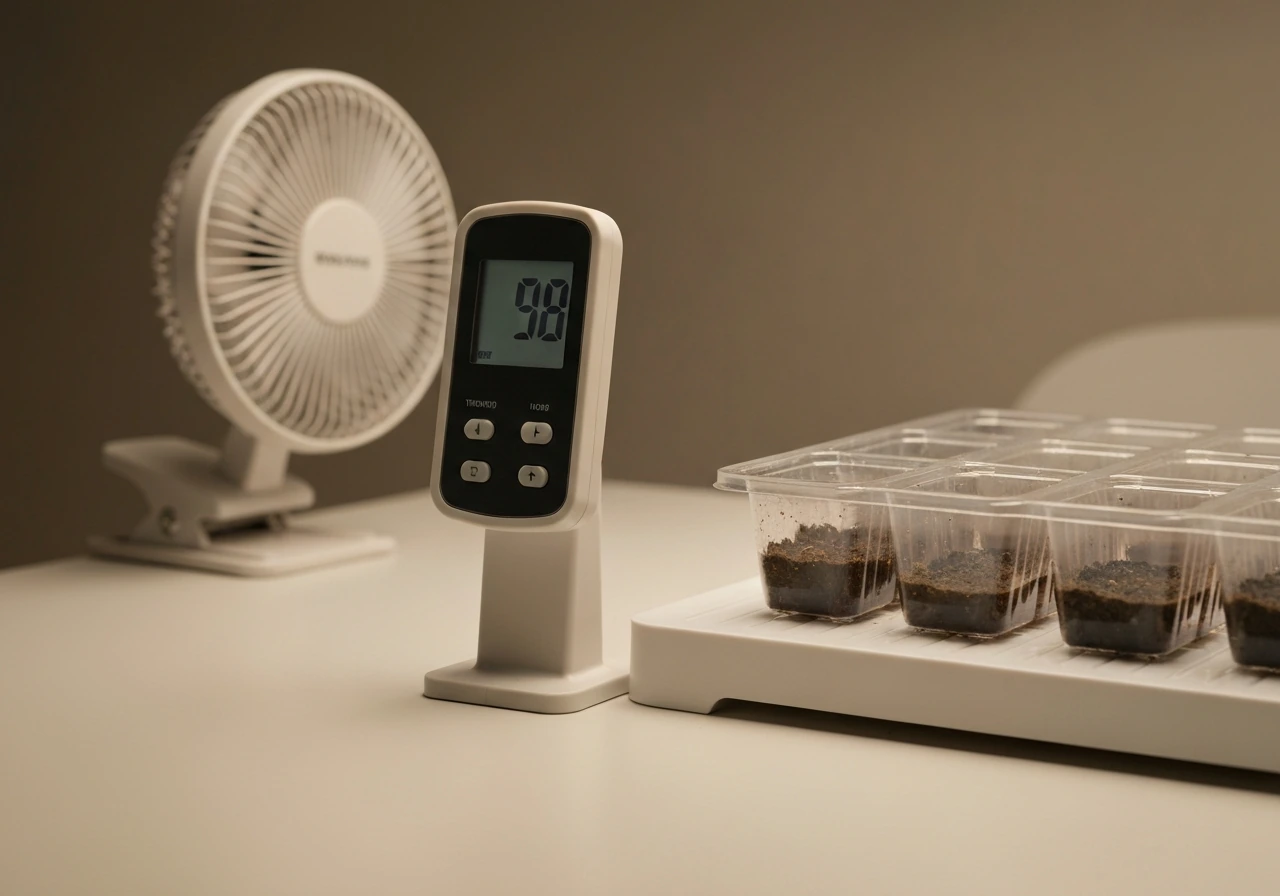
Keep your growing area between 68 and 75°F during the day for most fast-growing options. For seed germination, a heat mat under the tray to bring soil temperature to 70 to 75°F cuts days off your germination time noticeably. Airflow from a small oscillating fan (even 30 minutes twice a day) prevents the stagnant humidity that invites mold and gnats. Most tropical fast-growers appreciate 50 to 60% relative humidity; if your home runs dry in winter, grouping plants together or using a small pebble tray with water helps.
Containers and growing media
Use the smallest pot that fits the plant's root system. Oversized pots hold excess moisture around roots and slow things down (and invite root rot). A well-draining mix: standard potting soil with added perlite (around 20 to 30% by volume) works for most herbs and greens. For microgreens, coconut coir or a dedicated microgreen growing medium is cleaner and faster to set up than potting soil. Shallow trays, 1 to 2 inches deep, are all you need.
Seeds vs cuttings vs store-bought starts: which is actually fastest
For most fast-growing herbs, buying a nursery start or grocery store pot is the fastest route to your first harvest by 2 to 4 weeks over starting from seed. Mint, basil, and rosemary from a 4-inch pot can be harvested within days of purchase if you repot them and give them good light immediately.
Cuttings are a close second for speed. A basil or mint cutting placed in water roots in 1 to 2 weeks and is harvestable within 3 weeks of taking the cutting. This is also the cheapest method since you can propagate endlessly from one parent plant. Pothos and tradescantia cuttings root even faster, often in under a week in water.
Seeds are slowest to first harvest but give you the most variety and control. For microgreens and sprouts, seeds are the only option, and they're priced for high-density sowing so costs stay low. For herbs like cilantro and dill that don't transplant well (they go into shock easily), starting from seed directly in the final container is actually the better call over buying a start.
| Starting Method | Time to First Harvest | Cost | Best For |
|---|---|---|---|
| Nursery/store start | Fastest: 1–3 weeks | Medium | Basil, mint, chives, flowering plants |
| Cuttings in water | Fast: 3–4 weeks | Very low (free from existing plants) | Basil, mint, pothos, tradescantia |
| Seeds | Slowest for herbs (4–6 weeks), fastest for microgreens (7–14 days) | Very low | Microgreens, cilantro, dill, lettuce, leafy greens |
When growth stalls: troubleshooting and next steps
Leggy, stretched growth
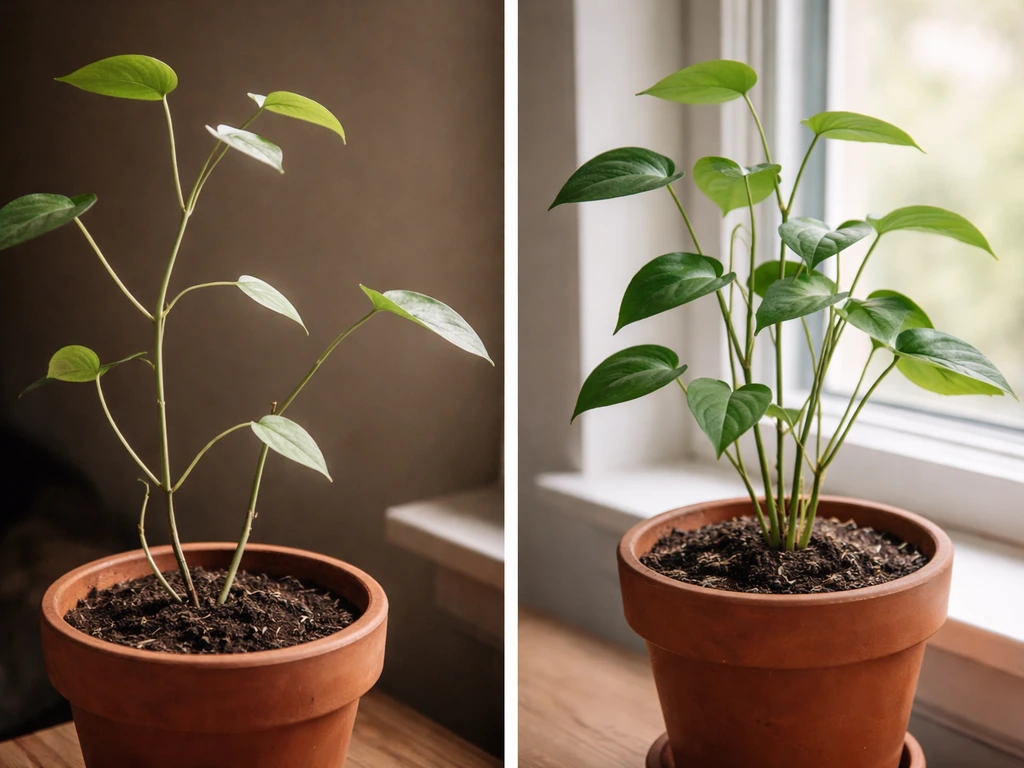
Long gaps between leaf nodes, thin weak stems, and pale color are all signs of etiolation: not enough light. The plant is stretching toward any light source it can find. The fix is always more light, closer light, or longer light hours. Move plants within 6 to 12 inches of a grow light or a bright window. If you're relying on a north-facing window in winter, you genuinely need a supplemental grow light to grow anything fast.
Slow growth with no obvious stretching
If your plant looks healthy but isn't putting on new growth, check temperature first. A cool room in winter (below 65°F) stalls most tropical fast-growers. Check also whether the plant is root-bound (roots circling out of the drainage holes means it's time for a slightly larger pot) or whether it needs fertilizer. A balanced liquid fertilizer like a 10-10-10 or similar, applied every two to three weeks during active growth, keeps nutrient levels from becoming a bottleneck.
Fungus gnats and damping off
Fungus gnats are the most common pest you'll face with indoor fast-growers, especially seedlings and microgreens. They thrive in consistently moist potting soil. The fix is twofold: let the top inch of soil dry out between waterings, and place yellow sticky traps flat on the soil surface to catch adults. For persistent infestations, BTI (Bacillus thuringiensis israelensis) applied as a soil drench targets the larvae without harming plants. Once fungus gnat populations build up, they're genuinely harder to knock back, so catch them early with sticky traps.
Damping off, where seedlings suddenly collapse at the soil line, is caused by overwatering combined with low light and poor airflow. Keep soil moisture adequate but never soggy, use a well-draining mix, make sure light levels are high enough, and run that fan for airflow. Warming the soil with a heat mat to 70 to 75°F also helps, since damping-off pathogens are more active in cold, wet conditions.
What to try next
Start today with a microgreen tray if you want the fastest visible result, or pick up a basil or mint start if you want a living herb that keeps producing. Add a basic LED grow light if you're in a low-light apartment; it's the single biggest upgrade you can make for indoor growth speed. Once you've got your fast herbs dialed in, the jump to leafy greens, then to more exotic tropical plants or flowering varieties, is a natural progression. If you're after the exotic plants you can grow indoors, start with ones that match your light and temperature, then build up slowly more exotic tropical plants. Tropical plants you can grow indoors often do best when you match their warmth and humidity needs. These characteristics include the right light, temperature, airflow, and appropriate containers. Many outdoor plants that tolerate indoor light and warmth can also grow indoors, as long as you match the light and temperature they need outdoor plants that can grow indoors. Many outdoor plants that tolerate indoor conditions and tropical plants suited to indoor growing share the same light and warmth requirements you'll already be optimizing for your herbs. If you want more than herbs, you can also try wild plants you can grow indoors.
FAQ
What’s actually the fastest if I want to eat something from my indoor setup this week?
It depends what you mean by “fast.” For quickest edible results, sprouts are usually the fastest (3 to 5 days), then microgreens (about 7 to 14 days). For a long-lasting “living” plant you can harvest repeatedly, basil or mint from a nursery or grocery pot typically gives the earliest usable harvest (often within 2 to 4 weeks from purchase, sometimes sooner after repotting).
If I already have decent soil and fertilizer, why are my fast plants still slow?
If your goal is speed, you generally want to prioritize light first, then temperature, and treat watering as “support.” However, the most common light-related mistake is placing grow lights too far away. Even a good LED can lose much of its punch with distance, so keep it near the top growth zone (without burning) and increase intensity or hours rather than adding fertilizer.
Can I speed up growth by watering more often?
Not necessarily. Many fast growers need consistent moisture management, but overwatering is what slows growth indirectly by causing issues like damping off (seedlings) or root stress (herbs). Use shallow containers for microgreens and a well-draining mix for herbs, then let the top layer dry slightly between waterings, especially if you see fungus gnats.
How much does room temperature vs. root temperature affect indoor growth speed?
Yes, especially in cold rooms or during winter. Seeds often germinate more slowly when the root zone is cool, so warming the tray to about 70 to 75°F with a heat mat can cut germination time. For plants like basil, avoid letting the overall room drop much below the low-to-mid 60s°F, because they stall even if light is strong.
Why do my plants look tall and weak even though I’m watering correctly?
You can run into this with both window growing and microgreens. Leafy plants will often stretch if the light is coming from one direction, so rotate trays or pots regularly. For microgreens, dim light can cause leaning and long gaps between leaf nodes, so increase light hours (around 15 hours for many microgreen varieties) and keep lighting close enough to deliver usable intensity.
What kind of seeds should I buy for sprouts and microgreens, and do garden seed packets work?
For sprouts, use seeds labeled for sprouting (food-grade). For microgreens, you can often use standard untreated vegetable or herb seeds, but avoid garden seeds that may be coated or treated, since those are not intended to be eaten raw. When in doubt, choose packaging that explicitly says “sprout” or “edible shoots.”
When should I harvest microgreens if I want the best results and fastest turnaround?
If you’re growing microgreens, harvesting too early is a common speed killer. Microgreens are meant to be harvested at the true leaf stage, not just when the seed coat opens. Waiting for true leaves improves flavor and nutrition and also helps you avoid “repeat-grow” problems where the tray doesn’t perform as well after an early cut.
How do I diagnose slow growth quickly without guessing?
Watch the gap between leaf nodes, stem thickness, and color. Pale growth and long spacing usually means insufficient light. If the plant looks healthy but never makes new leaves, check temperature first (too cool often stalls growth), then confirm light duration and proximity before adding more fertilizer.
Does pot size affect how fast indoor plants grow?
Oversized pots can slow things down because they hold extra moisture around the roots longer. For fast indoor herbs and greens, use a pot just big enough for the root system, then use a well-draining mix (often with perlite). With shallow microgreen trays, stick to a small depth (about 1 to 2 inches) to keep the crop consistent.
Is airflow really necessary, and what’s the right way to add it?
Use airflow proactively, but don’t blast. A small oscillating fan on low for short periods helps reduce stagnant humidity that encourages fungus gnats and mold, and it can also strengthen stems. If you feel drafts that dry plants rapidly or flatten them, reduce fan time or distance.
My plant gets light, but growth stopped. How can I tell if it’s root-bound?
If your fast plant is making leaves but not thriving, check for root binding. Roots circling in the drainage holes means the plant may be outgrowing its container, and growth can stall even under strong light. In that case, move to a slightly larger pot with fresh mix rather than changing only fertilizer amounts.
What should I do first if I see fungus gnats around my fast indoor plants?
For fungus gnat prevention, let the top inch of soil dry slightly between waterings and add yellow sticky traps to catch the adults. If you already have a persistent infestation, BTI soil drenches can target larvae. The key is acting early, because once populations build up, they’re harder to knock down.
Why did my seedlings collapse so suddenly at the soil line?
Damping off is usually a combo problem, not a single cause. It tends to happen when seedlings are kept too wet while light levels are low and airflow is poor. Improve light, avoid soggy soil, use a well-draining mix, run the fan, and consider a heat mat to keep the root zone in the warmer range.
Can I get fast flowering indoors, or are herbs and greens the only real option?
Flowering speed indoors is often limited. Many “fast bloom” plants from seed take weeks to months, and indoor light is frequently the bottleneck. If you want quick color, choose plants that flower well from starts or transplants, and manage conditions like bright indirect light and consistent day temperatures.