
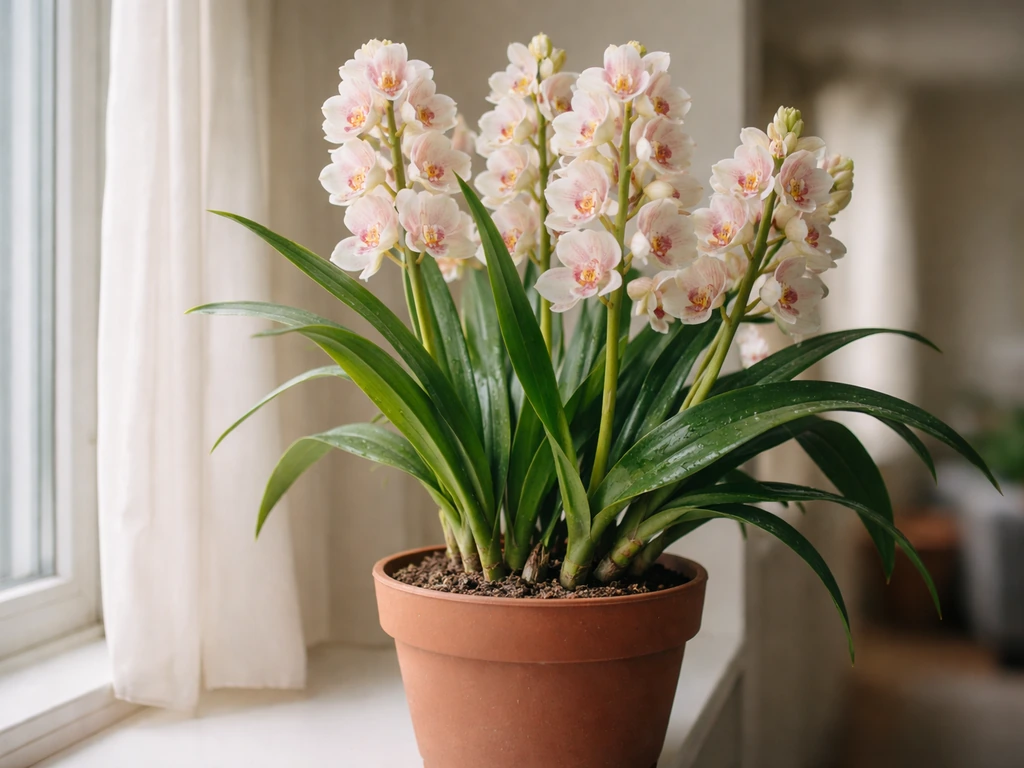
Yes, cymbidium orchids can grow indoors, but they are honestly one of the trickier orchids to rebloom inside a typical home. The plant itself will survive and stay green without much fuss. Getting it to actually flower indoors is a different story, and it comes down to two things: enough bright light and a genuine cool-down period in fall. If your home stays a steady 70°F year-round and your windows are on the dim side, you are going to be fighting an uphill battle. But if you can give them a bright south or east-facing window and let temperatures drop to the 50s°F at night in fall, you have a real shot at blooms every year.
Can Cymbidium Grow Indoors? Care Guide to Bloom
James Hartwell
28 May 2026
What 'indoors' actually means for a cymbidium
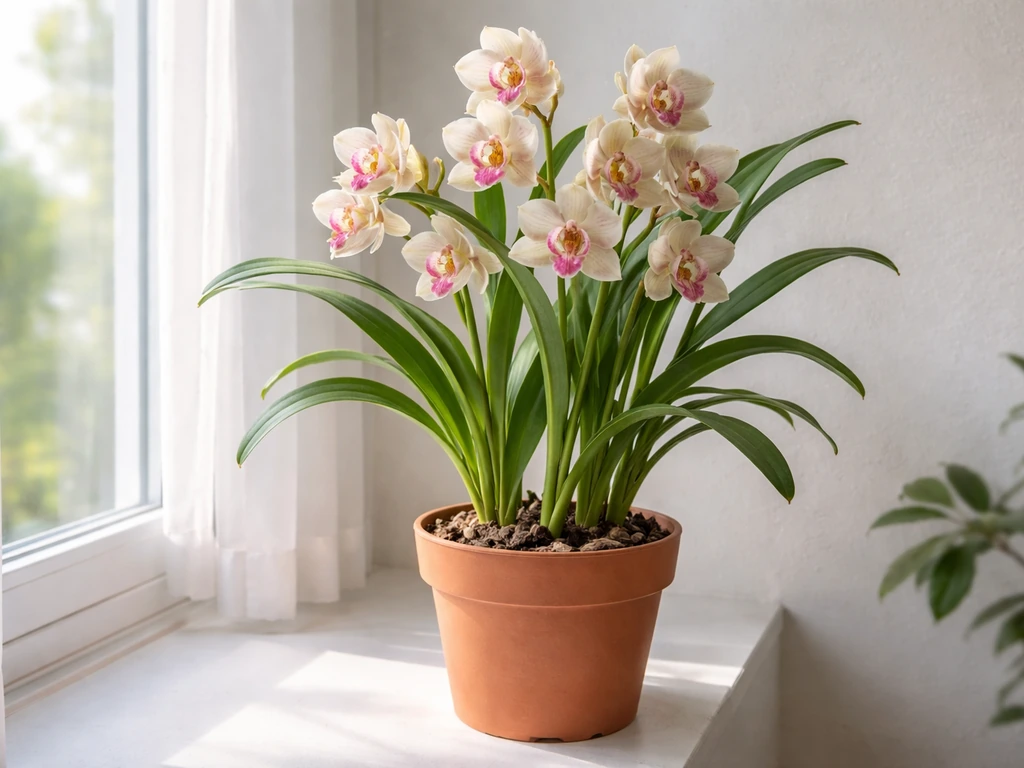
Cymbidiums are cool-growing orchids, which already sets them apart from the tropical phalaenopsis most people picture when they hear 'orchid.' In the wild and in greenhouse culture, they thrive in conditions that mimic cool mountain climates, with warm days and genuinely cold nights. When growers say 'grow them indoors,' they usually mean a cool conservatory, an unheated sunroom, or a bright porch that gets cold at night. A centrally heated living room kept at 68-72°F all year is not natural cymbidium territory, but it can work if you compensate with light and a seasonal cool-down strategy. The bottom line: indoors for a cymbidium means 'cool, bright, and seasonally cold' rather than 'warm and cozy.'
Getting the light right indoors
Light is the second most critical factor for cymbidium flowering, right after night temperature. The American Orchid Society is direct about this: insufficient light is second only to improper night temperature as the reason hybrid cymbidiums fail to bloom. Inside a home, your best options are a south-facing window or a large east-facing window. South-facing gets the most total light hours, which is ideal. East-facing gives good morning sun and stays a little cooler than a west window baking in afternoon heat, which actually suits cymbidiums well.
A good rule of thumb: if your leaves are a medium grassy green, the light is about right. If they are a deep forest green, the plant is not getting enough light and will probably skip blooming. Slightly yellowish-green with a hint of gold means you are right at the edge of the sweet spot. I have found that setting the pot as close to the window glass as possible (without letting it actually touch in winter) makes a meaningful difference compared to having it sit back a foot on a shelf.
If your windows genuinely cannot provide enough brightness, supplemental grow lights work well. Position a full-spectrum LED grow light 12 to 18 inches above the foliage and run it for 14 to 16 hours a day. Just keep in mind that the AOS notes light and temperature interact: a very warm spot right under a high-wattage light will undermine the cool conditions cymbidiums need at the same time. Keep the grow-light setup in a cooler room if you can.
Temperature, humidity, and airflow: the make-or-break trio
Temperature swings that actually trigger blooming
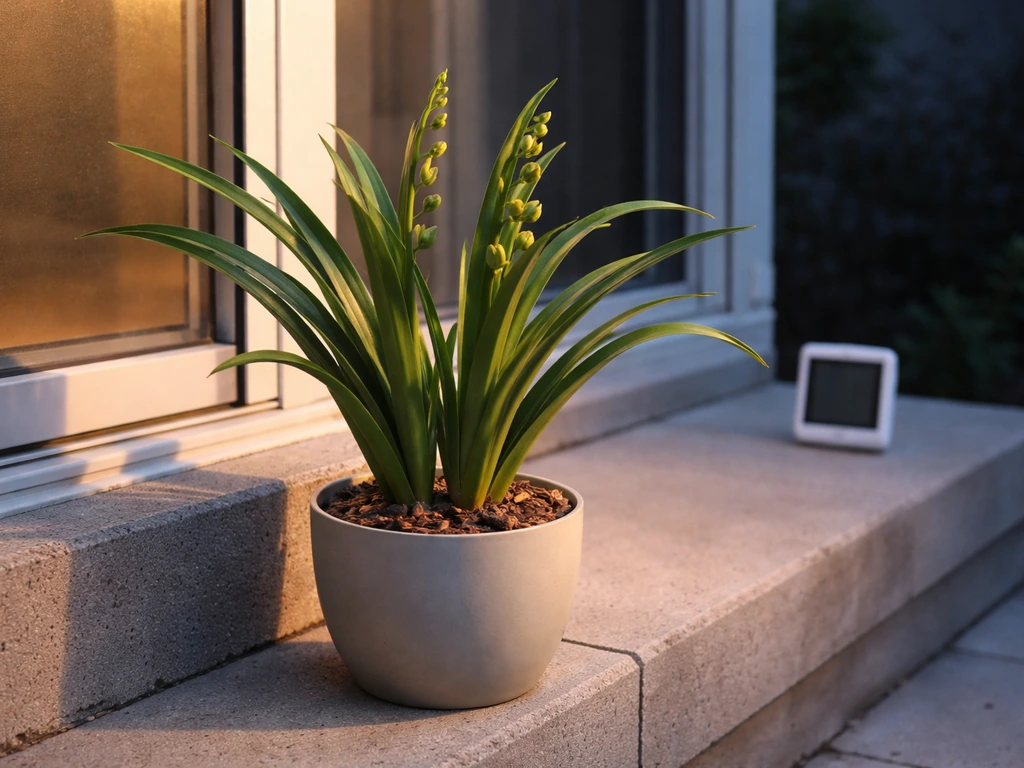
This is where most indoor cymbidium attempts fail. Cymbidiums need a real temperature difference between day and night to initiate flower spikes. Smithsonian Gardens pegs the target at about 75°F during the day and 50-60°F at night. Orchids.com and OrchidWeb both specify that nights below 58-60°F during late summer and early fall are what actually trigger spike development. Orchids.com similarly notes that mature Cymbidiums need nighttime temperatures below 60°F in early fall to initiate flower spikes nights below 58-60°F during late summer and early fall are what actually trigger spike development. If your nights stay in the mid-60s or warmer because of central heating, the plant simply will not get the signal to bloom.
The practical solution most indoor growers use is to move the plant outdoors (or to an unheated porch or garage) from late summer through early fall, usually August through October, to get those cool nights naturally. Once nighttime temperatures consistently drop below 40°F, bring it back inside. At that point, if a spike has initiated, it will continue developing indoors at normal room temperatures. If you genuinely cannot move the plant outside, placing it near a drafty window or in an unheated room at night (aiming for 50-55°F) can work in a pinch.
Humidity and airflow indoors
Cymbidiums do best at 50-60% relative humidity, according to the Canadian Orchid Congress. That is higher than what most centrally heated or air-conditioned homes maintain, which typically sits around 30-40% in winter. The classic fix is a humidity tray: fill a shallow tray with gravel or pebbles, add water to just below the top of the pebbles, and set the pot on top so it is never actually sitting in the water. McBean's Orchids specifically recommends this approach. A small room humidifier near the plant is even more effective if you have a collection of plants in one spot.
Airflow matters too, and it is easy to overlook. Stagnant air around the foliage encourages fungal issues, including black rot, which thrives in cool, moist, still conditions. A small fan running on low nearby is enough to keep air moving without stressing the plant. Just avoid blasting it with hot, dry air from a heating vent, which will dry out the roots and stress the leaves.
Potting mix, containers, and watering
The right potting medium
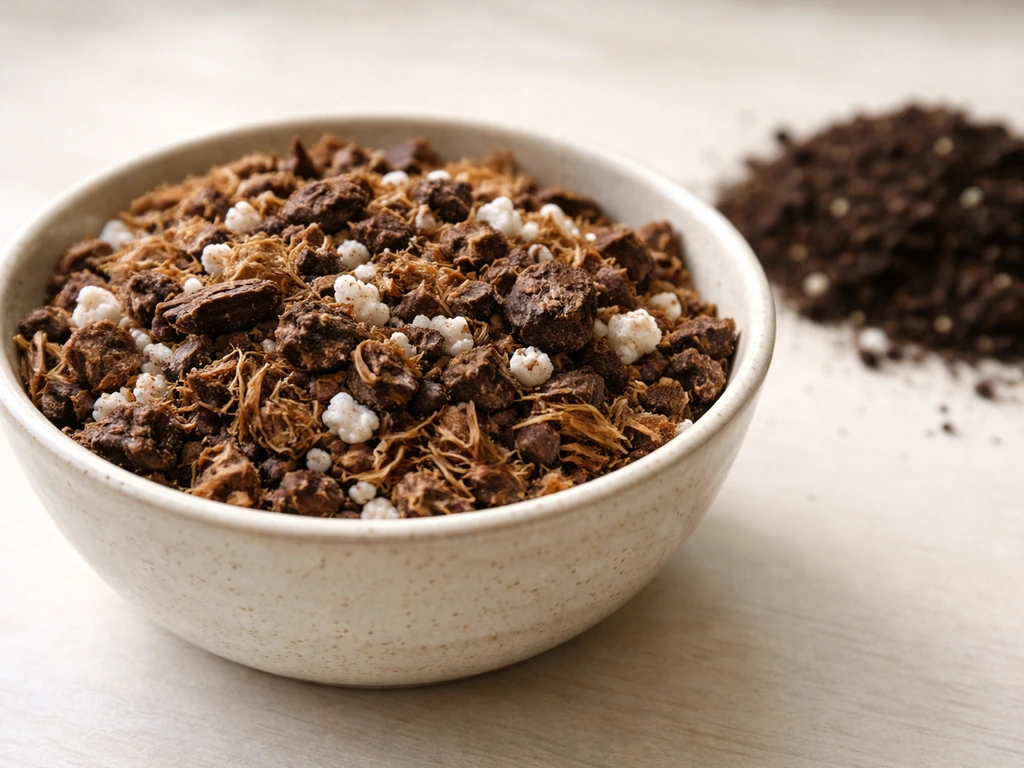
Cymbidiums need a free-draining, chunky mix, not standard potting soil. A good indoor cymbidium mix typically contains bark, perlite, and peat or coir in roughly equal parts. McBean's Orchids describes a specialized cymbidium compost along these lines. The goal is a medium that holds a little moisture but drains quickly and never becomes waterlogged. When you repot (usually every two to three years or when roots are bursting out), the AOS recommends positioning the top of the medium about half an inch below the rim of the pot, with the base of the pseudobulbs sitting about half an inch above the medium surface.
Container choice
Use a pot with drainage holes, full stop. Cymbidiums form large root systems and need room to grow, so do not underpot them, but also do not jump to an oversized container that holds excess moisture. A plastic nursery pot inside a decorative outer pot (the AOS calls this the 'slip pot' method) is a smart setup indoors because it lets you lift the inner pot out to water properly and ensures water does not pool around the roots. Avoid terracotta if your home tends to be dry, since terracotta dries out much faster and can stress the roots.
Watering routine
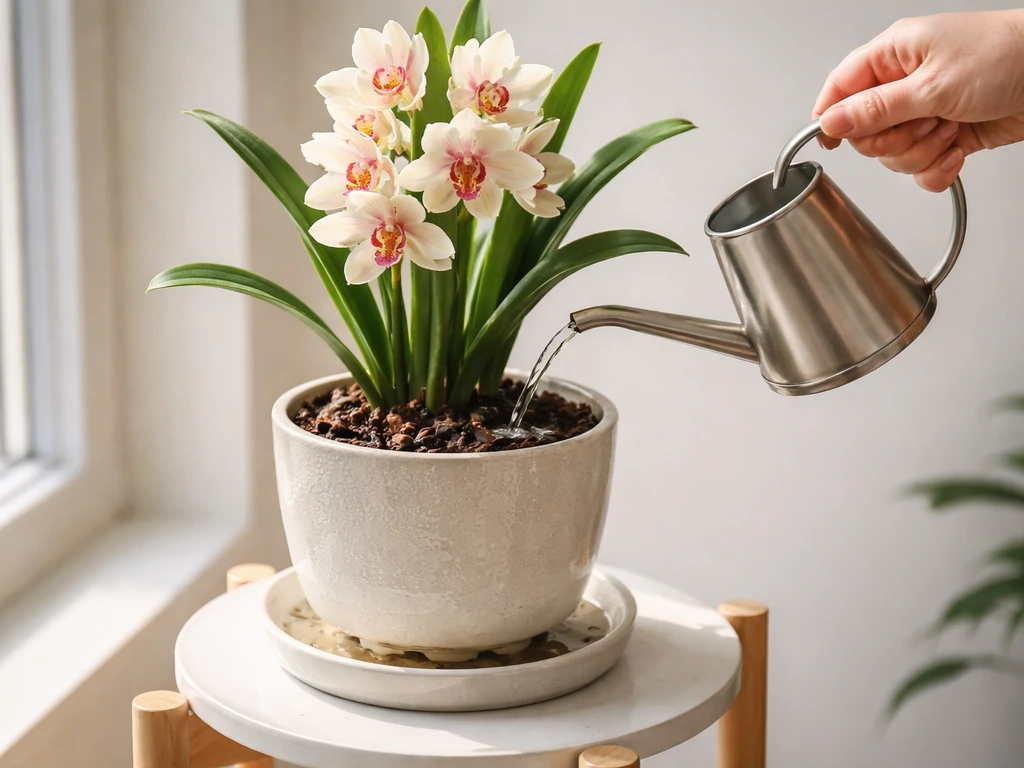
The Cymbidium Orchid Society of Victoria puts it simply: keep them moist and never let them dry out completely. Water thoroughly so it runs freely out the drainage holes, then let the top inch or so of medium dry slightly before watering again. During the active growing season (spring through summer), this often means watering once or twice a week indoors depending on pot size, temperature, and humidity. Maroondah Orchid Society also notes that when cymbidiums are grown in an open, free-draining potting mix, they can be watered on every sunny day during the growing season from October to April. In winter, when growth slows, you can back off slightly but never let the medium go bone dry. The AOS warns that leaf tip dieback is a sign of insufficient water, so err on the side of consistent moisture rather than letting plants sit dry.
Feeding your indoor cymbidium
Cymbidiums are heavy feeders compared to many other orchids. During the spring and summer growing season, feed with a balanced orchid fertilizer (such as 20-20-20) at half strength every two weeks. As you move into late summer and early fall, switch to a bloom-booster formula with higher phosphorus content. The AOS notes that phosphorus is essential for flower production, and the shift to a high-phosphorus feed at the time you are also inducing the cool-down period supports spike initiation. Once a flower spike is visible and developing, you can continue feeding lightly but dial it back to once a month. During the coolest part of winter when the plant is blooming or resting, minimal feeding is fine.
The Canadian Orchid Congress notes that slow-release fertilizer pellets can be a useful option for cymbidiums, giving a steady background feed rather than relying solely on liquid applications. I like using slow-release as a base and supplementing with liquid feed during the growing season for the best results.
Getting your cymbidium to rebloom indoors
The fall cool-down is non-negotiable
If you take one thing from this article, let it be this: cymbidiums will only flower under cool to cold conditions. The AOS states this plainly. Late summer through early fall nights below 58°F are the trigger for flower spike development. The easiest and most reliable method for indoor growers is to move the plant outside to a sheltered spot (porch, patio, or balcony) from late July or August until outdoor nights consistently threaten to drop near freezing, usually mid to late October depending on your climate. Those cool nights outdoors do the work naturally. Bring it back inside once you see a spike developing or once frost risk becomes real.
Caring for the flower spike once it appears
Once a spike emerges, handle the plant as little as possible and keep it out of drafts and sudden temperature swings. You can stake the spike gently with a thin bamboo stake as it grows to keep it upright. Avoid rotating the pot once buds are forming, since buds orient toward the light and sudden changes in orientation can cause them to drop. Keep humidity up and do not let the plant dry out while buds are swelling. Most cymbidium spikes take two to four months from initiation to full bloom, so patience is part of the deal.
Troubleshooting: why your cymbidium is not blooming
- Nights are too warm: if indoor temperatures do not drop below 60°F consistently in fall, no spike will form. Move the plant outside in late summer.
- Not enough light: leaves that are very dark green are a sign the plant needs more light. Move to a brighter window or add a grow light.
- No seasonal change: cymbidiums respond to the change in temperature and day length. A perfectly controlled indoor environment year-round suppresses blooming.
- Overpotted: too much medium around the roots stays wet and slows the plant's focus on flowering. Make sure pot size is appropriate to root mass.
- Underfed: if you have not been fertilizing through the growing season, the plant may not have enough stored energy to push a spike.
Common indoor problems and how to fix them
| Problem | Likely Cause | Fix |
|---|---|---|
| Yellowing leaves | Overwatering, root rot, or too little light | Check roots for rot, improve drainage, move to brighter location |
| Leaf tip dieback | Inconsistent watering or low humidity | Water more consistently, add humidity tray or humidifier |
| No flower spike | Nights too warm, insufficient light, or no seasonal cool-down | Move outdoors in late summer for cool nights, increase light |
| Black rot on leaves or pseudobulbs | Cool, moist, stagnant air conditions | Improve airflow with a small fan, avoid wetting foliage, reduce humidity slightly |
| Bud drop before flowers open | Sudden temperature change, low humidity, or draft | Stabilize temperature and humidity, keep away from vents and doors |
| Scale or mealybugs | Common indoor pests on orchids | Wipe with isopropyl alcohol on a cotton swab, treat with insecticidal soap or neem oil |
| Mushy pseudobulbs | Root rot from poor drainage or overwatering | Remove from pot, cut away rotten roots, repot in fresh free-draining mix, reduce watering |
Is a cymbidium the right indoor orchid for your setup?
Cymbidiums reward growers who can give them a genuinely cool period each year and a bright, airy spot indoors the rest of the time. Cyclamen is a different type of plant, and it has its own light and temperature needs for growing successfully what type of plant is cyclamen grow a garden. If you have a sunroom, a cool bright spare bedroom, or even a protected outdoor space you can use in fall, they are absolutely worth the effort. The blooms are spectacular and long-lasting, and established plants can produce multiple spikes. If your home is consistently warm and your windows are not great, you might find that other orchids or plants that prefer consistent indoor warmth are a better fit. If you are also considering other houseplants besides cymbidium orchids, you may find it useful to compare with guides on can tradescantia grow indoors for a lower-fuss option. For comparison, plants like cyclamen also need cool conditions to perform well indoors, while something like tradescantia or crotons are much more forgiving of typical warm home environments and do not require seasonal cool-downs at all.
If you are committed to making cymbidiums work, set yourself up right from the start: bright south or east window, a humidity tray, a consistent watering routine, regular feeding from spring through fall, and a plan to get those cool nights in late summer. If you want to grow Camellia sinensis indoors, you will also need the right light level and a consistent cool period to encourage healthy growth bright south or east window. Do those things and your cymbidium will not just survive indoors, it will bloom for you every winter. If you are wondering can crotons grow indoors, the key is matching similar needs for light and consistent conditions bloom for you every winter.
FAQ
How long will a cymbidium take to bloom indoors if I get the cool-down and light right?
Even with correct night temperatures and bright light, flower spikes still take time. Plan on roughly 2 to 4 months from spike initiation to full bloom, and be ready for your first indoor attempt to take a full season or two if the plant was moved too late or is not yet mature enough.
Can I skip the outdoor move and still get blooms if I have a window and a fan?
A fan helps with airflow, but it does not replace the required cool night signal. If your nighttime temperatures in the room stay above about 58 to 60°F in late summer and early fall, the spike trigger often will not happen, so you need a genuinely cooler location (unheated room, garage, or outdoor porch) during that window.
What’s the minimum indoor temperature drop I should target at night?
Aim for nights in the low 50s to around 60°F during late summer through early fall. If your nights only dip to the mid to upper 60s, the plant may stay green and healthy but frequently will not initiate spikes, so focus on achieving a real drop, not just slightly cooler conditions.
If my cymbidium produces spikes, should I keep it near the window or move it for temperature control?
Keep it where it is bright and stable. Once buds are forming, avoid sudden temperature swings and do not keep relocating it between warm and cool spots, because bud drop can occur. If you must adjust, do it gradually over a few days.
My cymbidium leaves look a bit yellowish, is that a sign it needs less light?
Slight yellowish-green with a hint of gold can mean you are near the edge of the ideal range. Deep forest green usually suggests insufficient light, while very pale or scorched-looking tissue can indicate too much direct sun or heat stress. The best check is new growth color plus flowering history.
Do cymbidiums need higher humidity, even if I’m already using a humidity tray?
Yes, especially in winter when indoor air can drop to 30 to 40% humidity. A tray helps, but place it with enough distance that water does not splash into the crown, and consider grouping plants if you have a collection, since local humidity rises when plants transpire together.
What watering mistake most often causes problems with indoor cymbidiums?
Letting the medium stay waterlogged or staying too dry for long stretches. Water thoroughly until it drains, then wait until the top layer dries slightly before watering again. Also, always empty the decorative outer pot if using the slip-pot method, so roots are not sitting in pooled water.
Should I mist cymbidium leaves to raise humidity?
Misting is usually less effective than humidity trays because droplets quickly dissipate and can leave moisture lingering on leaves and canes. If you mist, do it lightly and avoid late-day wet foliage. In most indoor setups, airflow plus a tray or humidifier is the more reliable approach.
How often should I repot cymbidiums grown indoors?
A common schedule is every 2 to 3 years, or sooner if roots are bursting out or the mix has broken down and drains poorly. When you repot, follow the depth guidance, keep the base of pseudobulbs correctly positioned above the medium surface, and use a chunky mix that drains fast.
Is it normal if my cymbidium does not bloom after one cool season?
Yes, it can happen. Flowering depends on both conditions and plant readiness, such as maturity and whether the spike trigger window was actually cold enough. If you missed the late summer to early fall nights, the plant may need another season with tighter temperature control.