
Cyclamen is a tuberous, herbaceous perennial in the primrose family (Primulaceae), and most of the ones sold in garden centers are hybrids of Cyclamen persicum. It flowers in winter and early spring, goes dormant in summer, and then wakes back up in autumn when temperatures cool and water returns. That seasonal rhythm is the most important thing to understand before you bring one home, because cyclamen is not a year-round bloomer sitting happily on a warm windowsill. Get the conditions right, though, and it rewards you with some of the prettiest cold-weather flowers you can grow indoors. Camellia sinensis can also be grown indoors if you give it bright light, consistent moisture, and the right temperature range grow indoors.
What Type of Plant Is Cyclamen? How to Grow It

James Hartwell
29 May 2026
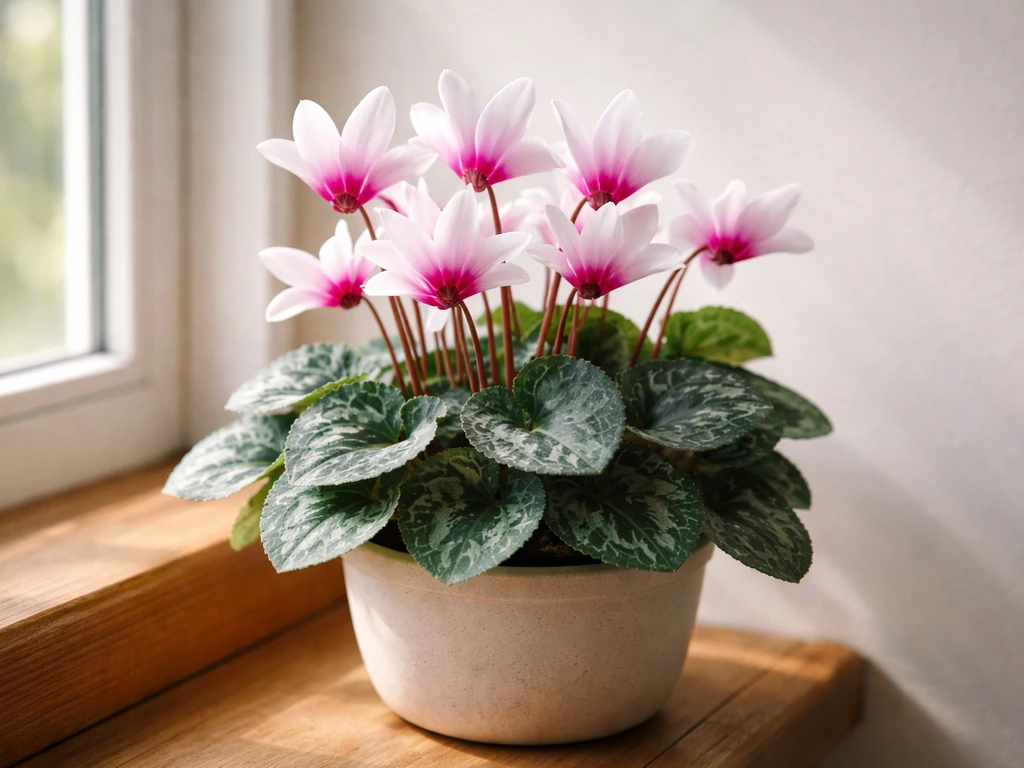
What cyclamen actually is
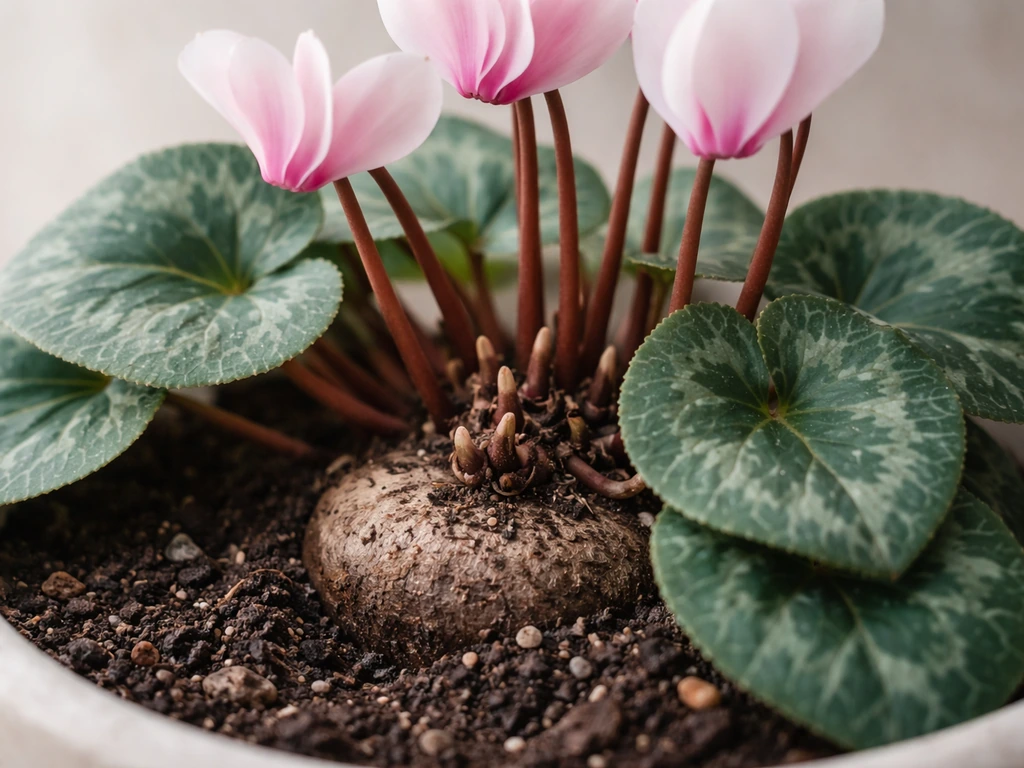
Cyclamen belongs to the Primulaceae family, the same family as primroses, which tells you something useful straight away: these are cool-weather plants that prefer the kind of conditions most tropical houseplants hate. The plant grows from a flattened tuber, not a true bulb, and that tuber is the engine of the whole operation. It stores energy during dormancy, then pushes out heart-shaped, patterned leaves and swept-back flowers (the petals reflex upward like butterfly wings) once conditions signal that active season has begun.
The florist's cyclamen (C. persicum) is the species behind almost every potted plant you see in shops from October through February. Its growth cycle mirrors the Mediterranean climate it comes from: it wakes up with autumn rains, flowers through winter and into early spring, and then shuts down when summer heat arrives. Other species like C.
graecum bloom in autumn and C. cyprium emerges late autumn into early winter, so timing can vary slightly by species, but the basic cool-season, summer-dormant pattern holds across the genus. Cyclamen Society notes that Cyclamen cyprium emerges late autumn into early winter with heart-shaped leaves and is often cultivated as a cool greenhouse pot plant in parts of northwest Europe [C. cyprium emerges late autumn into early winter](https://www.
cyclamen. org/plants/species/cyclamen-cyprium/).
Is cyclamen a good fit for you?
Honestly, cyclamen is one of those plants that splits people into two camps. Some gardeners love the challenge of getting it to rebloom year after year. Others buy it in winter, enjoy it for a few months, and let it go when it fades. Both approaches are completely valid, and knowing which camp you fall into helps you decide whether to invest time in learning its dormancy cycle.
Cyclamen suits you well if you have a cool room or a spot that stays in the 55 to 65°F range during the day, you can water carefully without splashing the crown, and you're happy to set the pot aside and mostly ignore it through summer. Camellias also can grow indoors, but they need bright light and consistently cool roots to stay healthy can camellias grow indoors. It is a particularly good choice for apartment dwellers with a cool north or east-facing window that gets bright indirect light, because that is almost exactly what this plant wants. It does not suit you as well if your home is consistently warm (above 70°F), if you tend to forget plants for weeks at a time, or if you want a 12-month bloomer.
Light and placement: indoors vs. outdoors
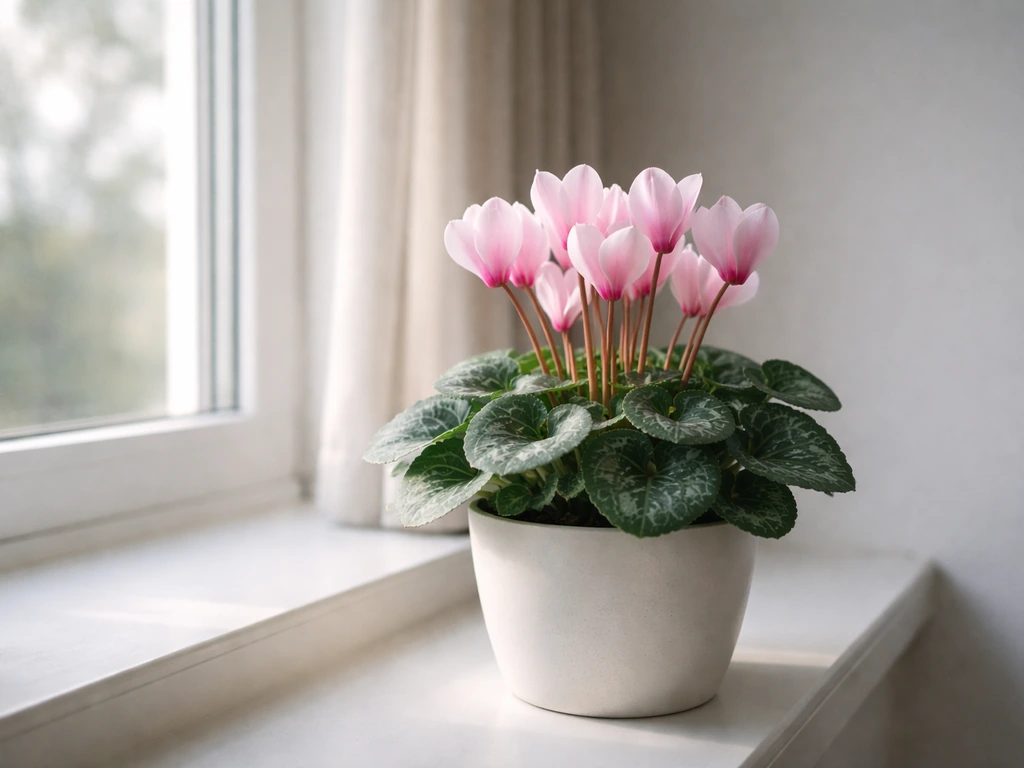
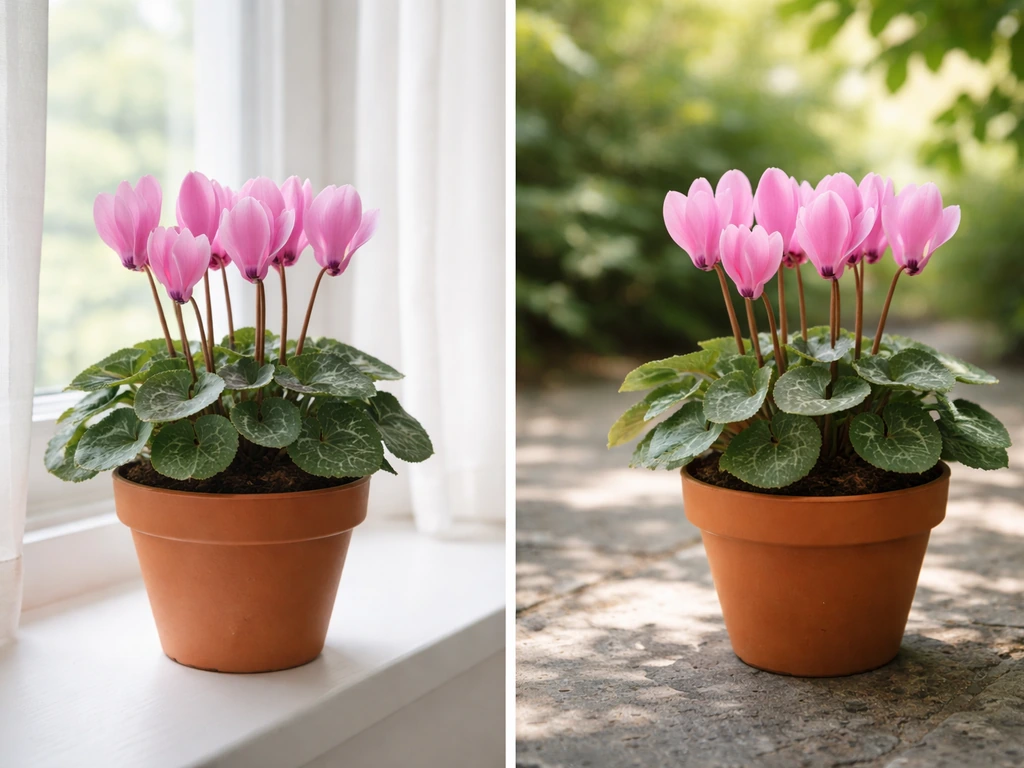
Indoors, the New York Botanical Garden sums it up well: bright light all day, but away from direct sunlight, and not too hot. A spot near a north or east-facing window, or set back a foot or two from a bright south or west window, works well. If you are also wondering can tradescantia grow indoors, choosing a similarly bright spot with gentle light will help it thrive north or east-facing window. Direct afternoon sun will stress the plant and shorten its bloom time noticeably. Insufficient light causes yellowing leaves and poor bud development, so don't tuck it in a dark corner just because it's a cool-weather plant.
Outdoors, cyclamen handles more light but still prefers dappled shade or a spot with morning sun and afternoon shade. In warm climates (USDA zones 9 and above), the summer heat is too intense for C. persicum to survive outside without shade and careful management. In cooler regions, hardy cyclamen species can naturalize under trees and shrubs. For most readers using this as an indoor gardening guide, treat cyclamen as a cool-season windowsill or bright-room plant and bring it back inside before temperatures consistently drop below 40°F.
Soil, potting mix, and watering (this is where most people go wrong)
Use a peat-free, loam-based compost with good drainage. Cyclamen roots need air as much as moisture, and a heavy, water-retaining mix is a direct path to tuber rot. When you pot it up, follow RHS guidance and position the tuber so its top sits just above the soil surface. This is one of those unusual plants where burying it too deep actually causes problems, because the exposed top of the tuber helps prevent rot and allows the crown to breathe.
Watering is where most people lose their cyclamen. The rule from North Carolina Extension is clear: only water when the soil feels dry, and never water directly onto the crown. The best method is bottom watering: set the pot in a saucer of water for about 20 to 30 minutes, let the potting mix absorb water through the drainage holes, then remove the pot and tip out any standing water.
This keeps the exposed tuber dry while making sure the roots get a thorough drink. Water thoroughly when you do water, and then wait until the surface is dry again before repeating. Yellow leaves are often a signal you're either too wet or too dry, so pay attention to the feel of the soil rather than a fixed schedule.
Temperature and humidity targets
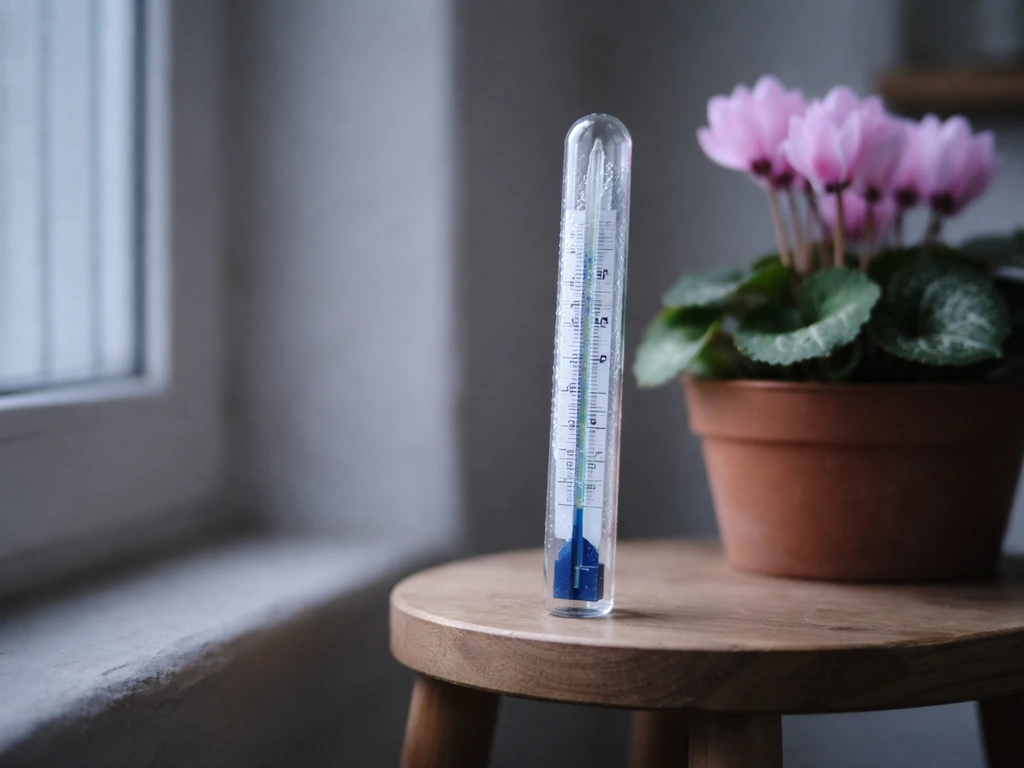
Getting the temperature right is the single biggest factor for indoor success with cyclamen. The target is 60 to 65°F during the day and around 50°F at night. NYBG puts the daytime range at 55 to 65°F with a night dip to 50 to 55°F. Either way, you're looking at a cool, almost unheated room by most home standards. A hallway, an unheated spare room, a cool basement with a window, or a spot near a drafty (but not freezing) window in winter are all good candidates.
Humidity matters too. Cyclamen prefers a humid environment, which can be tricky in centrally heated homes where air dries out significantly in winter. A pebble tray with water under the pot (not touching the drainage holes) adds ambient moisture without wetting the root zone. Keeping the plant away from radiators, heating vents, and hot, dry air is just as important as hitting the right temperature number. Think cool and humid, not warm and cozy.
How to start cyclamen and keep it going
Starting from a tuber (the easiest route)
For most home gardeners, buying a potted plant or a dormant tuber in autumn is the most reliable way to start. If you're planting a tuber, use a pot that leaves about an inch of space around the tuber, use your loam-based, well-draining mix, and position the top of the tuber just at or slightly above the soil surface. Start watering lightly once you see leaf tips beginning to emerge, then increase as growth picks up. Once flower buds appear, hold off on fertilizer until after the first flush of blooms.
Division of the tuber is technically possible but generally not recommended for C. persicum because the cut surfaces are very prone to rot. If you want more plants, seed is the better path.
Growing from seed (slower but rewarding)
Cyclamen can be grown from seed, but go in with realistic expectations: it takes patience. Soak seeds in cool water for about 24 hours before sowing. You don't need to cover them deeply with compost, as a very thin layer is all that's needed or you can leave them essentially on the surface. Seeds are slow to germinate and seedlings develop slowly. One practical challenge: if summer arrives before your seedlings have established well, they may go dormant early. Keeping cyclamen seedlings cool enough during their first summer helps manage dormancy timing, because seedlings can go dormant when summer arrives go dormant early. Keeping them cool enough through their first summer helps prevent this.
The care rhythm through the year
- Autumn (September to October): The tuber wakes up. Start watering regularly when you see new leaf growth beginning. Move the plant to its bright, cool spot.
- Winter to early spring (November to March): Active flowering period. Water by bottom-watering when the soil surface is dry. Remove spent flowers by twisting and pulling cleanly from the base to encourage continued blooming. Keep temperatures in the 50 to 65°F range.
- Late spring (April to May): Flowering slows and stops. Leaves begin to yellow naturally. Reduce watering gradually as the plant signals it's heading into dormancy.
- Summer (June to August): Full dormancy. Store the pot somewhere cool and dry, out of direct sun. Water just enough occasionally to prevent the tuber from completely desiccating. Do not force growth.
- Early autumn: New leaf tips appear. Resume regular watering and begin light fertilizing until flower buds form. The cycle starts again.
Quick comparison: cyclamen indoors vs. outdoors
| Factor | Indoors | Outdoors |
|---|---|---|
| Best light | Bright indirect light, away from direct sun | Dappled shade or morning sun only |
| Ideal temperature | 50–65°F day/night range | Cool, frost-free; depends on species hardiness |
| Humidity | Needs added humidity (pebble tray) | Natural ambient humidity usually sufficient |
| Watering control | Bottom-watering recommended | Rain usually adequate; avoid crown wetting |
| Dormancy management | Easy to control indoors | Depends on climate; summer heat can be fatal for C. persicum |
| Best for | Apartment dwellers, cool rooms, winter interest | Cool-climate gardens, shaded beds, container patios |
If you're deciding between growing cyclamen indoors or outdoors, indoors wins for most people reading this, simply because you have more control over the temperature and humidity that cyclamen needs. If you are specifically wondering whether crotons can grow indoors, the same idea applies: matching light, temperature, and moisture needs is the key to success can crotons grow indoors. Outdoors works beautifully in the right climate, but C. persicum specifically is not frost-hardy and will not survive hot, dry summers without intervention.
The honest verdict
Cyclamen is a cool-season flowering perennial grown from a tuber, and it's genuinely one of the best options for brightening up a cool indoor space in winter when almost nothing else is blooming. It's not the easiest houseplant, mostly because most homes are too warm for it, but if you have the right spot (cool, bright, humid) it's absolutely achievable and the rebloom cycle is very satisfying to get working.
If you are also curious about other orchids, check whether can cymbidium grow indoors in the kind of bright, cool conditions you can provide. Compared to something like a croton or tradescantia that wants warmth and humidity year-round, cyclamen asks for the opposite conditions, which makes it ideal for rooms you don't heat heavily. If you want a challenge in that cool spare bedroom window this autumn, cyclamen is well worth trying.
FAQ
What type of plant is cyclamen, is it a bulb or something else?
Cyclamen is typically grown as a cool-season potted plant (especially C. persicum hybrids) or from a dormant tuber, not as a traditional “bulb” plant. It has a flattened tuber that stores energy and then produces leaves and reflexed flowers during the cool months.
Will cyclamen bloom year-round in my garden or indoors?
Cyclamen usually will not rebloom consistently if it stays warm through spring and summer. After flowering, it naturally goes dormant when temperatures rise, so expect a rest period rather than continuous flowers.
Can I plant cyclamen outside year-round, or does it need to be brought back in?
Most “florist cyclamen” sold in winter are grown from Cyclamen persicum, which is not reliably hardy outdoors in many climates. If you want it outdoors, choose a hardy species for your area and provide summer protection in warm regions.
Is it okay to put cyclamen in a sunny window as long as the room is cool?
Yes, but avoid placing it where it gets strong afternoon sun through a window. Direct sun can shorten flowering and stress the buds, even if temperatures are cool.
How do I water cyclamen without causing rot?
Bottom watering is the safest approach because it keeps water away from the exposed crown. If water sits on the crown, it can contribute to crown or tuber rot.
Why are my cyclamen leaves turning yellow, and how can I tell if it’s too much or too little water?
Don’t water on a rigid schedule, check the potting mix by feel instead. Cyclamen is sensitive to both overwatering and underwatering, and yellow leaves often show the soil is staying too wet or too dry.
What potting mix should I use for cyclamen so the tuber stays healthy?
Use a peat-free, loam-based, well-draining mix, because cyclamen needs oxygen around the tuber. Heavy compost that holds moisture too long increases the risk of tuber rot.
How deep should I plant the cyclamen tuber in a pot?
Positioning matters, the top of the tuber should sit just at or slightly above the soil line. Planting it too deep can interfere with crown breathing and raises rot risk.
When should I fertilize cyclamen, and does it need much fertilizer?
Fertilize lightly and only after the first flush of blooms (or after active growth is underway). Too much fertilizer early can lead to weak growth, and feeding during the wrong phase can also worsen stress during dormancy.
What are common problems with cyclamen, and how do I troubleshoot them before treating?
Cyclamen generally resists typical garden pests but can still suffer from issues tied to poor airflow and overly wet conditions. If leaves and flowers look off, first correct watering and temperature before assuming insects are the cause.
Is growing cyclamen from seed worth it, or is it easier to buy a plant?
Seed is an option, but be ready for variability and slow results, some seedlings may also go dormant earlier than expected if summer temperatures arrive too soon. For many home gardeners, starting with a potted plant or dormant tuber is more reliable.