
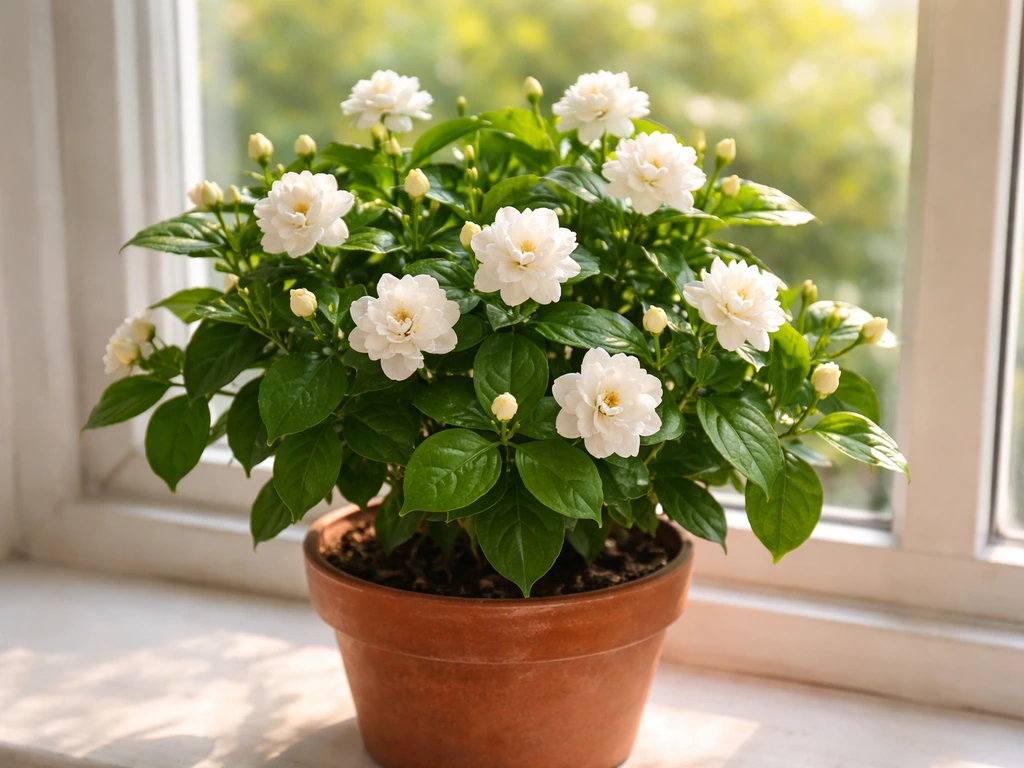
Yes, mogra (Jasminum sambac, also called Arabian jasmine) can grow indoors, and with the right setup it will actually bloom and fill a room with that famous fragrance. The catch is that mogra is a sun-hungry tropical, so it needs a genuinely bright window, consistent warmth above 65°F, and careful watering. Get those three things right and you have a real shot at indoor flowers. Miss even one of them and you'll end up with a healthy-looking plant that stubbornly refuses to bloom, or worse, drops every bud it forms.
Can Mogra Plant Grow Indoors? How to Grow and Bloom It

James Hartwell
13 May 2026
A quick note on which jasmine you have
The name 'mogra' almost always refers to Jasminum sambac, the species with those intensely fragrant small white flowers used in garlands and attar. It's a different plant from common jasmine (Jasminum officinale), poet's jasmine, or the star jasmine sometimes sold at garden centers. The indoor care guidance in this article is specifically for Jasminum sambac. If you have a different jasmine cultivar, the general principles still apply, but sambac is more heat-tolerant and slightly more forgiving of warm indoor conditions than some of its cousins.
Light and placement: this is the make-or-break factor
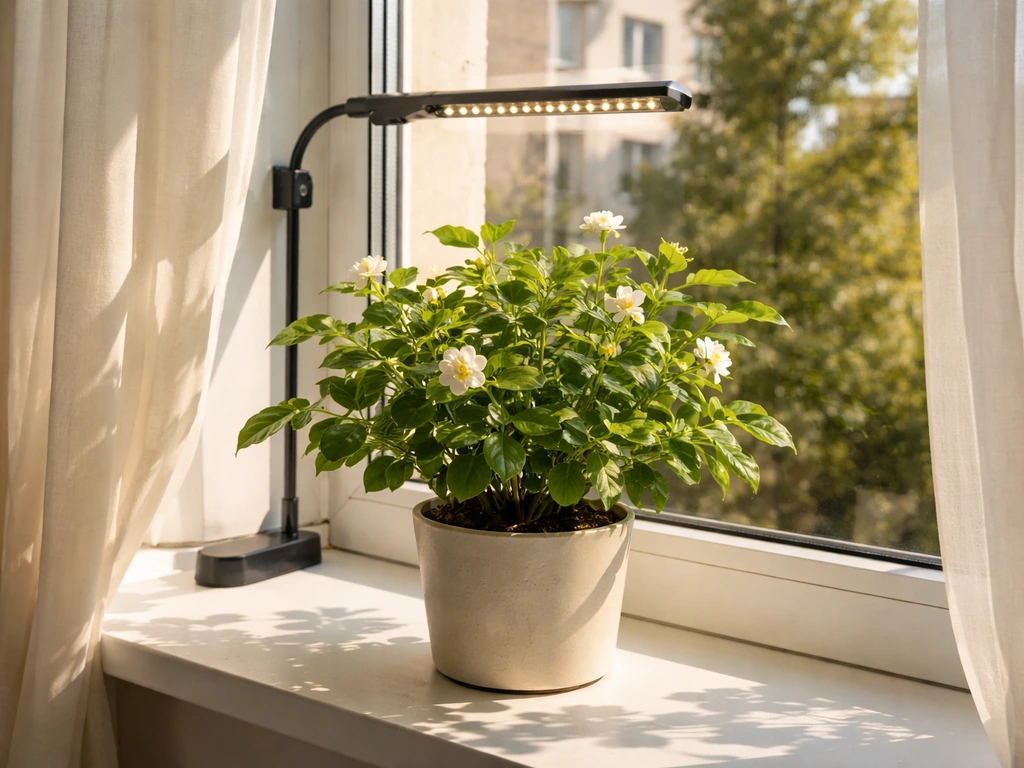
I want to be direct here because this is where most indoor mogra attempts fail. Mogra needs 4 to 8 hours of direct sunlight every day to produce blooms. A south-facing or west-facing window is your best option indoors. A sheer-curtained east window might keep the plant alive, but you'll likely get little to no flowering. A north-facing window is not enough, full stop.
If you're in an apartment with limited direct sun, a grow light is not a luxury, it's a necessity. Position a full-spectrum grow light 6 to 12 inches above the canopy and run it for 14 to 16 hours a day during the growing season to compensate for weaker indoor light. Think of it as giving the plant the equivalent of a south-facing windowsill it isn't getting.
- South or west window: best choice, 6 to 8 hours of direct sun, highest bloom potential
- East window with no obstructions: survivable but expect fewer flowers and slower growth
- North window: avoid for mogra, the plant will survive but bloom is unlikely
- Grow lights: use a full-spectrum LED, 14 to 16 hours daily, placed close to the plant
One more placement tip: keep the plant away from heating vents and air conditioning units. Mogra doesn't like blasts of dry hot or cold air hitting it directly. A bright windowsill with gentle ambient airflow is ideal.
Pot, soil, and drainage setup
Mogra does well in containers, which is actually one of the reasons it's so suited to indoor growing. Use a terracotta or ceramic pot with a drainage hole. Terracotta is particularly forgiving because it lets excess moisture evaporate through the walls, which reduces root rot risk. For a young plant, a 6-inch pot works. A more established plant will want an 8 to 10-inch pot, but don't jump too far ahead in pot size, a pot that's too large holds more moisture than the roots can use.
For soil, use a well-draining potting mix. A standard houseplant potting mix is fine, but cut it with about 20 to 30 percent perlite or coarse sand to improve drainage. Mogra in waterlogged soil will develop root rot quickly. You can also add a small amount of compost at planting time for slow-release nutrients, but keep it light.
Watering, humidity, and feeding
Watering routine
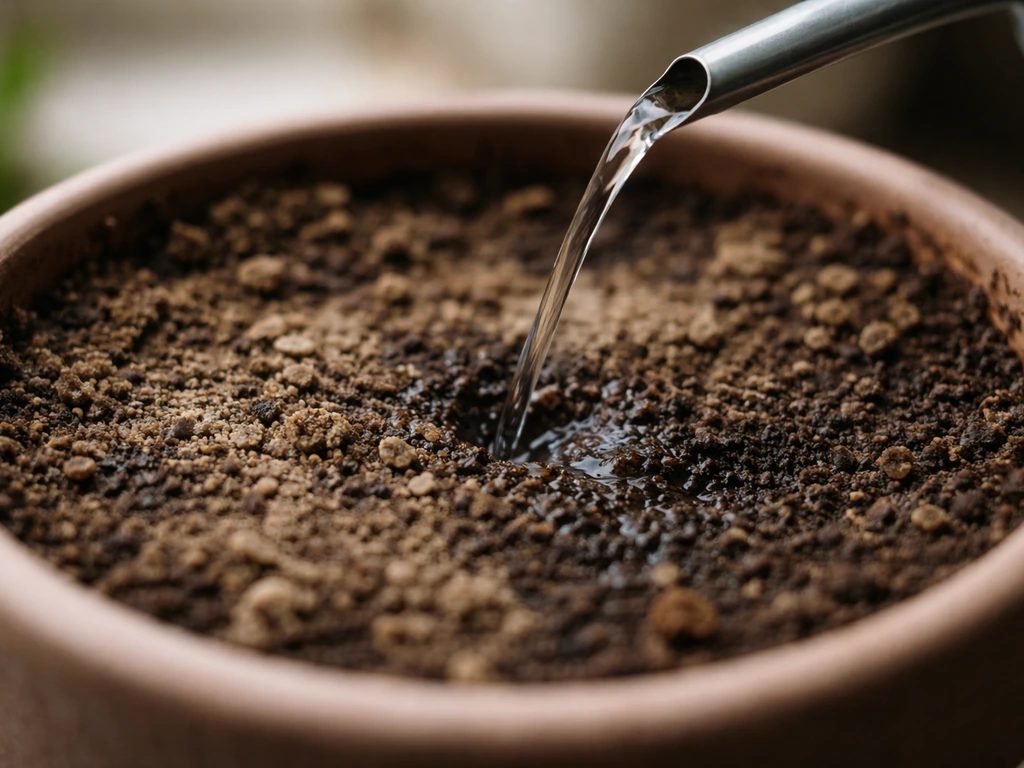
The golden rule for watering mogra indoors is to let the top inch or two of soil dry out before watering again. The goal is to bring the soil to a state of visual dryness between waterings, not bone-dry desert conditions, but not constantly moist either. Stick your finger about an inch into the soil. If it feels dry at that depth, water thoroughly until it drains from the bottom. Then wait again. During winter or low-light periods, you'll water much less frequently, sometimes every 10 to 14 days depending on your pot size and room temperature.
Humidity
Mogra prefers humidity at 50% or higher, but it will tolerate drier indoor air without serious harm. If your home runs very dry (common in winter with central heating), a small pebble tray with water placed under the pot or a nearby humidifier will help. Avoid misting the leaves directly as that can invite fungal issues. Humidity above 50% also reduces the stress that contributes to bud drop, which is one of the most frustrating problems for indoor growers.
Feeding schedule
During the active growing season (spring through early fall), feed your mogra once a week with a balanced, water-soluble fertilizer at quarter strength (about a quarter teaspoon per gallon of water). A balanced formula like 10-10-10 works well. Once the light levels drop in late fall and winter and growth slows, stop feeding entirely. Feeding a plant that isn't actively growing just pushes salt buildup in the soil and doesn't help the plant at all.
Temperature and airflow
Mogra is a tropical plant and it needs warmth year-round. Keep indoor temperatures above 65°F at all times for optimum growth. The plant can survive brief dips, but prolonged exposure to temperatures below 55°F (around 13°C) will cause stress, leaf drop, and growth shutdown. This is important if you're overwintering mogra indoors in a temperate climate, for example moving a patio container inside before the first fall frost. Don't put it in a cold garage or unheated basement. A bright, moderately warm room is exactly what Missouri Botanical Garden recommends for overwintering container sambac.
Airflow matters too. Stagnant air encourages fungal problems and pest outbreaks. Placing your mogra near a window that you open occasionally, or running a gentle fan in the room, creates the kind of light air movement that mimics the plant's natural tropical garden habitat without stressing it with a direct draft.
How to propagate mogra indoors
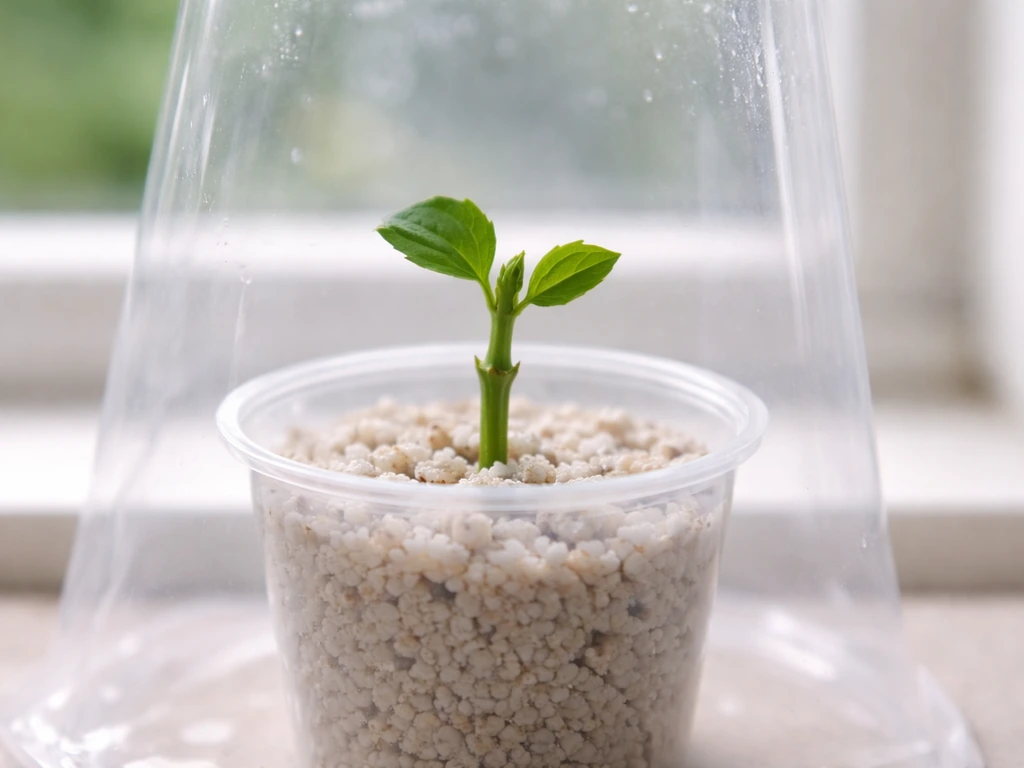
Here's something worth knowing upfront: cultivated Jasminum sambac generally does not produce viable seeds. The plant is reproduced almost entirely through vegetative methods, so cuttings are your practical route to starting new plants. In propagation trials on Jasminum sambac, semi-hardwood cuttings showed superior shoot and root proliferation compared with other cutting hardness categories.
- Take semi-hardwood cuttings in late spring or early summer. A semi-hardwood cutting is a stem that has matured past the very soft green tip but hasn't become fully woody. About 4 to 6 inches long with 2 to 3 leaf nodes works well.
- Strip the leaves from the bottom half of the cutting, leaving only 2 to 3 leaves at the top.
- Dip the cut end in rooting hormone powder or gel. This step is optional but research shows it can significantly boost root development in Arabian jasmine cuttings.
- Plant the cutting in a clean, well-draining rooting medium such as perlite, coarse sand, or a 50/50 perlite and potting mix blend. Avoid heavy soil mixes that stay too wet.
- Place the cutting in bright indirect light (not harsh direct sun at this stage) and keep the medium consistently moist but not soggy.
- Cover loosely with a clear plastic bag or humidity dome to maintain moisture around the cutting without waterlogging the medium.
- Roots typically develop in 4 to 6 weeks. Once the cutting shows new leaf growth and resists a gentle tug, it has rooted and can be moved to its permanent pot.
Common indoor problems and how to fix them
Bud drop
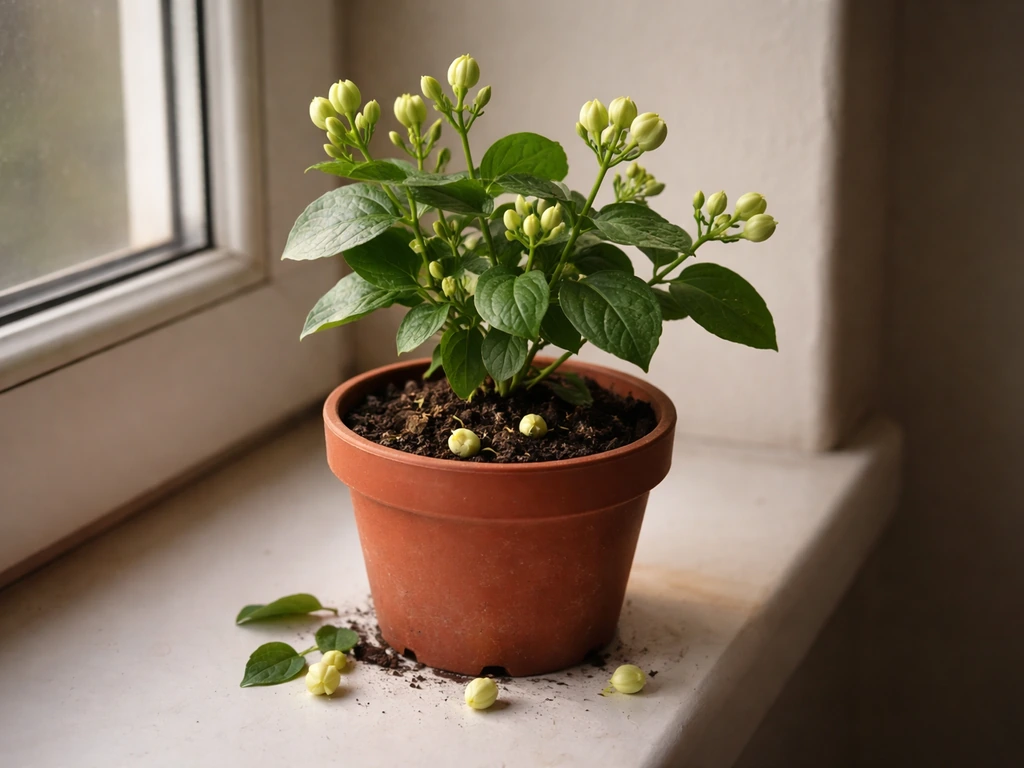
This is the single most common complaint from indoor mogra growers. The plant forms buds and then drops them before they open. The usual causes are: insufficient light, overwatering or underwatering, a sudden change in temperature or light position (like moving the plant), or very low humidity. The fix is to stabilize the environment: don't move the plant once buds form, keep the watering consistent, and make sure it's getting enough direct sun. If buds keep dropping, light is usually the culprit.
Yellow leaves
Yellowing leaves are usually overwatering, especially if the yellowing starts at the lower leaves and the soil has been consistently damp. Let the soil dry out more between waterings and check that your pot is draining properly. If only the newest leaves are yellowing while older ones look fine, it could be an iron or nitrogen deficiency, and a balanced fertilizer application during the growing season should correct it.
Leaf drop without obvious yellowing
Sudden leaf drop on an otherwise green plant almost always points to a temperature shock or cold draft. Check whether the plant is near an air conditioning vent, a drafty window, or was recently moved from a warm spot to a cooler one. Keep temperatures steady and above 65°F.
Pests: aphids, mealybugs, spider mites, and scale
Mogra grown indoors can attract the usual indoor houseplant pests. Aphids and mealybugs leave a sticky honeydew residue on leaves. [Spider mites thrive when indoor air is hot and dry](https://extension. psu.
edu/pest-and-disease-problems-of-indoor-plants/) and show up as fine webbing on the undersides of leaves. Scale insects look like small brown bumps on stems. Check the undersides of leaves regularly, especially during the growing season. For early infestations, pure neem oil diluted in water (following the product instructions) applied in two sprays one week apart is an effective and low-toxicity option.
For heavier infestations, insecticidal soap or horticultural oil works well for aphids and mealybugs; for spider mites, a miticide or repeated neem applications may be needed. Always isolate a newly purchased mogra plant for two weeks before placing it near other houseplants.
The plant grows well but never blooms
A lush, leafy mogra that refuses to flower is almost always a light problem. More fertilizer won't fix it. You need more direct sun hours or a stronger grow light. There's also an interesting factor worth trying: mogra and many jasmines may benefit from cooler nights in autumn (around 55 to 60°F for a few weeks) to trigger the shift from vegetative growth to flower production.
If you want queen anne's lace grown indoors, the key is bright light and consistently moist but not waterlogged soil mogra and many jasmines may benefit from cooler nights. If your plant is in a room that stays uniformly warm all year, try placing it near a slightly cooler window in autumn for a few weeks before bringing it back to full warmth and light. This temperature dip can help initiate bud set.
Care checklist and what to realistically expect
Indoor mogra growing is rewarding but not effortless. Here's an honest summary of what you're signing up for and what success looks like. If you are wondering can primula grow indoors, the key is also matching the light and moisture needs to your home conditions.
| Care Factor | What to Do | Realistic Expectation |
|---|---|---|
| Light | South or west window, 6 to 8 hours direct sun, or full-spectrum grow light 14 to 16 hours daily | Without strong light, expect foliage only, not flowers |
| Temperature | Keep above 65°F year-round, avoid cold drafts and vents | Temperatures below 55°F cause stress and leaf drop |
| Watering | Water when top inch of soil is dry, drain fully, reduce in winter | Consistent moisture cycling prevents root rot and bud drop |
| Humidity | Aim for 50%+ with a pebble tray or humidifier if needed | Low humidity is tolerated but increases stress |
| Fertilizing | Weekly at quarter strength (balanced) during active growth, stop in winter | Overfeeding in low light causes salt buildup, not better growth |
| Blooming | Needs strong light, warmth, and possibly an autumn cool-night period to trigger flowering | Expect 1 to 2 bloom flushes per year indoors if conditions are good |
| Fragrance | Strongest in the evening and at night when blooms open | Even 3 to 4 open flowers scent a small room noticeably |
| Lifespan | Can live many years as a container plant if repotted every 2 to 3 years | Annual pruning after flowering keeps the plant compact and productive |
If you're setting up your mogra today, here's the quick-start plan: buy a small plant from a reputable nursery (look for Jasminum sambac specifically), pot it in a well-draining mix with perlite in a terracotta pot with drainage holes, place it in your brightest south or west window, water only when the top inch of soil is dry, and start a weekly diluted fertilizer routine once you see new growth. Don't repot immediately after bringing it home, let it settle for two to three weeks first. The plant may drop a few leaves adjusting to indoor conditions. That's normal. Give it steady light and warmth and it will settle in.
Compared to some of the other flowering plants you might consider for indoors, mogra is actually a reasonable choice for a dedicated grower. It's more demanding than a polka dot plant or purple heart plant, which are grown mostly for foliage and tolerate moderate light. Can polka dot plant grow indoors? You can, but it prefers moderate light compared with mogra.
Purple heart plants can grow indoors too, but they generally need less intense light than mogra. But for anyone who wants indoor fragrance, mogra's blooms are worth the extra attention to light and temperature. Just go in with realistic expectations: this is a high-light plant, and the closer you can get it to outdoor sun conditions, the better it will perform. Will portulaca grow indoors?
If you're comparing options, you can also ask whether a purple queen plant can grow indoors and what light it needs purple queen can grow indoors. If you're also wondering about other indoor bloomers like primula, the light and watering requirements are different but the same indoor conditions matter can primula grow indoors. If you are also curious about other edible plants for your windowsill, you might wonder can purslane grow indoors too. If you are also curious about other edible plants for your windowsill, can purslane grow indoors too?
With the right light and watering habits, you can grow it successfully as a bright-window or grow-light plant portulaca indoors.
FAQ
Can mogra plant grow indoors in a low-sun apartment where the window is only bright, not sunny?
Yes, but only if the room has a genuinely sunny spot and you can keep temperatures warm. If your “bright” window is still mostly indirect light, the plant may survive for months yet rarely set buds.
My indoor mogra is growing leaves but not blooming, how can I tell whether it’s a light problem or a feeding problem?
If you get leggy growth, long gaps between leaves, pale color, or no buds, that usually signals insufficient direct light. Before changing fertilizer, increase direct sun hours or raise your grow light intensity, and keep the plant in the same position once you start seeing bud formation.
Should I prune indoor mogra after I buy it, or wait until it blooms?
Avoid pruning hard right after bringing it home. Do light shaping only after it settles (typically 2 to 3 weeks), because sudden root and light stress can reduce budding. If you prune to control size, wait until after the main flowering flush so you do not remove potential bloom wood.
What’s the best way to raise humidity for indoor mogra, is misting okay?
Misting can raise humidity briefly, but it can also increase fungal risk and does not reliably keep humidity steady. For consistent humidity, use a pebble tray or a small humidifier and aim for 50% or higher, especially during winter when air is dry.
When should I repot indoor mogra after bringing it home?
Repotting too soon can disrupt roots and trigger leaf drop or bud drop. Let the plant adjust to your home for 2 to 3 weeks, then repot only if it is rootbound, in a non-draining pot, or planted in poor, water-retaining soil.
How do I prevent root rot with indoor mogra, does terracotta alone fix overwatering?
A terracotta pot helps, but drainage matters more than material. Use a pot with a drainage hole, and always empty the saucer after watering. If water stays in the saucer for hours, root rot risk rises even with terracotta.
Can I fertilize indoor mogra year-round to speed up flowering?
Start feeding only when you see active new growth, not just when temperatures are warm. Use quarter strength weekly during spring through early fall, and stop in late fall and winter, since feeding during low light can cause nutrient salt buildup.
Do cooler nights really help indoor mogra produce more buds, and how cold is safe?
Yes, and this is often helpful if your home is uniformly warm. During autumn, a short period of cooler nights (around 55 to 60°F for a few weeks) can help initiate bud set, but do not let daytime temps drop below the mid-60s consistently.
My mogra forms buds and drops them before opening, what are the most common causes to check first?
Main reasons include bud stress from inconsistent watering, moving the plant after buds form, cold drafts from windows or vents, and low humidity. If buds keep dropping, prioritize stabilizing light and temperature and ensure the top inch of soil drying cycle is consistent.
What do yellow leaves mean on indoor mogra, how can I tell the difference between overwatering and nutrient issues?
If yellowing starts on older lower leaves and the soil stays damp, it is usually overwatering or poor drainage. If newer leaves yellow while older ones stay green, it may point to nutrient deficiency, so adjust watering first and then consider a balanced fertilizer during the active season.
Is it really necessary to isolate a new indoor mogra plant for two weeks, and what am I looking for during that time?
Quarantine is worth doing because indoor pests spread quickly between plants. Isolate newly purchased mogra for about two weeks, then inspect leaf undersides and stem nodes before moving it near other houseplants.
Can I grow indoor mogra from store-bought seeds, or is it better to use cuttings?
For seed-starting, expect it to be extremely difficult because cultivated Jasminum sambac typically does not produce viable seed. The practical approach indoors is to start from cuttings, because that is how most plants are propagated.