
Yes, Purple Queen (almost certainly Tradescantia pallida) grows indoors really well. It's actually one of the easier trailing houseplants to keep alive, tolerates a fair bit of neglect, and stays a gorgeous deep purple as long as it gets enough light. The main thing that trips people up indoors is light: not enough of it and the plant goes leggy and fades.
Can Purple Queen Grow Indoors Yes How to Succeed

James Hartwell
16 May 2026
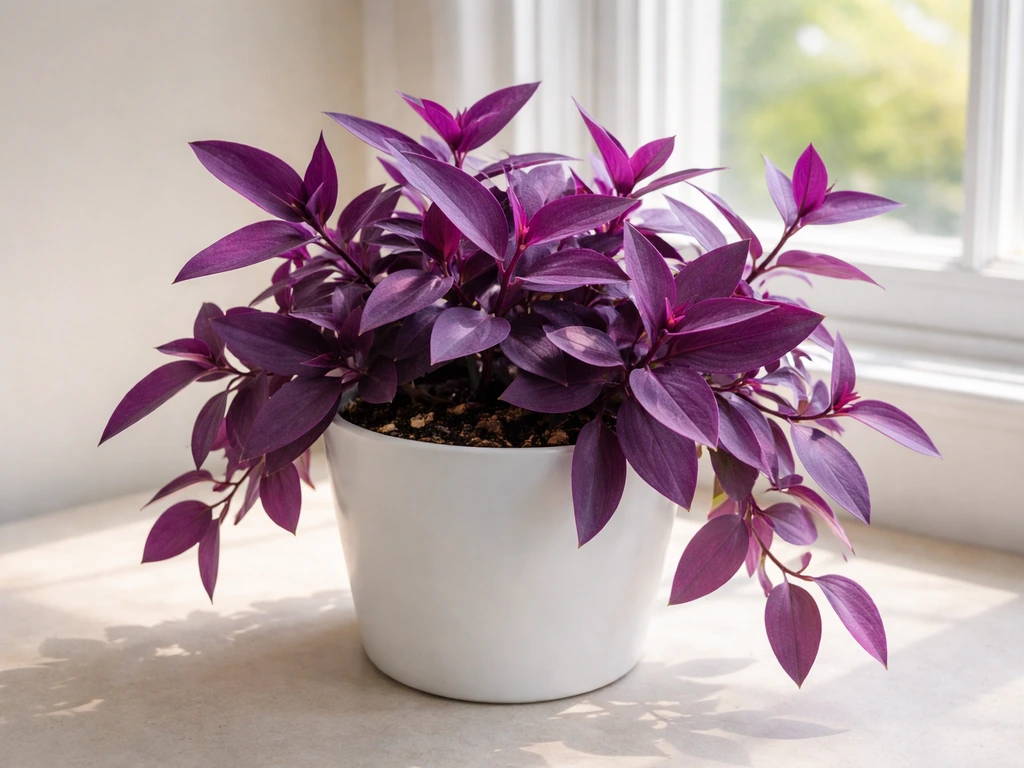
If you are wondering can purple heart plant grow indoors, light is the key factor to get it growing well and staying richly colored. Get it in front of a bright window or under a grow light, water it only when the top inch of soil is dry, and this plant will reward you without much fuss.
Which Purple Queen do you actually have?
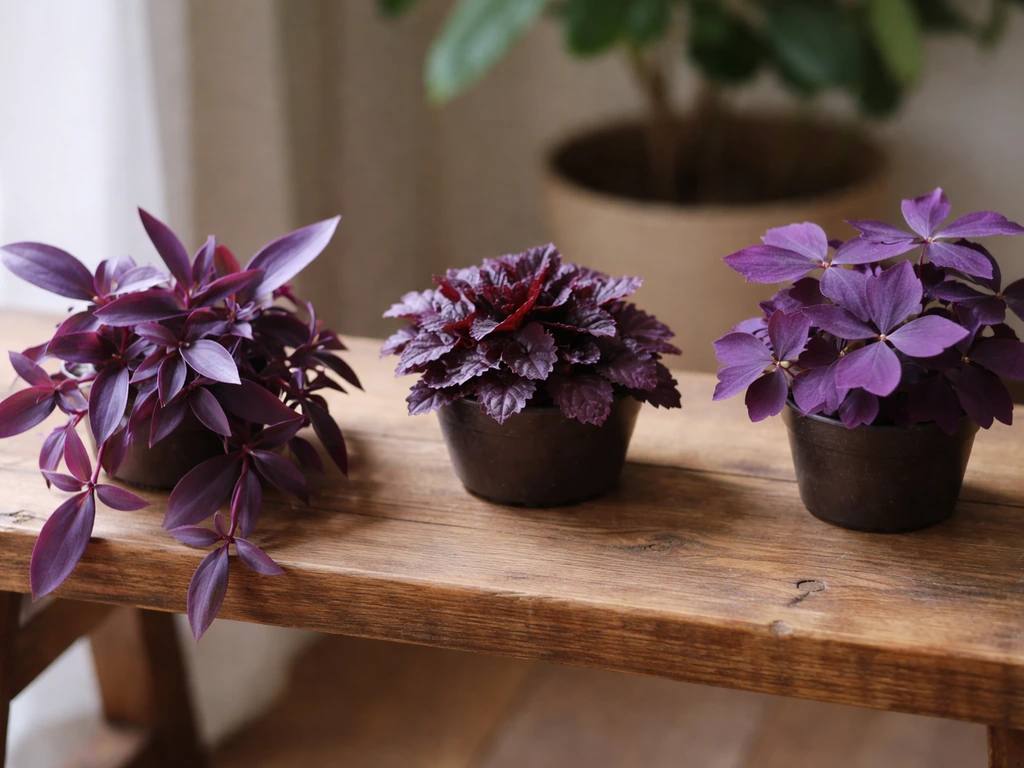
"Purple Queen" is a common trade name, and nurseries slap it on a couple of different plants. The one you're almost certainly looking at is Tradescantia pallida, a low-growing, trailing perennial in the spiderwort family. It's sold under a confusing mix of names: Purple Queen, Purple Heart, and sometimes just Tradescantia. They're all the same plant. Purple heart plant (Tradescantia pallida) is so similar in naming and appearance that if you've ever searched that term too, you're looking at the exact same species.
The other plants occasionally sold as "purple queen" are far less common and usually labeled more specifically (like certain purple-leaved Alternanthera cultivars). If your tag says "Purple Queen" and nothing else, Tradescantia pallida is a safe assumption. Still, confirm with the ID steps below before dialing in care.
How to confirm you have Tradescantia pallida
Look at the leaves first. Tradescantia pallida has long, lance-shaped leaves that clasp the stem at the base (they wrap around it slightly, which is a distinctive trait). The upper surface is dark purple, sometimes with a slightly greyish or greenish tint depending on light levels. The underside is a brighter, more vivid purple with a faint reddish edge along the margin. The whole plant is fleshy and semi-succulent feeling.
If your plant flowers, that's the easiest confirmation: Tradescantia pallida produces small, 3-petaled flowers in a deep pink to light purple color. If you see those tiny three-petaled blooms tucked between the leaves, you've got the right plant. The stems trail or sprawl rather than growing upright, and the whole plant has a soft, slightly fuzzy texture.
Light requirements indoors
This is the most important factor for growing Purple Queen indoors, and it's where most people go wrong. Outdoors, this plant lives in full sun and develops its deepest, most intense purple in those conditions. For best color, the Wisconsin Master Gardener PDF says to grow Tradescantia pallida in full sun for the [deepest, most intense purple](https://hort. extension.
wisc. edu/files/2015/12/Tradescantia_pallida. pdf). Tradescantia pallida develops its deepest, most intense purple in full sun [deepest, most intense purple in those conditions](https://www.
wikipedia. org/wiki/Tradescantiapallida). Indoors, you're aiming to get as close to that as possible. If you’re also wondering whether a can mogra plant can grow indoors, the good news is that many similar trailing plants do well with strong light and consistent care can mogra plant grow indoors.
Window placement
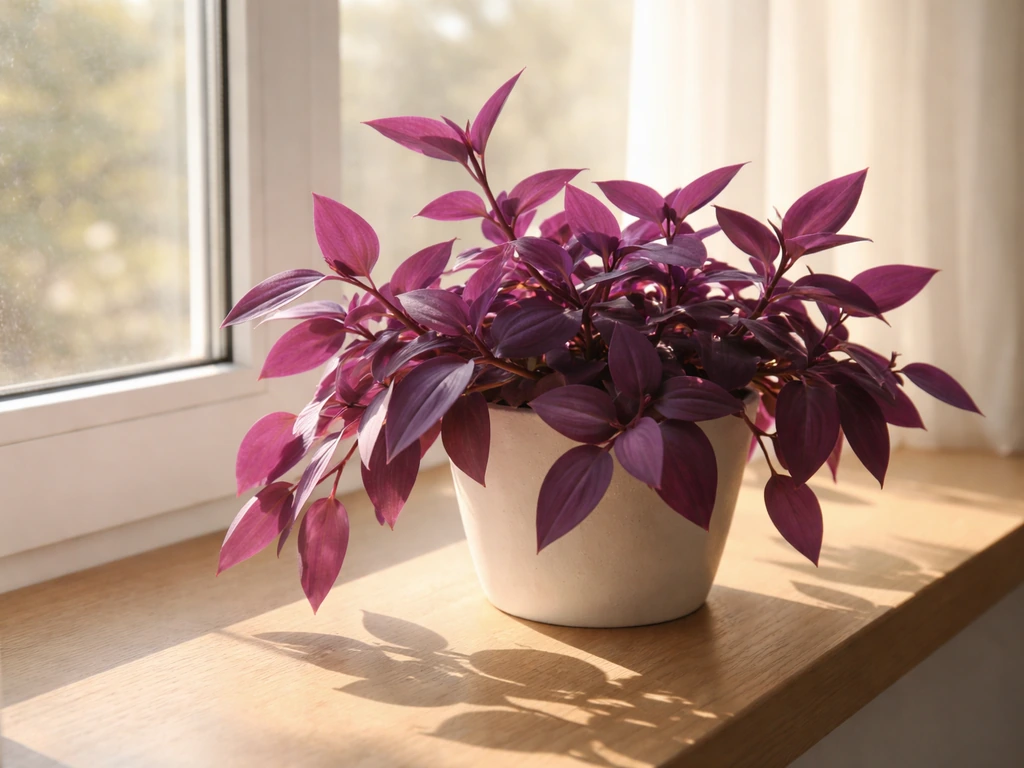
A south-facing window is your best bet if you're in the northern hemisphere. East or west-facing windows work too, especially if the plant is close to the glass and gets several hours of direct morning or afternoon sun. Bright indirect light (like a few feet back from a large south window) is the minimum for decent growth, but don't expect the same richness of color you'd get with more direct exposure. North-facing windows are really not enough for this plant long-term: it'll survive but lose color fast and stretch toward the light.
Grow lights
If your apartment situation means limited window access (a common reality for a lot of us), a full-spectrum LED grow light positioned 6 to 12 inches above the plant for 12 to 14 hours a day makes a real difference. I've seen Purple Queen stay vibrantly purple under a decent grow light in a windowless office setup. The more light you give it, the more that deep purple comes out. In lower light, leaves can shift toward greener or pinkish tones, which is the plant telling you it wants more.
Watering, soil, drainage, and pot setup
Tradescantia pallida is surprisingly drought-tolerant once established, which is a pleasant trait in a houseplant. The rule that works consistently: only water when the top inch of soil is dry, or even when the top two inches are dry if your home is on the cooler or less bright side. The plant stores some moisture in its fleshy stems, so it handles a missed watering better than most. Root rot from consistently soggy soil is a much bigger risk than underwatering.
Soil mix
Use a well-draining potting mix and improve it by mixing in perlite or coarse sand, about 20 to 30 percent by volume. A standard indoor potting mix on its own tends to hold too much moisture for this plant. The goal is soil that drains quickly after watering and doesn't stay wet for more than a day or two.
Pot choice
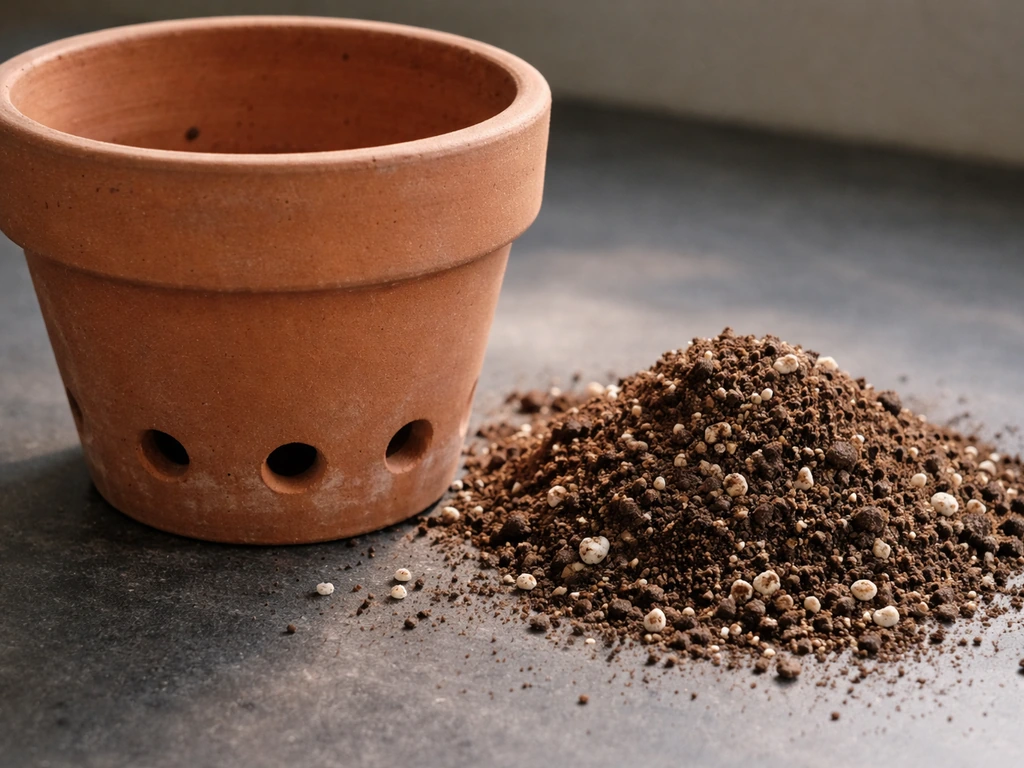
A terracotta pot is genuinely the better choice here because it wicks moisture away from the soil and helps prevent waterlogging. Whatever you use, drainage holes are non-negotiable. Don't let the pot sit in a saucer full of standing water: dump that water out after each watering. For pot size, snug is better than too large. A pot that's too big holds more soil than the roots can drink, which keeps things wet longer than ideal.
Temperature, humidity, and airflow
Purple Queen is comfortable in the same temperature range most of us keep our homes: 65°F to 75°F (18°C to 24°C) is the sweet spot. It doesn't like cold drafts or temperatures below about 50°F, so keep it away from drafty windowsills in winter and don't leave it near an air conditioning vent in summer. It's a tender perennial that won't survive frost, so if you're moving it in from outside, do it before nighttime temps drop below 50°F.
Humidity is not a fussy requirement for this plant. It handles average household humidity (around 40 to 50 percent) without complaint, which puts it ahead of a lot of tropical houseplants. If you're in a very dry home in winter (below 30 percent humidity), a light occasional misting or a pebble tray won't hurt, but it's not necessary the way it would be for something like a fern. Good airflow around the plant matters more: stagnant, stuffy air encourages fungal problems and pest pressure. A lightly cracked window nearby or a small fan running occasionally keeps things healthier.
Fertilizing, pruning, and keeping that purple color
Fertilizing
Feed your Purple Queen every 4 to 6 weeks during spring and summer when it's actively growing. Use a balanced liquid fertilizer (something like a 10-10-10 formula) diluted to half the recommended strength. Full-strength fertilizer can burn the roots and doesn't speed things up in any useful way. Skip fertilizing in fall and winter when growth slows, especially if you're not using a grow light to keep it actively growing year-round.
Pruning for shape and color
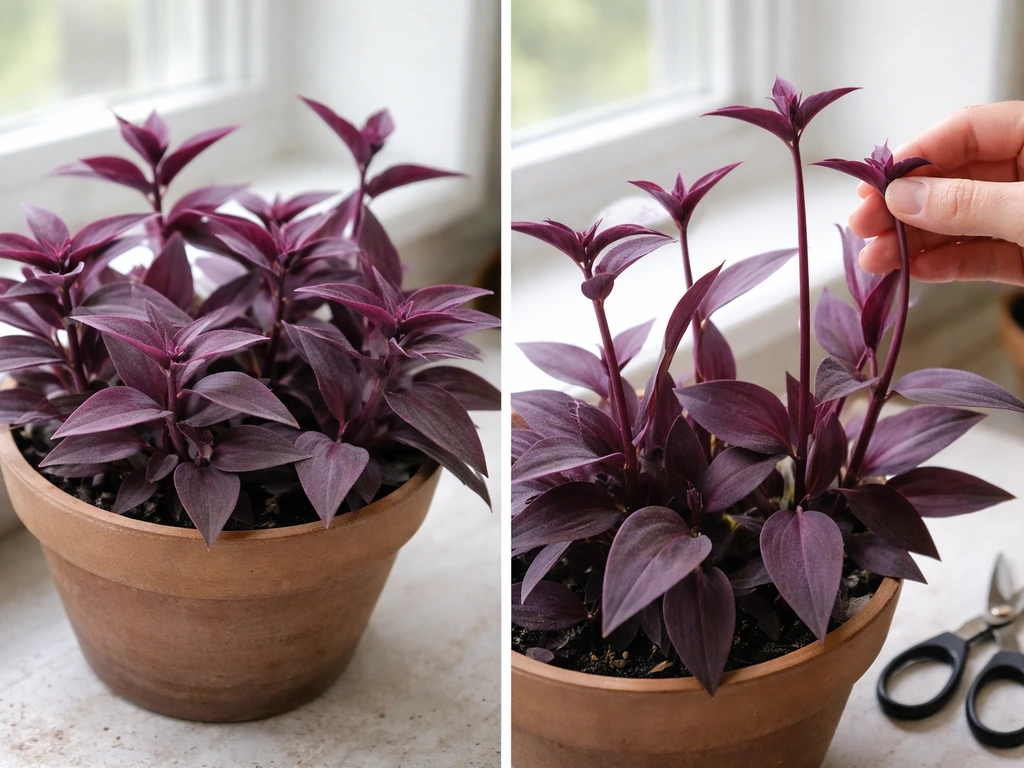
Pinching and trimming regularly is one of the best things you can do for a Purple Queen indoors. When stems get long and bare at the base, the plant starts looking scraggly. Pinch off the tips of stems to encourage branching and a fuller, more compact shape. Cutting stems back by a third when they get leggy redirects the plant's energy into new growth. The new growth tends to come in with the most vivid purple color, especially with good light. If your plant is starting to look stretched and pale, a hard cut-back combined with more light almost always snaps it back into shape.
Keeping the color intense
Light is the biggest lever for purple color. More light equals more anthocyanin production, which is what gives the leaves that deep purple. If leaves are turning green or fading to a dull pink, that's almost always a light problem first, not a fertilizer problem. Move the plant to a brighter spot before reaching for the fertilizer bottle.
Troubleshooting common indoor problems
| Problem | Likely Cause | Fix |
|---|---|---|
| Leggy, stretched stems | Not enough light | Move to a brighter window or add a grow light; pinch tips to encourage bushiness |
| Fading to green or dull pink | Low light or aging leaves | Increase light first; prune back older stems so new, vivid growth takes over |
| Yellowing leaves | Overwatering or root rot | Let soil dry out; check roots (brown/mushy = root rot); repot into fresh mix if needed |
| Crispy brown leaf tips | Underwatering, low humidity, or dry heat | Water more consistently; move away from heating vents |
| Mushy stems at the base | Root rot from waterlogged soil | Unpot, trim dead roots, repot in fresh well-draining mix with more perlite |
| White cottony fluff on stems | Mealybugs | Wipe with a cotton swab dipped in rubbing alcohol; treat with neem oil spray |
| Tiny webs under leaves, stippled leaves | Spider mites | Rinse plant in the shower; apply insecticidal soap; increase humidity slightly |
Mealybugs and spider mites are the two pests most likely to find your Purple Queen indoors. Spider mites especially love warm, dry conditions, so if you're running heat in winter and the air is dry, keep an eye on the undersides of leaves. Catching either pest early makes a huge difference: a small infestation is easy to treat, a large one takes weeks to clear up.
Indoor setup checklist and next steps
Quick setup checklist
- Place within 1 to 2 feet of a south or west-facing window, or directly under a full-spectrum grow light running 12 to 14 hours daily
- Pot into a well-draining mix: standard potting soil plus 20 to 30 percent perlite, in a terracotta pot with drainage holes
- Water only when the top 1 to 2 inches of soil feel dry; never let it sit in standing water
- Keep room temperature between 65°F and 75°F; protect from cold drafts and heating or cooling vents
- Fertilize every 4 to 6 weeks in spring and summer with half-strength balanced liquid fertilizer
- Pinch stem tips monthly to keep growth compact and encourage branching
- Check the undersides of leaves every couple of weeks for spider mites or mealybugs
Bringing it in from outside
If your Purple Queen has been living outdoors and you're transitioning it inside (common in late spring or heading into fall), give it a week or two of gradual adjustment. Start by moving it to a shaded outdoor spot for a few days so it isn't hit with a sudden drop in light intensity, then bring it inside to your brightest window. Check the plant thoroughly for pests before it crosses the threshold: outdoor plants often carry hitchhikers that become a much bigger problem once they're inside with no natural predators.
Propagating when things go wrong (or when things go right)
One of the best things about Tradescantia pallida is how ridiculously easy it is to propagate. If you are trying to grow queen anne's lace indoors, you can also use simple propagation steps like this as a related approach when you need new plants to keep the look going propagate. If your plant has gotten leggy, take 4 to 6 inch stem cuttings, strip the lower leaves, and stick them in a glass of water.
They'll root in a week or two, then you can pot them into soil. You can also stick cuttings directly into moist potting mix and they'll root without a water step. Spring through early summer is the best time to propagate since the plant is actively growing, but honestly it roots so readily it works almost any time.
Use fresh cuttings to fill a pot back in if the mother plant has gotten bare at the base: pin several cuttings around the rim of the same pot and within a few weeks you've got a full, bushy-looking plant again.
Signs your Purple Queen is actually thriving
- Deep, rich purple color on leaves and stems (not green-tinged or washed out)
- Steady new growth from stem tips, especially after pruning
- Firm, fleshy stems that aren't mushy or soft at the base
- Occasional small pink-purple blooms appearing between the leaves
- Roots that are white or light tan (not brown or smelly) when you check drainage holes
If you're hitting all of those markers, your setup is working. Purple Queen is genuinely one of the more rewarding indoor plants to keep because the feedback loop is fast: improve the light, and you'll see deeper color within weeks. Trim it back, and new growth pops out quickly. For anyone who finds portulaca or purslane too finicky to keep indoors, Purple Queen hits a much more forgiving sweet spot while still delivering that dramatic color payoff.
For a plant that you might think is too picky for indoor life, Purple Queen is often a simpler option than purslane. If you were wondering whether will portulaca grow indoors, that tends to be much more finicky than Purple Queen portulaca or purslane.
FAQ
What if my apartment only has low light, can Purple Queen still grow indoors?
Yes, but it usually needs help to keep its color and shape. If you cannot place it near a bright window, plan on a full-spectrum grow light and aim for roughly 12 to 14 hours per day. A very dim room can keep it alive, but it will likely fade and stretch.
How do I know whether I’m overwatering or underwatering Purple Queen indoors?
Watering should be based on dryness, not a calendar. Check the top inch of soil, water thoroughly only when it feels dry, then let excess drain completely. If the leaves look limp with dry soil, that points to underwatering, while soft stems or a persistently damp mix points to overwatering.
Does pot size matter for indoor Purple Queen, and what size should I use?
Keep the pot small-to-medium and make sure drainage holes are clear. A pot that is too large holds moisture longer, which increases the chance of root rot. If you see water taking more than a couple of days to dry the top inch, move to a tighter pot or increase drainage material.
My Purple Queen is losing its purple color, what should I check first?
If your leaves are turning greener, look pale, or the plant becomes long and bare at the base, assume light is the issue first. Increase hours under a bright window or grow light, and rotate the plant weekly so one side does not grow toward the light.
When is the best time to pinch or cut back Purple Queen indoors?
Normal pruning and stem cutbacks are fine, you can pinch tips anytime during active growth (spring through summer). If you need a more dramatic reset, do the hard cut during that same active period to reduce stress and encourage faster regrowth.
How can I revive a leggy Purple Queen indoors without buying a new plant?
Propagation from stem cuttings is an easy way to keep the plant lush and prevent legginess. Use 4 to 6 inch cuttings, remove the lower leaves, and root them in water or directly in moist mix, then pot multiple cuttings around the edge of the same container for a fuller look.
What’s the safest way to move Purple Queen indoors from outdoors?
Yes, but expect more mess and higher pest risk if you bring it in mid-season. Before moving indoors, treat for mealybugs or spider mites if you see them, and quarantine for about 1 to 2 weeks in bright light to confirm nothing is lingering.
How can I catch pests early on Purple Queen before they spread?
Mealybugs and spider mites often show up on the underside of leaves and where stems meet. Inspect weekly, especially in warm, dry conditions, and wipe leaves with a damp cloth first if infestations are small, then follow through with appropriate repeat treatments because eggs can hatch over time.
Can Purple Queen be trained to grow upright indoors, or does it need to trail?
Purple Queen is often grown as a trailing plant, but you can train it to be more upright by using gentle support and frequent trimming of long sections. Even then, it will naturally trail, so choose hanging baskets or let trailing stems drape over the rim for best results.
Should I mist Purple Queen indoors if the air is dry?
Typically no. Tradescantia pallida prefers a drier cycle and average home humidity, so heavy misting is not usually helpful. If your home is extremely dry, add airflow and only light, occasional misting, because stagnant moisture can worsen problems even when humidity looks low.