
Yes, turtle vine (Callisia repens) grows very well indoors as long as you give it bright indirect light, let the top inch of soil dry out between waterings, and keep it somewhere reasonably warm. It's actually one of the more forgiving trailing houseplants you can grow in an apartment or on a windowsill, and it rewards even modest attention with dense, attractive foliage that trails beautifully from a hanging basket or pot.
Can Turtle Vine Grow Indoors? Care Guide and Setup Tips
James Hartwell
6 Jun 2026
What turtle vine actually is (and why indoor results vary)
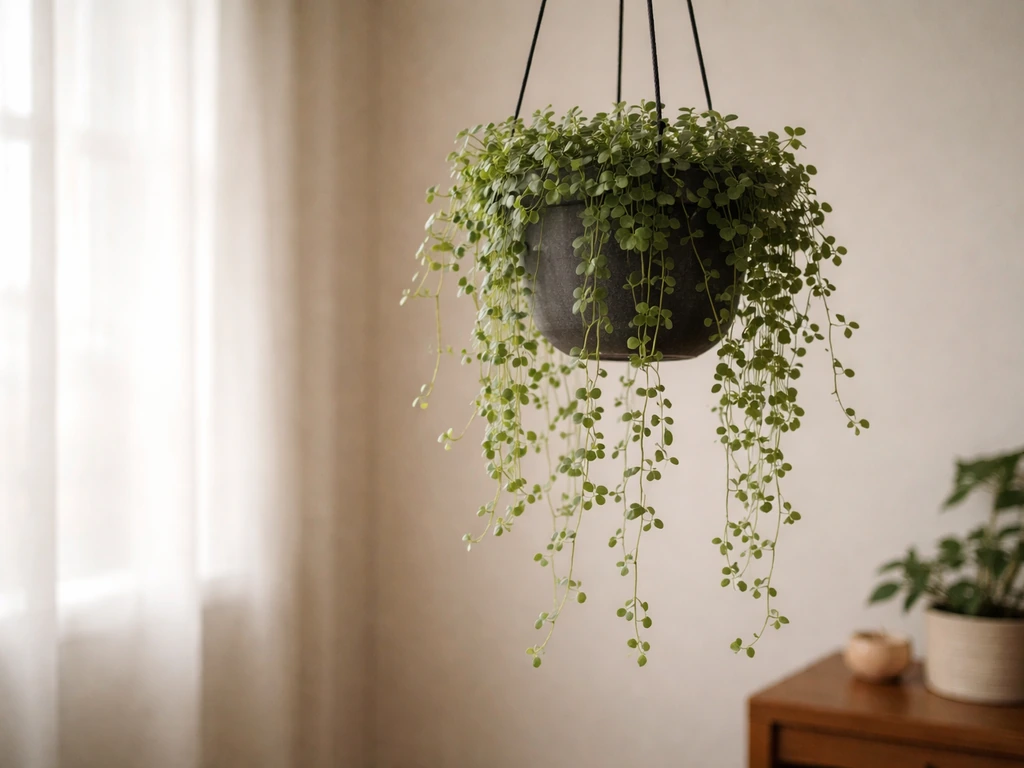
Turtle vine is most commonly Callisia repens, a low-growing succulent creeper in the Commelinaceae family. You'll also sometimes see Callisia gentlei var. elegans sold under the same name, so don't be surprised if your plant looks slightly different from photos online. Both are treated essentially the same way indoors. The plant gets its name from the small, rounded leaves that overlap along trailing stems, a bit like turtle shells stacked along a vine.
The reason indoor results vary so much comes down to light. Turtle vine outdoors gets ambient brightness all day. Indoors, it depends entirely on where you put it, and a dark corner versus a bright south-facing window can mean the difference between a compact, colorful plant and a leggy, washed-out one. Get the light right and most other things fall into place. Get it wrong and no amount of careful watering will compensate.
Light needs indoors: windows vs. grow lights
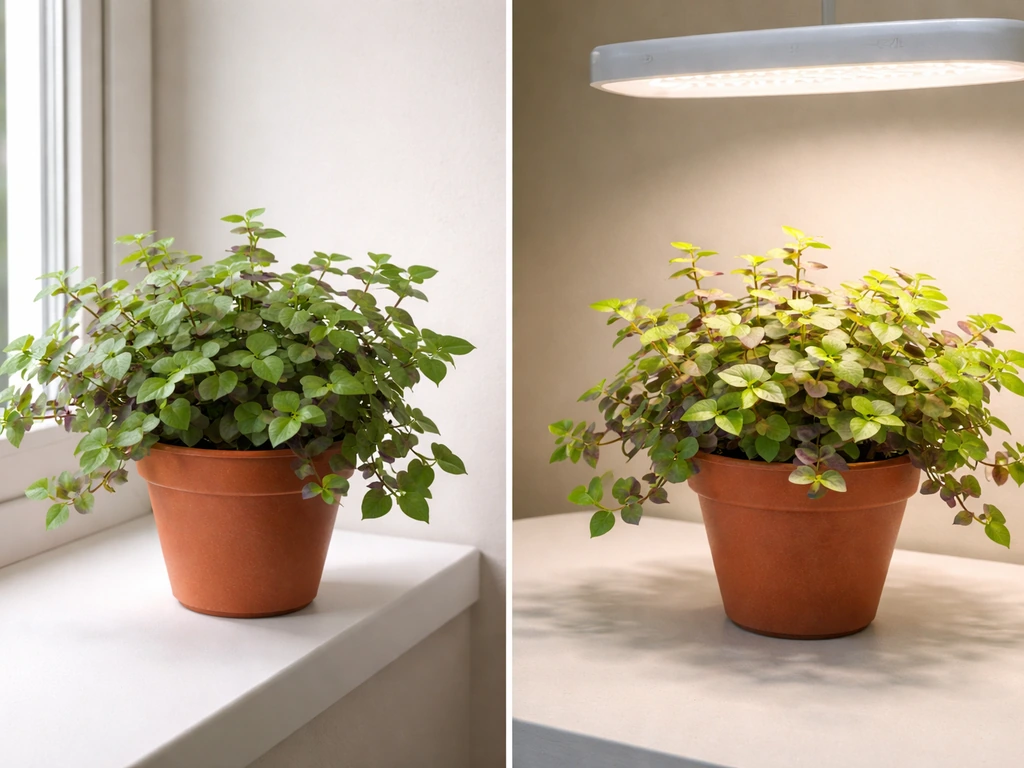
Turtle vine wants bright indirect light, roughly 3 to 6 hours per day. CALLISIA CARE GUIDE (PDF) also recommends blank" rel="noopener noreferrer">bright indirect light for turtle vine (Callisia), along with practical indoor care rules for watering and light. If you want to know whether you can grow Carolina reapers indoors, the light and heat requirements matter even more than with most houseplants can you grow carolina reapers indoors. An east-facing windowsill is ideal because you get gentle morning sun without the harsh midday rays that can scorch the leaves. A south or west-facing window works too, but pull the plant back a foot or two or use a sheer curtain to diffuse the strongest afternoon light. Direct midday sun on a south window will cause sun scorch, especially on plants that haven't been acclimated to it.
One useful trick: watch the foliage color. In good bright light, the leaves take on a slightly blushed or bronze tone. In low light, they go flat green and the stems start stretching. If your plant is reaching toward the window and getting sparse between nodes, it's telling you it needs more light.
If you don't have a bright window, a grow light works really well for turtle vine. A full-spectrum LED positioned 6 to 12 inches above the plant for 12 to 14 hours a day is enough to keep growth compact and the leaves looking healthy. This makes it a genuinely viable option for apartments with north-facing windows or interior rooms that don't get much natural light at all.
Watering, soil, and drainage
The single biggest mistake people make with turtle vine indoors is overwatering. It's a semi-succulent, which means it stores moisture in its stems and leaves. Water only when the top inch of soil has dried out, and stick your finger in to check rather than going by a calendar. In a warm room in summer, that might be every 4 to 5 days. In a cooler room in winter, it could easily stretch to 10 days or more.
Soil mix matters just as much as watering frequency. Standard potting soil alone holds too much moisture and will eventually cause root rot. A good working mix is 50% potting soil, 25% perlite, and 25% succulent or cactus mix. That ratio gives you enough organic matter to hold nutrients while the perlite and gritty component keeps excess water moving through. Whatever pot you use, it must have drainage holes. No exceptions.
For fertilizing, a balanced liquid fertilizer at half strength once a month during the growing season (spring through summer) is plenty. Don't fertilize in winter, and skip it for the first two weeks after repotting to avoid stressing the roots while they're getting established.
Temperature, humidity, and airflow
Turtle vine is comfortable in the same temperature range most people keep their homes: 65 to 80°F (18 to 27°C) is ideal. It doesn't like cold drafts, so keep it away from air conditioning vents and drafty windows in winter. Below about 50°F the plant will sulk, and frost will kill it outright. If you're in a temperate climate and want to move it outside in summer, bring it back in before night temperatures drop into the low 50s.
Humidity around 50 to 60% keeps turtle vine looking its best. Most homes sit somewhere in that range, so it's usually not a problem. If your home is very dry (below 40%, common in winter with central heating), the plant can handle it but may grow more slowly. You can mist occasionally, but don't overdo it since sitting moisture on the leaves and stems invites fungal issues. A small pebble tray with water underneath the pot is a gentler way to raise humidity. Good airflow is also worth mentioning: stagnant air in an enclosed space encourages mold and pests, so don't tuck it inside a closed cabinet.
How to plant, train, and prune turtle vine indoors
Getting it planted
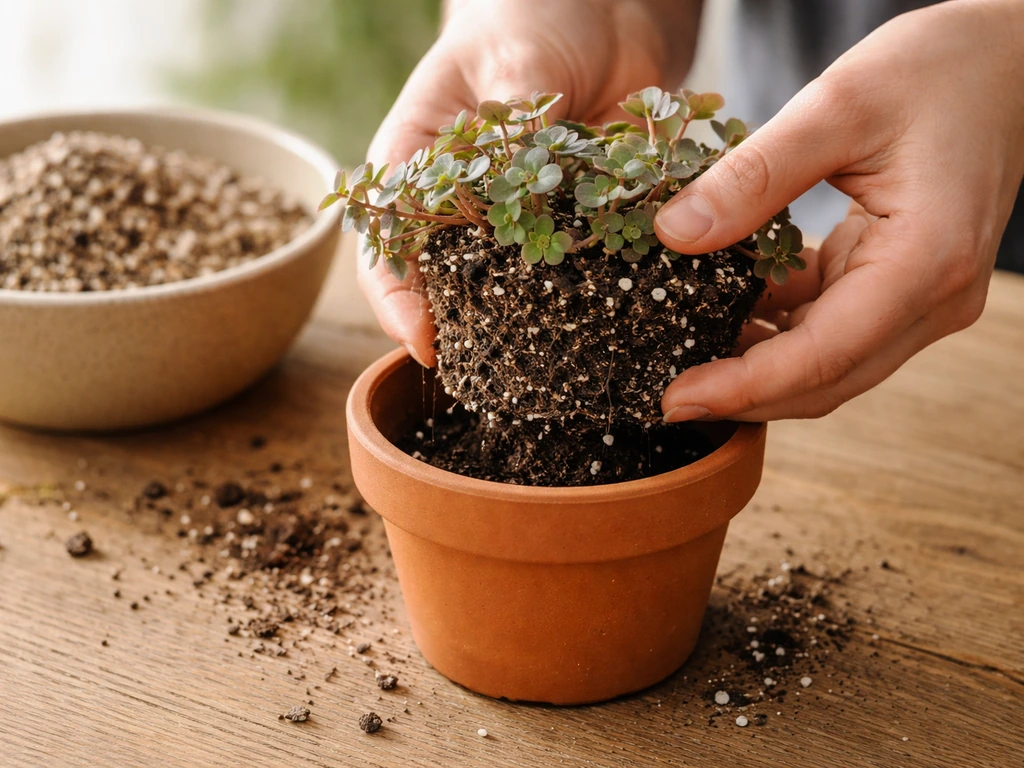
Choose a pot that's only slightly larger than the root ball. Turtle vine isn't a fast-rooting plant that needs room to sprawl underground, and an oversized pot holds more soil that stays wet longer. A 4 to 6 inch pot is usually right for a newly purchased plant. Fill it with your well-draining mix, plant at the same depth it was in its nursery pot, and water it in thoroughly, then wait for the top inch to dry before watering again.
Training and managing the trailing stems
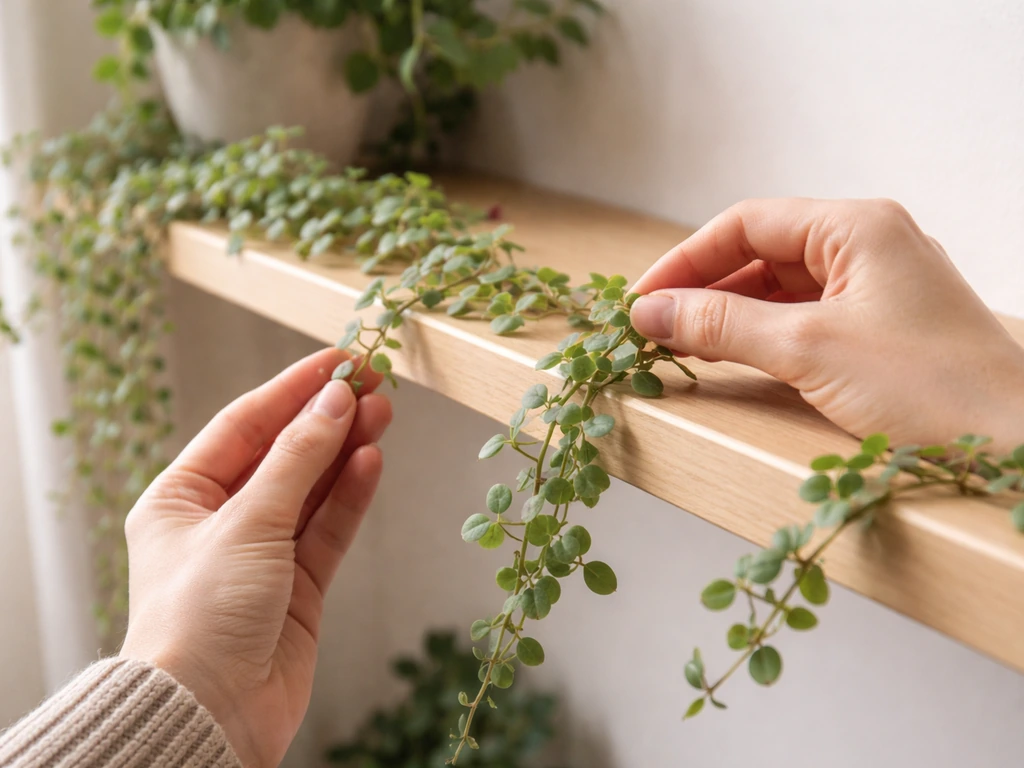
Turtle vine's natural growth habit is to trail and creep, which makes it perfect for hanging baskets or the edge of a shelf where stems can cascade down. If you want a more upright or bushy appearance, you can weave stems around a small trellis or wire frame. The plant won't climb on its own the way a true climber does, but stems can be tucked and guided easily. Rotating the pot a quarter turn every week or two keeps growth even and prevents the plant from leaning toward the light source.
Pruning to keep it dense
Pinch or trim the stem tips regularly to encourage branching and keep the plant compact. Left unpruned, the stems get long and bare at the base, which is perfectly natural but not the look most people want indoors. Use clean scissors to snip just above a leaf node. The cuttings you remove are easy to propagate: take a 2 to 4 inch piece just below a node, strip the lower leaves, and stick it into moist soil or a glass of water. Roots appear within a couple of weeks, and you'll have a new plant to fill in gaps or share.
Common problems and how to fix them
| Problem | Likely Cause | Fix |
|---|---|---|
| Leggy stems, sparse leaves | Not enough light | Move closer to a bright window or add a grow light |
| Yellow leaves | Overwatering or poor drainage | Let soil dry more between waterings, check pot drainage |
| Soft, brown stem bases | Root rot from consistently wet soil | Repot into fresh well-draining mix, trim any rotten roots |
| Leaf scorch (brown crispy edges) | Too much direct sun | Move back from window or add a sheer curtain |
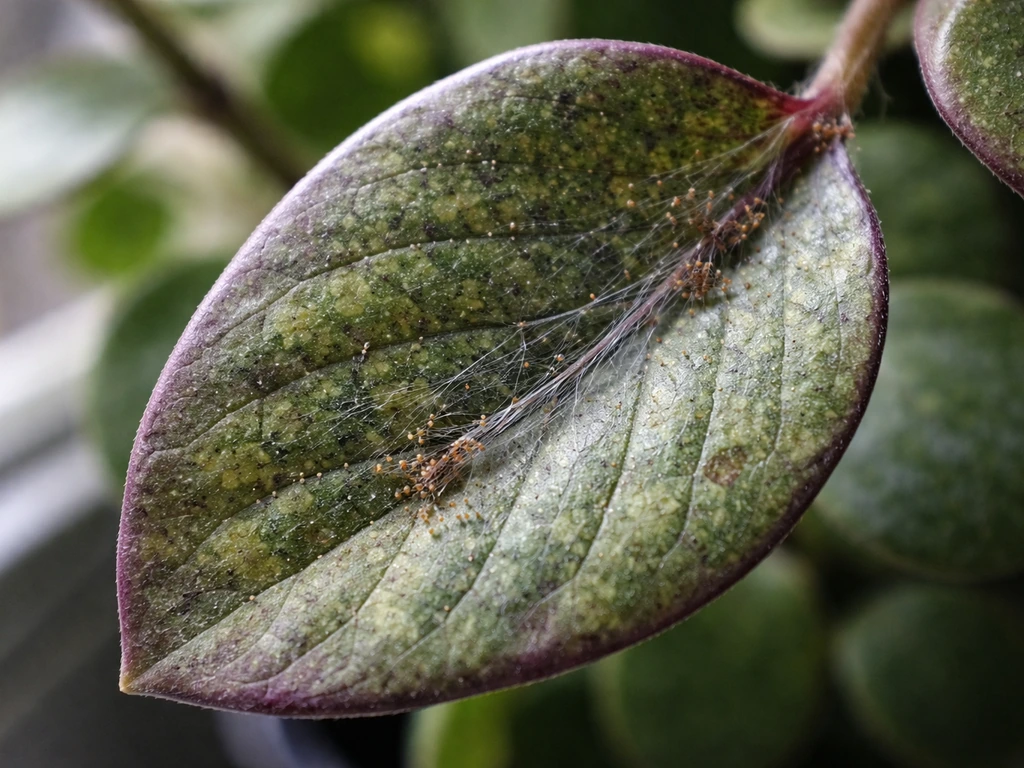
| Tiny webbing on undersides of leaves | Spider mites (common in dry conditions) | Rinse leaves with water, raise humidity, treat with neem oil |
| White cottony clusters on stems | Mealybugs | Dab with rubbing alcohol on a cotton swab, treat with insecticidal soap |
| Tiny flies around soil | Fungus gnats from overwatering | Let soil dry further between waterings, use yellow sticky traps |
Spider mites are the pest I see most often on turtle vine indoors, especially in winter when central heating dries the air out. Brooklyn Botanic Garden explains that mealybugs are among the most destructive common indoor houseplant pests and that pest problems can be triggered or accelerated by conditions like excessive moisture and dry-hot stress Spider mites are the pest I see most often on turtle vine indoors. Keeping humidity at or above 40% goes a long way toward preventing them. Mealybugs tend to show up on plants that are already stressed, so healthy, well-lit plants are less vulnerable. Fungus gnats are almost always a sign of consistently wet soil, so if they appear, the fix is almost always to water less, not to treat the soil with something.
Choosing the right indoor setup
A hanging basket near a bright east or south-facing window is the classic setup for turtle vine, and it genuinely works well. The trailing stems look great, and the elevated position often gets slightly more light than a low shelf. If you don't have good natural light, a dedicated grow light stand is more reliable than struggling with a dim windowsill. Grow lights let you control duration and intensity precisely, which removes the biggest variable.
Terrariums are another option. Turtle vine is listed in terrarium plant guides and does tolerate the higher humidity found in a planted terrarium environment. The caveat is that a fully sealed terrarium can get too stagnant and promote fungal growth. An open or vented terrarium works better. For most home gardeners, a hanging basket or a pot on a bright shelf is simpler and more reliable than a terrarium setup.
If you're comparing trailing indoor vines more broadly, turtle vine is considerably less demanding about humidity than some alternatives. It's easier to manage indoors than something like Virginia creeper, which really wants to be outside, and it's more tolerant of average home conditions than many tropical vines. It's a helpful comparison, because can you grow Virginia creeper indoors depends heavily on getting strong light and maintaining the right outdoor-like conditions. If you've had success with pothos or similar easy trailers, turtle vine sits in a comparable difficulty range.
Your indoor turtle vine checklist
- Place the plant within 1 to 3 feet of a bright east, south, or west-facing window, or set up a full-spectrum grow light 6 to 12 inches above the plant.
- Pot it in a well-draining mix: 50% potting soil, 25% perlite, 25% succulent or cactus mix, in a pot with drainage holes.
- Water only when the top inch of soil is dry. Check with your finger, not a schedule.
- Keep room temperature between 65 and 80°F and away from cold drafts or air conditioning vents.
- Maintain humidity above 40% using a pebble tray or occasional misting. Don't seal it in a closed space with no airflow.
- Pinch stem tips monthly to encourage bushiness and prevent bare, leggy growth.
- Fertilize with balanced liquid fertilizer at half strength once a month from spring through summer. Skip winter fertilizing entirely.
- Check leaf undersides every two weeks for early signs of spider mites or mealybugs.
- Propagate trimmings in water or moist soil to fill in the pot or start new plants.
Turtle vine is one of the better choices for anyone who wants a trailing houseplant that doesn't demand a greenhouse setup to look good. A can potato vine grow indoors also comes down to light and warm conditions, so you should make sure it gets enough brightness throughout the day. If you’re wondering can vinca vine grow indoors, that question is similar in that indoor success depends mostly on giving the plant enough light and the right watering routine trailing houseplant. Give it a bright spot, a well-draining pot, and restrained watering, and it will fill out into a genuinely attractive plant within a few weeks. Most people who struggle with it are either underestimating how much light it wants or overwatering it out of good intentions. Can purple sweet potato vine grow indoors? Yes, it can do well indoors if it gets enough light and is kept warm. Fix those two things and you're most of the way there. Silvervine is also something you can grow indoors, but it has different light and care needs than turtle vine grow silvervine indoors.
FAQ
How do I tell if my turtle vine is getting too little light versus being overwatered?
Low light usually shows slow growth, flat or dull green leaves, and stems stretching toward the window. Overwatering more often shows swollen or mushy stems, persistent droop despite dry surface soil, and fungus gnats. If the top inch is dry but the plant still looks worse, increase light first, not watering.
Can I grow turtle vine in a bathroom or kitchen with variable humidity?
It can work well if it still receives bright indirect light, for example near a bright window. Bathrooms often have higher humidity but also cooler temperatures and airflow issues, which can make fungal problems more likely if soil stays wet.
What type of water should I use indoors for turtle vine?
Use room-temperature water and let excess drain fully. If your water is very hard or heavily treated, occasional buildup can occur in potting mixes, so it helps to do a thorough runoff watering every few weeks to flush salts, then resume your normal “top inch dry” routine.
How often should I rotate the plant, and will it affect growth?
Rotating by about a quarter turn every 1 to 2 weeks helps keep the trailing pattern even. If you rotate too frequently or move it often between windows and interiors, growth can temporarily slow, since the plant adjusts to light changes.
Is it okay to mist turtle vine leaves for humidity?
Occasional misting is fine if your home is very dry, but misting is not a great long-term humidity solution. Aim to avoid water sitting in leaf overlaps or on the plant for long periods, because that can increase the risk of fungal spots.
Do I need to repot turtle vine right away when I buy it?
Usually not. Wait until you see clear rooting and active growth, or only repot if the nursery mix is very dense and stays wet for days. If you repot, skip fertilizing for at least two weeks and keep light bright to help it recover.
What pot size should I use if I want it to trail longer?
A slightly snug pot is best. An oversized container holds extra moisture, which increases root rot risk and makes watering harder to get right. For a newly purchased plant, a small 4 to 6 inch pot is typically the sweet spot.
Why do the leaves look pale or washed out even though I water correctly?
Pale or dull foliage usually points to insufficient light or uneven exposure. Move closer to a bright east window or diffuse harsh south or west sun, then watch for the bronze or blushed color that often shows up in brighter conditions.
Can turtle vine survive directly behind an uncovered window in summer?
Often it will not tolerate intense direct midday sun. If you want to use a south or west window, use a sheer curtain, pull the pot back about a foot, and acclimate gradually over 1 to 2 weeks.
What should I do if I notice spider mites indoors?
First isolate the plant if possible, then increase humidity modestly and improve light and airflow. Remove heavily affected stems, wipe leaves, and check again after a few days. Because mites can rebound when conditions improve, repeated treatment or targeted miticide may be needed if wiping alone does not stop the spread.
Are fungus gnats always a sign my soil is too wet?
In most cases, yes. They typically mean the mix is staying moist or drying too slowly. Let the potting mix dry to your normal “top inch dry” standard, and consider bottom-watering or reducing watering frequency rather than adding treatments immediately.
How fast does turtle vine fill in a hanging basket, and when should I trim?
It can look better within a few weeks, but full coverage depends on light and the number of stems you start with. Trim or pinch stem tips regularly once the plant is established, so it branches instead of forming one long strand.
Can I grow turtle vine in a terrarium that is not fully sealed?
Yes, an open or vented terrarium is the safer choice. Even then, avoid letting the soil stay constantly wet, and provide bright light near the enclosure, since glass can reduce airflow and slow drying compared with a hanging basket.