You can grow Virginia creeper indoors, but you should go in with realistic expectations: this is a vigorous, fast-growing woody vine that really wants to be outside covering a fence or wall. You might also wonder, can you grow silvervine indoors, and the answer depends on light, pot setup, and how closely you mimic its natural growing conditions.
Can You Grow Virginia Creeper Indoors? Steps to Succeed
James Hartwell
24 May 2026
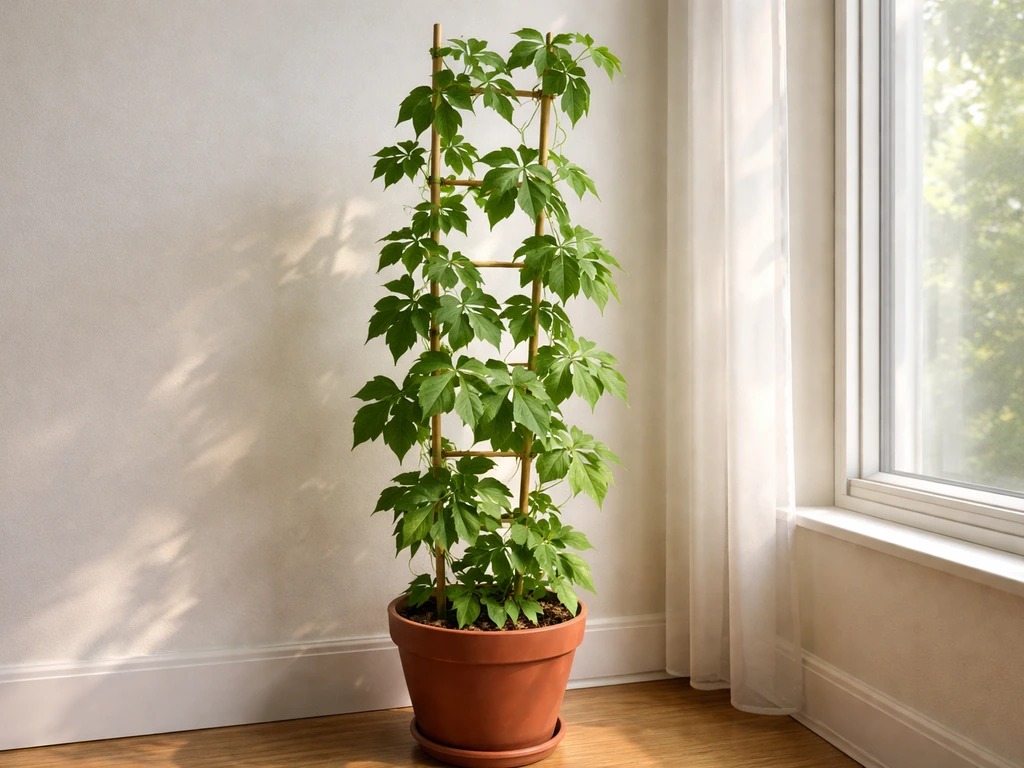
Indoors, it can survive and even put out decent growth if you give it a bright south- or west-facing window, a large container with good drainage, and regular pruning to keep it from taking over your living room. Long-term, it's a challenge. Most indoor setups will eventually lose the battle with its size.
That said, plenty of people grow it successfully as a seasonal houseplant or a contained trellis specimen, and if you're willing to stay on top of it, here's exactly how to do it.
What you're actually dealing with indoors vs. outside
Virginia creeper (Parthenocissus quinquefolia) is classified as one of the most vigorous vines in North American landscapes. Outside, it can cover a two-story wall in a few seasons. Indoors, a container limits that somewhat, but it doesn't slow the plant down as much as you'd hope. Think of it like keeping a Labrador in an apartment: possible, but it needs a lot of management and exercise or things get messy fast.
The plant clings using tendrils tipped with adhesive disks, which means it will attach to walls, curtains, shelving, and anything else nearby if you're not training it deliberately onto a trellis. Indoors it won't produce the brilliant scarlet fall color it's famous for unless it gets strong, direct light, and in lower light conditions the foliage tends to stay green but thinner and less dense. It tolerates shade, which is what makes indoor survival possible, but tolerate and thrive are two very different things.
The honest framing: if you want a lush, gorgeous vine for a sunroom or a bright apartment with a large south-facing window, Virginia creeper can genuinely work. If you've got a dim north-facing room and limited time to prune, you'll be fighting a losing battle. Know which situation you're in before you commit.
Light and the best spot in your home
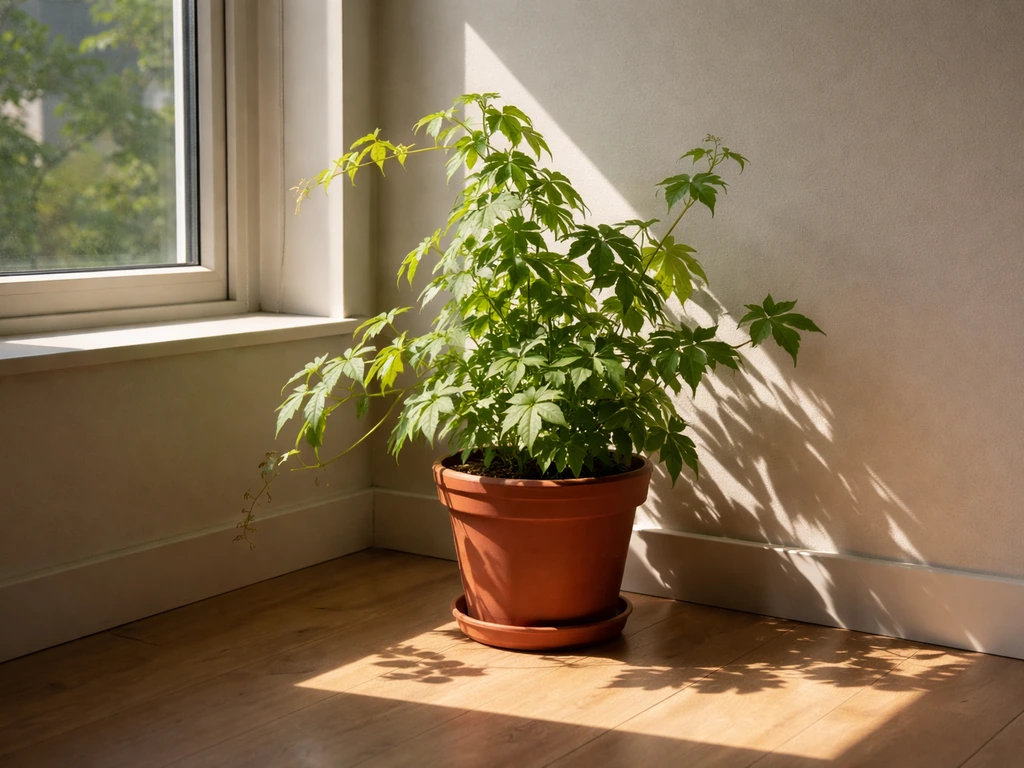
Light is the single most important factor here, and I won't sugarcoat it. Virginia creeper is most vigorous in full sun. That means your brightest window is not just preferred, it's basically required for anything beyond bare survival. A south-facing or west-facing window that gets several hours of direct sunlight daily is your best bet. East-facing works as a secondary option. North-facing windows will keep the plant technically alive, but growth will be sparse and weak, and no amount of fertilizer will fix that. As University of Connecticut Extension puts it, fertilizer will not overcome inadequate light, and that's exactly right.
Cornell's indoor plant light framework defines "high light" as bright direct sunlight through an unobstructed south, east, or west window. Virginia creeper falls squarely in that high-light category for good performance indoors. If your best window doesn't cut it, a grow light placed 6 to 12 inches above the foliage for 12 to 14 hours a day can supplement, but I'd lean toward a full-spectrum LED setup rather than a basic fluorescent. That said, grow lights add complexity and electricity cost, and you'll still need to prune aggressively or the vine will chase the light source and get leggy.
- South-facing window: best option, provides the most direct sun hours
- West-facing window: good second choice, strong afternoon sun
- East-facing window: acceptable, cooler morning light, expect slower growth
- North-facing window: last resort only, expect thin, leggy growth
- Grow lights: full-spectrum LED, 12-14 hours daily, positioned close to foliage
Pots, soil, and why drainage matters more than you think
Virginia creeper is forgiving about soil in the garden, tolerating everything from dry and poor to moist and fertile. In a container, that tolerance narrows because the roots are confined and the soil can swing from bone-dry to waterlogged fast. Start with a well-draining standard potting mix, something with perlite or coarse sand mixed in at roughly a 3:1 ratio. Avoid dense, peat-heavy mixes that hold too much moisture. A terracotta pot is genuinely better than plastic here because it allows the soil to breathe and dries out more evenly.
For pot size, start with at least a 10 to 12-inch diameter container, but expect to size up within a season or two. The vine grows quickly and once it gets rootbound, growth stalls and the plant gets stressed. A drainage hole is non-negotiable. Sitting in standing water is one of the fastest ways to kill this plant indoors, and no amount of management will save a vine rotting at the roots.
One useful trick for long-term indoor management is root pruning: when you repot, trim back some of the outer roots before returning the plant to its container. This slows top growth and keeps the plant from demanding a larger and larger pot every year. It's the same principle gardeners use with bonsai, and it's genuinely effective here.
Watering, humidity, and feeding
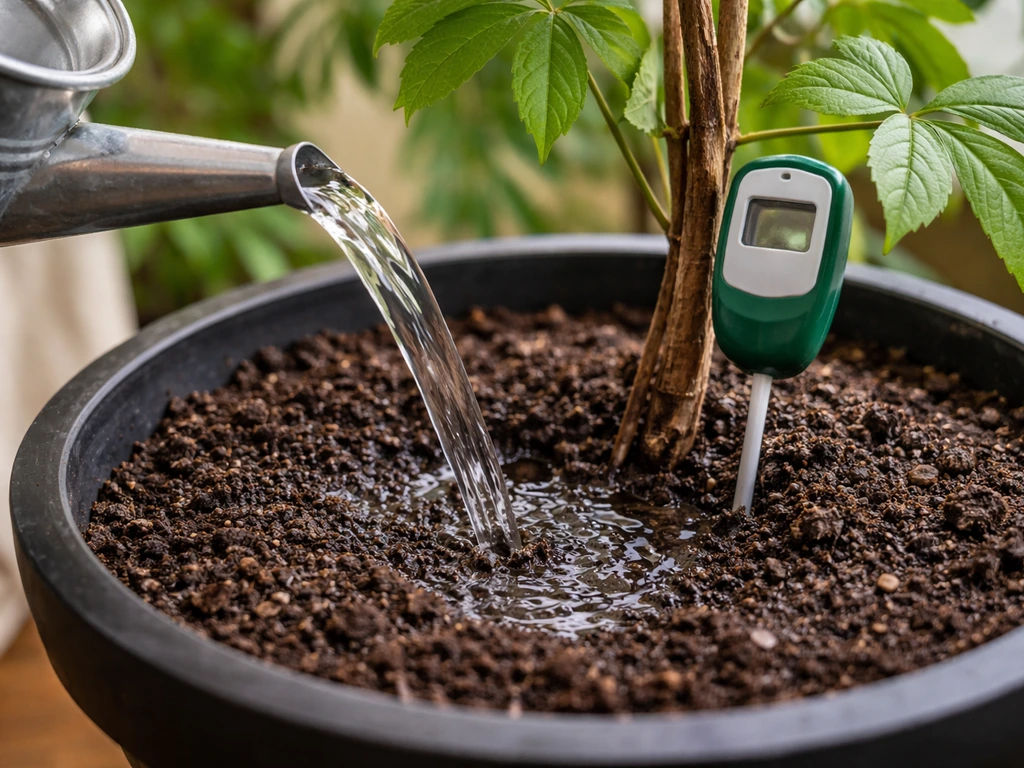
Virginia creeper tolerates a range from moist to dry, which gives you a little breathing room, but indoors you still need to be consistent. The general rule I follow: water thoroughly when the top inch of soil feels dry, then let it drain completely. In summer, when the plant is actively growing and light levels are higher, that might mean watering every 5 to 7 days depending on pot size and room temperature. In winter, cut back noticeably, maybe every 10 to 14 days, because growth slows and overwatering in cool, low-light conditions is a real problem.
Humidity is not a major issue with Virginia creeper the way it is with tropicals. It handles average indoor humidity (30 to 50 percent) without complaint. You don't need a humidifier or regular misting. If your home is extremely dry in winter from heating systems, the occasional misting won't hurt, but it's not something to stress over.
For fertilizing, a balanced liquid fertilizer (something like a 10-10-10 or 20-20-20) diluted to half strength, applied monthly during the active growing season (spring through early fall) is plenty. Stop fertilizing in late fall and through winter. Don't over-fertilize hoping to speed growth: it won't compensate for poor light, it'll just push weak, leggy stems.
Training on a trellis and keeping the vine under control
This is where most indoor growers either succeed or give up. Virginia creeper needs something to climb, and you need to direct it deliberately. A small trellis, a bamboo stake cage, or a wall-mounted frame all work. The adhesive tendrils will grab on to almost anything, so steer new growth toward your trellis regularly and redirect any tendrils that wander toward walls or furniture.
Pruning is your main management tool. During the growing season, prune lightly and often, pinching back new growth tips to encourage branching rather than long, single shoots reaching across your room. Major cutbacks should happen during dormancy, in late fall or very early spring before new growth begins. At that point you can cut the vine back hard, removing a third to half the overall length, which resets the plant's size and encourages dense regrowth. If you skip dormant-season pruning for a year or two, the vine gets away from you fast.
- Set up a trellis or climbing frame in the pot before the vine gets established
- Redirect new tendrils onto the trellis every week or two during spring and summer
- Pinch back shoot tips during the growing season to encourage bushy growth
- Do a hard cutback in late fall or very early spring during dormancy
- Root prune when repotting to limit overall size year over year
Pests and leaf problems to watch for
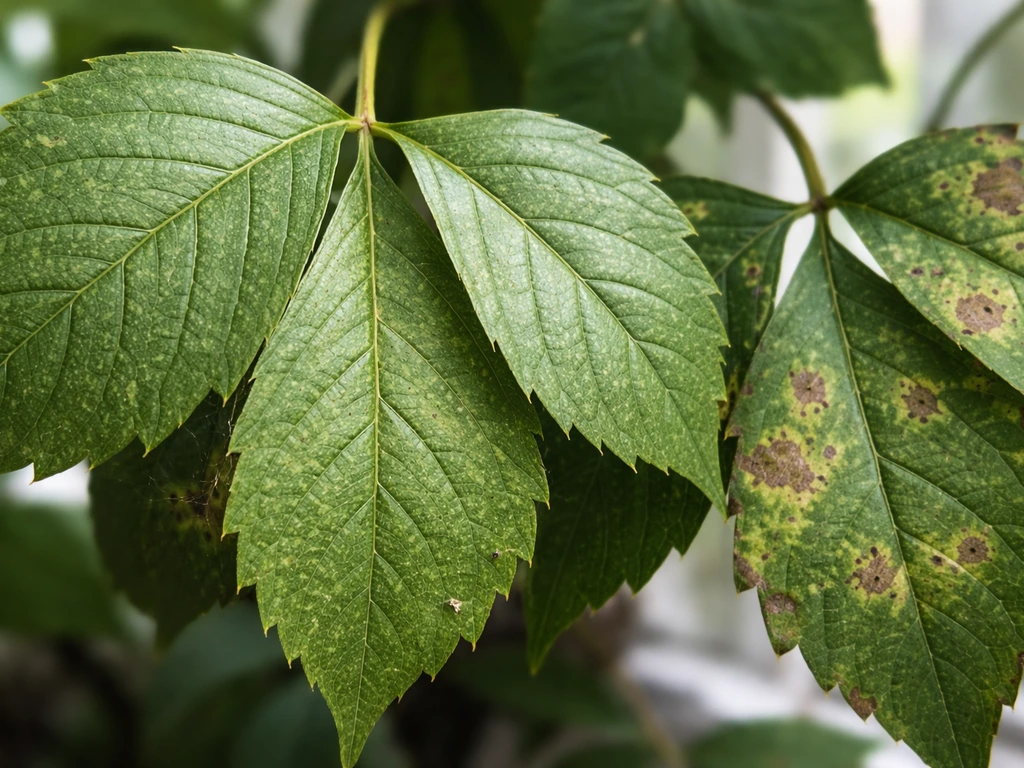
Indoors, Virginia creeper's most common pest problems are spider mites and aphids. Spider mites thrive in dry, warm indoor air and show up as tiny stippled dots on the leaves with fine webbing underneath. A hard spray of water on the foliage (do this in a sink or shower) knocks them back, and neem oil or insecticidal soap applied every 7 to 10 days handles persistent infestations. Aphids cluster on new growth and are easy to spot. Wipe them off by hand or use insecticidal soap spray.
On the disease side, watch for leaf spot, which shows up as angular reddish to gray-brown spots that enlarge and turn brown with tiny dark fruiting bodies at the center. Connecticut’s State Plant Pest Handbook for Boston ivy (Parthenocissus) similarly notes leaf spot problems such as Guignardia and Cercospora and powdery mildew (Uncinula), and recommends minimizing disease by avoiding overcrowding and removing affected leaves.
Good air circulation and avoiding overhead watering reduce the risk significantly. Remove affected leaves promptly. Powdery mildew can appear as white, dusty patches on the foliage, especially if the plant is crowded or air flow is poor. Reduce humidity around the plant, space it away from walls, and apply a dilute baking soda spray or neem oil if it persists.
| Problem | What it looks like | Quick fix |
|---|---|---|
| Spider mites | Stippled, pale leaves; fine webbing on undersides | Blast with water; neem oil or insecticidal soap every 7-10 days |
| Aphids | Sticky residue, clusters on new growth tips | Wipe off by hand or use insecticidal soap spray |
| Leaf spot | Reddish-brown angular spots, dark fruiting bodies | Remove affected leaves; improve air circulation; avoid wet foliage |
| Powdery mildew | White dusty coating on leaf surface | Improve airflow; neem oil or baking soda spray |
| Root rot | Yellowing leaves, mushy base, foul-smelling soil | Repot in fresh mix; trim rotten roots; reduce watering |
When indoor growing just isn't going to work
Let's be straight about the situations where this plant will defeat you indoors. If you don't have a bright, unobstructed south or west window and you're not set up to run grow lights, the vine will slowly decline: sparse foliage, long leggy stems, and eventual dieback. You can't fertilize or water your way out of insufficient light. If your space is small and you can't commit to pruning every few weeks during the growing season, the vine will quickly become unmanageable and invasive in the best indoor sense of the word.
Virginia creeper also needs a dormancy period in winter with cooler temperatures and reduced watering to stay healthy long-term. If your home stays warm and bright year-round, the plant may not get that rest, which causes cumulative stress. Many gardeners find it works best as a seasonal indoor plant: brought inside in fall, kept cool and semi-dormant through winter near a bright window, then moved back outdoors in spring where it genuinely thrives.
If you're deciding between keeping it indoors permanently versus seasonally, I'd vote for seasonal unless you have a genuinely sun-drenched space. The plant will be healthier, more ornamental, and much easier to manage if it spends summers outside.
Indoor vine alternatives worth considering
If Virginia creeper's demands feel like too much for your setup, there are vines that handle indoor conditions far more graciously. You can also look at sweet potato vine varieties, including purple ones, to see whether they handle your indoor light and container setup purple sweet potato vine grow indoors. Pothos, heartleaf philodendron, and tradescantia are all naturally adapted to lower light and contained spaces.
If you specifically want a trailing or climbing vine aesthetic, turtle vine is a compact option that's much easier to manage indoors. If you’re wondering, yes, can turtle vine grow indoors, and it’s often chosen specifically for easier indoor management. Purple sweet potato vine and vinca vine can also be grown indoors with some success if you have the light for them, and they're generally less aggressive than Virginia creeper.
If you're specifically wondering, can vinca vine grow indoors, the answer is yes with the right light and care. The common thread is choosing a plant whose natural growth habit actually matches what your indoor space can offer.
Virginia creeper is one of those plants where the answer to "can you grow it indoors" is genuinely yes, but the follow-up question, "should you?" depends entirely on your setup and how much time you want to spend managing it. If you have the light and the patience for regular pruning, it's a striking, unusual houseplant. If you're looking for something lower-maintenance, there are better indoor vine options that won't test your patience within the first season.
FAQ
How much light is the minimum to keep Virginia creeper alive indoors?
If you only have a north-facing or heavily shaded spot, expect slow, sparse growth and eventual decline. A practical minimum is a bright window where the leaves get direct sun at least part of the day, or a grow light setup positioned 6 to 12 inches above the foliage running 12 to 14 hours.
Can I grow Virginia creeper indoors without a trellis or support?
It will try to climb whatever it touches, including curtains, shelving, and furniture, which makes it hard to control and easier to damage. Plan on some kind of training frame or stake cage, even if it is small, and redirect wandering tendrils immediately.
Will pruning keep it small long-term, or does it always outgrow the pot indoors?
Pruning helps, but it rarely prevents root and stem expansion entirely. Root pruning at repot time slows the overall push upward and reduces the urge to size up, but you should still expect periodic cutting back and occasional pot size adjustments.
How often should I prune Virginia creeper indoors?
During the growing season, plan on light pruning or pinching every couple of weeks, or whenever shoots extend beyond your training area. Deeper cutbacks should be saved for late fall or early spring before new growth starts.
What’s the best container material to avoid indoor root problems?
Terracotta is usually safer because it breathes and dries more evenly than plastic. Pair it with a drainage hole and a well-draining mix, otherwise the vine can sit wet too long and rot, even if you water carefully.
How do I water Virginia creeper correctly if my indoor conditions swing between seasons?
Check the soil, not the calendar. Water thoroughly when the top inch dries out, then let excess drain completely. In winter, reduce frequency substantially because cooler temperatures and lower light slow water use.
Why do my leaves stay green and never turn red indoors?
Indoor fall color requires strong, direct light over time. If you are not getting several hours of unobstructed sun, the vine will often stay green, thinner, and less dense, even if it is healthy.
Can I keep it indoors year-round instead of treating it as seasonal?
It is possible, but it is harder because the plant benefits from a winter rest with cooler temps and reduced watering. If your home is warm and bright all winter, it may accumulate stress, so you may need to mimic dormancy with less water and cooler placement near a window.
What should I do if the vine becomes leggy and reaches toward the window?
That usually signals insufficient light. Move it to the brightest unobstructed window you have, rotate the pot weekly if the light is directional, and consider a grow light to prevent long, weak, space-hogging growth.
How do I handle spider mites or aphids indoors without spreading them around?
Isolate the plant if possible. Rinse foliage in a sink or shower to knock pests down, then follow up with insecticidal soap or neem oil on a repeating schedule (about every 7 to 10 days for persistent issues). Also check nearby plants because mites and aphids spread quickly indoors.
Is over-fertilizing a common reason Virginia creeper fails indoors?
Yes. Too much fertilizer can push weak, leggy growth without improving vigor if light is lacking. Stick to half-strength balanced fertilizer monthly during spring through early fall, then stop in late fall and winter.
What potting mix mistakes cause the most indoor failures?
Dense, peat-heavy mixes that stay wet too long and mixes without enough drainage. Use a standard potting mix amended for drainage (for example, perlite or coarse sand) so water flows through and the root zone dries between waterings.