Yes, you can grow flowers in a terrarium, but the setup matters enormously. Most flowering plants need more light and airflow than a sealed glass box provides, which is why so many people end up with lush leaves and zero blooms. If you are wondering can you grow African violets in a terrarium, the answer depends mostly on getting enough light and managing humidity so blooms can form reliably.
Can You Grow Flowers in a Terrarium Yes How to Start
James Hartwell
2 Jun 2026
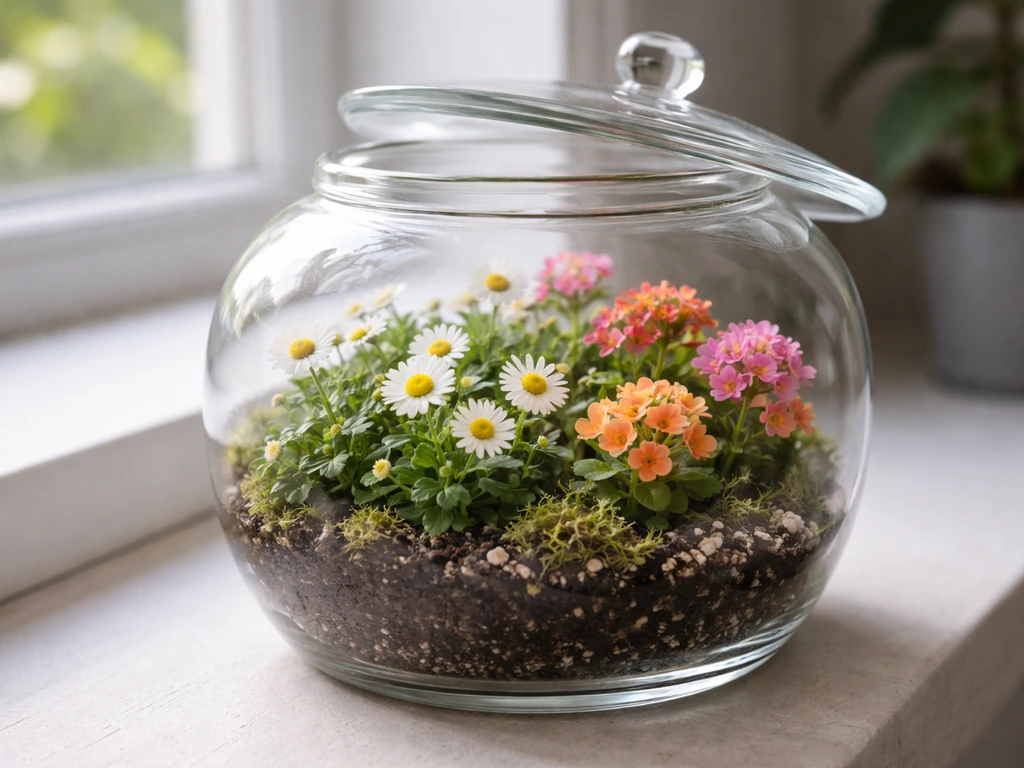
The trick is either choosing an open terrarium (which behaves more like a dish garden) for most flowering plants, or picking specific humidity-tolerant bloomers like African violets for a semi-open setup. Get those two things right and a terrarium can absolutely flower. Get them wrong and you'll have a beautiful green experiment that never puts up a single bud.
What to realistically expect when growing flowers in a terrarium
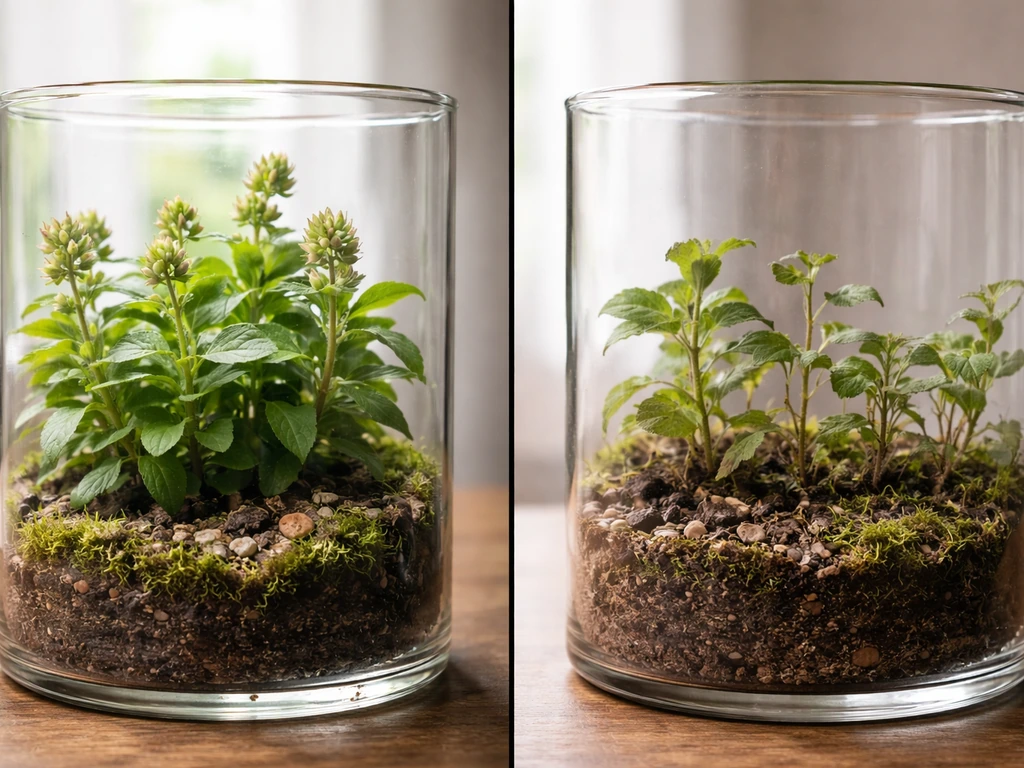
Terrariums are genuinely great at keeping humidity high and moisture consistent, which is a real advantage for certain plants. But flowering requires energy, and energy requires light. Most indoor terrariums don't get enough of it. On top of that, a fully closed terrarium traps warm, humid air that many flowering plants simply can't tolerate without developing mold, rot, or just refusing to bloom. So the realistic picture looks like this: if you pick the right plant and the right terrarium type, you'll get flowers. If you grab a random seed packet and toss it into a sealed glass globe on your windowsill, you'll be disappointed.
Closed vs open terrariums: which one actually works for flowers
This is probably the single most important decision you'll make. Closed terrariums (think sealed glass containers with lids) create their own internal rain cycle. Water evaporates from the soil, condenses on the glass, and drips back down. Mississippi State University Extension describes this beautifully: the water cycles within the container, keeping humidity-loving plants consistently moist without much intervention. That's fantastic for ferns and mosses. For flowering plants, it's often too much of a good thing. The stagnant, saturated air encourages fungal problems and discourages blooming in most species.
Open terrariums are the better choice for the majority of flowering plants. Open terrariums are the better choice for the majority of flowering plants, and that approach also aligns well with the idea of flowers you can grow indoors with the right light and humidity balance. They behave more like a dish garden, with lower ambient humidity and better airflow. You'll water more frequently than in a closed system, but your plants can actually breathe.
If you're committed to using a closed or bottle-style terrarium, you'll need to vent it regularly. Oklahoma State University Extension advises partially opening or briefly removing the lid when condensation is heavy, then replacing it once moisture evaporates. Do this consistently and you've essentially turned your closed terrarium into a semi-open one.
| Terrarium Type | Humidity Level | Best For Flowers? | Watering Frequency | Main Risk |
|---|---|---|---|---|
| Closed (sealed lid) | Very high | Only humidity-tolerant bloomers (e.g., African violets) | Rarely, based on soil dryness | Mold, rot, stagnant air |
| Semi-open (vented lid) | Moderate-high | Yes, with careful management | Occasionally | Inconsistent humidity if venting is irregular |
| Open (no lid) | Low-moderate | Yes, most flowering plants | Regularly | Drying out faster, more watering needed |
| Bottle terrarium | Very high | Rarely, very limited options | Almost never | Extremely hard to control, high mold risk |
My honest recommendation: if you're starting out and want flowers, go with an open terrarium. It's far more forgiving and gives you a much wider plant selection. If you already have a closed terrarium and want to make it work, commit to the venting routine and stick to species that genuinely tolerate high humidity.
The best flowers to actually grow in a terrarium
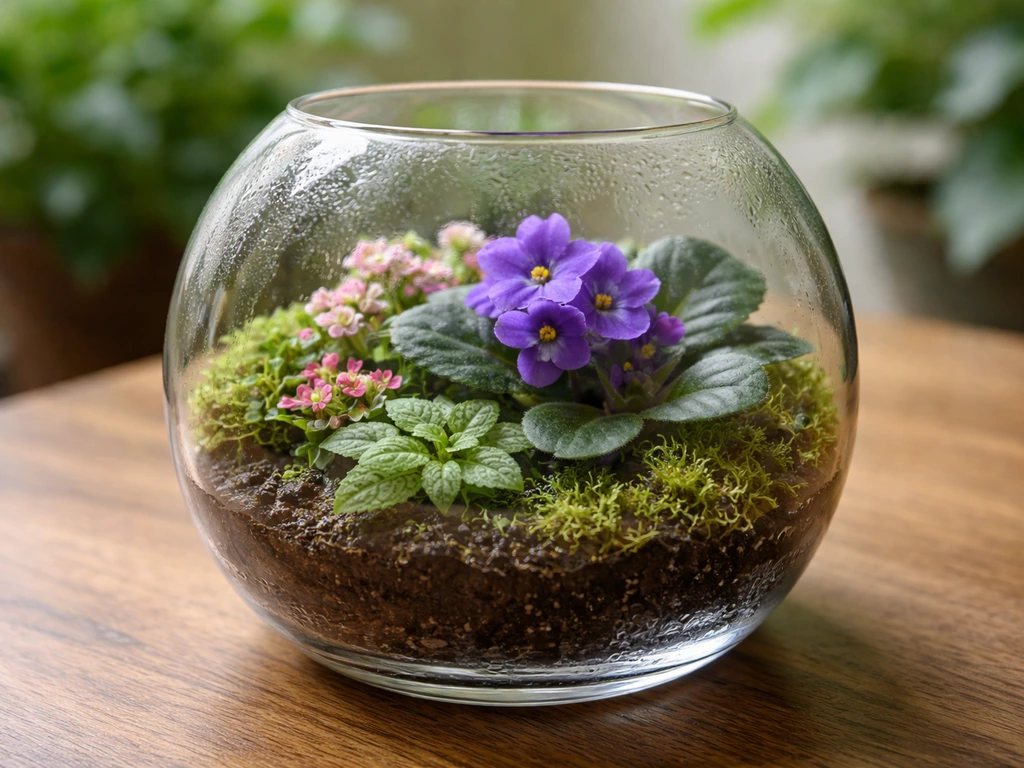
Not every flower belongs in a terrarium. Some of the most common mistakes I see are people trying to grow petunias, zinnias, or other garden annuals in enclosed glass containers. Those plants want full sun, strong airflow, and room to sprawl. They'll struggle and sulk. Instead, focus on plants that naturally live in humid, low-light, or sheltered environments.
Strong candidates for closed or semi-open terrariums
- African violets: probably the most terrarium-compatible flowering plant you can find. They love humidity, tolerate indirect light, and stay compact. With the right photoperiod (more on that below), they'll bloom reliably.
- Miniature orchids (like Lepanthes or small Masdevallia species): thrive in high humidity and can flower in terrarium conditions if light is sufficient.
- Flame violets (Episcia): stunning trailing plants with red or orange flowers that genuinely enjoy humid, warm enclosures.
- Miniature gloxinias (Sinningia pusilla): tiny plants that actively prefer the controlled humidity of a semi-closed terrarium.
Good candidates for open terrariums
- Primrose (Primula): compact, cold-tolerant, and happy in the moderate humidity of an open glass container near a bright window.
- Impatiens: shade-tolerant bloomers that work well in open terrariums with decent indirect light.
- Oxalis: easy, cheerful, and will flower in open terrariums with a few hours of bright indirect light daily.
- Small succulents that flower (like Haworthia or Echeveria): technically not classic flowers, but they do bloom and they strongly prefer the drier conditions of an open setup.
If you're specifically interested in African violets in a terrarium, that topic goes deep enough to deserve its own treatment, and it's worth exploring in detail separately given how popular and rewarding that combination can be. If you’re wondering whether you can grow outdoor flowers indoors, the answer depends on matching light, humidity, and the plant’s natural needs to indoor conditions African violets.
Light: the real reason most terrarium flowers never bloom
I can't stress this enough: insufficient light is the number one reason terrarium flowers don't bloom. Leaves will still grow in low light. Blooms won't. Flowering is an energy-expensive process for a plant, and if your terrarium is sitting in a dim corner looking pretty, your plants are just surviving, not thriving enough to flower.
What 'enough light' actually means
Take African violets as a benchmark since they're the most widely grown terrarium bloomer. For African violets specifically, Virginia Cooperative Extension (Virginia Tech) notes that the length of light exposure affects growth and flowering. University of Georgia Extension research puts the minimum at around 600 foot-candles for 14 hours a day. The African Violet Society of America puts it similarly at 600 foot-candles for 12 to 14 hours daily. University of Minnesota Extension adds that African violets need 14 to 16 hours of light and 8 to 10 hours of darkness to flower consistently. That's a very specific photoperiod most windows simply can't deliver, especially in winter.
A bright north or east-facing windowsill might hit 200 to 400 foot-candles on a good day. A south-facing window in summer can reach 1,000 or more, but direct sun through glass can cook your plants and fade blooms fast. The practical solution for most indoor terrarium growers is a dedicated grow light. If you want flowers that can grow indoors without sunlight, a grow light can be an easy way to supply the brightness they need.
Setting up grow lights for terrarium flowers
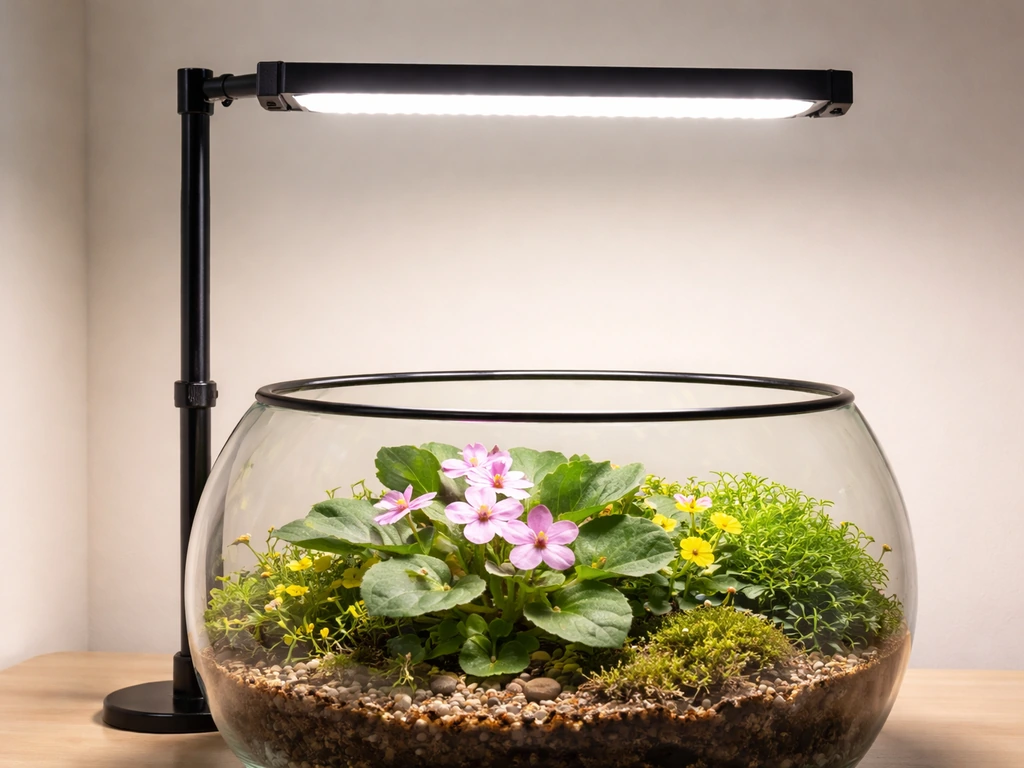
- Use a full-spectrum LED grow light positioned 6 to 12 inches above the terrarium opening (adjust based on your specific bulb's intensity).
- Put it on a timer set to 14 hours on, 10 hours off. This photoperiod mimics the light cues many flowering plants need to initiate blooms.
- Don't place the light so close it heats the terrarium interior significantly, especially in a closed system where heat has nowhere to go.
- If you're using a glass-lidded terrarium, check whether the glass is blocking a significant portion of the light spectrum, as some tinted or thick glass can reduce effective intensity.
Oklahoma State University Extension notes that supplemental lighting is often necessary for terrariums and directs growers to dedicated 'growing under lights' guidance. That's exactly the right instinct. Don't try to make a poorly lit location work by choosing 'low light' plants and hoping for blooms. Get the light right first.
Soil, drainage, humidity, and watering: the unglamorous stuff that determines success
Soil and drainage setup
There's a persistent myth that a layer of rocks or pebbles at the bottom of a terrarium provides drainage. It doesn't. Penn State Extension is direct about this: the charcoal-plus-potting-soil approach is what actually works. A practical closed terrarium layering system looks like this from bottom to top: a thin layer of horticultural charcoal mixed into your potting soil (or layered beneath it), then an appropriate potting mix for your chosen plant. The charcoal helps absorb byproducts and keeps the soil from going sour. For flowering plants, I usually add a small amount of perlite to the mix to keep things from compacting and getting waterlogged.
For open terrariums, drainage is more conventional: use a well-draining potting mix suited to your specific plant (cactus mix for succulents, African violet mix for violets, general indoor potting mix for most others), and make sure your container has drainage holes if possible, or use the charcoal layer method if it doesn't.
Watering without wrecking everything
Penn State Extension gives the clearest watering guidance I've seen for closed terrariums: only water if condensation has stopped, plants start to droop, or the soil feels dry. Not on a schedule. Not once a week because it feels right. Let the terrarium tell you when it's thirsty. For a properly set up closed terrarium, you might only add water every few weeks or even less often.
Oklahoma State University Extension recommends using a spray bottle and adding small, controlled amounts of water rather than pouring it in. They also suggest wiping the inside walls dry with a paper towel before re-covering to prevent water spots and reduce excess condensation. These small habits make a real difference in preventing the mold problems that kill terrarium flowers.
Managing humidity for blooms
Too much humidity suppresses flowering in most plants and encourages fungal issues. If you're seeing persistent, heavy condensation on the glass, that's a sign things are too wet. Vent the terrarium by partially opening the lid until the condensation clears, as OSU Extension advises, then close it again. In an open terrarium, you don't have this problem, which is one more reason open setups are easier for flower growing.
Feeding, pruning, pest prevention, and getting plants to actually bloom
Fertilizing: less is genuinely more here
Terrariums are contained ecosystems and fertilizer salts can build up fast with nowhere to go. The University of Arizona Cooperative Extension also notes that terrariums are typically closed or sealed and that [salts can become detrimental over time](https://extension. arizona. edu/sites/default/files/pubs/az2050-2023.
pdf) in these enclosed systems. Penn State Extension recommends waiting until after the first year before fertilizing a closed terrarium at all, and then using an organic water-soluble fertilizer at just one-quarter of the recommended rate, skipping winter entirely. Clemson Extension warns that soluble salt buildup from over-fertilization can damage roots, and Penn State has specific guidance on how excess salts can require repotting or aggressive intervention to fix. In a sealed glass container, you can't just flush the soil.
Start with less than you think you need, and increase only if plants show clear signs of nutrient deficiency.
Pruning and training for more flowers
Dead-heading (removing spent blooms) is important in terrariums because decaying plant material in a humid environment is an open invitation for mold. Remove faded flowers promptly. Trim any yellowing or damaged leaves. Keep plants at a size that fits comfortably in the container with airflow around the foliage. Crowded, touching leaves in a humid terrarium are a mold risk you don't need.
Triggering blooms: what plants actually need
Beyond light, many flowering plants need a slight temperature drop at night to initiate bloom cycles. If your terrarium is in a consistently warm room with stable temps, try placing it near a window on cool evenings (not cold enough to shock the plant, but a 5 to 10 degree F drop overnight can help). Some plants also need a slight dry period before reblooming, which is easier to manage in an open terrarium. For African violets specifically, the photoperiod control mentioned above is the most reliable blooming trigger.
Pest and mold prevention
Iowa State University Extension warns that stagnant water and stale air in terrariums contribute directly to fungal problems. Their guidance for dealing with mold: dampen the moldy area to remove it, then allow the terrarium to dry out before watering again. Prevention is much easier than treatment. The habits that prevent mold are the same habits that help flowers thrive: don't overwater, vent when humidity is excessive, remove dead plant material promptly, and keep the glass clean. For pests like fungus gnats (which love moist soil), let the top layer of soil dry out more between waterings, especially in open terrariums. Yellow sticky traps placed near the terrarium opening can catch adults before they multiply.
Why your terrarium flowers aren't blooming (and how to fix it)
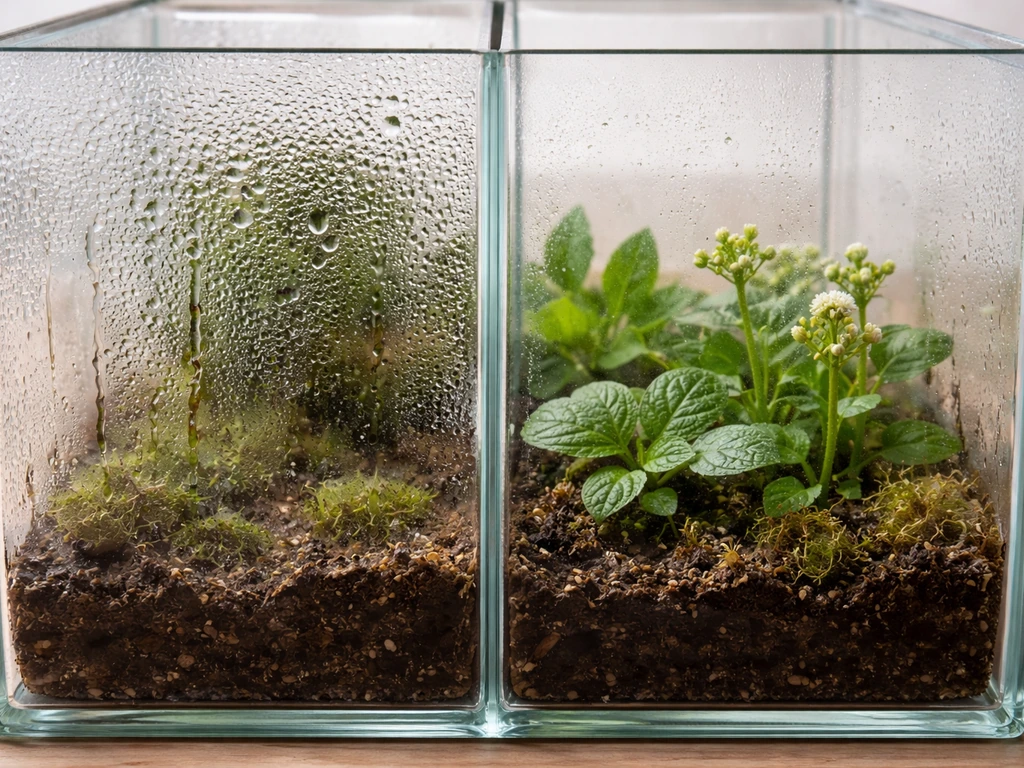
If you've set up your terrarium and you're getting healthy foliage but no flowers, work through this list. In my experience, it's almost always one of these culprits.
| Problem | Likely Cause | Fix |
|---|---|---|
| No blooms at all | Insufficient light intensity or duration | Add a grow light on a 14-hour timer, or move to a much brighter location |
| Buds form but drop off | Humidity too high, or temperature too warm and stable | Vent the terrarium more frequently; try a slight nighttime temp drop |
| Leaves healthy but no buds | Wrong photoperiod or plant not mature enough | Set a timer for consistent 14-hour light/10-hour dark cycles; check plant age |
| Mold appearing on soil or flowers | Overwatering or insufficient airflow | Stop watering, vent the terrarium, remove affected material, let it dry |
| Yellowing leaves, no vigor | Fertilizer salt buildup or root rot | Check soil moisture; if consistently wet, repot with fresh mix and reduce watering |
| Flowers are pale or faded | Light too intense or direct sun hitting glass | Diffuse the light source or move the terrarium slightly away from direct rays |
| Plant growing leggy with no blooms | Not enough light overall | Increase light intensity and duration; leggy growth is a classic low-light signal |
One more honest note: some plants that would flower beautifully outdoors or in a sunny windowsill simply won't bloom in a terrarium no matter what you do. If you've tried everything above and still can't get blooms, the plant might just not be the right fit. It's not failure, it's information. Swap it out for one of the terrarium-compatible bloomers listed above and you'll likely have a completely different experience. Flowers that do well as indoor plants in general tend to adapt better to terrarium conditions, and starting with species known to thrive inside gives you a much stronger foundation.
FAQ
Can you grow flowers in a terrarium without a grow light if you only have a windowsill?
Sometimes, but expect results to be seasonal. North or east windows often fall short for consistent blooms, even if leaves grow. If you see tall, leggy growth or buds that never form, switch from “low light” expectations to adding a dedicated grow light (or move the terrarium to the brightest possible spot) rather than changing plant care alone.
What’s the best terrarium type for getting actual blooms, not just healthy leaves?
Use an open terrarium for most flowering plants, because it gives airflow and reduces trapped condensation. If you insist on a sealed container, you must follow a venting routine (partially opening until condensation clears) and choose species that tolerate high humidity, otherwise mold and stalled blooming are common.
How often should I water a closed terrarium to get flowers?
Don’t water on a fixed schedule. In a closed terrarium, add water only after condensation stops, the soil feels dry to the touch through the glass, or plants show mild droop. Overwatering keeps humidity too high, which suppresses flowering and increases fungal risk.
Is there a drainage layer I should add in a closed terrarium (rocks, pebbles, or gravel)?
Avoid rocks or pebbles as a “drainage layer,” they don’t solve the moisture and airflow issues in a sealed container. Use the charcoal and potting mix approach instead (charcoal mixed into the soil), and optionally add a small amount of perlite to help prevent compaction and waterlogging for flowering plants.
Why do my African violets grow but never bloom in a terrarium?
The two most common causes are insufficient brightness and the wrong light timing. African violets typically need long daily light exposure and a real dark period, so a windowsill setup can miss the photoperiod, especially in winter. If you see new leaves but no buds, prioritize light intensity and consistent daily hours over changing fertilizer or water frequency.
How can I tell if my terrarium is too humid to bloom?
Look for consistently heavy condensation on the glass, fogging that never clears, and plant tissue that stays overly wet. That combination usually means the system is staying saturated. If it does not clear between vents, switch to an open setup or improve venting and airflow, then reassess your plant selection.
Will dead-heading help with terrarium flowers or is it optional?
Dead-heading matters more in a humid terrarium. Spent blooms and decaying leaves create extra organic material that fuels mold in trapped moisture. Remove faded flowers promptly and trim yellowing or crowded foliage to keep airflow around leaves.
My terrarium shows mold starting on one spot, what should I do first?
Remove or dampen the affected area, then let the terrarium dry down before watering again. After you intervene, adjust the “inputs” that caused it, usually overwatering, poor venting, and stagnant air, because treating only the visible mold often leads to repeat outbreaks.
Do flowering plants in a terrarium need fertilizer, and how do I avoid salt buildup?
Yes, but less than you would expect, especially in sealed containers where salts cannot be flushed out. Wait until after the first year before fertilizing closed terrariums, use a diluted organic water-soluble fertilizer at about one-quarter strength, and skip winter. If your plants look increasingly stressed despite good light, salt buildup could be part of the issue.
Can I grow outdoor annuals like zinnias or petunias in a terrarium if I open the lid?
Usually not. Even with a partially open lid, outdoor annuals typically need strong airflow and far more light than most indoor terrariums deliver. They also tend to sprawl beyond the container’s usable space, increasing crowding and moisture problems.
How cool should it get at night for terrarium flowers to bloom?
A mild drop can help some species initiate bloom cycles, but it must not shock the plant. Aim for a modest overnight temperature decrease (about 5 to 10 F is often cited as a helpful range) and avoid placing the terrarium where it will experience cold drafts. Keep daytime conditions stable to reduce stress.
If I’ve fixed light and humidity and still get zero flowers, should I keep troubleshooting or change the plant?
At that point, swap the plant. Some species simply do not bloom well under terrarium constraints, even with correct humidity and ventilation. Choose known terrarium-compatible bloomers (often indoor or shade-tolerant plants) rather than repeating the same setup with another random flower variety.