Confederate jasmine can grow indoors, and with the right setup it will even bloom, but it is not an easy houseplant. This is a vigorous outdoor vine that genuinely wants full sun, warm temperatures, and room to climb.
Can Confederate Jasmine Grow Indoors? Full Care Guide

James Hartwell
19 May 2026
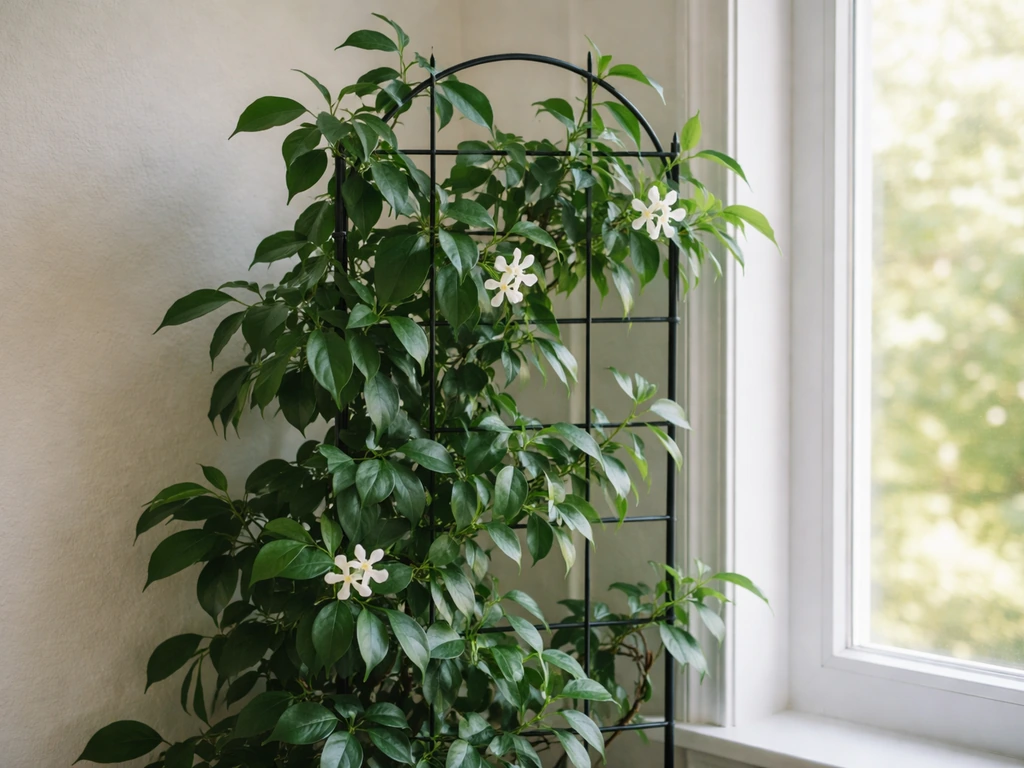
Indoors you can keep it alive and reasonably happy in a very bright south- or west-facing window, but if your space is dim or your winters are cold and dry, you will mostly be babysitting a slow-growing vine that never flowers. Jade plants are also capable of growing indoors when they have very bright light and careful watering grow indoors.
Go in with clear expectations: this plant rewards effort and good placement, but it will not forgive a dark corner. If you are also wondering can wandering jew grow indoors, it has similar light and humidity needs, but it is generally easier to keep going year-round.
What Confederate jasmine actually is (and what to expect indoors)
Confederate jasmine is Trachelospermum jasminoides, also sold as star jasmine or southern jasmine. Clemson University's Home and Garden Information Center confirms this species mapping directly, so if you bought it under any of those names, you are working with the same plant. It is a twining woody vine with glossy dark-green leaves and clusters of small, pinwheel-shaped white flowers in spring and early summer. The scent is intense and genuinely lovely, which is usually why people want it indoors in the first place.
Outdoors in warm climates (USDA zones 7 to 10) it is vigorous to the point of being unruly. Indoors, growth slows down considerably, especially in lower light. can jasmine grow indoors <a data-article-id="48787606-14A9-4F05-9616-33C54F5A6D1C">can jasmine grow indoors? Create indoor conditions that match its light and warmth needs rather than expecting fast growth in low light like many other houseplants; if you are wondering can jasmine grow indoors, this is the core reason it slows down inside: brightness and acclimation matter.
. [UF/IFAS notes that the plant is slow to get established even outdoors](https://hort. ifas. ufl.
edu/database/documents/pdf/shrubfactsheets/trajasa. pdf), so do not panic if your new indoor plant seems to sit still for the first few months. The tradeoff is that slower growth makes it easier to manage as a container plant. Think of it as a vining houseplant that needs some coaxing rather than a monster that will take over your living room.
Light requirements and where to put it
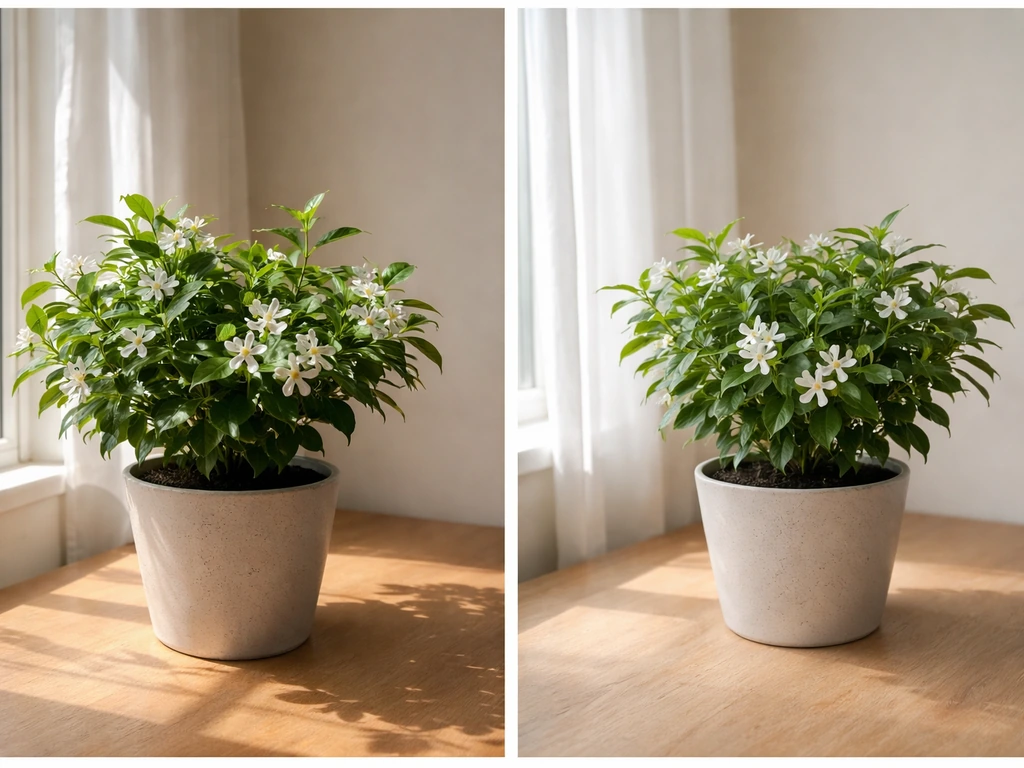
Light is the single biggest factor in whether your Confederate jasmine survives and blooms indoors. If you are growing this plant indoors, check how much light it really gets each day so you can match its needs light for Confederate jasmine indoors. This plant needs bright, direct or very bright indirect light for most of the day. A south-facing window is ideal, giving the longest exposure to direct sun. A west-facing window works well too, especially if it is unobstructed. East-facing windows can support the plant but flowering will be minimal. North-facing windows will slowly decline the plant over months.
Clemson HGIC specifically recommends direct sun during winter for jasmine grown indoors, which tells you something important: this is not a filtered-light plant. If your best window has a sheer curtain or is blocked by a porch overhang, pull the curtain back and get the pot as close to the glass as possible. In my experience, even a foot of extra distance from the window makes a noticeable difference in growth rate.
When to add a grow light
If you are working with an apartment that does not get strong natural sun, a full-spectrum LED grow light is not optional, it is necessary. Look for a light rated around 2000 to 4000 lumens placed 6 to 12 inches above the plant, running 14 to 16 hours a day in winter and 12 hours in summer. A cheap timer makes this easy to manage. Grow lights will keep the plant healthy and growing, but flowering still requires consistently bright conditions over several weeks, so the more light you can provide, the better your odds of getting blooms.
Temperature, humidity, and airflow
Confederate jasmine is happiest between 60 and 80 degrees Fahrenheit indoors. It will tolerate brief dips toward 50 degrees but prolonged cold causes leaf drop and root stress. Keep it well away from drafty windows in winter and never let it sit directly against cold glass. Equally, avoid placing it near heating vents, which blast dry hot air and cause the same kind of stress in the opposite direction.
Humidity is where most people run into trouble. Average indoor air, especially in winter with central heating running, tends to hover around 30 to 40 percent relative humidity. Confederate jasmine prefers 50 to 60 percent. Below that, you will start seeing crispy leaf edges and increased spider mite activity. A small humidifier near the plant is the most effective fix. Pebble trays with water help marginally but are not reliable on their own. Grouping plants together also raises local humidity slightly.
Airflow matters more than people realize. Good air circulation discourages fungal problems and strengthens stems. If your space is very still, run a small fan on low nearby for a few hours a day. Just do not aim the fan directly at the plant for extended periods, as that dries out foliage.
Soil, pot size, and watering
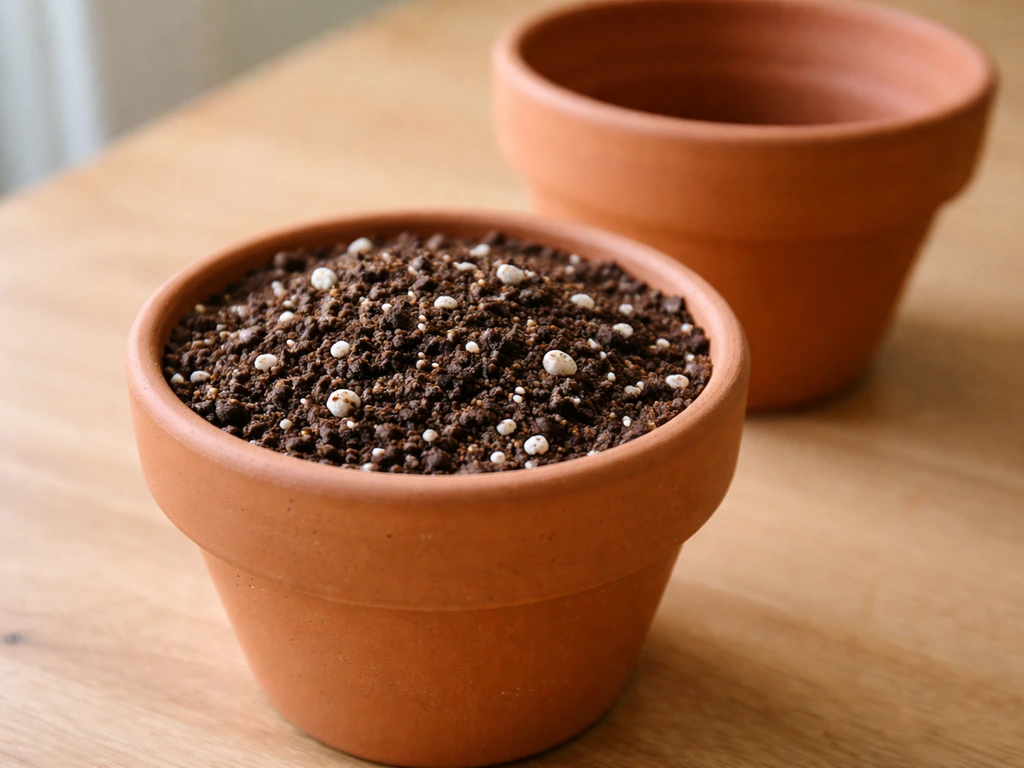
Use a well-draining potting mix. A standard peat- or coco-based potting soil with added perlite (about 20 to 25 percent by volume) is ideal. Avoid heavy garden soil or mixes designed for moisture retention. Confederate jasmine wants its roots to dry out slightly between waterings, and soggy soil is the fastest way to rot the roots.
For pot size, start with a container that is only one to two inches wider than the root ball. This plant actually blooms more reliably when slightly rootbound, so resist the urge to plant it in a giant pot with lots of extra room. Make sure the pot has drainage holes. A pot without drainage is asking for trouble.
How often to water
Water thoroughly until water drains from the bottom, then let the top inch of soil dry out before watering again. In a warm, bright spot this might mean watering every 5 to 7 days in summer and every 10 to 14 days in winter when growth slows. Stick your finger an inch into the soil rather than going by a schedule. If it feels damp, wait. If it feels dry, water. Overwatering is far more common than underwatering with this plant indoors.
Training and pruning to keep it manageable
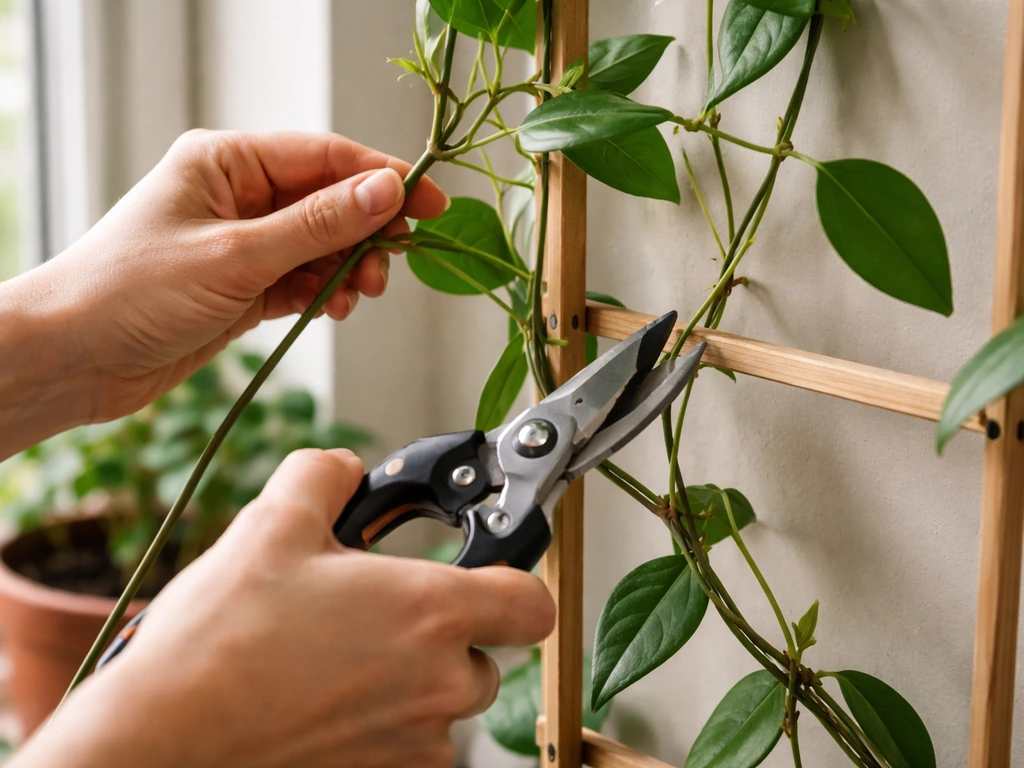
Confederate jasmine is a twining vine, meaning it wraps its stems around whatever it can find. Indoors, you have to direct that growth intentionally or it will reach for curtains, nearby plants, and anything else within range. Training is an ongoing task, not a one-time job, but it is also what makes this plant interesting to grow inside.
Prune after the spring flowering period, cutting back long stems by one-third to one-half. This encourages bushier growth and sets up fresh stems for the next season's flowers. Mid-summer is also a good time to snip back any wild stems that are getting out of hand. Avoid heavy pruning in fall or winter, as the plant is already stressed by lower light and cold air. Use clean, sharp scissors or pruners to prevent ragged cuts that invite disease.
Light pinching throughout the growing season keeps the plant compact. If you want a bushier, less sprawling look, pinch the tip of each new stem back to the second or third leaf. This diverts energy into side shoots rather than long runners.
Do you need a plant support?
Yes, absolutely. Confederate jasmine needs something to climb or it will sprawl out of its pot and become a tangled mess. The good news is that indoor supports can be simple and even decorative. A small bamboo trellis, a wire hoop pushed into the pot, or a moss pole all work well. You can also train the vines around a simple wire frame shaped into a heart or circle for a clean, contained look that sits right in the pot.
As new vines grow, gently wrap them around the support or secure them with soft plant ties, twist ties, or small clips. Do not use tight wire or string that can cut into the stems. Check the ties every few weeks and loosen any that are starting to constrict growth. The goal is to guide the plant upward and spread it across the support evenly so light reaches all the foliage.
Propagation, repotting, and long-term care
The easiest way to propagate Confederate jasmine is from stem cuttings. Take a 4- to 6-inch cutting just below a leaf node in late spring or early summer, strip the lower leaves, and dip the cut end in rooting hormone powder. Plant it in a small pot with moist perlite or a perlite-and-potting-soil mix, cover it loosely with a plastic bag to hold humidity, and keep it in a warm, bright (but not direct sun) spot. Roots typically form in 3 to 6 weeks. This is a great way to make backup plants or share with friends.
Repot in spring every 2 to 3 years, or when you see roots circling the bottom of the pot or pushing out of drainage holes. Move up only one pot size at a time. When repotting, this is also a good moment to refresh the potting mix, check roots for rot, and cut back any dead or damaged roots before replanting. After repotting, hold off on fertilizing for 6 to 8 weeks to let the plant settle in.
Feed monthly during spring and summer with a balanced liquid fertilizer diluted to half strength, or use a slow-release granular fertilizer worked into the top inch of soil at the start of the growing season. Stop fertilizing in fall and winter when growth naturally slows. If you want to push blooming, switch to a low-nitrogen, higher-phosphorus fertilizer (like a bloom booster) in late winter to early spring just as new growth kicks off.
Troubleshooting common indoor problems
Most problems with Confederate jasmine indoors come down to light, water, or pests. Here is how to read the symptoms and fix them quickly.
| Symptom | Likely Cause | Fix |
|---|---|---|
| Yellow leaves (older, lower leaves) | Overwatering or root rot | Let soil dry out fully, check roots, improve drainage |
| Yellow leaves (new growth) | Nutrient deficiency or low light | Feed with balanced fertilizer, move to brighter spot |
| Leaf drop (green leaves falling) | Cold draft, sudden temperature change, or repotting shock | Move away from cold glass or vents, stabilize temperature |
| Crispy leaf edges | Low humidity or underwatering | Increase humidity, check watering schedule |
| No flowers | Insufficient light or wrong fertilizer | Move to brighter window, use bloom-booster fertilizer in late winter |
| Slow or no new growth | Low light, root-bound, or winter dormancy | Add grow light, consider repotting, wait for spring |
| Sticky residue or distorted new leaves | Aphids | Spray with neem oil or insecticidal soap, repeat weekly |
| Fine webbing under leaves | Spider mites | Raise humidity, spray with neem oil, isolate plant |
| White powdery coating on leaves | Powdery mildew | Improve airflow, reduce overhead misting, apply fungicide |
Spider mites are the most common pest on Confederate jasmine kept indoors, particularly in dry winter conditions. They thrive in low humidity and move fast. If you catch them early, a strong spray of water to dislodge them followed by neem oil applications every 5 to 7 days usually clears the problem. Aphids tend to cluster on new growth and respond well to insecticidal soap. Always isolate an affected plant before treating it so pests do not spread to your other houseplants.
How to set yourself up for success starting today
If you are starting fresh, buy a healthy plant from a reputable nursery rather than a stressed big-box-store specimen. Look for dark green, glossy leaves with no yellowing or webbing, and check the undersides of leaves before you buy. When you get it home, resist the urge to repot immediately unless the roots are clearly crammed. Let it acclimate to your light and humidity for 2 to 4 weeks before making changes.
Get your support in place early. Pushing a hoop or trellis into the pot before the vines get long is much easier than untangling an established plant later. Put the pot in your sunniest window, set up a humidifier or pebble tray if your home is dry, and start checking soil moisture every few days to learn the plant's watering rhythm in your specific conditions.
Confederate jasmine is not as beginner-friendly indoors as something like a pothos, but it is far from impossible. If you are comparing it to other common indoor vines, you might also be wondering can creeping jenny grow indoors, but it has different needs than Confederate jasmine pothos. The people who succeed with it are the ones who nail the light first and do not overwater. Get those two things right and the rest is manageable.
If you enjoy fragrant flowering vines and are willing to put in a bit of effort, this plant is genuinely rewarding when it blooms. If you want something lower-maintenance, a true Arabian jasmine or a gardenia might be worth comparing before you commit. Gardenia is sometimes grown indoors too, but it has different light, watering, and humidity needs than Confederate jasmine.
FAQ
How long should I expect it to take for Confederate jasmine to bloom indoors after I bring it home?
If your light and temperature match what it needs, plan on months, not weeks. Many plants sit still during acclimation, and indoors blooms often show up only after several months of stable, very bright conditions. Avoid repotting or major rearranging during that period because disruption can reset the timeline.
What should I do if my plant drops leaves even though I’m watering correctly?
Leaf drop indoors is commonly triggered by cold drafts, hot dry air from vents, or prolonged low light. Check that the pot is not touching cold window glass at night, move it away from heating ducts, and verify you are getting direct or very bright light for most of the day.
Can I grow Confederate jasmine on a shaded patio or near a window that only gets indirect sun?
Indirect light usually keeps it alive but rarely supports flowering, and growth can stall. If you do not have a truly bright window, use a grow light positioned close to the plant and run it for long winter hours, then reassess after a few weeks.
Do I need to hand-pollinate Confederate jasmine indoors to get flowers?
Usually no, because the main barrier indoors is not pollination, it is maintaining consistently bright conditions long enough for buds to form and open. If you get buds but no blossoms, first confirm light intensity and duration, then check that humidity and watering are not stressing the plant.
Why are my leaves turning yellow or developing brown tips indoors?
Yellowing often points to overwatering or insufficient light, while brown, crispy edges are more typical of low humidity or salt buildup from fertilizer. Let the top inch of soil dry before watering again, and if needed, do a gentle “flush” by watering through until it runs out the bottom to reduce buildup.
What humidity target should I aim for if I don’t have a humidifier?
Try to maintain roughly the mid-range it prefers, about 50 to 60 percent. If you cannot run a humidifier, increase humidity with a larger grouped plant setup and place a water tray nearby, but accept that it may not be enough during very dry winter weeks.
Is it okay to mist Confederate jasmine leaves to raise humidity?
Misting can offer temporary relief but it does not reliably increase room humidity, and frequent wetting can encourage spotting in low-airflow corners. If you mist, do it lightly and keep airflow good, but a humidifier is generally the more dependable option.
How do I tell the difference between underwatering and overwatering with this plant?
Overwatering tends to come with consistently damp soil, dull growth, and root stress risk, sometimes followed by yellowing or leaf drop. Underwatering typically shows up as dry soil and wilting, then crispy leaf edges. Use the finger test on the top inch and adjust rather than following a fixed calendar.
Can I keep Confederate jasmine in a hanging basket indoors?
It is usually a poor match because it is a twining vine that needs a support for upward growth. In a hanging basket it will spill and tangle, and you may struggle to keep light reaching the foliage evenly. Use a trellis or pole and keep the plant training upward instead.
What type of fertilizer should I use if I only care about flowers, not just foliage?
To encourage blooms, shift to a low-nitrogen, higher-phosphorus formula around late winter to early spring when new growth starts. Keep the fertilizer diluted and stop in fall and winter, because feeding during low-light months can worsen salt buildup and stress.
How should I handle spider mite prevention in winter?
In dry winter conditions, check leaf undersides weekly and act early. Maintain the preferred humidity, avoid vent blasts, and if you see fine webbing or stippling, dislodge with water and follow with repeated treatments on a tight schedule rather than one-time spraying.
When should I repot, and should I prune roots when I do it?
Repot in spring every couple of years or when roots circle or push from drainage holes. You can remove dead or clearly rotten roots during repotting, but avoid heavy root cutting because indoor vines often take time to recover and reestablish.
Can I use tap water if I live in an area with hard water?
Hard water can contribute to fertilizer and mineral buildup, which may show up as browning leaf tips or dull growth. If you notice recurring tip burn, consider using filtered or distilled water for at least part of the season, and flush the pot occasionally to leach salts out of the root zone.