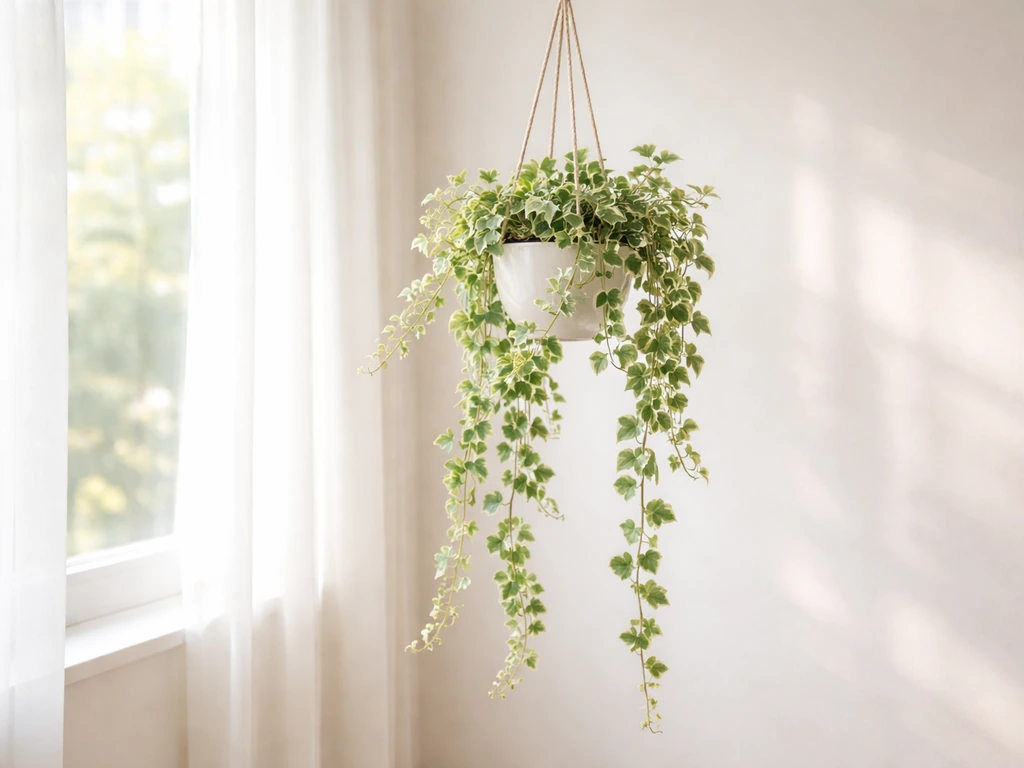
Yes, German ivy can grow indoors, but there are a few things worth sorting out before you buy one. The name 'German ivy' gets used for more than one plant. Most commonly it refers to Senecio mikanioides, a trailing vine that the RHS actually recommends as a houseplant, or to Dichondra argentea 'Silver Falls', a cascading silver-leafed creeper sold at most garden centers. Either way, both can be kept indoors successfully if you give them enough bright indirect light. The honest caveat: they are not low-light plants. Put them in a dim corner and they will get leggy, pale, and thin fast. Put them in a well-lit spot with decent airflow and decent drainage, and they will trail beautifully for years.
Can German Ivy Grow Indoors? Care Guide for Success

James Hartwell
4 Jun 2026
Sorting out the name confusion first
Before diving into care, it is worth knowing what you actually have. 'German ivy' is one of those frustratingly vague common names that garden centers apply to several different trailing plants. Senecio mikanioides is the classic German ivy, a fast-trailing vine with lobed, ivy-shaped leaves that produces small clusters of yellow flowers in autumn and winter indoors. Dichondra argentea 'Silver Falls' is a separate plant with small round silvery leaves, often labeled 'German ivy' or just 'dichondra' depending on where you buy it. There is also Dichondra repens, a low-growing groundcover version. This guide covers all three since their indoor care needs are very similar, but most of the advice applies directly to whichever one you have sitting on your shelf right now.
If you are specifically researching ivy-type plants for indoors, it is worth knowing that regular English ivy and other ivy relatives have their own quirks indoors. German ivy and dichondra behave more like classic trailing houseplants than true ivies do, which is actually a point in their favor.
What indoor conditions actually work
Light: this is the make-or-break factor
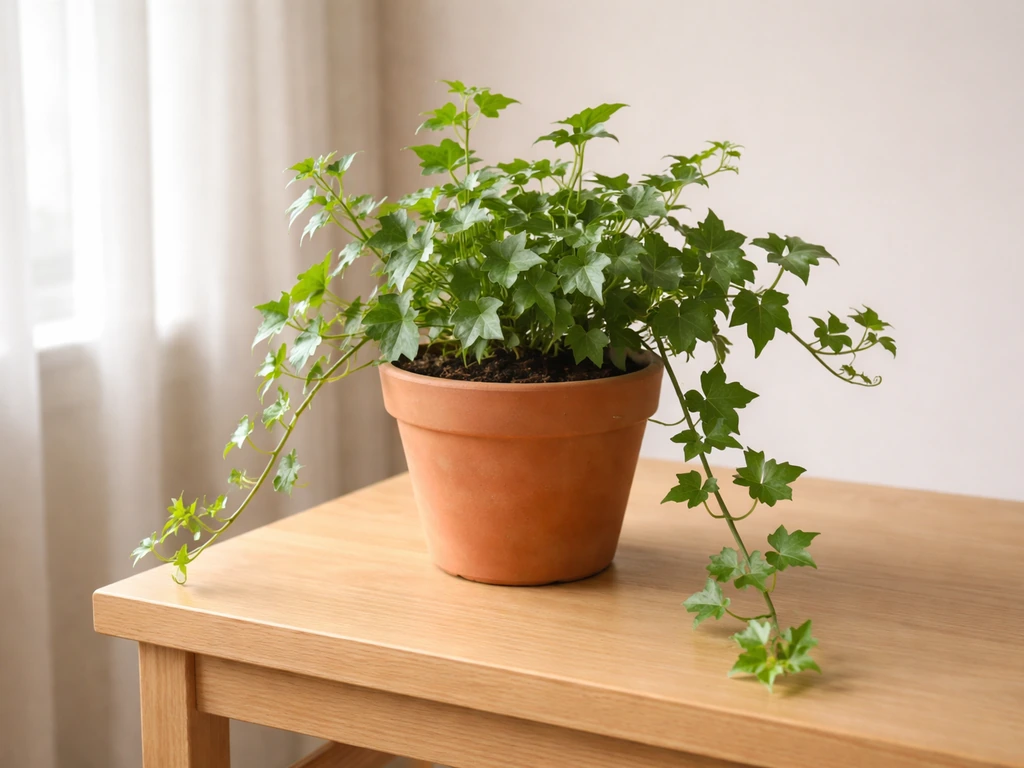
Bright, indirect light is what you are aiming for. Think a spot within about a meter or two of a south- or east-facing window where the plant gets strong ambient brightness but no harsh direct midday sun hitting the leaves. A few hours of gentle morning or late-afternoon sun is actually beneficial, especially for Silver Falls dichondra, which needs light to maintain its silver color and tight leaf spacing. What you want to avoid is direct, intense midday sun through glass, which scorches the leaves and causes brown, crispy edges, sunken patches, and stunted new growth.
Low light is where things go wrong fast. When these plants do not get enough light, the stems stretch dramatically between leaf nodes (that leggy, stringy look), new leaves come in smaller and duller, and Silver Falls loses its silver sheen entirely. I have seen people assume the plant is sick when it is just starving for light. If you only have north-facing windows or a genuinely dim apartment, a grow light placed 20 to 30 centimeters above the plant for 12 to 14 hours a day will make a real difference.
Temperature, humidity, and airflow
These plants are comfortable in typical indoor temperatures, roughly 15 to 24 degrees Celsius (60 to 75 Fahrenheit). Dichondra repens can handle quite a bit outdoors, tolerating light frost down to around -9 Celsius, but indoors you are unlikely to push those limits. Keep them away from heating vents and cold drafts near windows in winter. Average indoor humidity is fine, somewhere in the 40 to 60 percent range. You do not need to mist these plants or run a humidifier for them. What you do want is decent air circulation. Stagnant, still air combined with any excess moisture on the leaves is a recipe for fungal issues like leaf spot and botrytis. A spot with gentle ambient airflow, near an occasionally opened window or a gentle fan, keeps problems away without any fuss.
Setting up the pot, soil, and drainage properly
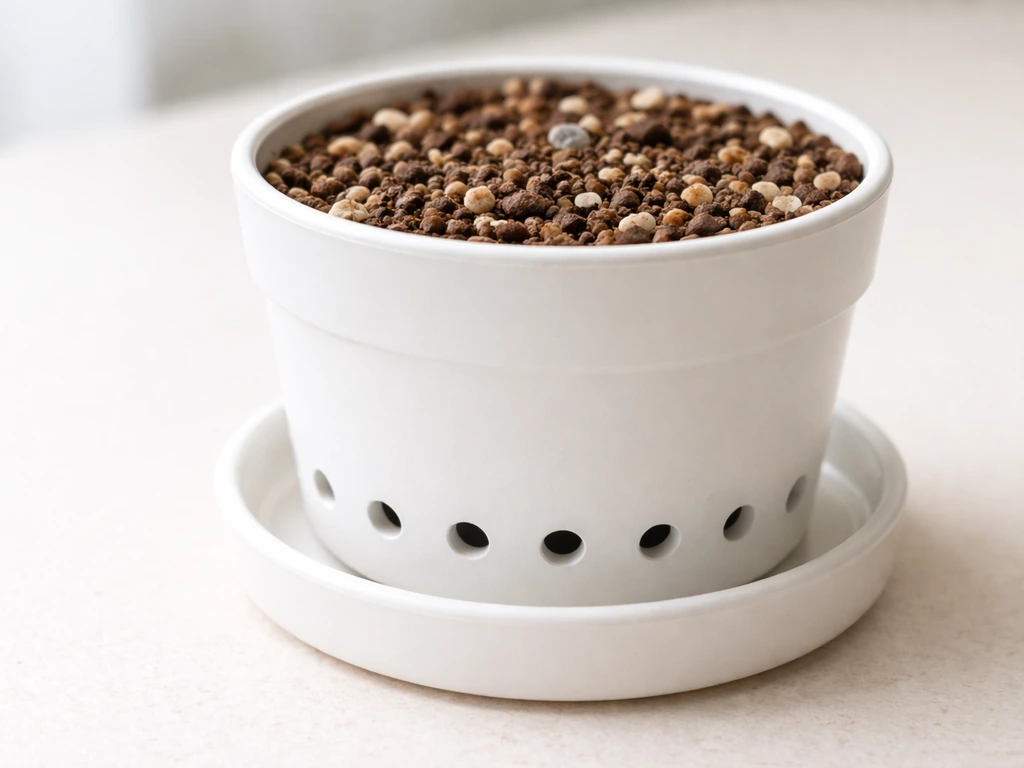
Get this part right and you solve at least half the potential problems before the plant is even in your home. Use a pot with at least one drainage hole, full stop. No exceptions. A pot without drainage will lead to soggy, anaerobic soil and root rot, and these plants are not forgiving of that. A hanging basket or a wide, shallow pot works especially well for trailing varieties since it gives the vines somewhere to cascade naturally.
For soil, use a well-draining potting mix. A standard houseplant potting compost with extra perlite mixed in (roughly 70 percent compost, 30 percent perlite) gives roots the aeration they need while still retaining just enough moisture. Avoid heavy, dense mixes designed for outdoor beds. They hold water too long and compact over time in a pot. If you are potting up Silver Falls dichondra specifically, some growers use a 50/50 perlite and coco coir mix, which is very free-draining and works well if you are a consistent waterer.
Pot size matters more than people think. Trailing plants like these can actually sit in slightly smaller pots than you might expect because a large pot holds excess moisture around the roots for too long. Start with a pot that is only slightly larger than the root ball, and size up gradually as the plant fills out.
Watering: the most common way people kill this plant
Overwatering kills German ivy and dichondra more reliably than almost anything else. The rule to remember is: let the top inch or two of soil dry out before you water again. Greg App’s care guidance for Dichondra repens similarly emphasizes letting the soil dry out between waterings to prevent overwatering and root rot. Stick your finger into the soil. If it feels moist at all, wait. If it feels dry down to your first knuckle, water thoroughly until it drains freely from the bottom, then empty the saucer underneath so the pot is not sitting in standing water.
In summer, in a bright warm spot, you might be watering every 5 to 7 days. In winter, when growth slows and temperatures drop, cut back significantly. Some growers water only when the soil is almost completely dry in winter, which might mean every 2 to 3 weeks. The plant tells you when it is getting thirsty: leaves start to look slightly dull or the stems go a little soft. That is a much better prompt to water than a calendar schedule.
Signs of watering problems and how to fix them fast
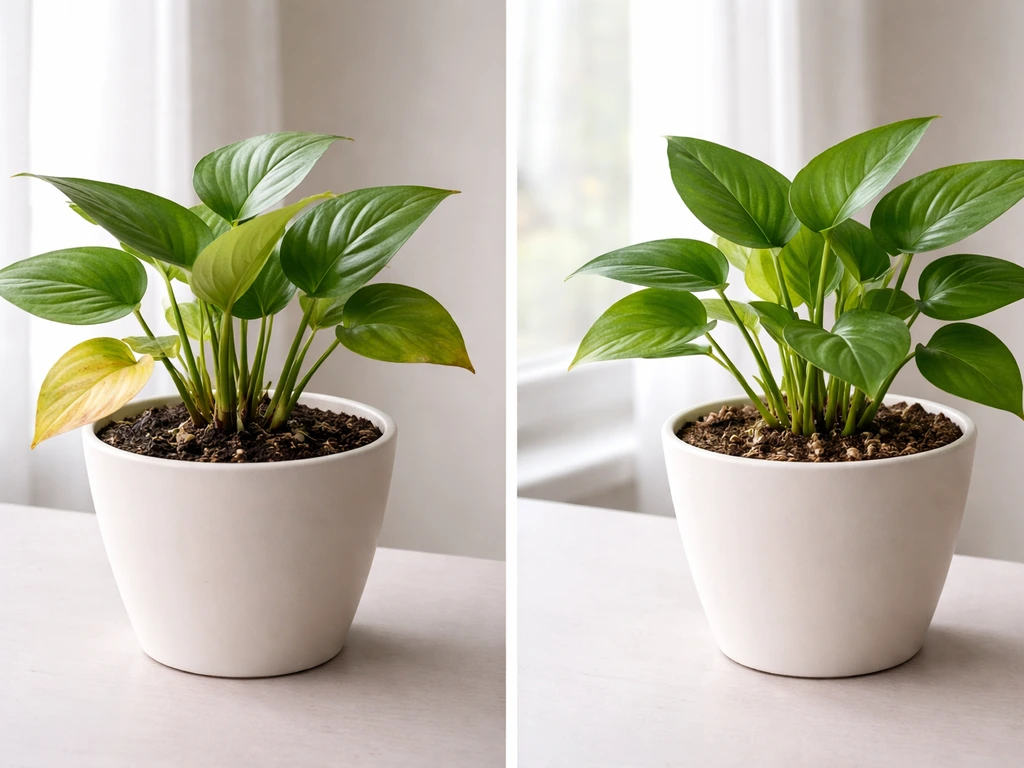
| Symptom | Likely Cause | Fix |
|---|---|---|
| Yellowing lower leaves, mushy stems | Overwatering or poor drainage | Let soil dry out, check roots for rot, repot if necessary |
| Wilting despite moist soil | Root rot (roots cannot take up water) | Remove affected roots, repot in fresh dry mix, reduce watering |
| Crispy brown leaf edges | Sun scorch or underwatering | Move away from direct sun, increase watering frequency slightly |
| Sudden leaf drop | Cold draft or temperature shock | Move to a stable, warm indoor spot away from windows/vents |
| Leggy, pale stems with small leaves | Not enough light | Move closer to a bright window or add a grow light |
Training, pruning, and making more plants from cuttings
Left to its own devices, German ivy will trail downward in long cascading stems. That looks great in a hanging basket or on a high shelf, but if you want a fuller, bushier look, pinching the growing tips is the move. Pinching off the last centimeter or two of each stem tip encourages the plant to branch rather than just send one long vine extending further. Do this regularly during the growing season (spring through summer) and you will end up with a noticeably fuller plant. If the plant has already gotten very long and straggly, you can cut stems back to whatever length looks good. The plant will re-shoot from the cut point.
There is some conflicting advice around pruning: some sources say dichondra needs no pruning and cutting alters its natural shape. Honestly, it depends on what you want. For a hanging basket effect where long cascading trails are the point, leave it alone. For a pot on a shelf where you want density, pinch regularly. Neither approach is wrong.
Propagating from cuttings (easy and useful)
Cuttings are genuinely easy with these plants, and propagation is the best way to refresh a plant that has gone thin or leggy. When stems get long and stretched, instead of just cutting them off and throwing them away, root them and you have new plants. The process is straightforward.
- Take a healthy stem cutting about 8 to 10 centimeters long, cutting just above a node (the point where a leaf meets the stem).
- Remove the lower leaves so the bottom third of the cutting is bare stem.
- Do not use rooting hormone, it is not necessary and some sources suggest it can actually slow rooting on dichondra.
- Push the bare stem section into a pre-moistened mix of 50 percent perlite and 50 percent coco coir (or just a light potting mix).
- Keep the cutting in bright indirect light and maintain light moisture in the rooting medium without making it soggy.
- Roots typically develop within 2 to 4 weeks. Once you see new leaf growth, the cutting has rooted and can be treated as a normal plant.
Fertilizing and adjusting care through the seasons
German ivy and dichondra are not heavy feeders. You do not need to be aggressive with fertilizer. A balanced, water-soluble fertilizer at half strength, something like a 10-10-10 NPK formula, applied once a month during spring and summer is plenty. Feed only when the plant is actively growing. During autumn and winter, stop feeding altogether. Indoor plants in low light with slowed growth cannot use extra nutrients, and excess fertilizer salts in the soil cause their own problems, including leaf burn and root damage.
Seasonally, your main adjustments are watering frequency (less in winter) and fertilizing (spring and summer only). Beyond that, check whether your light situation changes as the sun angle shifts. A spot that gets good light in summer might become quite dim in December. If you notice the plant getting leggier in winter, a grow light is a practical solution rather than fighting against the season.
Pests, diseases, and the problems you are most likely to hit
Common pests to watch for
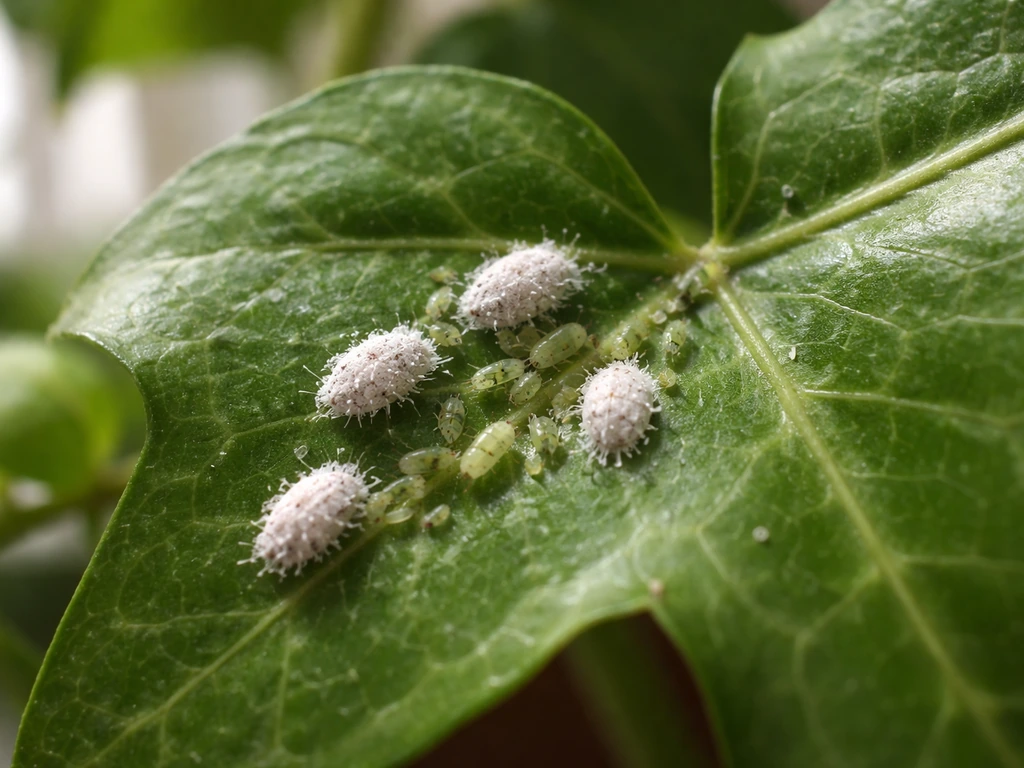
Dichondra and German ivy can attract a frustrating range of houseplant pests. The ones you are most likely to encounter indoors are mealybugs, aphids, scale insects, fungus gnats, whitefly, and spider mites. Mealybugs show up as white cottony fluff tucked into leaf axils and stem joints. Spider mites leave fine webbing and tiny brown or bronze speckles on younger leaves, often more visible when you hold the leaf up to the light. Fungus gnats are the small flies hovering around the soil surface and are almost always a sign of consistently overwatered, soggy soil.
Watch also for root mealybugs, which are harder to spot because they live in the soil around the roots. If a plant is declining for no obvious reason, especially yellowing slowly with reduced vigor despite correct watering and light, unpot it and check the roots for white waxy patches. Root mealybugs also increase susceptibility to root rot by damaging root tissue.
How to deal with pests without overcomplicating it
- Isolate any affected plant immediately so pests do not spread to other houseplants.
- For mealybugs and aphids: dab affected areas with a cotton swab dipped in rubbing alcohol, then spray the whole plant with a diluted neem oil solution or insecticidal soap. Repeat every 5 to 7 days for 3 to 4 weeks.
- For spider mites: increase humidity slightly around the plant (they hate it), and use an insecticidal soap spray. Avoid systemic insecticides if spider mites are present as these can make mite populations worse.
- For fungus gnats: let the soil dry out more thoroughly between waterings to break the larval cycle, and use yellow sticky traps to catch the adults.
- For scale insects: scrape off visible shells manually, then treat with neem oil or insecticidal soap.
Disease problems: mostly linked to water and airflow
Root rot is the single most common disease problem and is almost entirely preventable. It comes from overwatering, compacted or poorly drained soil, or pots without drainage holes. If you catch it early, you can save the plant by removing it from the pot, cutting off brown mushy roots with clean scissors, letting the remaining roots air-dry briefly, and repotting in fresh dry mix. If more than half the root system is gone, take cuttings from healthy stems and restart the plant rather than trying to save a heavily rotted specimen.
Fungal leaf issues like botrytis, leaf spot, powdery mildew, and rust are less common but show up in conditions of stagnant air and moisture sitting on leaves. Remove affected leaves, improve airflow around the plant, avoid wetting the foliage when watering, and keep the plant in a spot where air moves gently. Good hygiene goes a long way: remove dead leaves from the soil surface promptly since they create a habitat for fungal spores.
Your next steps: what to do right now
If you already have a German ivy or dichondra indoors, do a quick check right now: Is it within a meter or two of a bright window? Is the pot draining properly? Does the soil feel dry at the first knuckle before you water? If the answer to any of these is no, that is the first thing to fix. Most indoor failures with this plant come down to light, drainage, or overwatering, not anything complicated. If you are exploring other indoor growth questions, can hyacinth grow indoors is another useful related option to check alongside your light planning.
- Place the plant near a bright south- or east-facing window, or set up a grow light if your space is dim.
- Check that your pot has a drainage hole and that the saucer underneath is not full of standing water.
- Use a well-draining potting mix with perlite added if the current soil feels heavy or dense.
- Water only when the top inch or two of soil is dry, and water thoroughly each time rather than little and often.
- Pinch stem tips during spring and summer if you want a fuller, bushier trailing plant.
- Feed monthly with a balanced half-strength fertilizer from spring through summer, then stop for winter.
- Inspect leaves and soil regularly for early signs of pests and deal with them fast before they spread.
Get those basics right and German ivy is genuinely one of the more rewarding trailing plants to keep indoors. If you want to grow geraniums indoors, focus on bright light and a well-draining pot just as you would for other houseplants geraniums grow indoors. It grows quickly, looks dramatic cascading from a shelf or basket, and Senecio mikanioides even rewards you with cheerful yellow flowers in the colder months. You can also apply the same indoor-light thinking when considering grape hyacinth, since it has its own requirements for thriving indoors can grape hyacinth grow indoors. If you are exploring other trailing or ivy-type plants for indoors, it is worth comparing how this one stacks up against standard ivy varieties and related plants, since light requirements and pest vulnerabilities vary more than the similar common names suggest. If you are wondering can ixora grow indoors, the answer depends on whether you can provide strong light and consistent warmth. If you are also wondering can water hyacinth grow indoors, it has very different needs than these houseplants watering and pest vulnerabilities. If you want to know the difference between true ivy and German ivy indoors, start by matching light levels to the plant you bought ivy-type plants.
FAQ
How can I tell if my indoor “German ivy” is suffering from too little light versus too much sun?
Measure the leaf color and spacing, not just length. If stems are long but leaves stay small, dull, and farther apart, it is almost always a light shortage. If leaves scorch (brown crispy edges, pale patches) that points to harsh direct sun through glass, so you should move it back from the window or add sheer curtains.
Can I use a grow light to replace window light for indoor German ivy?
Yes, but only if you adjust the watering schedule and keep the soil from staying wet. A grow light is especially helpful in winter, start with 12 to 14 hours per day, and water only after the top 1 to 2 inches dry out (use the finger test). If you switch lights on and keep watering the same as summer, root rot risk goes up.
What should I do if my German ivy is in a decorative cachepot with no drainage?
If your plant is in a pot without drainage, do not “carefully” water. Repot into a container with at least one drainage hole and use a well-draining mix, then pause watering for a short period so excess moisture can dissipate. For a plant already declining, check roots for brown, mushy tissue before deciding whether to save it or restart from cuttings.
My German ivy looks leggy, can I fix it without replacing the plant?
When stems stretch and the plant looks thin, do two things together: improve the light and refresh the structure. Pinch the growing tips during the active season, and if it is already very leggy, take stem cuttings and root them to rebuild the plant’s density rather than relying on new growth from weak, stretched sections.
How often should I repot indoor German ivy, and how big should the next pot be?
Repotting is helpful when the plant is rootbound or the mix has broken down, but it is not a quick rescue for overwatering. Choose the active growth period (spring to summer), keep the next pot only slightly larger, and never increase pot size to “give it more room,” that often keeps roots wet longer.
My indoor German ivy has fungus gnats, what does that usually mean and what is the first step?
If you see fungus gnats, the soil is staying too wet, even if the surface looks dry. Let the top inch or two dry thoroughly, reduce watering frequency, and consider adding a thin layer of dry material on top of the soil. Always ensure airflow and avoid watering with a schedule that ignores how fast your indoor mix dries.
Should I mist my German ivy to increase humidity?
It can be safe, but avoid misting as a routine. These plants generally do fine with normal indoor humidity (around 40 to 60 percent) and the bigger priority is gentle airflow. If you mist and leaves stay wet, you raise the odds of leaf-spot type problems.
How do I set a reliable watering routine for German ivy indoors?
Use a gentle, consistent approach. Look for signs like dull leaves or soft stems, then water thoroughly until it drains, and empty any saucer. Over time, you can fine-tune to your home, because winter often slows drying and may require watering every couple of weeks.
Can I fertilize German ivy in winter, and what are signs I used too much?
Yes, and the “wrong” fertilizer is a common mistake. Use a balanced fertilizer at half strength about once a month only in spring and summer, and stop entirely in autumn and winter. If leaves look scorched or edges brown, flush with clean water (let it drain fully) and pause feeding.
Are the indoor care needs the same for Senecio mikanioides and Dichondra ‘Silver Falls’?
All three “German ivy” types mentioned (Senecio mikanioides and dichondra forms) generally prefer the same indoor baseline: bright indirect light, breathable airflow, and drainage. The most practical exception is Dichondra Silver Falls, which tends to lose its silver look more quickly in dim conditions, so it may need a closer window or grow light.