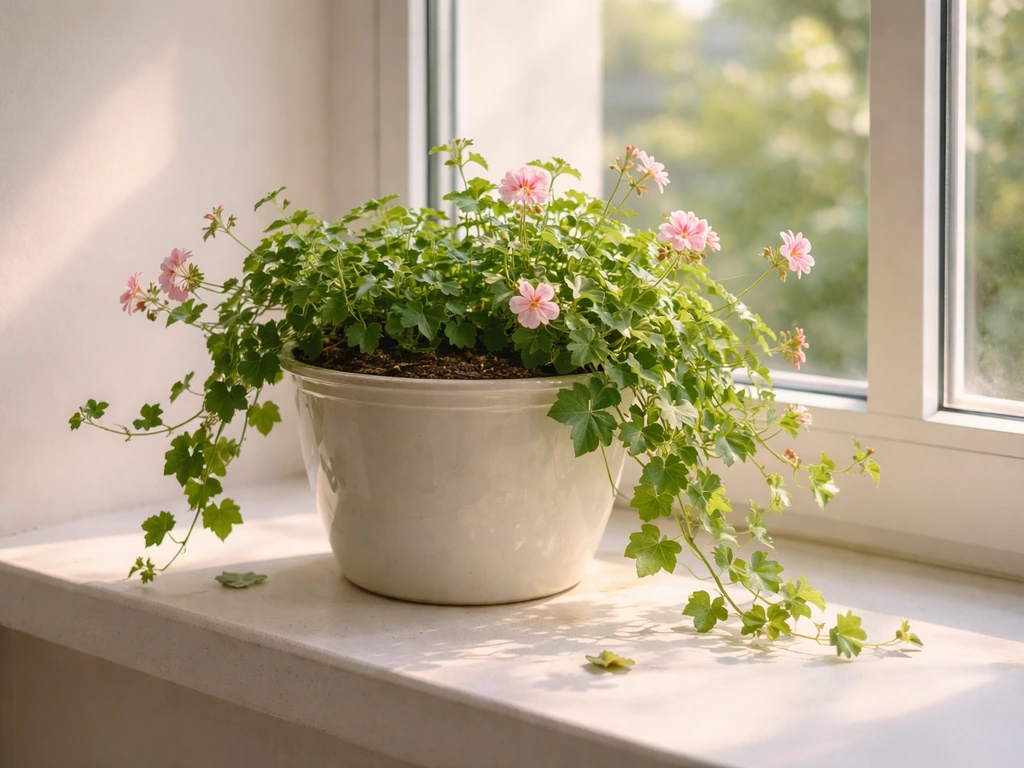
Yes, ivy geraniums (Pelargonium peltatum) can absolutely grow indoors year-round, and they'll even bloom continuously if you give them enough light. Yes, can ivy grow indoors is answered in this guide, and the biggest factor is getting enough bright light. Clemson University Extension calls potted geraniums "excellent indoor plants" and specifically includes ivyleaf types in that praise. The catch is that light is everything with these plants. Get that right, and the trailing stems, glossy leaves, and clusters of flowers will reward you all year. Get it wrong, and you'll end up with a sad, leggy mess that never blooms.
Can Ivy Geraniums Grow Indoors? Light, Water, Care Tips

James Hartwell
7 Jun 2026
Light: the single biggest factor for indoor ivy geraniums
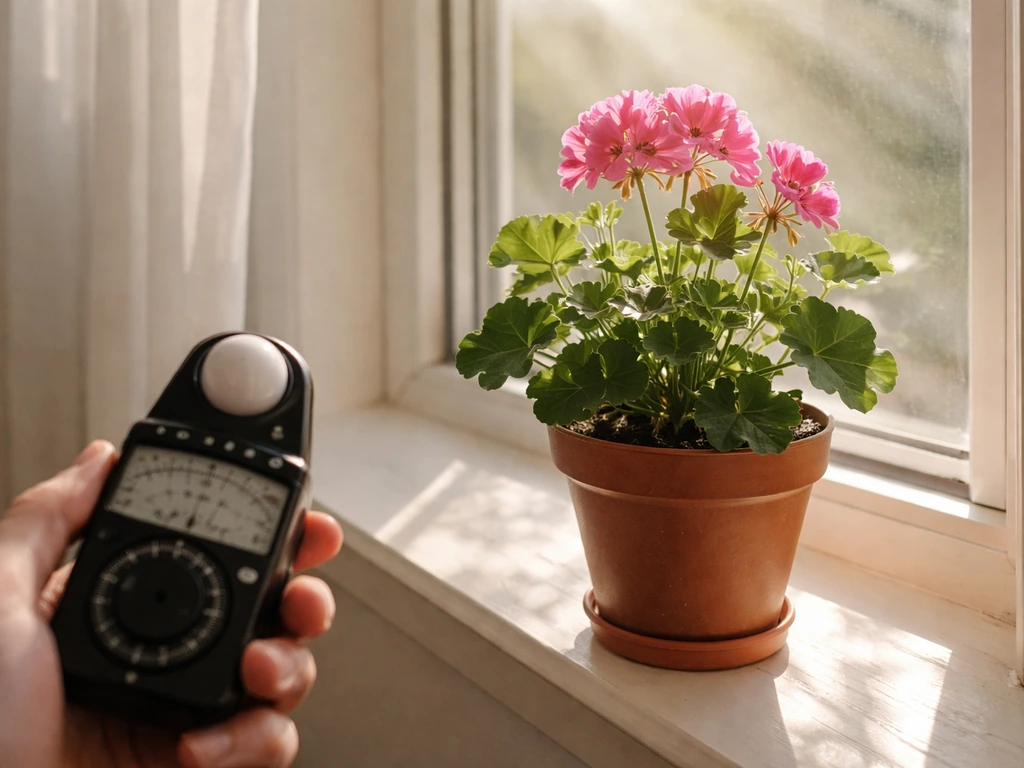
Ivy geraniums are sun-lovers. Indoors, they need bright light, and Clemson Extension is blunt about it: bright light is essential for continuous flowering. Can hyacinth grow indoors depends mostly on getting the same kind of strong, consistent light that indoor ivy geraniums need for flowering bright light. If you’re wondering will geraniums grow indoors, the short answer is yes, especially when you meet their light needs. The best spots in your home are south- or west-facing windowsills, especially in winter when the sun angle is low. If you're in an apartment with only north or east-facing windows, don't give up, but do plan on supplementing with grow lights.
In foot-candles, ivy geraniums want 2,000 to 3,500 foot-candles of light intensity according to NCSU Horticulture. That's genuinely bright, roughly what you'd get within a foot or two of a large, unobstructed south-facing window. Most interior rooms don't come close to that, so placement right at the glass matters. Will geraniums grow indoors? Yes, as long as you place them right at a very bright window or provide enough grow light.
For artificial lighting, the practical target from Clemson Extension is to position your plant about 12 inches beneath a 40-watt daylight or cool fluorescent bulb and run it for 16 hours per day. Modern LED grow lights work just as well. If you're growing under lights through winter, a simple timer takes all the guesswork out of the daily schedule. I keep a small timer on mine and it's one of those low-effort changes that makes a noticeable difference.
Watering, soil, and container setup
Overwatering is the fastest way to kill an indoor ivy geranium, and it's a far more common mistake than underwatering. These plants want to blank" rel="noopener noreferrer">dry out somewhat between waterings. The practical check: push your finger into the soil to a depth of 4 to 6 inches. If it feels moist, leave it. If it's dry, water thoroughly until water drains freely from the bottom. That drainage is important. Clemson Extension specifically says you want some water to come out the bottom each time you water, which flushes salts and confirms the root zone got fully wet.
Timing matters too. NCSU recommends watering in the morning so the foliage and soil surface can dry out before evening. This reduces the risk of a physiological problem called oedema (more on that below) and keeps fungal issues at bay.
For soil, NCSU is clear that ivy geraniums don't grow well in heavy soil and struggle in a straight peat-lite mix. Their recommendation is a porous mix that includes 20 to 30 percent mineral soil. In practical home-gardener terms, that means a quality potting mix blended with perlite, not straight bagged potting soil and definitely not garden soil. Aim for something that drains fast but holds some structure.
The container needs drainage holes, full stop. Terracotta pots are my personal preference for ivy geraniums indoors because they're porous and help prevent waterlogged roots. A pot that's slightly snug rather than oversized also helps, since excess soil volume stays wet longer and invites root rot.
Temperature, humidity, and airflow
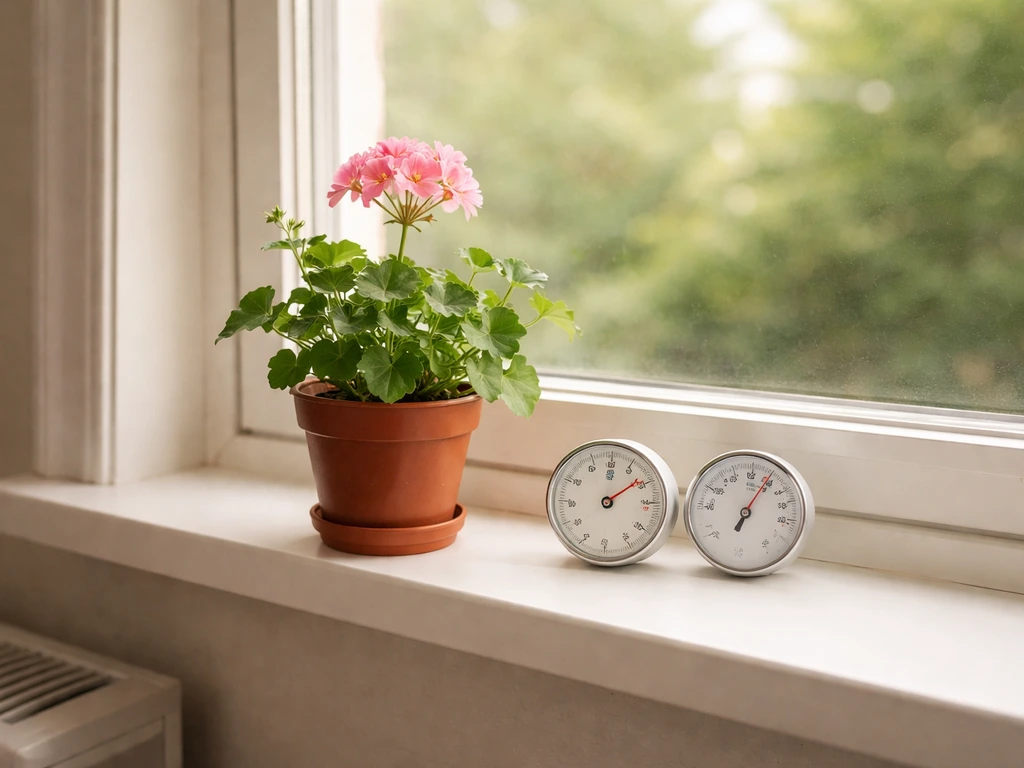
Ivy geraniums prefer cooler indoor conditions than most people expect. University of Wisconsin Extension recommends keeping them at 60 to 65 degrees F indoors, and notes they perform noticeably better at these cooler temps. This makes them good candidates for a bright sunroom or a cooler bedroom, but not ideal sitting on top of a heating vent or next to a fireplace. Hot, dry air from forced-air heating stresses these plants, makes spider mites very happy, and can cause the leaf chlorosis and yellowing described by NCSU. Penn State Extension also notes that pests like mealybugs, whiteflies, and spider mites can cause problems on indoor plants spider mites thrive in hot, dry conditions.
Average home humidity (around 40 to 50 percent) is generally fine. You don't need to mist or run a humidifier for ivy geraniums, but you do want to avoid extremely dry conditions near heating vents. Good airflow around the plant helps too. I try to make sure mine aren't crammed into a corner where air just stagnates. A small fan on a low setting nearby works well in winter when windows are closed.
How to get started: cuttings, transplanting, or seeds
Taking cuttings (the easiest and fastest method)
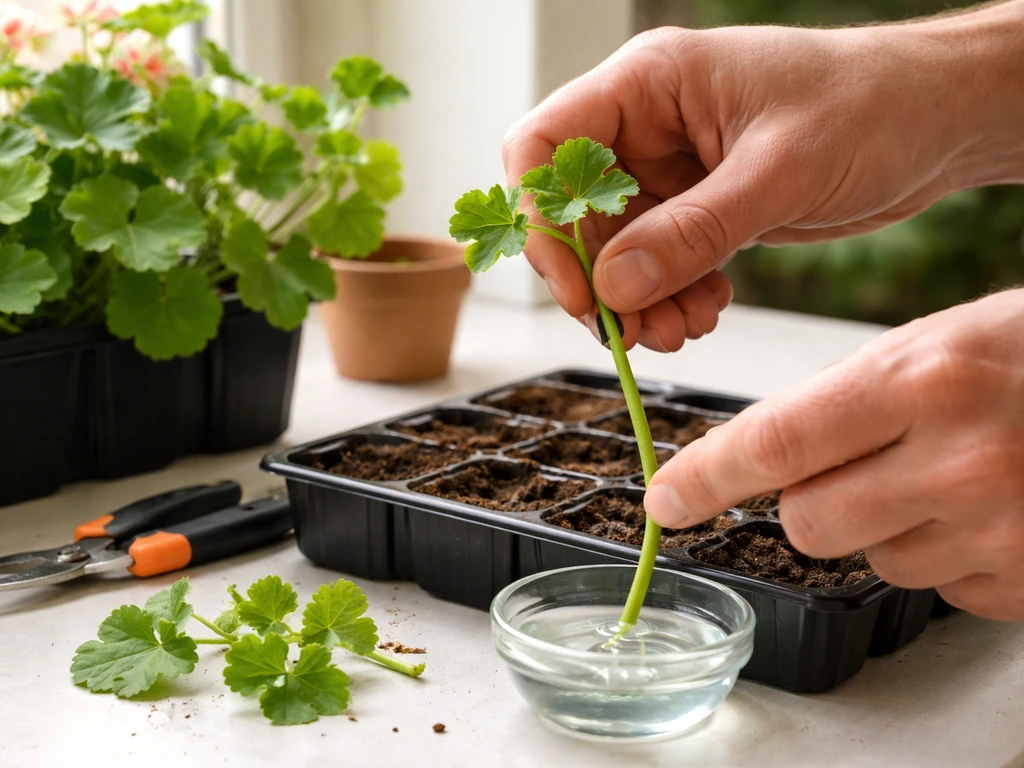
Cuttings are the most reliable way to start ivy geraniums indoors, and they root predictably. Take a cutting that's 3 to 4 inches long, remove the lower leaves, dip the cut end in rooting hormone powder, and stick it into a well-draining rooting medium like a mix of peat moss and perlite or coarse sand. Use a container with drainage holes, water the medium well, and let it drain. Place the cutting in bright light but not direct harsh sun while it roots. Wisconsin Extension says cuttings are typically well-rooted after about 6 weeks.
Bringing an outdoor plant inside
If you're overwintering an outdoor ivy geranium, the transition is straightforward. Trim the plant back by one-third to one-half before bringing it inside. Clemson Extension recommends cutting back to about 6 inches from the base, then placing the plant in a sunny window to recover and regrow. Water it well after trimming and let the soil dry appropriately between waterings from that point on. The cutback might look dramatic, but the plant bounces back quickly with good light.
Starting from seed
Seeds are the slowest route. Geranium seeds germinate in one to three weeks, but going from seed to a flowering plant takes roughly three to four months. University of Minnesota Extension suggests starting seeds indoors in mid-January if you want plants ready for outdoor transplanting in spring. If your goal is a year-round indoor plant, you can start seeds whenever, just know you're committing to several months before you see blooms.
Common indoor problems and how to fix them
| Problem | Likely Cause | Fix |
|---|---|---|
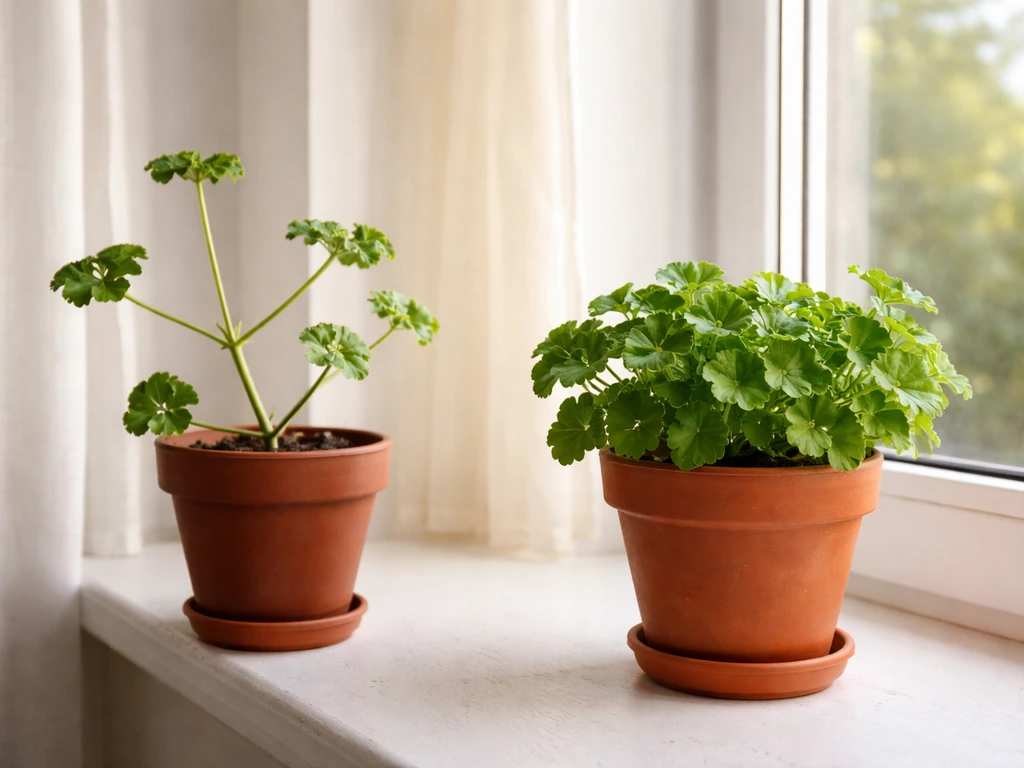
| Leggy, stretched stems | Not enough light | Move to a south/west window or add a grow light 12 inches above the plant for 16 hours daily; pinch stems just above a leaf node to encourage bushy regrowth |
| Yellowing leaves and leaf drop | Oedema, overwatering, or hot air exposure | Water in the morning, improve drainage, keep away from heat vents; check for corky bumps on leaf undersides (oedema sign) |
| No blooms | Insufficient light or over-fertilizing | Maximize light first; cut fertilizer back to half-strength if you've been feeding heavily |
| Root rot / wilting in wet soil | Overwatering or poor drainage | Let soil dry to 4-6 inches depth before watering; repot into fast-draining mix with perlite if roots are mushy |
| Spider mites | Hot, dry indoor air | Move away from heat sources; improve airflow; treat with insecticidal soap or neem oil |
| Mealybugs or whiteflies | Common indoor pest pressure | Isolate the plant immediately; wipe mealybugs with rubbing alcohol on a cotton swab; use yellow sticky traps for whiteflies |
| Corky bumps on leaf undersides (oedema) | Overwatering combined with low light and cool temps | Improve drainage, water in the morning, increase light and airflow |
Leggy growth is probably the most common complaint I hear from people growing geraniums indoors. It's almost always a light problem, not a watering or feeding problem. Before you do anything else, get the plant closer to the brightest window you have or add a grow light. Then pinch the stretched stems back just above a leaf node. New, compact growth will come in from those points.
Keeping your ivy geranium blooming and growing well
Fertilizing
Ivy geraniums don't need heavy feeding. University of Minnesota Extension warns they won't bloom well if over-fertilized, and recommends a half-strength water-soluble all-purpose fertilizer every three weeks during active growth. Clemson Extension suggests fertilizing semi-monthly from March through October, then pulling back in winter, especially if light levels drop. For winter indoor use, NCSU recommends a lower-phosphorus fertilizer like 15-0-15 (potassium and calcium nitrate based), then switching to a balanced 20-20-20 in spring. The key takeaway: less is more with fertilizer. When in doubt, use half the label dose.
Pruning and deadheading
Deadheading spent flower clusters keeps the plant tidy and encourages new blooms. Just pinch or snip off the entire flower stem down to where it meets the main stem, not just the individual flowers. Beyond deadheading, prune or pinch back stems regularly to prevent the leggy, sprawling look that ivy geraniums can develop indoors with lower light. Pinching just above a leaf node redirects energy into side shoots, keeping the plant fuller and more compact. Think of it as a haircut every few weeks rather than a one-time event.
Your indoor setup checklist
- Place the plant on a south- or west-facing windowsill, or within 12 inches of a grow light running 16 hours per day
- Use a fast-draining potting mix blended with perlite (20-30% perlite by volume) in a pot with drainage holes
- Water only when the top 4 to 6 inches of soil feel dry; water thoroughly until it drains from the bottom
- Water in the morning, not in the evening
- Keep indoor temps between 60 and 65 degrees F; keep the plant away from heat vents and fireplaces
- Feed with half-strength balanced fertilizer every two to three weeks during active growth; reduce or skip in winter if light is low
- Pinch back leggy stems just above a leaf node every few weeks
- Deadhead spent flower clusters at the base of the stem
- Check weekly for pests, especially spider mites in dry winter air
- Ensure some airflow around the plant to reduce humidity buildup and pest pressure
If you're also considering regular upright geraniums for indoors, the same core requirements apply, though ivy geraniums have a naturally trailing habit that makes them especially appealing in a hanging basket or on a high shelf near a bright window. If you are curious whether other plants like water hyacinth can water hyacinth grow indoors, the setup and watering needs are quite different from ivy geraniums. Folks interested in true trailing vines might also look at whether ivy or German ivy work for their indoor space, though those are quite different plants with their own requirements. Ivy geraniums sit in a sweet spot: they're genuinely beautiful indoors when given good light, and they're forgiving enough that a new indoor gardener can succeed with them.
FAQ
What’s the easiest way to tell if my ivy geranium is getting enough light indoors?
Look for compact growth and regular flowering. If stems stretch between leaf nodes (leggy growth), new leaves are smaller, or blooms stall, move the plant closer to the brightest window or start supplementing with a grow light. As a quick check, rotate the pot weekly so all sides receive similar light.
Can ivy geraniums survive near a window in winter without grow lights?
They can, but only if the window stays truly bright. In winter, many homes have light that’s too weak for continuous blooming, even with a south-facing window. If you notice buds dropping or no new flower clusters, add a timer-based light setup rather than waiting for spring.
Do ivy geraniums need a rest period indoors?
Not like some flowering plants do. With enough bright light, they can keep blooming year-round. If you cannot maintain light intensity in winter, expect slower growth and fewer blooms, and reduce fertilizer and water slightly rather than forcing high input.
How do I water an ivy geranium when the potting mix seems dry on top but wet deeper down?
Use the finger test deeper in the pot, 4 to 6 inches down. If the deeper soil is still moist, wait and re-check in a day or two. This prevents chronic overwatering caused by frequent small top-ups.
Is it okay to mist ivy geraniums to increase humidity?
Usually no. Misting is not typically necessary at normal home humidity, and wet foliage can increase disease risk. Better options are airflow (a small fan on low) and avoiding drafts from vents or heat sources that dry the air too much.
Why do my ivy geranium leaves turn yellow or look blotchy even though I’m watering correctly?
Hot, dry air from forced-air heating and light stress are common causes. If yellowing happens alongside crispy edges or poor flowering, move the plant away from vents and closer to the brightest window. Spider mites can also cause stippling, so inspect the undersides of leaves.
Can I use fertilizer year-round indoors?
It’s safer to ease off when light drops. In winter, keep fertilizer minimal or switch to a lower-rate schedule because ivy geraniums need light to use nutrients. If you see lush leaves but no flowers, reduce fertilizer first and verify light intensity next.
What’s the best pruning or pinching schedule for fuller trailing growth indoors?
Pinch or trim regularly during active growth, not just once. A practical approach is to pinch stretched stems back just above leaf nodes every few weeks, and keep the plant rotated so side shoots develop evenly across the trailing habit.
How long do ivy geranium cuttings take to root indoors, and what improves success?
They often root in about 6 weeks under bright conditions. For better success, use a well-draining rooting medium, keep it evenly slightly moist (not soggy), and avoid direct harsh sun while rooting. A clear plastic cover can help briefly, but ensure some airflow to prevent mold.
Should I repot my indoor ivy geranium, and what pot size is ideal?
Repot only when roots fill the container or drainage is poor. Choose a pot that is slightly snug, not much larger, because excess soil holds water longer and increases root rot risk. Always use a pot with drainage holes and refresh the mix to a porous blend if it has compacted over time.
What should I do if my indoor ivy geranium is flowering but also getting leggy?
Legginess usually points to insufficient light even if you still see blooms. Move it closer to the window or add a grow light, then pinch back stretched stems above leaf nodes to encourage side branching. Continue deadheading flower clusters to redirect energy toward new growth.