
Yes, ixora can grow indoors, but it's one of those plants that will make you work for it. If you're also wondering about can German ivy grow indoors, the key is matching light and moisture to that plant's needs ixora can grow indoors. It's a tropical shrub that craves bright light, warm temperatures, and decent humidity year-round. Get those three things right, and you'll have a compact, colorful bloomer on your windowsill or under grow lights. Miss any one of them consistently, and you'll end up with a leggy, yellowing plant that refuses to flower. This guide walks you through exactly what ixora needs indoors so you can decide whether it's worth the effort for your setup.
Can Ixora Grow Indoors? Indoor Care Guide for Success

James Hartwell
5 Jun 2026
What ixora actually is (and the indoor reality check)
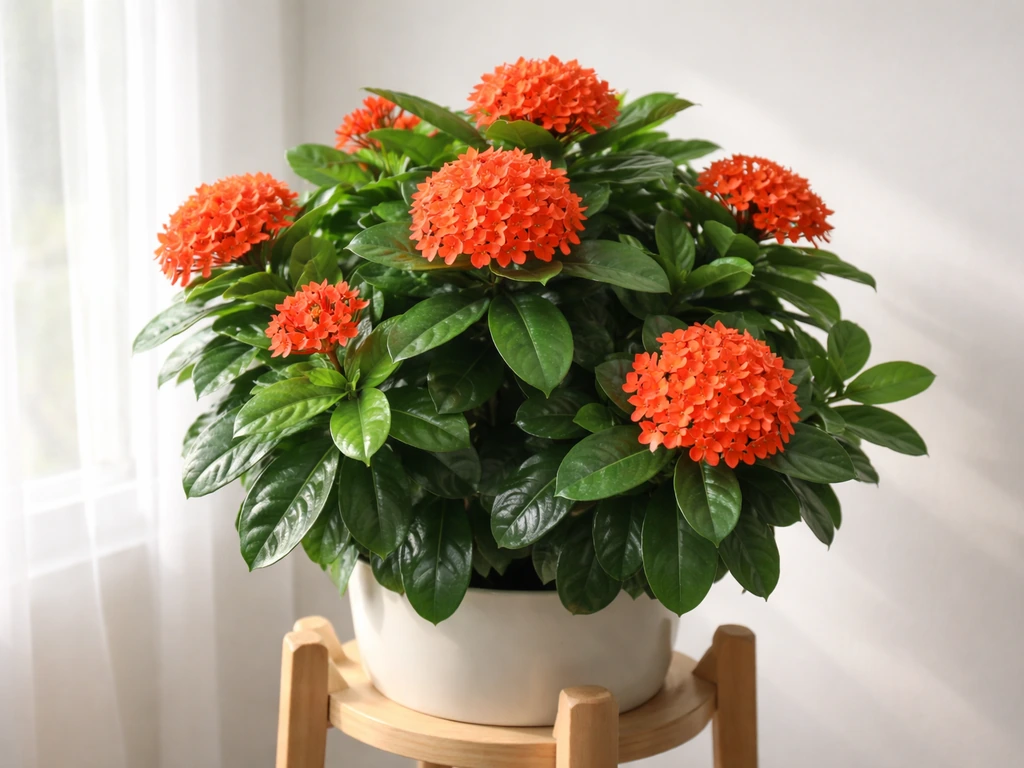
Ixora is a genus of tropical and subtropical flowering shrubs native to Asia, Africa, and the Pacific. Its center of diversity is Tropical Asia, which tells you everything you need to know about what it wants: heat, light, moisture, and no frost, ever. In its natural habitat it experiences monsoon rains, intense sun, and warm nights, then dries out between rain cycles. It doesn't experience a cool season, low light, or the dry air that comes with central heating.
In warm climates it's grown as an outdoor hedge or specimen shrub and blooms year-round. Indoors, you're essentially asking it to live like a houseplant when it's genetically programmed to be an outdoor tropical. That's doable, but you need to meet it halfway. Think of it as a high-maintenance houseplant rather than a low-effort one. If you've successfully grown something demanding like a gardenia indoors, you already have the instincts for ixora.
Light requirements and where to put it inside
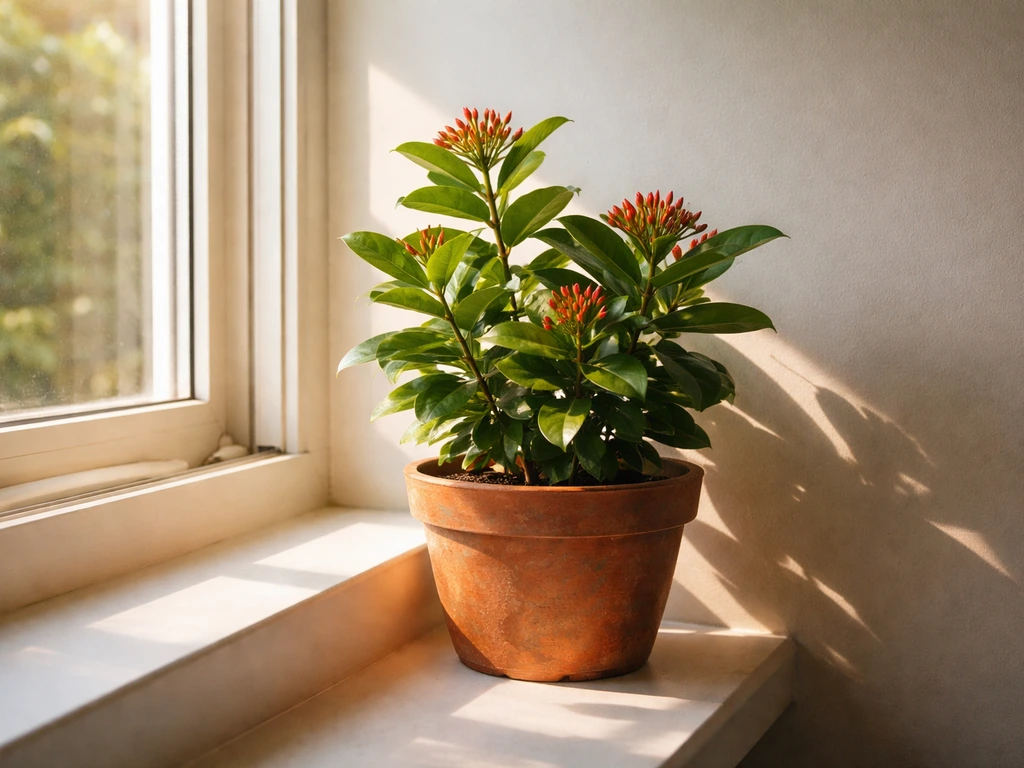
Light is the single most important factor for getting ixora to thrive and flower indoors. It needs full or partial sun, which translates to a south, east, or west-facing window. A south-facing window is the gold standard for most of the US and Europe because it gets the longest run of direct light through the day. East and west windows work, especially in summer, but they're borderline during the shorter days of fall and winter.
If your brightest window gets fewer than four to five hours of direct sun per day, ixora will survive but probably won't bloom reliably, and growth will be slow and leggy. This is where a grow light genuinely changes the game. A full-spectrum LED positioned close to the plant (within 12 to 18 inches) and run for 14 to 16 hours a day can substitute effectively for a subpar window. I've seen ixora bloom consistently under a decent grow light in a north-facing apartment, so don't write it off just because your windows face the wrong direction.
One practical note: ixora is labeled as 'showy everblooming' and can flower under a variety of light conditions, which sounds reassuring. But 'variety of conditions' has a floor. The closer you get to full sun, the better your results. Dim light is the number one reason indoor ixora owners end up with a green bush with no flowers.
Temperature, humidity, and airflow
Ixora wants to be warm all year. The practical indoor minimum is 60°F (16°C), and that's really the lowest end of what it will tolerate without growth slowing to a crawl. Ideally you're keeping it between 65°F and 85°F (18°C to 29°C). Most homes sit comfortably in that range during the day, but watch out for cold drafts from windows in winter. A plant sitting right against a cold glass pane on a January night can easily dip below its comfort zone even if your thermostat says 68°F.
Humidity is the other challenge. Ixora prefers 50% relative humidity or higher. The average home in winter with the heat running can drop to 20 to 30%, which is genuinely stressful for a tropical plant. A small humidifier near the plant is the most reliable fix. Grouping plants together helps a bit, and a pebble tray with water under the pot gives marginal improvement. I wouldn't rely on pebble trays alone if you're in a dry climate or a heated apartment in winter.
Airflow is worth mentioning because it matters in both directions. Ixora doesn't want stagnant, stuffy air, which encourages fungal issues and pests. But it also doesn't want to be blasted by an air conditioning vent or a drafty window. Good ambient air circulation in a well-ventilated room is usually enough. Just don't park it directly in front of a vent.
Soil, pots, and fertilizing
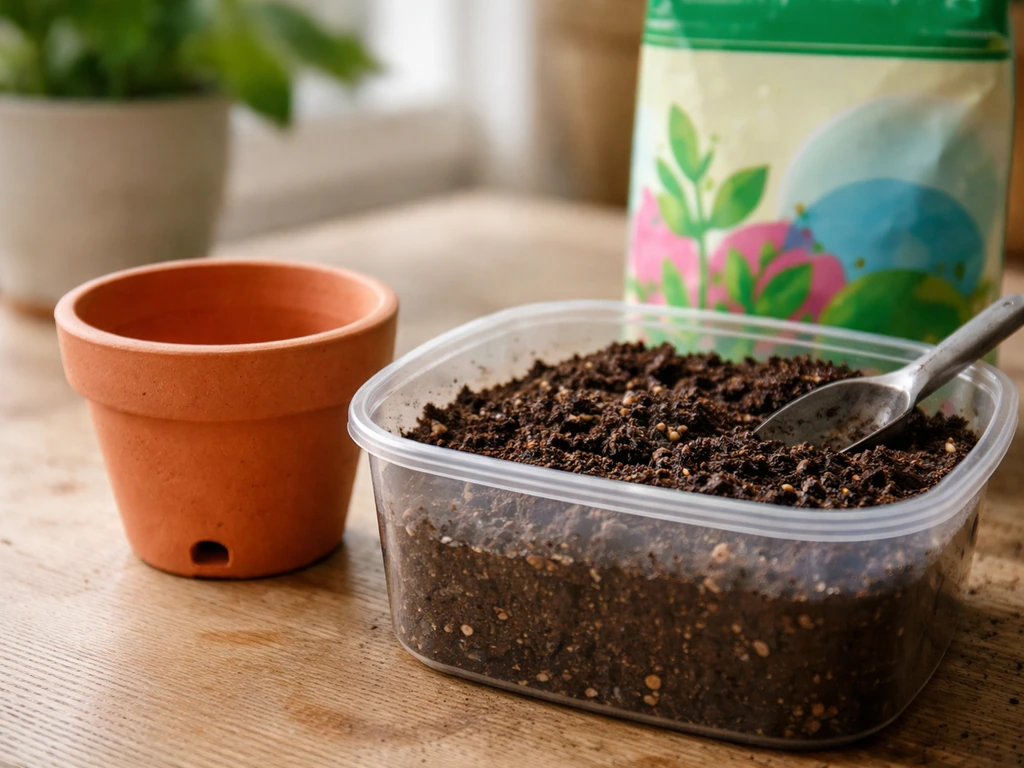
Soil pH is one of the most overlooked factors for indoor ixora, and getting it wrong is the main reason plants develop yellow leaves. Ixora needs an acidic mix, targeting a pH of 5.5 to 6.0. That's similar to what blueberries and azaleas prefer. Standard all-purpose potting mix often runs closer to neutral or slightly above, which is already too high. Use a mix formulated for acid-loving plants, or blend standard potting mix with peat moss or fine bark to bring the pH down.
For the pot itself, drainage is non-negotiable. A pot with a drainage hole, period. Terra cotta is a good choice because it breathes and dries more evenly than plastic, which helps prevent the soggy-root situation that ixora hates. Repot when the plant is visibly rootbound, typically every two to three years, and use the same acidic mix.
Fertilizing: ixora is a moderate feeder, and its needs go up when it's under high light (like a grow light setup). During the growing season (spring through summer), a balanced, acidic fertilizer every two to four weeks keeps it moving. Look for fertilizers marketed for azaleas or acid-loving plants, since these tend to support the lower pH the plant needs. Ease off in fall and winter when growth naturally slows, especially if your light levels drop. Overfeeding a slow-growing plant in low light will cause its own set of problems.
Watering and drainage
The simplest watering rule for indoor ixora: water when the soil surface looks dry. That's the guidance from experienced growers, and it works. You want the soil kept just on the drier side of moist, not bone dry and not waterlogged. Gardening Know How emphasizes keeping the pot moist and moving to bright light as soon as germination happens. In practice, that usually means watering every five to ten days in summer and less frequently in winter, but the soil is your guide, not the calendar.
Overwatering is the classic beginner mistake. Soggy roots cut off oxygen, cause root rot, and lead to leaf drop and flower failure, which are the same symptoms as underwatering. If you're not sure which direction you're going wrong, stick your finger an inch into the soil. If it's still damp, wait. If it's dry an inch down, water thoroughly until it drains out the bottom, then let it drain fully before putting it back in its saucer.
Never let ixora sit in standing water in a saucer for more than an hour. Empty the saucer after watering. This one habit will save you from most root problems. In its native habitat, ixora experiences intense rain followed by well-drained periods, not permanent moisture. Replicate that cycle in a pot and you're on the right track.
Common indoor problems and how to fix them
Yellow leaves (chlorosis)
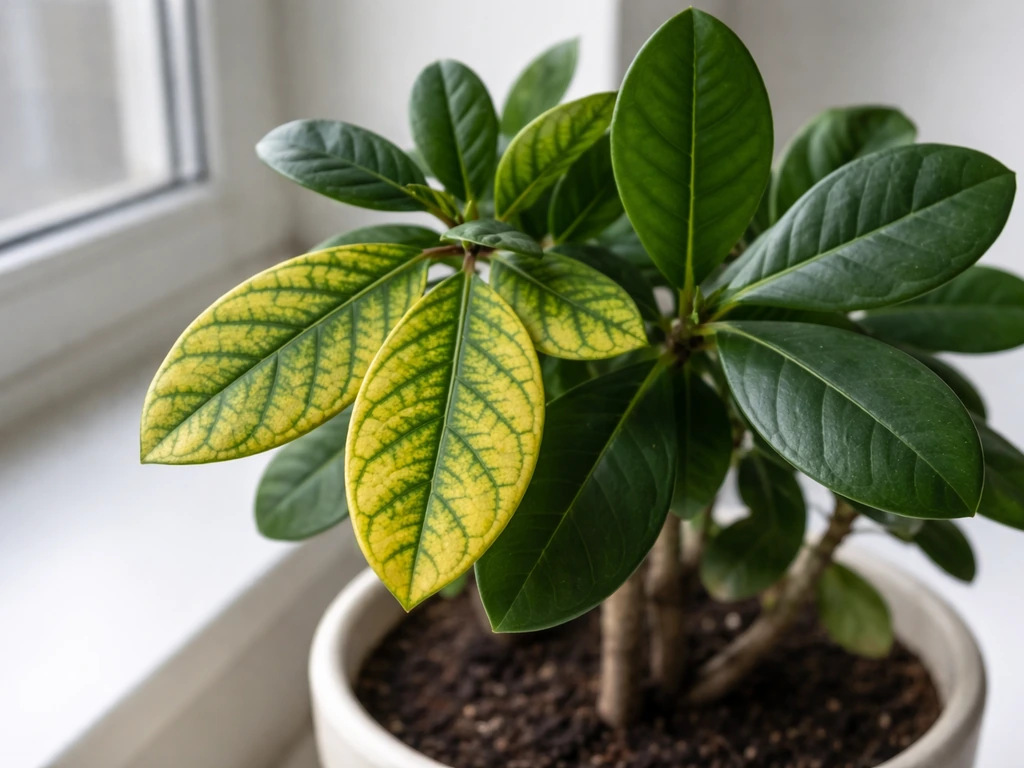
Yellow leaves with green veins, called interveinal chlorosis, is the most common issue with indoor ixora. It's almost always an iron deficiency caused by the soil pH creeping too high, usually above 6.5 to 7.0. At that pH, iron is present in the soil but in a form the plant can't absorb. The fix has two parts: first, bring the pH back down with an acidic fertilizer or a soil acidifier; second, give the plant a fast-acting iron chelate treatment to address the deficiency directly. Spray iron chelate on the foliage according to the product label for a quick response while the soil situation catches up.
A note on chelate products: if your tap water is alkaline or your potting mix drifts high, DTPA or EDDHA iron chelates hold iron availability at higher pH better than basic EDTA chelates, which lose effectiveness around pH 6.5 and above. For a typical home setup, an iron chelate labeled for acid-loving or tropical plants will usually do the job.
Pests
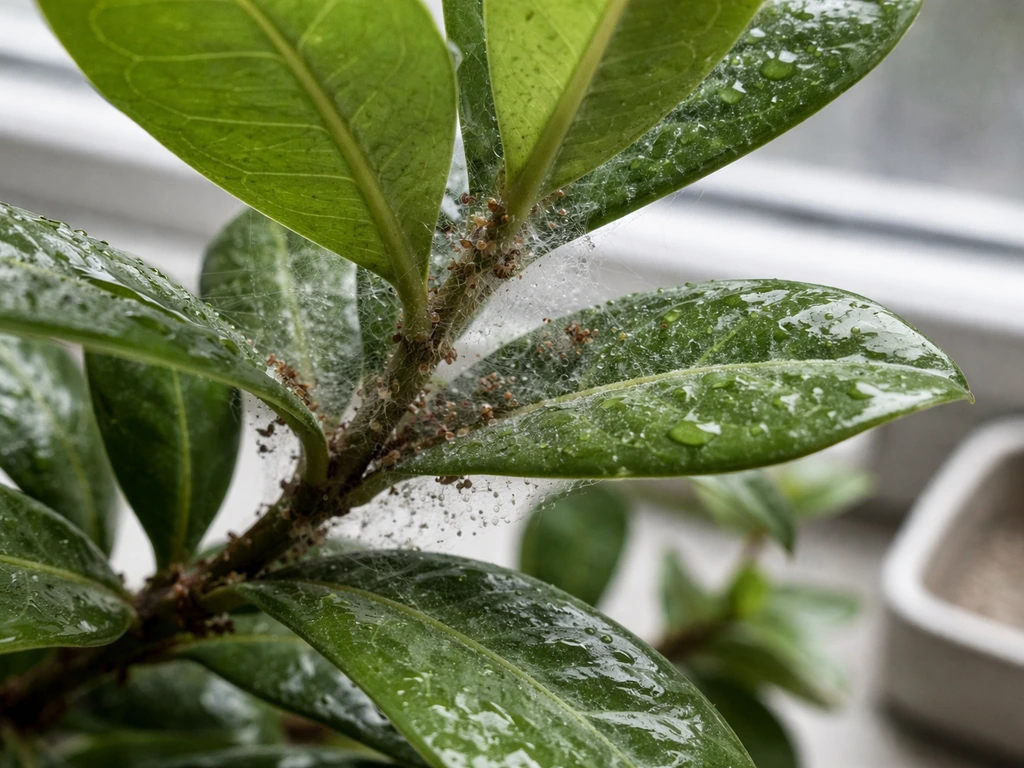
Indoor ixora is most susceptible to spider mites, mealybugs, scale, and whitefly. Spider mites are especially common in dry winter conditions when central heating runs constantly, exactly the conditions that also stress ixora's humidity needs. Look for fine webbing on the undersides of leaves and dusty-looking foliage. Mealybugs show up as white cottony clusters, often where leaves meet stems. Scale looks like small brown bumps stuck to stems or leaf undersides.
- Spider mites: increase humidity, isolate the plant immediately, and treat with insecticidal soap or neem oil spray, covering leaf undersides thoroughly
- Mealybugs: dab individual clusters with a cotton swab dipped in rubbing alcohol, then follow up with neem oil or insecticidal soap on the whole plant
- Scale: scrape off manually with a soft toothbrush, then treat with horticultural oil or neem oil
- Whitefly: yellow sticky traps for monitoring, insecticidal soap spray for control, repeated every five to seven days until clear
Catch pests early by inspecting your ixora every time you water. Flip a few leaves and check stem junctions. A small infestation is easy to knock back; a large one on a stressed plant is a real battle.
Leggy growth and no flowers
Leggy, stretched growth with no blooms is almost always a light problem. If you are wondering about can grape hyacinth grow indoors, the key is matching the light and watering it needs so it does not stall light problem. If the plant is reaching toward the window, the stems are long and thin between leaves, and new growth looks weak, move it closer to your brightest light source or add a grow light. Cool temperatures compound this: growth slows noticeably below 65°F, and blooming essentially stops when conditions feel more like autumn than summer to a tropical plant.
How to keep ixora flowering indoors
Getting ixora to bloom consistently indoors means keeping all the variables in the right zone at the same time. Here's a quick checklist to run through if your plant isn't flowering or you want to prevent it from stopping: If you are wondering will geraniums grow indoors, the answer depends on how much light and consistent care you can provide.
- Light: Is it getting at least four to five hours of direct or strong indirect sun, or a comparable amount under a grow light? If not, this is your first fix.
- Temperature: Is it staying above 65°F day and night? Check near the window on cold nights specifically.
- Humidity: Is it above 50%? Use a cheap hygrometer to check. If it's not, add a humidifier.
- Watering: Is the soil drying out slightly between waterings, but not going completely dry for days? Adjust your schedule.
- Soil pH: Has it been more than a year since you used an acidic fertilizer or checked pH? Drift toward neutral is gradual but real.
- Fertilizing: Are you feeding it during the growing season? Ixora won't bloom well on empty soil.
- Pot size: Is it rootbound? A pot-bound plant under stress won't prioritize flowering.
- Pruning: Light pruning after a bloom cycle encourages new growth, which is where next blooms form.
Ixora is described as everblooming, and in truly tropical outdoor conditions it earns that label by flowering year-round. Indoors, you're more likely to get a strong flush in summer with occasional blooms the rest of the year, especially if light drops in winter. That's a realistic expectation. If you get flowers at all indoors, you're doing well.
When ixora might not be worth it indoors
Ixora is genuinely not beginner-friendly as a houseplant. If you are also wondering can ivy grow indoors, the key is matching its light and humidity needs to your space before you commit. If you're in a north-facing apartment with no grow light, live somewhere with very low winter humidity, or don't want to monitor soil pH, ixora is going to frustrate you. It's the kind of plant that rewards attention and punishes neglect quite visibly.
If you love the look of a tropical flowering shrub but want something with more indoor tolerance, consider flowering plants that handle lower light and more variable conditions more gracefully. Can water hyacinth grow indoors as well, and if so, what conditions does it need to thrive? Plenty of other blooming plants work well indoors with less fussing. On the other hand, if you already have a bright sunny spot, a humidifier, and you're the type who checks on plants daily, ixora is genuinely worth it. Those clusters of small, bright flowers are spectacular when the plant is happy.
If you're set on ixora specifically, the single best investment you can make is a good full-spectrum grow light. It removes the biggest variable (light) from the equation and lets you place the plant wherever it makes sense rather than forcing it into a sub-ideal window. Pair that with a humidifier, an acidic potting mix, and a consistent watering habit, and you've met most of what this plant needs to thrive inside a real home. If you're wondering the same thing about another plant, you can also check whether can hyacinth grow indoors in your home conditions.
| Care Factor | What Ixora Needs Indoors | Common Mistake |
|---|---|---|
| Light | Full to partial sun; south, east, or west window; or grow light 14-16 hrs/day | Too little light, leading to leggy growth and no blooms |
| Temperature | 65°F–85°F (18°C–29°C); minimum 60°F (16°C) | Cold drafts near windows in winter dropping below minimum |
| Humidity | 50% relative humidity or higher | Dry heated indoor air in winter, especially without a humidifier |
| Watering | Water when soil surface is visually dry; never sit in water | Overwatering causing root rot, or inconsistent watering causing flower drop |
| Soil pH | 5.5–6.0 (acidic); use acid-loving plant mix | Neutral or alkaline potting mix causing iron chlorosis |
| Fertilizing | Moderate feeder; acidic fertilizer every 2-4 weeks in growing season | No feeding, or using a neutral fertilizer that raises pH over time |
| Pests | Scout weekly; treat early with neem oil or insecticidal soap | Missing early infestations until they're severe |
FAQ
Can I mist ixora instead of using a humidifier indoors?
Yes, but only if the “dry season” is real. Let the top inch of soil dry between waterings, then water thoroughly until it drains. Do not keep the soil surface mist-damp, and never rely on a saucer to hold water, since ixora needs oxygen around the roots to avoid rot.
How often should I fertilize ixora indoors, and what if it stops growing in winter?
Go by active growth, not a calendar. In low light or during winter when growth slows, cut back to longer intervals and use weaker fertilizer. If new shoots stop or leaves look pale, it usually means light is insufficient rather than lack of food, so adjust light before adding more fertilizer.
My indoor ixora has yellow leaves. How do I confirm it’s iron related (and not something else)?
Try a simple pH sanity check before buying products. If you get persistent yellowing (especially with green veins), test the potting mix pH or assume it has drifted high. Then correct pH with an acidic amendment or acid fertilizer, and use the right iron chelate type if your water is alkaline.
What should I change first if my ixora is leggy and not blooming?
If stems are stretching and flowering stalls, it’s typically light. Move it closer to the brightest window or add a grow light, then turn the pot weekly so all sides get even illumination. Also avoid sudden location changes that combine brighter light with cold drafts, since that can trigger leaf drop.
Why does my ixora struggle in winter even when the room temperature feels warm?
Cold drafts and cold glass are common causes of droopy or dropping leaves. Keep the plant back a few inches from windows in winter, avoid placing it directly under HVAC vents, and aim to keep night temps closer to the 60°F (16°C) minimum or above.
Can I use regular potting soil for indoor ixora?
No. Many “houseplant” mixes are near-neutral and can drift upward over time, which triggers interveinal chlorosis. Use an acid-loving blend or amend with peat moss or fine bark to target about pH 5.5 to 6.0, and repot before the plant becomes severely rootbound.
Can ixora live outside during the warm months and return indoors later?
Yes, in summer it can be fine, but acclimate slowly. Increase light gradually and watch for dry-mist stress and quick soil drying. Also ensure outdoor nights do not drop below the warm range, and bring it back indoors before cool weather or heavy rain conditions start.
Why did my ixora stop blooming in winter, and will it bloom again?
Flowering can be inconsistent, so manage expectations: indoors it often produces a strong flush in brighter months and fewer blooms in winter. Your best chance is to maintain bright light, steady warmth, and higher humidity year-round. If flowers stop when days shorten, you may need to extend grow-light hours to keep “summer-like” conditions.
What’s the best way to handle spider mites or scale on indoor ixora?
Treat promptly and isolate if possible. Rinse leaves gently, then wipe or treat the specific pest type (mites, mealybugs, scale, or whitefly) according to the product label. Because ixora is stressed by dry air, improving humidity can reduce reinfestation, but it should not replace pest treatment.
Can ixora grow in a decorative pot with no drainage hole?
A planter without drainage can work only if it’s essentially a different system with careful watering control, which is risky for ixora. For most homes, use a pot with a drainage hole. If you must use a decorative cachepot, empty it after watering and do not let water sit.