
Yes, busy lizzies can grow indoors, and with the right spot they will bloom for months at a stretch. The key is light: these plants need far more of it than most people expect from a "shade-loving" flower. Get that right, keep them evenly moist and warm, and you'll have flowers on your windowsill all winter. You may be wondering whether daylilies have similar indoor needs, and the answer depends on getting the light right and choosing an appropriate setup can daylilies grow indoors. If you are also curious about other window-friendly flowers like alyssum, you might wonder can alyssum grow indoors. Get it wrong and you'll end up with a leggy, flowerless stem that drops its buds and sulks. The good news is the fixes are straightforward once you know what to look for.
Can Busy Lizzies Grow Indoors? Indoor Care Guide

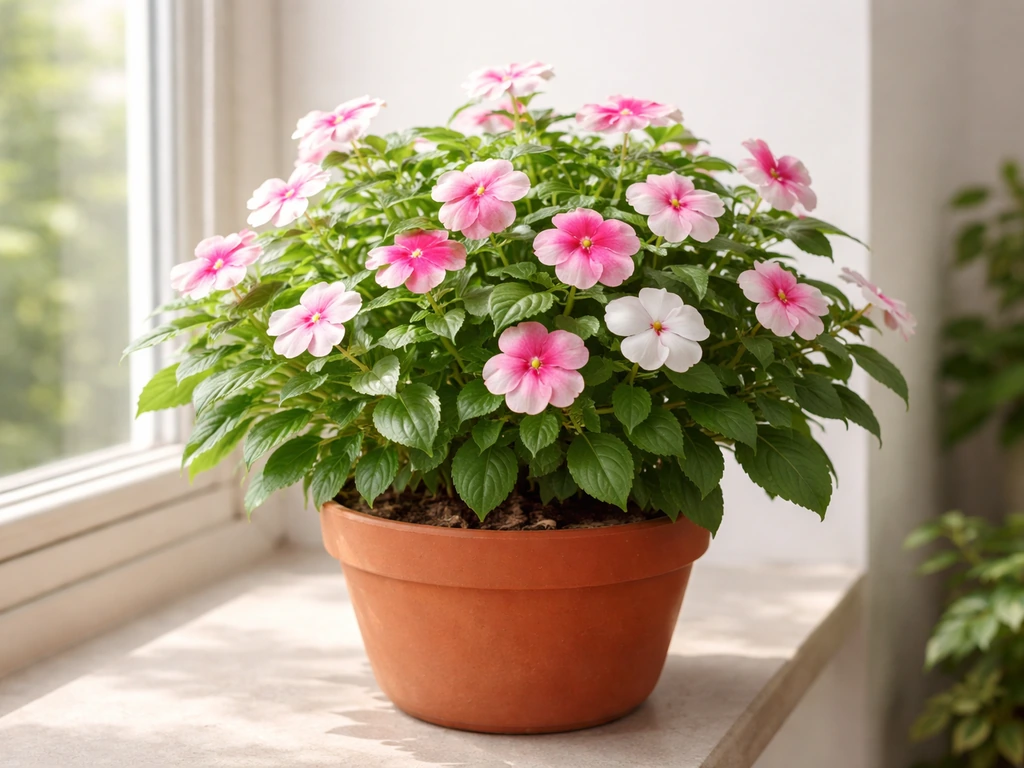
Which busy lizzie are you actually growing?
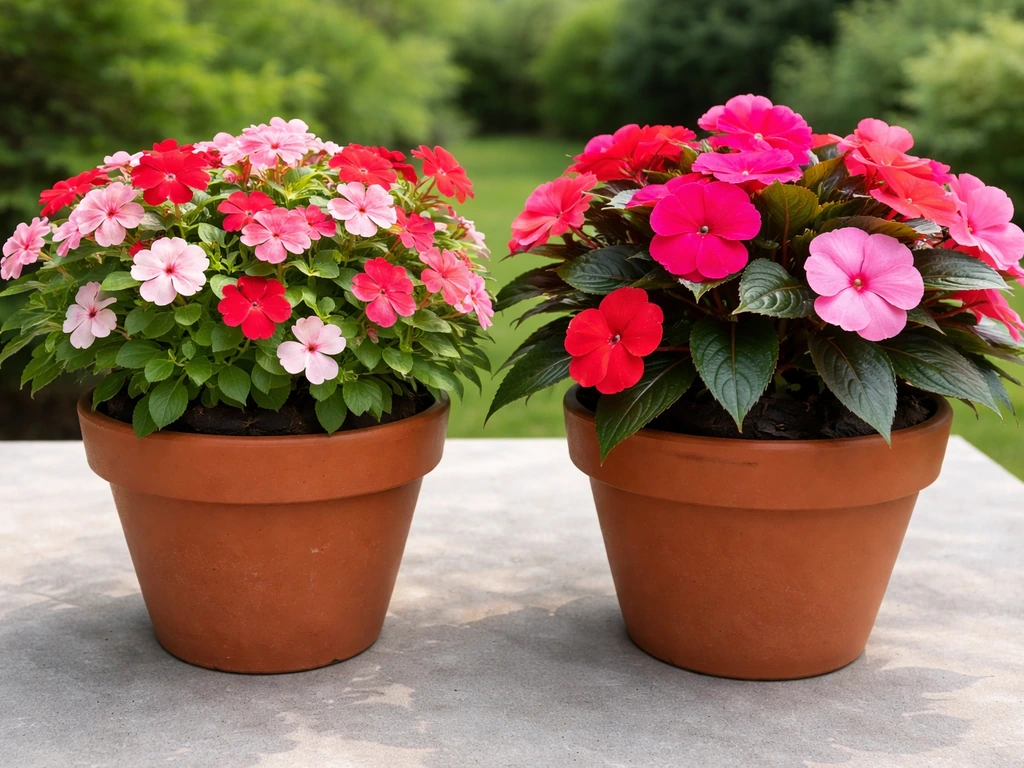
This matters more than people realize. When gardeners say "busy lizzie," they usually mean one of two quite different plants: Impatiens walleriana (the classic bedding impatiens you see in hanging baskets and garden borders) or New Guinea impatiens (Impatiens hawkeri and related hybrids, with bigger, bolder flowers and often darker, glossier foliage). Both are grown ornamentally, but they behave differently indoors, and extension guidance consistently lists them as separate groups for a reason.
New Guinea impatiens are the better indoor candidate of the two. They tolerate more direct sun, tend to be more compact, and are more forgiving if conditions aren't perfect. Common bedding impatiens (walleriana) can work indoors too, but they are fussier about light levels and more prone to getting leggy in anything less than a very bright spot. If you're shopping specifically for an indoor plant, reach for New Guinea impatiens. If you're trying to bring in a plant from the garden, either can work with the right acclimation.
"Indoors" also deserves a quick definition. A cool, dim north-facing hallway is not the same environment as a sunny south-facing window in an apartment. Busy lizzies need the latter end of that spectrum to actually bloom. Keeping them alive in low light is possible; keeping them flowering is a different challenge.
Light: the make-or-break factor
If there's one thing I'd want you to take from this whole article, it's this: busy lizzies need a lot of light indoors. Can lobelia grow indoors? The principles of light and consistent care are key for most flowering plants. Their reputation as shade plants comes from outdoor conditions where "shade" still means many thousands of foot-candles of ambient brightness. Indoors, that same shade doesn't exist. A room that looks bright and cheerful to your eyes is often genuinely dim for a flowering plant.
For common impatiens (walleriana), aim for a bright east or west-facing window with a few hours of gentle direct sun. A south-facing window works well in winter when the sun is lower and less intense, though you may need a thin sheer curtain in summer to prevent scorch. North-facing windows simply don't deliver enough light for consistent flowering, no matter how close to the glass you position the pot.
New Guinea impatiens are more sun-tolerant and can handle a south or west-facing window with several hours of direct indoor sun per day. They'll actually do better with more light than walleriana types, and this is exactly why they perform better as houseplants. If you're an apartment dweller with one decent south-facing window, New Guinea is your best bet. Aim for at least 4 to 6 hours of bright, direct or near-direct light daily for both types to bloom reliably.
If your windows aren't cutting it, a grow light placed 6 to 12 inches above the plant on a 14-hour timer will make up the difference. Full-spectrum LED grow lights are inexpensive now and genuinely transform what's possible for flowering plants indoors.
Temperature, humidity, watering, and soil
Temperature
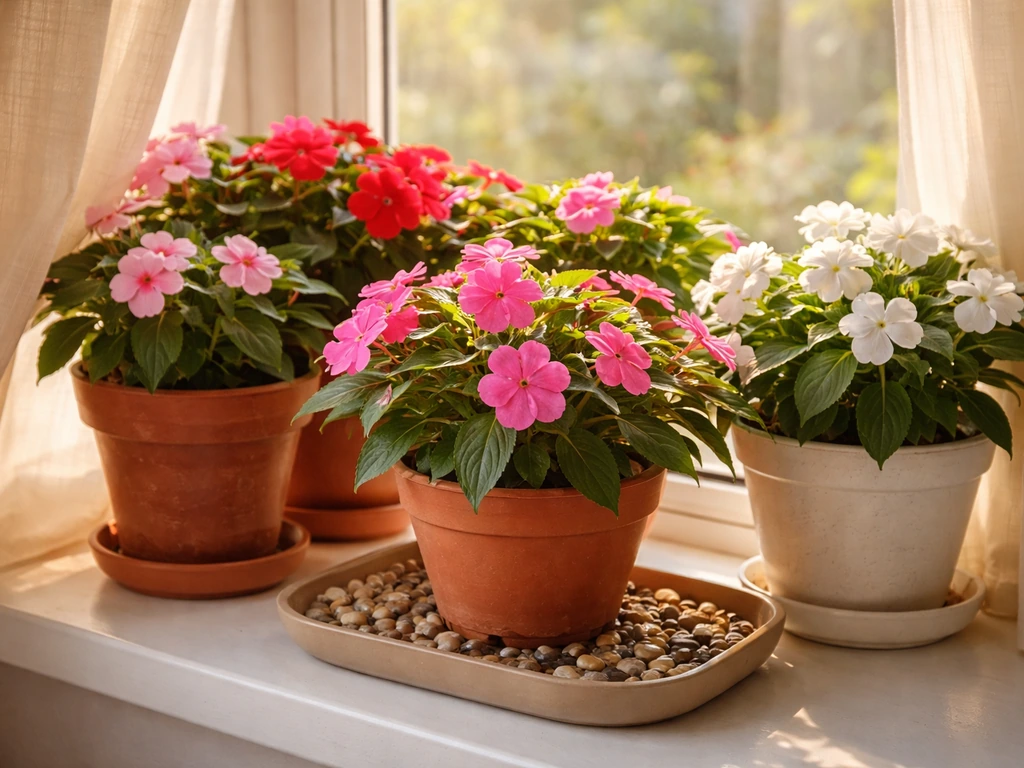
Busy lizzies like it warm. The sweet spot for New Guinea impatiens indoors is 65 to 80°F (18 to 27°C), and common impatiens are happy in the same range. Below about 50 to 55°F (10 to 13°C), growth stalls and flower production stops. Cold windowsills in winter are a real problem: the glass can be significantly colder than the room air, and roots sitting against cold glass suffer. Slide a piece of folded cardboard or a small mat under the pot on cold nights if your windowsill gets chilly.
Humidity
Busy lizzies appreciate humidity, which is one reason they thrive in warm, moist outdoor summers but struggle near indoor heating vents in winter. Aim for 50% relative humidity or above if you can manage it. A pebble tray filled with water placed under the pot, grouping plants together, or running a small humidifier nearby all help. Misting the foliage directly isn't ideal as it can encourage fungal issues, especially in low-airflow indoor spaces.
Watering
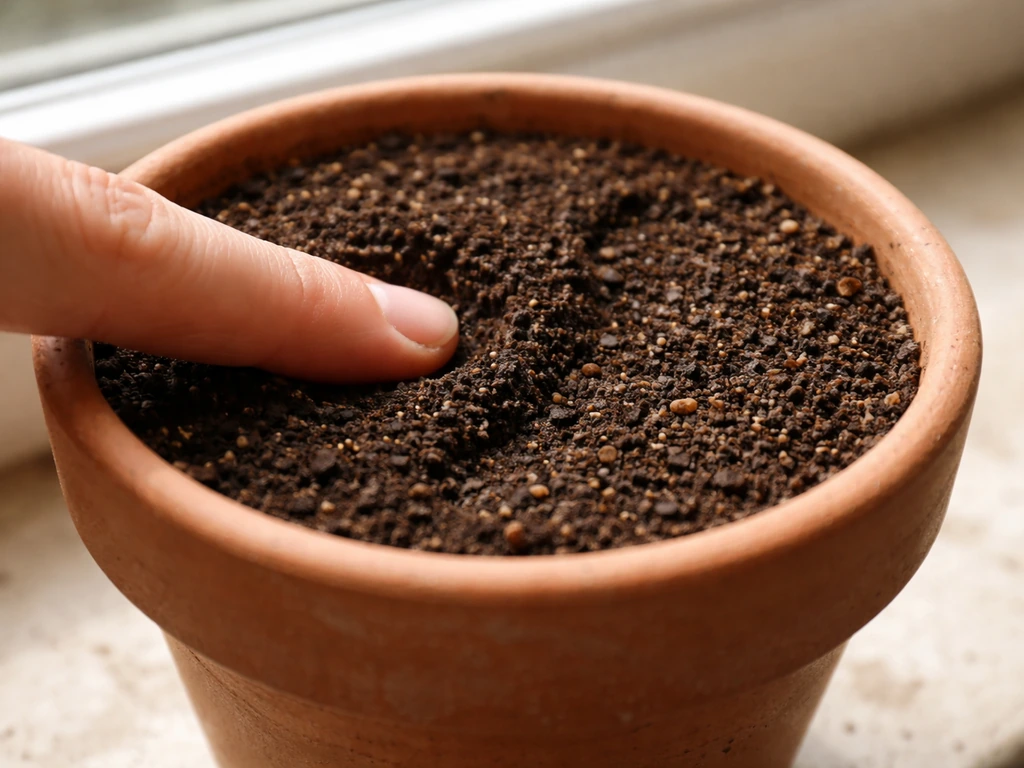
The goal is consistently moist but never soggy soil. Syngenta’s New Guinea impatiens container guidance notes that they prefer soil that is consistently moist but not soggy consistently moist but never soggy soil. Busy lizzies will visibly wilt when they're thirsty, and while that's a useful alarm bell, letting them reach that point repeatedly stresses the plant and causes bud drop. Check the top inch of soil every two to three days. When it feels just barely dry, water thoroughly until it drains freely from the bottom. In winter or in lower-light conditions, the plant uses water more slowly, so your interval will lengthen. Don't water on a fixed schedule; water based on what the soil tells you.
Soil
Use a well-draining, peat-free multipurpose compost or a mix specifically labeled for container flowering plants. Adding around 20 to 30% perlite to a standard potting mix improves drainage noticeably and reduces the risk of root rot. Busy lizzies don't like heavy, compacted soil that holds water around their roots. Repot every one to two years or when roots start circling the bottom of the pot.
Pots, drainage, and feeding
Drainage holes are non-negotiable. Busy lizzies sitting in a pot without drainage holes will develop root rot within weeks, especially indoors where evaporation is slower. If you love a decorative pot without holes, use it as an outer cover and keep the plant in a plain nursery pot with good drainage inside it. Empty the saucer after watering so the roots aren't sitting in standing water.
Pot size matters too. Don't over-pot busy lizzies. A pot that's much larger than the root ball retains too much moisture between waterings and invites root rot. Go up one pot size (roughly 2 inches in diameter) when you repot, not several sizes at once. For most indoor plants, a 6 to 8 inch pot is a reasonable starting point for a single plant.
For feeding, use a liquid balanced fertilizer (something like a 10-10-10 or 20-20-20) diluted to half strength every two weeks during the active growing season (roughly March through September). In winter, drop to once a month or stop feeding entirely if growth has slowed significantly. Overfeeding with a high-nitrogen fertilizer will push leafy growth at the expense of flowers, so resist the urge to give them extra during a blooming slump.
What to realistically expect indoors
In a genuinely bright indoor spot, busy lizzies grow quickly. New Guinea impatiens in particular can put on several inches of new growth in a month during spring and summer. Common impatiens grow fast too but tend to get leggier more quickly without regular pinching. Both types can bloom almost continuously indoors if light is adequate, typically for six months or more in a good year. Can lamium grow indoors too? If you’re curious, the same idea of strong light and steady care matters. In a winter with short, gray days and no grow light supplementation, flowering will slow or pause.
Pinching the tips back by about a third every four to six weeks keeps the plant bushy and encourages more branching and more flower buds. I know it feels counterintuitive to cut off stems that look healthy, but it genuinely works. A leggy busy lizzie that's cut back hard will fill out significantly within a few weeks.
Indoor problems and how to fix them fast
| Problem | Likely Cause | Quick Fix |
|---|---|---|
| Leggy, stretched stems | Not enough light | Move to brighter window or add grow light; pinch stems back by a third |
| Buds dropping before opening | Temperature fluctuations, low humidity, or underwatering | Move away from drafts and vents; check soil moisture; raise humidity |
| Yellowing lower leaves | Overwatering or root rot | Check roots, improve drainage, let soil dry slightly more between waterings |
| No flowers despite healthy growth | Too much nitrogen or insufficient light | Switch to a low-nitrogen bloom fertilizer; increase light |
| Wilting despite moist soil | Root rot | Unpot, trim rotted roots, repot in fresh well-draining mix |
| White powdery residue on leaves | Powdery mildew (low airflow) | Improve air circulation; treat with diluted neem oil spray |
| Sticky leaves or distorted new growth | Aphids | Rinse with water; apply insecticidal soap weekly until clear |
| Fine webbing on underside of leaves | Spider mites (common in dry indoor air) | Raise humidity; treat with neem oil or insecticidal soap |
| Tiny flies around soil surface | Fungus gnats (overwatering) | Let top 2 inches of soil dry out; use sticky yellow traps; treat soil with neem drench |
Spider mites and fungus gnats are the two pests I see most often on indoor busy lizzies. Spider mites thrive in exactly the dry, warm air that indoor heating produces in winter, so boosting humidity is both a prevention and a treatment strategy. Fungus gnats are almost always a sign of consistently wet soil near the surface, so tightening up your watering habits solves the problem at its root (pun intended).
How to get started: seeds, cuttings, or store-bought plants
Starting from seed
Busy lizzie seeds are tiny and need light to germinate, so press them onto the surface of moist seed compost without covering them. They need warmth (around 70 to 75°F) and consistent moisture. Germination takes 10 to 20 days, and it's another 10 to 14 weeks before you'll see flowers. Starting from seed is rewarding and cheap, but it requires patience and good light from day one. Grow lights genuinely make this much easier.
Taking cuttings
Stem cuttings are the fastest and most reliable way to propagate busy lizzies. Take a 3 to 4 inch cutting just below a leaf node, remove the lower leaves, and place it in a glass of water or directly into moist perlite or cuttings compost. Roots appear within one to two weeks, often faster. This is a great option if you have an existing plant you want to multiply, or if a friend has one you can take a cutting from.
Buying a starter plant
For most people wanting flowers quickly, buying a flowering plant from a garden center is the best starting point. Look for compact, bushy plants with lots of buds rather than fully open flowers. Avoid plants that look stretched or have yellowing leaves. Garden centers stock busy lizzies heavily in spring and early summer, so late May through June is a prime time to find them.
Bringing an outdoor plant inside
If you want to rescue a garden busy lizzie before the cold hits, start the transition about two to three weeks before you bring it fully indoors. Begin by placing it in a shadier spot in the garden for a week to reduce its dependence on full outdoor light. Then move it to a sheltered porch or covered area for a few days. Finally, bring it inside to your brightest window. Skipping this gradual acclimation usually results in a dramatic leaf and bud drop as the plant adjusts to the shock of lower light. Check for pests before it comes inside, as aphids and spider mites love to hitch a ride. A thorough inspection and a preventive neem oil spray before bringing the plant in is good practice.
Busy lizzies are not the easiest plants to grow indoors compared to low-maintenance foliage houseplants, but they're far from the hardest. If you've ever tried growing lobelia or alyssum inside, you'll find busy lizzies noticeably more forgiving. If you’re wondering can lantana grow indoors, you’ll get the best results by matching its light and warmth needs, too genuinely more forgiving. Give them a genuinely bright spot, keep the soil consistently moist, feed them regularly in the growing season, and pinch them back to keep growth bushy, and they'll reward you with months of color. If you're also curious about lysimachia, you can check whether it can lysimachia grow indoors and what conditions it needs to thrive.
FAQ
What should I do if my busy lizzie has buds but they drop before opening indoors?
Bud drop indoors is most often a light or watering stability issue. Move the plant to the brightest window you have (or add a grow light), and water only when the top inch is just barely dry, then water thoroughly until excess drains out. Avoid letting the pot dry out, then suddenly soaking, since the stress triggers bud drop.
Can I keep busy lizzies on a windowsill without a grow light all winter?
Sometimes, but it depends on your window direction and winter light. East or west windows with several hours of near-direct sun can work, south windows often work better in winter, while north windows rarely sustain blooming. If flowering slows, use a full-spectrum LED on a timer rather than guessing and moving the pot daily.
Are busy lizzies safe to place near a window that gets cold at night?
They are very sensitive to cold windowsills. If the glass side is chilly enough to stall growth (roughly below 50 to 55°F), insulate the pot with a small mat or folded cardboard and keep the soil from contacting the cold surface. Also, avoid direct exposure to cold drafts from gaps around the window frame.
How do I tell the difference between underwatering and overwatering indoors?
Underwatered plants usually wilt and look limp, and the soil feels dry at the top and often throughout the pot. Overwatered plants may stay wet longer, develop yellowing or mushy stems, and can attract fungus gnats. A simple check is to lift the pot after watering, then again after it dries, so you learn how “light” it gets when it actually needs water.
Should I mist busy lizzies to boost humidity?
It's usually better to avoid misting the foliage indoors. Instead, use a pebble tray, group plants, or a small humidifier, since misting can increase fungal risk in low airflow. If you must mist, do it early in the day and only lightly, while making sure leaves dry quickly.
What humidity level is actually worth aiming for indoors?
Aim for 50% relative humidity or higher if you can, especially in winter when heating dries the air. If you cannot reach that consistently, focus on keeping watering correct and improving local humidity with a humidifier or pebble tray, then monitor for spider mites.
Do I need to pinch busy lizzies, or will they branch on their own?
Pinching helps a lot for indoor plants because they often stretch toward the light. Pinch back about one-third every four to six weeks to encourage branching and more flower buds. If you skip pinching, expect a leggier plant with fewer stems producing flowers.
What’s the best pot size and how do I avoid root rot?
Start with a pot about 6 to 8 inches for one plant, and repot up only one size (around 2 inches wider) when needed. Root rot is much more likely when the pot is oversized, since soil stays wet too long. Make sure there are drainage holes, empty any outer saucer after watering, and use a well-draining mix with added perlite.
How often should I fertilize, and should I switch formulas once it blooms?
During the active growing season, use a liquid balanced fertilizer at half strength every two weeks. In winter, cut back to once a month or stop if growth slows. Avoid high-nitrogen feeds, since they can push leaves at the expense of flowers, even if the plant looks healthy.
My busy lizzie looks leggy even though it’s in bright light. Is it normal?
Legginess usually means the plant is reaching for insufficient light. Rotate the pot weekly so the growth evens out, then verify light duration (roughly 4 to 6 hours of bright, direct or near-direct light daily). If your room brightness is “sunny” to your eyes but not enough for flowering, use a grow light at the correct height.
Can I propagate busy lizzies in water, and how do I transplant without killing the new roots?
Yes. Use 3 to 4 inch cuttings just below a leaf node, remove lower leaves, and root in water until roots form (often one to two weeks). When moving to soil, pot up promptly in moist, well-draining mix and keep light strong but indirect for a few days to reduce transplant shock.
Why do I sometimes get fungus gnats on indoor busy lizzies?
Fungus gnats usually indicate persistently wet soil near the surface. Let the top inch dry just barely before watering, water thoroughly with good drainage, and consider bottom-watering for a short period to reduce surface moisture. If gnats persist, sticky traps can help catch adults while you correct the watering routine.
Will a garden busy lizzie survive the indoor transition if I bring it in later in the fall?
It can, but you still need acclimation. Start transitioning 2 to 3 weeks before bringing it fully inside by moving it to a shadier, sheltered area first, then to your brightest indoor window. Skipping that step often causes leaf and bud drop, especially when indoor winter light is weaker than outdoors.